
Lightning Strikes, Short Circuits, and Overloads: Protection Measures for 10kV Oil-Immersed Transformers
In 10kV distribution systems, oil-immersed transformers are extensively used in factories, commercial buildings, mining operations, and substations due to their excellent heat dissipation performance, stable operation, and cost-effectiveness. However, during long-term service, lightning strikes, short circuits, and overload operation remain the three primary risks that can accelerate insulation aging, damage internal components, or even cause transformer burnout.
Based on electrical engineering principles and practical operating experience, this article systematically analyzes effective protection measures for 10kV oil-immersed transformers. The content provides practical guidance for transformer selection, operation and maintenance management, and system upgrading in modern power distribution networks.
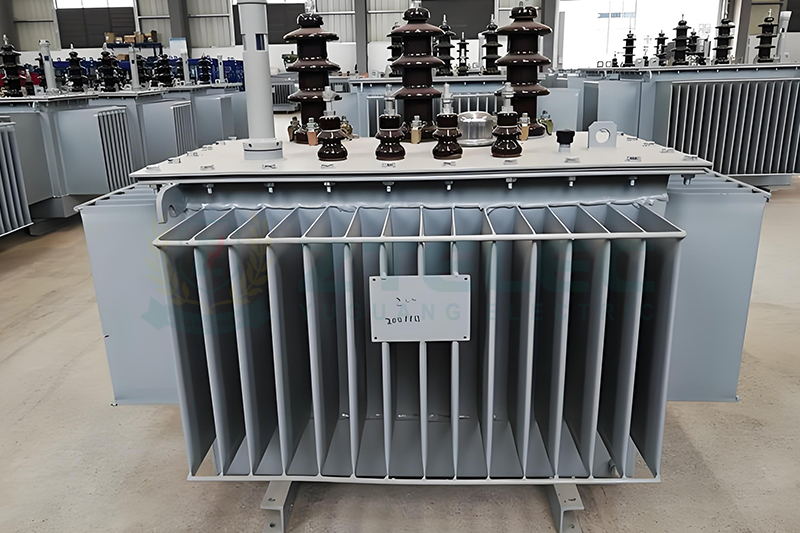
Lightning Overvoltage Protection Measures
Selection and Installation of Surge Arresters
High-performance metal oxide surge arresters (MOA) are recommended for 10kV oil-immersed transformers. These devices feature fast response speed and low residual voltage, allowing them to effectively suppress lightning-induced overvoltages before they reach the transformer insulation system.
Surge arresters should be installed on the high-voltage incoming line, directly at the transformer high-voltage bushings, and on the low-voltage side to form a coordinated multi-level protection structure. The grounding resistance of surge arresters should not exceed 4 Ω. In areas with high soil resistivity, grounding resistance reduction measures such as additional grounding electrodes or chemical grounding agents should be adopted.
Improvement of the Grounding System
Each transformer should be equipped with an independent grounding grid that is reliably interconnected with the main station grounding system. Grounding conductors are preferably made of hot-dip galvanized flat steel with a cross-sectional area of no less than 50 mm², and routing should be as short and straight as possible to minimize impedance.
Grounding resistance must be measured at least once a year, preferably before the thunderstorm season, to ensure continued compliance with relevant technical standards.
Protection of Incoming Line Sections
Within a distance of 1–2 km from the transformer incoming line, insulation reinforcement measures should be implemented, and line surge arresters should be installed. For cable systems, surge arresters must be installed at cable terminations, while the metallic armor and shielding layers of cables should be reliably grounded at both ends.
Core Measures for Short-Circuit Protection
Enhancing Short-Circuit Withstand Capability
Transformers selected for 10kV systems should comply with IEC 60076 or GB 1094 standards. Strengthening the mechanical design of windings is essential to improve both axial and radial strength, allowing the transformer to withstand the intense electromagnetic forces generated during short-circuit events.
Installation of Fast-Acting Protection Devices
Vacuum circuit breakers are commonly used on the high-voltage side in combination with relay protection systems. Instantaneous short-circuit protection and overcurrent protection should be properly coordinated to minimize fault clearing time and limit thermal and mechanical stress on the transformer.
Improving Insulation Material Quality
High-strength electrical insulating paper and pressboard should be used to enhance the mechanical integrity of the insulation system. The winding support structures must remain stable under short-circuit impact forces to prevent deformation and insulation failure.
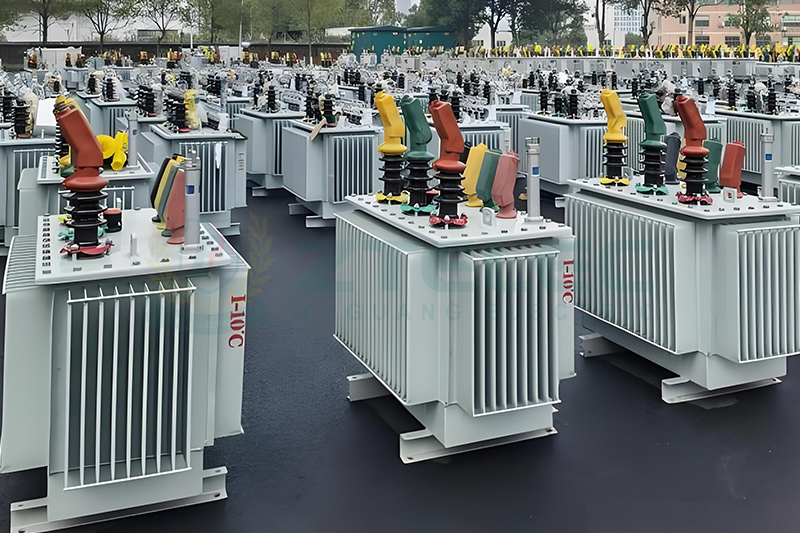
Overload Operation Protection Strategies
Temperature Monitoring Systems
Oil-immersed transformers should be equipped with temperature monitoring devices featuring remote signaling functions. Overtemperature alarms are typically set at 85 °C, with tripping thresholds at 95 °C. Winding hot-spot temperatures should be calculated based on load current and top-oil temperature to accurately assess thermal stress.
Online monitoring systems can further support real-time assessment of insulation condition and operating status, enabling predictive maintenance.
Load Management Practices
Under normal operating conditions, the transformer load factor should not exceed 85%, while short-term overload should be limited to no more than 1.5 times the rated current. Radiators must be kept clean, oil circulation unobstructed, and auxiliary cooling equipment installed when required.
Operating modes should be adjusted according to seasonal variations in power demand to avoid prolonged thermal stress.
Insulation System Maintenance
Dissolved gas analysis (DGA) of insulating oil should be performed every 1–3 years to detect early signs of thermal or electrical faults. Annual measurement of winding insulation resistance and polarization index is recommended, along with AC withstand voltage and dielectric loss (tan δ) tests conducted in accordance with applicable standards.
Comprehensive Protection and Operation & Maintenance Considerations
Routine testing of insulating oil dielectric strength and moisture content is essential. At least one comprehensive preventive test should be conducted annually. Before the thunderstorm season, special attention should be given to the inspection of lightning protection devices and grounding systems.
When significant load growth is observed, the transformer’s operating margin should be promptly evaluated to determine whether capacity expansion or system optimization is required.
Emergency Response and Fault Recovery
Post-Lightning Strike Handling
After a lightning event, surge arresters should be inspected immediately. Insulation resistance measurements and dissolved gas analysis of the insulating oil should be performed, followed by step-by-step voltage withstand testing to confirm insulation integrity.
Short-Circuit Fault Handling
In the event of a short circuit, the fault location must be identified and isolated. Windings should be inspected for deformation, and insulation performance thoroughly tested. After repairs, the transformer should operate under no-load conditions for at least 24 hours before returning to normal service.
Post-Overload Assessment
Following an overload event, the degree of insulation aging should be evaluated. All connection points must be checked for signs of overheating, and drying treatment should be carried out if moisture ingress is detected.
The safe and reliable operation of 10kV oil-immersed transformers depends on the establishment of a multi-level protection system addressing lightning strikes, short circuits, and overload risks. By properly configuring protection devices, strictly implementing maintenance procedures, and adopting advanced monitoring technologies, transformer failure rates can be significantly reduced, service life extended, and power supply reliability effectively ensured.
- more+releated article
- 2025-12-15PET Composite Films in Dry-Type Transformers:
- 2025-12-15Lightning Strikes, Short Circuits, and Overloa
- 2025-12-13How to Select and Use Phenolic Cloth-base Lami
- 2025-12-13How Much Does Bakelite Sheet Cost? 2025 Price
- 2025-12-13Why are most 3240 epoxy boards yellow?
- 2025-12-13What are the Main Applications of FR4 Epoxy Bo
- 2025-12-13Why Does the Price of Insulating Paperboard Va
- 2025-12-13Heat-Resistant DDP Insulation Paper
- 2025-12-13Comparison of Heat-Resistant DDP Insulating Pa
- 2025-12-13G10 and FR4 Epoxy Boards: Commonly Used for Ge
- ELECTRICAL INSULATION BOARD MATERIALS
- ELECTRICAL INSULATION MATERIALS
- POWER TRANSFORMER
- ENAMELED WIRE
- SWITCHGEAR



- Lightning Strikes Protection for 10kV Oil-Immersed TransformersPrice of a 1600kVA 10kV Cast Resin Dry-Type Transformer35kV dry-type transformer protection10kV oil-immersed transformer110 kV oil-immersed transformerOil-Immersed Transformer Maintenance66 kV oil-immersed transformer110 kV oil-immersed transformersdry-type transformer33 kV oil-immersed transformer69/66 kV Three-Phase Oil-Immersed Power TransformersDry-Type Distribution Transformer Pricedry-type distribution transformerdry type transformeroil-immersed transformerpower transformer 110kVtransformer procurement guide 2025power system upgrade stepssubstation upgrade66kV equipment selection66kV transformer system33kV to 66kV upgrade66 kV oil-immersed power transformer220 kV to 66 kV step-down transformeroil-immersed transformer for substation