
10 kV Oil-Immersed Transformer Selection Guide | Insulation, Cooling & Core Materials
With the rapid development of power grids, industrial facilities, and infrastructure projects, 110 kV oil-immersed transformers have become indispensable components in high-voltage transmission and distribution networks. Their insulation level, cooling performance, and core material selection directly impact system reliability, energy efficiency, equipment lifespan, and long-term operating costs.
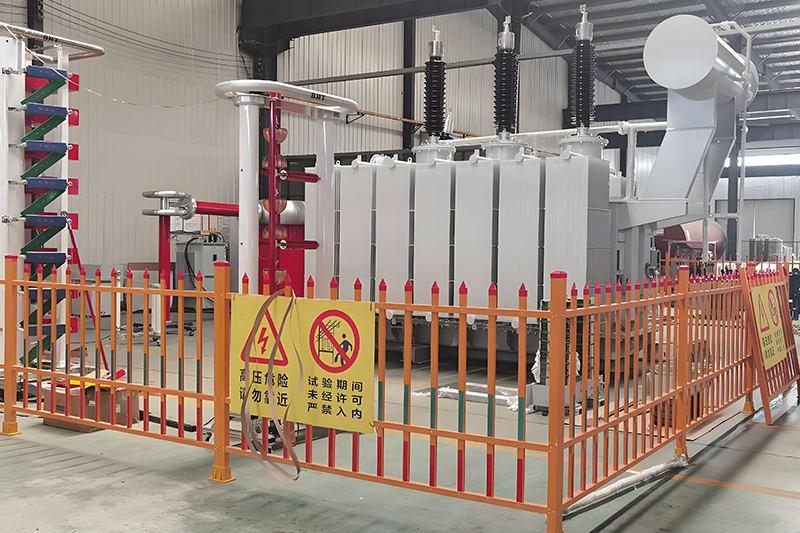
This guide provides a detailed and professional analysis of 110 kV oil-immersed transformer selection from four key dimensions: insulation system, cooling method, core material, and essential technical criteria.
Advantages of 110 kV Oil-Immersed Transformers
110 kV transformers are widely used in public power systems due to their wide capacity range (10 MVA–63 MVA+), low losses, strong insulation strength, and adaptability to harsh outdoor environments.
Insulation System Analysis
Insulation performance is a core factor affecting the transformer’s ability to withstand internal electrical stress, and it greatly influences operational safety and service life.
Insulating Oil
Mineral Oil: The most commonly used insulating medium, featuring excellent dielectric properties and cooling performance. When selecting a transformer, attention should be given to the oil’s dielectric strength, moisture content, acid value, and oxidation stability. High-quality refined mineral oil is recommended.
Silicone Oil & Natural Ester Oil: These high fire-safety insulating liquids (K-class fire-resistant) are ideal for underground substations, indoor substations, and environmentally sensitive areas. Natural ester oil offers greater biodegradability and a high flash point.
Solid Insulation Materials
Insulating Paper and Paperboard: 110 kV transformers typically use Kraft paper and thermally upgraded papers such as NOMEX®. For applications with fluctuating loads or long-life requirements, high-density and high thermal class insulation materials (Class C) should be selected.
Insulation Molded Components: Used for spacers and other structural insulation parts, these materials influence electric-field distribution within the windings. Consistent quality and uniform density are essential.
Cooling Method Analysis
The cooling system affects transformer efficiency and its ability to support sustained load operation. Different substations require different cooling configurations based on load characteristics and environmental conditions.
ONAN – Oil Natural Air Natural
A simple, quiet, and maintenance-free cooling mode that relies on natural convection of oil and air. Suitable for transformers ≤ 20 MVA in stable-load or noise-sensitive environments.
ONAF – Oil Natural Air Forced
Equipped with radiator fans to enhance heat dissipation, ONAF is the standard cooling method for medium to large 110 kV transformers. Fan groups can be intelligently controlled to match load profiles and reduce energy consumption.
OFAF / ODAF – Oil Forced Air Forced
These methods use oil pumps and forced-air cooling to achieve the highest cooling efficiency. They allow compact transformer designs but require more maintenance. Best suited for high-load, space-limited, or critical substations.
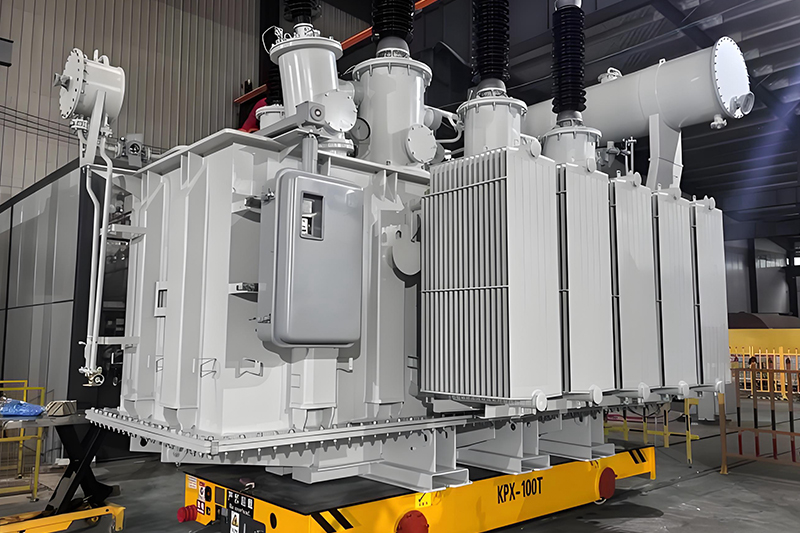
Core Material Analysis
The magnetic core determines no-load loss, excitation current, and overall transformer energy efficiency.
Cold-Rolled Grain-Oriented Silicon Steel (CRGO)
A widely used, cost-effective option with stable magnetic performance.
High Magnetic Induction Silicon Steel (Hi-B Steel)
This material reduces no-load losses by 10%–20% and enables a smaller core design, significantly improving transformer efficiency.
Amorphous Alloy Cores
Although less common in 110 kV applications, amorphous alloys offer extremely low no-load losses, making them ideal for high-efficiency, energy-saving projects.
Key Selection Criteria for 110 kV Oil-Immersed Transformers
Rated Capacity & Load Characteristics: Reserve 10–20% capacity based on maximum load and potential system expansion.
Insulation Class & Materials: Choose high thermal class insulation systems and high-quality insulating oil to ensure long-term stability.
Cooling Method & Temperature Rise: Select suitable cooling types based on climate conditions and project load profiles.
Core Material & Loss Data: No-load and load loss should comply with national standards. Core materials significantly influence operating power consumption.
Environmental Adaptability: Ensure transformer design meets special conditions such as high altitude, humidity, corrosion, or high lightning levels.
Certifications & Testing: Verify that the transformer has passed partial discharge tests, lightning impulse tests, temperature rise tests, and insulation withstand tests.
110 kV oil-immersed transformers are vital components linking transmission and distribution networks. Scientific selection—focused on insulation systems, cooling configuration, and core materials—helps reduce equipment failure risks, improve operating efficiency, and ensure stable power grid operation over a service life of 20–30 years.
oil immersed transformer lifespan
oil immersed transformer maintenance
transformer lifecycle
transformer insulation aging
dry type transformer temperature monitoring
- more+releated article
- 2026-05-11How Long Does an Oil-Immersed Transformer Last
- 2026-05-08Modern Power System Dry-Type Transformer Insta
- 2026-05-07Oil-Immersed Transformer Overheating: Causes,
- 2026-05-07Dry-Type Transformers for Data Centers: 2026 R
- 2026-04-30Air-Core Reactor vs Iron-Core Reactor: How to
- 2026-04-29Compact Enclosed Transformer for Smart Grid: T
- 2026-04-2812-Pulse and 24-Pulse Phase-Shifting Transform
- 2026-04-27Oil-Immersed Transformers for Industrial Plant
- 2026-04-25Why Dry-Type Transformers Are Preferred for Ho
- 2026-04-24Enclosed Transformer Outdoor Solutions: IP Pro
- ELECTRICAL INSULATION BOARD MATERIALS
- ELECTRICAL INSULATION MATERIALS
- POWER TRANSFORMER
- ENAMELED WIRE
- SWITCHGEAR



transformer insulation aging
transformer lifecycle
oil immersed transformer lifespan
oil immersed transformer maintenance
dry type transformer installation
dry type transformer temperature monitoring
dry type transformer maintenance
dry type transformer sizing
transformer cooling system failure
transformer overheating causes
oil immersed transformer overheating
transformer oil temperature
harmonic mitigation
dry type transformer
K factor transformer
data center transformer
Cast resin transformer
insulation oil degradation
DGA analysis transformer
transformer fault analysis
oil immersed transformer failure
smart grid transformer
compact enclosed transformer
integrated distribution transformer
compact transformer substation