
50 Hz vs 60 Hz Transformer: Design Differences at 23 kV
System frequency looks like a small line on a datasheet, but it shapes almost every part of a transformer. At 23 kV, where distribution and industrial networks depend on reliable equipment, choosing the wrong frequency can mean overheating, higher losses or a failed acceptance test.
This guide explains how 50 Hz and 60 Hz designs differ for a 23 kV class transformer. It covers core design, losses, impedance, noise, insulation, testing and what really happens if you connect a transformer to the wrong frequency.
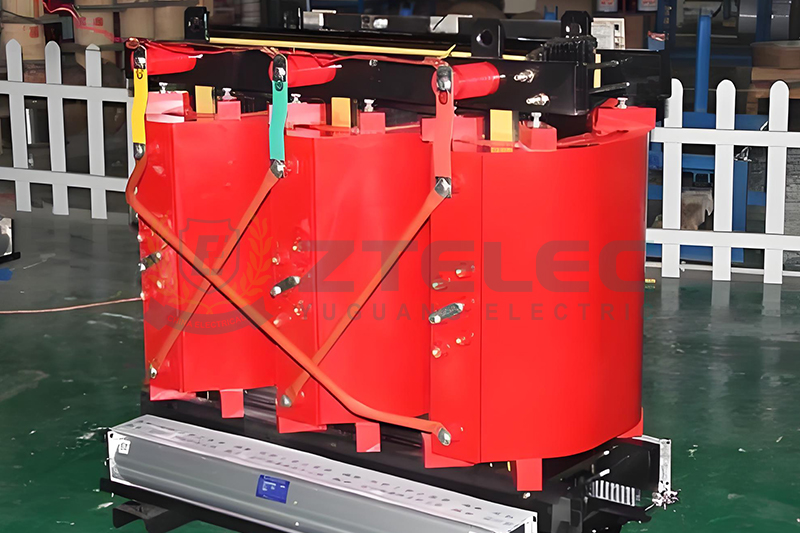
Why Frequency Matters in Transformer Design
A transformer works by magnetic induction. The voltage it can handle is tied directly to the frequency, the number of turns and the magnetic flux in the core.
The basic relationship is simple: voltage is proportional to frequency, turns and flux. If frequency changes while voltage and turns stay the same, the flux in the core must change in the opposite direction.
This one relationship explains most of the differences between 50 Hz and 60 Hz designs.
Where 50 Hz and 60 Hz Are Used at 23 kV
Roughly half of the world runs on 50 Hz and half on 60 Hz. Europe, most of Asia, Africa and Australia use 50 Hz. North America, parts of South America, South Korea, Taiwan, the Philippines and some Middle East networks use 60 Hz.
The 23 kV class, including nearby values such as 22 kV, 22.9 kV and 24 kV, appears in both groups. That is why exporters and project buyers often need to confirm frequency before they confirm anything else.
Core Design: Flux Density and Cross-Section
Same Voltage, Higher Frequency, Lower Flux
At the same voltage and the same number of turns, a 60 Hz transformer has about 17 percent less peak flux than a 50 Hz transformer. This is because 50 divided by 60 is roughly 0.83.
Designers can use this in two ways. They can reduce the core cross-section, which saves silicon steel, or they can keep the core and reduce the turns.
Why a 60 Hz Unit Can Be Lighter
For this reason, a 60 Hz transformer of the same rating is often somewhat smaller and lighter in the active part than a 50 Hz unit. The saving is real, but it is not automatic. Loss targets, temperature rise limits and impedance values also decide the final size.
Core Material Choice
At 23 kV, most oil immersed distribution units use cold-rolled grain-oriented silicon steel. Amorphous alloy cores are also common where no-load loss is a priority.
Amorphous material is sensitive to frequency and flux density, so a design for 60 Hz should be verified with the supplier rather than copied from a 50 Hz drawing.
Losses: What Changes With Frequency
No-Load Loss
Core loss has two main parts. Hysteresis loss rises with frequency and flux, while eddy current loss rises with the square of both.
When voltage is held constant, flux falls as frequency rises. The result is that hysteresis loss drops slightly at higher frequency, and eddy current loss stays roughly the same. In practice, a well-designed 60 Hz transformer can match or slightly beat the no-load loss of a 50 Hz unit.
Load Loss
Load loss depends mainly on current, winding resistance and stray losses. Stray losses in the tank and structural parts rise with frequency, so a 60 Hz design needs more attention to shielding and winding layout.
The difference is usually modest at distribution sizes, but it grows with capacity.
Impedance: A 60 Hz Unit Has Higher Reactance
Reactance is proportional to frequency. If a 50 Hz winding arrangement is used at 60 Hz, the reactive part of the impedance rises by about 20 percent.
For a distribution transformer, this affects voltage regulation and short-circuit current. A higher impedance reduces fault current but increases voltage drop under load.
Typical impedance for a 23 kV distribution transformer is in the 4 to 6 percent range, but the exact value should be written into the purchase specification for the target frequency and not left to the factory default.
Noise Level and Frequency
Transformer hum comes mainly from magnetostriction in the core. The vibration occurs at twice the system frequency, which means 100 Hz on a 50 Hz grid and 120 Hz on a 60 Hz grid.
The human ear is slightly more sensitive at 120 Hz, so a 60 Hz unit can sound a little louder at the same measured level. Lower flux density, step-lap core joints and good core clamping help reduce noise in both cases.
If the site is near homes or offices, state the sound power or sound pressure limit in the order.
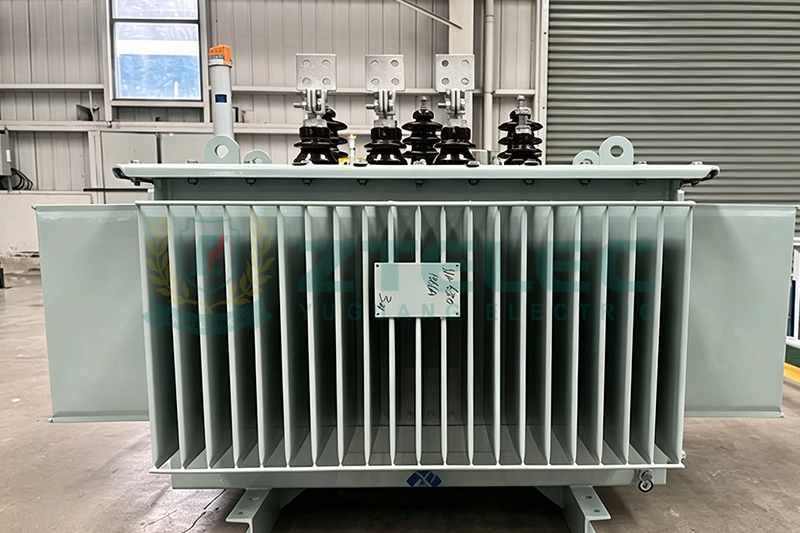
Insulation at 23 kV: Is It Frequency Dependent?
The insulation level is set mainly by voltage class, not by frequency. For a 23 kV system, the equipment highest voltage is usually 24 kV under IEC practice, with common lightning impulse levels of 95 kV or 125 kV and a power-frequency withstand of 50 kV.
North American practice uses its own class and basic impulse level tables under IEEE standards, so values do not always match one to one. Always state the required BIL and applied voltage in the specification.
Frequency does matter in testing, however, as explained below.
Testing Differences
Induced Voltage Test
The induced overvoltage test is run at a higher voltage and a higher test frequency, commonly above twice the rated frequency. This avoids saturating the core during the test.
The test frequency chosen for a 60 Hz unit is different from that for a 50 Hz unit, and factories need suitable test equipment to run it correctly.
Standards
IEC 60076 is the main reference for 50 Hz markets and is also used in many 60 Hz countries. IEEE C57 series standards dominate North America and some other 60 Hz regions.
The two families differ in temperature rise definitions, loss tolerances, test procedures and nameplate practice. Make sure the quotation names the exact standard, not just the frequency.
What Happens If You Connect to the Wrong Frequency?
Using a 50 Hz Transformer on 60 Hz
This is generally the safer direction. Flux falls to about 83 percent of the design value, so the core is not driven into saturation. No-load current and core loss usually decrease.
The impedance rises by roughly 20 percent in its reactive part, voltage regulation changes, and the unit may run a little louder. Rated power should still be checked against the temperature rise limits of the standard.
Using a 60 Hz Transformer on 50 Hz
This is the risky direction. Flux rises by about 20 percent, and a core designed with a normal margin may saturate. The result is high magnetizing current, extra heating, more noise and possible damage to the insulation over time.
In most cases, a 60 Hz transformer must be derated, usually by reducing the voltage in proportion to frequency, if it is used on a 50 Hz network at all. Never do this without written approval from the manufacturer.
Dual Frequency Transformers
Some projects need equipment that can work at both 50 Hz and 60 Hz, such as export machinery, portable power systems or sites that will switch grids later. A dual frequency design is based on the worst case, which is the lower frequency of 50 Hz, because that produces the highest flux.
This design has a larger core than a pure 60 Hz unit, so it costs more and weighs more. Specify this clearly and ask for losses and temperature rise guaranteed at both frequencies.
Cost and Weight Comparison
All else equal, a 60 Hz design at 23 kV can use less core steel and may weigh slightly less. That does not always make it cheaper, since North American specifications often call for different accessories, bushings and test procedures.
Compare quotes on the same standard, loss level and accessory list before you judge the price effect of frequency alone.
Checklist: What to Specify When Ordering a 23 kV Transformer
Start with the system frequency, rated power, primary and secondary voltage, tapping range and vector group. Add the impedance percentage, the insulation level and the cooling class.
Name the standard, such as IEC 60076 or IEEE C57, along with the no-load and load loss requirements. Include the sound level limit, the temperature rise limit, ambient conditions and altitude.
List the accessories, test requirements and any need for dual frequency operation. A complete specification prevents costly redesigns after the order is placed.
Practical Tips for Buyers and Engineers
Confirm the grid frequency in writing at the start of the project, even for repeat orders. A mistake here is expensive to correct after shipment.
Ask the manufacturer to state the design flux density at rated voltage and frequency. This number shows whether the core has an adequate margin against saturation.
Request a test report that records no-load current and loss at 90, 100 and 110 percent of rated voltage. These points reveal how the core behaves if the grid voltage drifts.
If equipment may later move to a different country, discuss this with the supplier before the design is frozen.
The difference between 50 Hz and 60 Hz at 23 kV is more than a nameplate detail. Frequency sets core flux, size, losses, impedance, noise and test methods. A transformer built for the right frequency runs cooler, quieter and longer.
If you are planning a 23 kV project, send ZTELEC your frequency, capacity, standard and site conditions. Our engineers can recommend a design and provide a quotation with guaranteed losses and delivery time.
FAQ
Can a 50 Hz transformer run on 60 Hz?
Usually yes at the same voltage, since flux falls and the core is not overloaded. Impedance and noise change, so confirm with the manufacturer.
Can a 60 Hz transformer run on 50 Hz?
Not safely at full voltage. Flux rises by about 20 percent and can cause saturation and overheating. It needs derating or a redesign.
Is a 60 Hz transformer smaller than a 50 Hz transformer?
It can be, because lower flux allows a smaller core. The actual size depends on losses, impedance and temperature rise requirements.
Does frequency change the insulation level at 23 kV?
Not directly. The insulation level follows the voltage class and the chosen standard, but test frequency and test method do differ.
Note: Technical values in this article are general design guidance. Final parameters should be confirmed against the applicable standard and the manufacturer's design data.
transformer frequency difference
23 kV transformer design
50 Hz vs 60 Hz transformer
POWER GRIDS 2026 exhibition
compact substation
- more+releated article
- 2026-10-2150 Hz vs 60 Hz Transformer: Design Differences
- 2026-10-20ZTELEC to Showcase Power Equipment at POWER GR
- 2026-10-19How to Size a 3500 kVA Transformer: Load &
- 2026-10-163500 kVA Transformer Nameplate Guide: Ratings,
- 2026-10-1523 kV Transformer Secondary Voltage: 400 V vs
- 2026-10-143500 kVA 23 kV Oil-Immersed Transformer: Speci
- 2026-10-13Pad-Mounted Transformer: Applications in Under
- 2026-10-12Meet ZTELEC at Powerexpo Almaty 2026
- 2026-10-10S11 vs. S13 vs. S20 Oil Immersed Transformers:
- 2026-10-09KYN28-12 Switchgear: Technical Specifications
- ELECTRICAL INSULATION BOARD MATERIALS
- ELECTRICAL INSULATION MATERIALS
- POWER TRANSFORMER
- ENAMELED WIRE
- SWITCHGEAR

FR-4 Copper-Free Laminate | High-Performance Insulation Material
FR-4 Copper Clad Laminate Manufacturer & Supplier
23 kV transformer design
transformer frequency difference
50 Hz vs 60 Hz transformer
compact substation
ZTELEC Yuguang Electric
Power transformer
POWER GRIDS 2026 exhibition
3500 kVA transformer
how to size a transformer
transformer sizing
load factor
demand factor
3500 kVA transformer nameplate
transformer nameplate guide
vector group
400 V transformer
400 V vs 416 V
23 kV transformer secondary voltage
416 V transformer
3500 kVA oil immersed transformer specifications
23 kV oil-immersed transformer
underground distribution transformer
pad mount transformer applications
pad-mounted transformer
transformer supplier Kazakhstan