
S11 vs. S13 vs. S20 Oil Immersed Transformers: Comparison Guide
Buyers of oil immersed distribution transformers often see model codes such as S11, S13 and S20 in quotations. The numbers look like small version changes, but they point to real differences in energy loss, material quality and long-term cost.
This guide explains what each series means, how they compare, and how to choose the right one for your project.
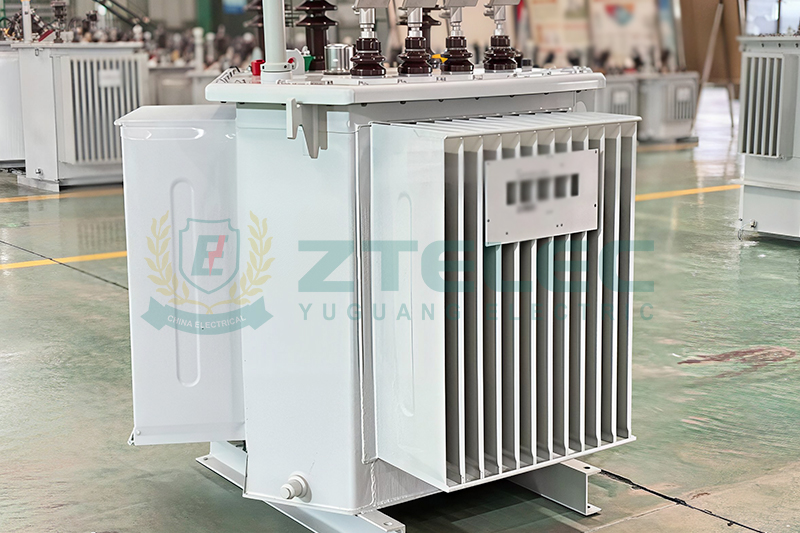
What Do S11, S13 and S20 Mean?
In the Chinese transformer naming system, the letter S stands for a three-phase transformer. The number is the performance series. A higher number generally means lower losses and a more advanced design.
A typical model code looks like S13-M-1000/10. Here, M means fully sealed, 1000 is the rated capacity in kVA, and 10 is the high voltage class in kV.
A Note on Series Numbers
The S11 and S13 series are widely recognized in national standards and industry practice. The S20 label is used by many manufacturers for an ultra-low-loss design, but its loss values are not always defined in the same way by every standard. For that reason, always compare the guaranteed loss figures in the data sheet, not only the series name.
S11 Oil Immersed Transformer
The S11 series was a popular upgrade over the older S9 series. It reduced no-load loss through better core design and improved silicon steel.
Key Characteristics
S11 transformers use cold-rolled grain-oriented silicon steel with a standard lamination method. Many designs use a fully sealed tank with corrugated fins, so the oil does not contact outside air.
They have a lower purchase price than S13 and S20. That makes them attractive for projects with tight budgets or very low load factors.
Limitations
Loss levels are higher than newer series. In many regions, S11 no longer meets the minimum energy efficiency requirements for new installations. Before buying, check your local regulation, because some utilities and tenders no longer accept it.
S13 Oil Immersed Transformer
The S13 series became the mainstream choice for energy-saving distribution transformers. It offers a clear step down in no-load loss compared with S11.
Key Characteristics
S13 designs commonly use higher-grade silicon steel and an improved core structure, such as step-lap joints. Better cutting and stacking reduce magnetic flux leakage and noise.
Industry sources often cite an average no-load loss reduction of around 25 percent compared with S11. Load loss is also optimized by winding design and conductor selection.
Why It Is Popular
S13 balances price and efficiency. It satisfies many national and utility energy efficiency requirements, and the extra cost over S11 is often recovered through energy savings in a few years.
S20 Oil Immersed Transformer
The S20 series is positioned as a higher-efficiency option above S13. It targets customers who care about lifecycle cost, carbon reduction and compliance with strict efficiency rules.
Key Characteristics
S20 designs typically use premium or domain-refined silicon steel, precise core cutting, and optimized winding geometry. These measures reduce both no-load and load losses.
Many manufacturers claim a further no-load loss reduction compared with S13. The exact figure differs by capacity and supplier, so ask for a guaranteed value in the contract.
Trade-Offs
The higher grade of steel and tighter manufacturing control make S20 more expensive. It makes the most sense when the transformer runs for long hours, electricity prices are high, or the project must meet strict efficiency targets.
S11 vs S13 vs S20: Side-by-Side Comparison
The table below compares the three series in general terms. Actual numbers depend on capacity, voltage class and the manufacturer's design.
| Feature | S11 | S13 | S20 |
|---|---|---|---|
| Energy efficiency level | Standard, older generation | High efficiency | Very high efficiency |
| No-load loss | Highest of the three | About 25% lower than S11 (typical) | Lower than S13 (varies by supplier) |
| Load loss | Standard | Slightly improved | Further optimized |
| Core material | Grain-oriented silicon steel | Higher-grade silicon steel, step-lap core | Premium or domain-refined steel |
| Noise level | Moderate | Lower | Lowest in most designs |
| Purchase price | Lowest | Medium | Highest |
| Best for | Tight budgets, light loads | General use, utilities, industry | Long-term savings, strict efficiency targets |
Understanding Transformer Losses
To compare these series properly, you need to understand the two types of loss.
No-Load Loss
No-load loss, also called core loss, occurs whenever the transformer is energized, even with no load connected. It runs 24 hours a day, 365 days a year. For lightly loaded transformers, this is the largest share of total energy waste.
Load Loss
Load loss, also called copper loss, comes from current flowing through the windings. It rises with the square of the load current, so it matters most for heavily loaded transformers.
Why This Matters for Series Choice
The step from S11 to S13 and S20 mainly targets no-load loss, because it is constant. That is why newer series bring the largest savings on transformers with a low or moderate load factor, such as those in residential areas and commercial buildings.
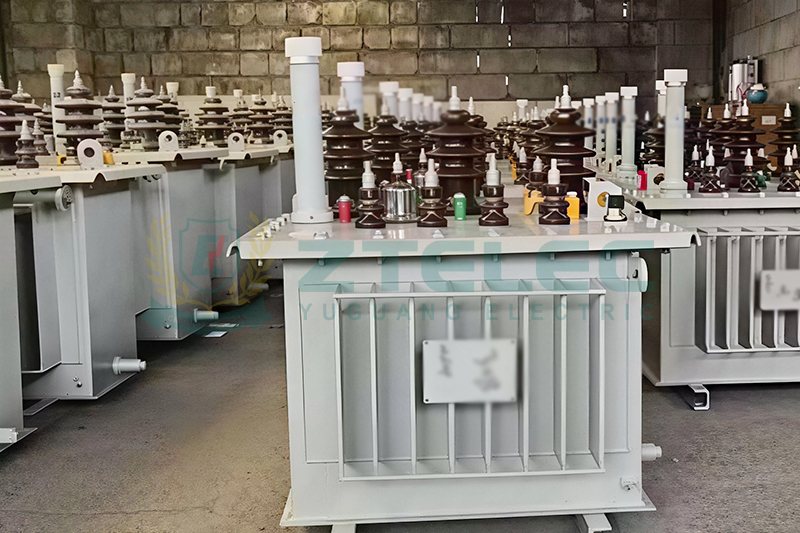
Calculating the Payback Period
A simple method helps you decide whether a more efficient transformer is worth the extra cost.
First, find the no-load loss difference between two models in kilowatts. Multiply it by 8760 hours per year to get yearly energy savings in kWh. Then multiply by your electricity price to get yearly cost savings.
Finally, divide the extra purchase price by the yearly saving. The result is the payback period in years. Add the load loss difference, multiplied by the load factor squared and the operating hours, for a more complete result.
Example Logic
If an S13 saves 0.3kW of no-load loss compared with S11, the yearly saving is about 2628 kWh. At an electricity price of 0.10 per kWh, that is roughly 263 per year. If the S13 costs 800 more, the payback is around three years. These figures are only an illustration, so use your own prices and loss data.
Other Factors Beyond Efficiency
Noise
Better cores and cleaner magnetic paths reduce vibration. This is important for transformers near homes, schools and offices.
Temperature Rise and Lifespan
Lower losses mean less heat. Less heat slows the aging of insulation paper and oil, so the transformer can last longer and operate more safely under overload.
Size and Weight
Premium cores can be larger or heavier in some designs. Check the dimensions if your site has space or transport limits.
Carbon Footprint
Saved electricity means lower emissions. Companies with sustainability targets can use efficient transformers as part of their reporting.
How to Choose Between S11, S13 and S20
Choose S11 When
The budget is very limited, the load is light and local rules still allow the model. It can also suit temporary or short-life projects.
Choose S13 When
You want a balanced option for most distribution projects. It offers solid savings and broad acceptance without the highest price.
Choose S20 When
You plan to run the transformer for decades, face high electricity costs, or must meet very strict efficiency requirements. It also suits green building and carbon reduction projects.
Standards and Regulations
Efficiency rules change over time. Many countries have raised minimum efficiency levels for distribution transformers, and older series are gradually being phased out of public tenders.
In China, national standards such as GB 20052 set energy efficiency grades for distribution transformers. Internationally, IEC 60076 covers general requirements, and regions such as the European Union apply ecodesign rules with maximum loss limits. Always confirm the rules that apply in your market before choosing a series.
Typical Application Scenarios
Residential and Commercial Buildings
Load levels vary a lot through the day, and many transformers run lightly for long periods. A lower no-load loss, as in S13 or S20, brings the best savings here.
Factories and Heavy Industry
Industrial transformers often run at high load. Load loss matters more, so check both loss values. S13 is usually enough, while S20 suits plants with very long operating hours.
Utility Distribution Networks
Utilities own thousands of transformers for many years. Small savings per unit add up to large totals, so higher-efficiency series are often preferred for bulk tenders.
Renewable Energy Projects
Solar and wind plants face fluctuating output, and the transformer stays energized even when generation is low. Low no-load loss improves the overall yield of the project.
Installation and Maintenance Tips
Efficiency is only part of the story. Good installation and care keep the transformer reliable.
Place the unit on a level base with enough clearance for cooling. Keep ventilation paths clear and protect the unit from direct water exposure. Check grounding and cable connections before energizing.
During operation, monitor oil temperature, oil level and load current. Test the oil quality at regular intervals, and inspect bushings, seals and the breather. Sealed designs need less maintenance, but they still need periodic inspection.
Checklist Before You Order
Request a data sheet with guaranteed no-load loss, load loss, impedance, noise and temperature rise. Confirm that the values are written in the contract, along with penalties for exceeding them.
Ask about the core steel grade and manufacturer, and the winding material. Look for type test reports and routine test records. Check the oil type, tank design and sealing method. Finally, verify the warranty, spare parts and local service support.
Frequently Asked Questions
Is S13 better than S11?
In terms of energy efficiency, yes. S13 has lower losses, lower noise and lower running costs, although it costs more to buy.
Is S20 always better than S13?
It is more efficient in most designs, but it is not always the best financial choice. If the transformer has a low operating time or electricity is cheap, the extra cost may not pay back quickly.
Can I replace an S11 with an S13 or S20?
Usually yes, if the capacity, voltage, vector group, impedance and dimensions fit. Check the foundation and protection settings before replacement.
Do these series apply to dry type transformers?
No. The S11, S13 and S20 codes here refer to oil immersed designs. Dry type transformers use different codes, such as SCB series.
Are amorphous alloy transformers better?
Amorphous alloy transformers offer even lower no-load loss, but they cost more and can be larger. They are worth considering for very lightly loaded transformers.
The difference between S11, S13 and S20 is mainly about energy loss, material quality and total cost over time. S11 is the budget option, S13 is the balanced mainstream choice, and S20 is the premium efficiency option.
Compare guaranteed loss data, calculate your payback period, and choose a supplier that can prove its quality. A transformer is a long-term asset, so the lowest purchase price is rarely the lowest total cost.
S11 vs S13 vs S20
S13 transformer
oil immersed transformer comparison
S20 transformer
S11 transformer
- more+releated article
- 2026-10-10S11 vs. S13 vs. S20 Oil Immersed Transformers:
- 2026-10-09KYN28-12 Switchgear: Technical Specifications
- 2026-10-08Transformer Price List 2026: Cost per kVA in C
- 2026-09-30Chinese Transformer Factory Tour: Behind the S
- 2026-09-302026 China National Day Holiday Notice from zt
- 2026-09-29Oil Immersed vs. Dry Type Transformer: Which O
- 2026-09-29ZTELEC Group Debuts at Data Centre World Singa
- 2026-09-28Dry Type Transformer Manufacturers: How to Eva
- 2026-09-24Prefabricated Substation Price and HS Code: Pr
- 2026-09-23How to Select a Transformer for a Solar Power
- ELECTRICAL INSULATION BOARD MATERIALS
- ELECTRICAL INSULATION MATERIALS
- POWER TRANSFORMER
- ENAMELED WIRE
- SWITCHGEAR

FR-4 Copper-Free Laminate | High-Performance Insulation Material

FR-4 Copper Clad Laminate Manufacturer & Supplier
S11 transformer
S13 transformer
oil immersed transformer comparison
S11 vs S13 vs S20
S20 transformer
metal-clad withdrawable switchgear
12kV switchgear
KYN28A-12
KYN28-12 specifications
KYN28-12 switchgear
transformer price list 2026
China transformer price
transformer cost per kVA
oil immersed transformer price
Chinese transformer factory tour
dry type transformer production
Transformer Manufacturing Process
transformer factory China
China National Day holiday 2026
ztelecgroup holiday notice
National Day holiday schedule
oil filled transformer
oil immersed vs dry type transformer
dry type transformer
dry-type transformer