
Pad-Mounted Transformer: Applications in Underground Distribution
As cities grow denser and utilities place a higher value on reliability and appearance, overhead lines are steadily giving way to underground cable networks. At the heart of many of these networks sits a compact, tamper-resistant, ground-level unit: the pad-mounted transformer.
This guide explains what a pad-mounted transformer is, how it works in underground distribution, where it is used, and how to choose the right unit for your project.
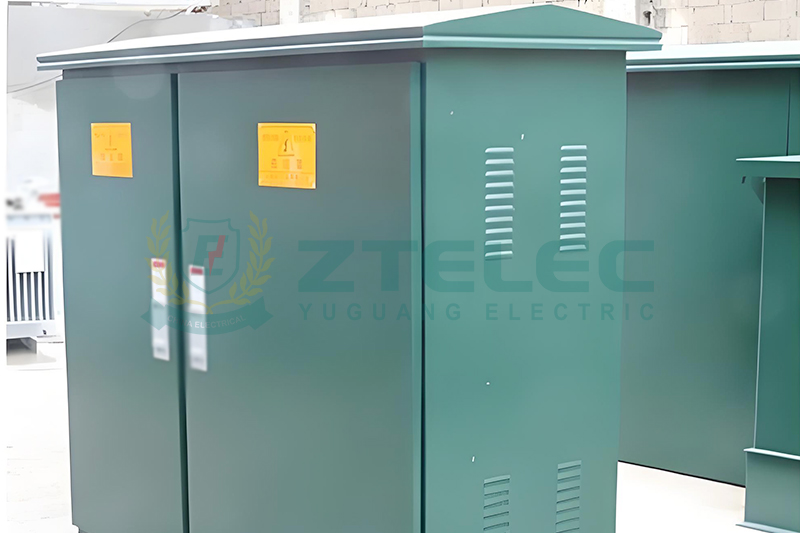
What Is a Pad-Mounted Transformer?
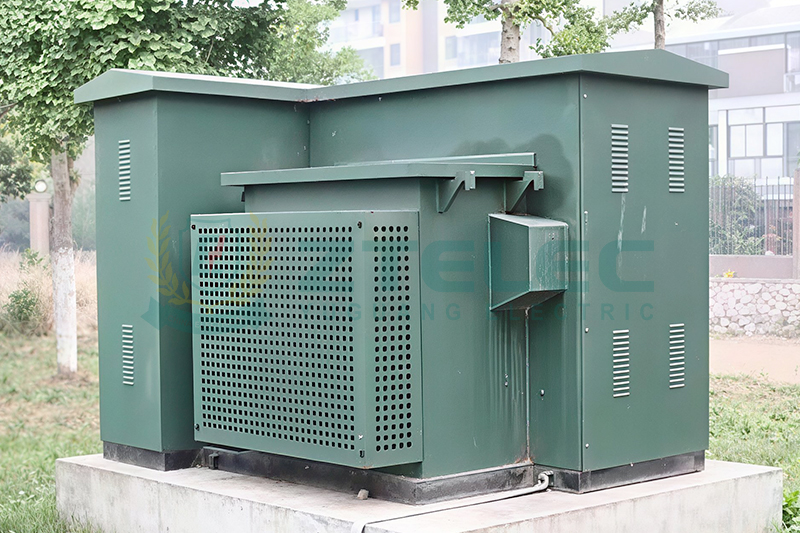
A pad-mounted transformer is a ground-level distribution transformer housed in a locked, weatherproof steel enclosure. It sits on a concrete pad and connects to underground primary cables on the medium-voltage side and underground secondary cables on the low-voltage side.
Unlike a pole-mounted transformer, all live parts are fully enclosed. The high-voltage and low-voltage compartments are separated, and access is restricted to authorized personnel. This makes the unit safe to install in public areas such as residential streets, parks, shopping centers, and school campuses.
Typical ratings range from 25 kVA for small single-phase units up to 5000 kVA for large three-phase units. Common primary voltages include 11 kV, 13.8 kV, 22 kV, 33 kV, and 34.5 kV, with secondary voltages such as 120/240 V, 208Y/120 V, 400/230 V, or 480Y/277 V depending on the regional standard.
Why Underground Distribution Needs Pad-Mounted Transformers
Underground distribution has become the preferred choice for new developments in many countries. Cables buried below ground are protected from wind, ice, falling trees, lightning, and vehicle collisions. Outage rates are typically lower than overhead networks, and the skyline stays clean.
However, underground cables still need a way to step voltage down to usable levels at the point of consumption. Pad-mounted transformers fill this role. They bring medium voltage to the edge of a neighborhood or a building and convert it to low voltage in a single, compact, safe package.
Safety in Public Spaces
Because the enclosure is grounded, lockable, and tamper-resistant, there is no exposed energized equipment. Cable terminations are inside a deadfront or live-front compartment that can only be opened with a special tool or key. This design greatly reduces the risk of accidental contact by the public, children, or animals.
Reduced Visual Impact
Pad-mounted units are low-profile and usually painted in muted colors such as green, grey, or beige. They blend into landscaping and can be screened with shrubs or decorative walls. For developers and municipalities that care about aesthetics, this is a major advantage over pole-mounted equipment.
Higher Reliability and Lower Maintenance
With no exposure to overhead line faults, pad-mounted transformers experience fewer weather-related interruptions. Sealed tanks, corrosion-resistant coatings, and factory-tested components extend service life, which is commonly 25 to 30 years or more under normal operating conditions.
Main Applications in Underground Distribution
Residential Subdivisions
New housing developments are the most common application. A single-phase pad-mounted transformer can serve several homes through short secondary cable runs, while a three-phase unit can supply an apartment cluster or townhouse block. Compact footprints and quiet operation make them well suited to residential streets.
Commercial Buildings and Shopping Centers
Retail parks, office complexes, and shopping malls need a dependable three-phase supply with enough capacity for lighting, HVAC, elevators, and tenant loads. A pad-mounted transformer placed near the building can feed the main switchboard directly, reducing cable length and voltage drop.
Industrial Parks and Light Manufacturing
Factories and logistics centers often install one or more pad-mounted transformers outside their buildings. Units can be specified with higher impedance, special winding configurations, or K-factor ratings to handle motor loads, variable frequency drives, and other non-linear equipment.
Data Centers and Critical Facilities
Data centers, hospitals, and telecom hubs rely on redundancy. Pad-mounted transformers arranged in a dual-feed or loop configuration help maintain supply when one cable section is out of service. Fast replacement and modular design also shorten recovery time after a fault.
Solar and Wind Power Plants
Renewable energy projects use pad-mounted transformers as step-up units at the inverter station. A solar array can have dozens of units spread across the site, each collecting power from inverters and raising it to the collector system voltage. Their rugged enclosures handle dust, heat, humidity, and temperature swings.
Airports, Ports, and Transport Hubs
Airports, rail stations, and container terminals need distributed power across large areas. Underground cables avoid interference with aircraft, cranes, and vehicle movement, and pad-mounted transformers provide local conversion where it is needed.
Campuses, Hotels, and Resorts
Universities, hospitals, theme parks, and resorts prefer a clean appearance and high safety. A ring of pad-mounted transformers connected by underground cable offers flexible expansion without disturbing the landscape.
Radial Feed vs. Loop Feed Configurations
Pad-mounted transformers are available in two common primary configurations, and the choice affects network reliability.
In a radial feed, one primary cable supplies the transformer and the cable ends there. It is simple and low cost, and it suits small or non-critical loads. If the cable or the transformer fails, downstream customers lose power until repairs are made.
In a loop feed, two primary cable sections connect to the transformer, forming part of a ring. A load-break switch or a set of switches allows operators to isolate a faulted section and restore supply from the other direction. This is the standard choice for urban networks, commercial areas, and critical loads.
Key Design Features to Understand
Enclosure and Compartments
The enclosure is usually made from heavy-gauge steel with a powder-coated or polyurethane finish. It contains two compartments: one for high-voltage terminations and one for low-voltage terminations. A barrier separates the two. Doors are padlockable and often include penta-head or hex-head security bolts.
Liquid Insulation
Most pad-mounted units are oil-filled for cooling and insulation. Mineral oil is common, but many utilities now specify natural ester or synthetic ester fluids because of their higher fire point and better biodegradability. For indoor or environmentally sensitive sites, a dry-type pad-mounted design may also be considered.
Protective Devices
Typical protection includes bayonet fuses in series with current-limiting fuses, a pressure relief device, an oil temperature gauge, a liquid level gauge, and a drain and sampling valve. Surge arresters can be mounted on the primary bushings or elbows to protect against lightning and switching overvoltages.
Bushings and Connectors
Deadfront designs use separable insulated connectors such as elbow connectors and bushing wells. These allow operators to disconnect cables safely with a hot stick. Live-front designs use exposed bushings inside the compartment and are more common in some regions or for specific applications.
Tap Changer
An off-circuit tap changer lets installers adjust the secondary voltage by plus or minus 2.5 percent or 5 percent steps. This compensates for variations in supply voltage or cable voltage drop. The transformer must be de-energized before operating the tap changer.
How to Select the Right Pad-Mounted Transformer
Determine Load and kVA Rating
Start by calculating the connected load, applying diversity and demand factors, and adding a margin for growth. Avoid oversizing too much, because lightly loaded transformers waste energy through no-load losses. Avoid undersizing too, because sustained overload shortens insulation life.
Match Voltage and Phase
Confirm the primary voltage from the utility, the secondary voltage required by the load, and whether single-phase or three-phase is needed. Check vector group requirements, such as Dyn11 or Yzn11 for three-phase units, according to local grid rules.
Consider Efficiency and Losses
Energy efficiency regulations such as DOE 2016 in the United States or Tier 2 Ecodesign rules in Europe set minimum efficiency levels. Low-loss cores, such as amorphous metal or high-grade silicon steel, reduce no-load losses and can deliver a strong return on investment over the transformer's life.
Check Standards and Certifications
Depending on the market, applicable standards may include IEEE C57.12.34, IEEE C57.12.00, ANSI C57.12.28 for enclosure integrity, IEC 60076, or GB standards. Ask the manufacturer for type test reports, routine test reports, and quality management certificates such as ISO 9001.
Think About the Environment
Coastal sites need stainless steel or heavily coated enclosures. Hot, arid climates may need extra cooling capacity. Cold regions require fluids with a low pour point. Flood-prone areas may call for elevated pads or sealed designs.
Installation Requirements
A pad-mounted transformer is installed on a level, reinforced concrete pad sized to the unit's footprint, with openings for incoming and outgoing cables. The pad should be built to carry the full weight of the transformer and to resist settlement.
Clearances matter for safety and maintenance. Local codes normally require minimum distances from buildings, windows, fire exits, and combustible materials. Operators also need clear working space in front of the doors, often 3 meters or more, to use hot sticks and handle cables safely.
Grounding is another critical step. A ground grid or ground rods must be installed to keep step and touch voltages within safe limits. Oil containment, such as a gravel-filled sump or a bunded pad, may be required to prevent spills from reaching soil or water.
Maintenance and Lifecycle Care
Pad-mounted transformers need little routine maintenance, but periodic inspection extends their life. A basic program includes visual checks for rust, leaks, and damage, verification of door locks and warning labels, and checking oil level and temperature gauges.
Utilities also schedule dissolved gas analysis and oil quality tests for larger or critical units. Infrared scans of connections can reveal hot spots before they cause outages. Keeping vegetation clear of the enclosure and ensuring that ventilation openings are not blocked will help the unit run cooler.
Advantages and Limitations
The main advantages are safety, a small footprint, a clean appearance, a high degree of reliability, and easy integration with underground cable networks. Factory assembly shortens installation time and reduces on-site errors.
There are some limitations too. Initial cost is generally higher than a pole-mounted transformer, and cable fault location can take longer underground. Units in flood-prone or heavily trafficked areas need extra protection. Careful design and a good supplier relationship reduce these risks.
Frequently Asked Questions
What is the difference between a pad-mounted transformer and a pole-mounted transformer?
A pole-mounted transformer hangs from an overhead structure and connects to overhead lines, while a pad-mounted transformer sits on a ground-level concrete pad inside a locked enclosure and connects to underground cables. Pad-mounted units are safer for public areas and have a lower visual impact.
How long does a pad-mounted transformer last?
With proper loading, cooling, and maintenance, a quality unit typically serves for 25 to 30 years, and many last longer. Overloading, poor oil quality, and corrosion are the main factors that shorten service life.
Can a pad-mounted transformer be used for a solar farm?
Yes. Pad-mounted transformers are widely used at solar plants as step-up units connecting inverters to the medium-voltage collector system. They can be built with dual or split secondary windings to match multiple inverters.
Is a pad-mounted transformer safe to install near homes?
Yes, provided the unit meets applicable standards and is installed with proper clearances, grounding, and warning signs. The tamper-resistant enclosure and deadfront connections are designed specifically for public environments.
What kVA sizes are available?
Single-phase units commonly start at 25 kVA, and three-phase units range from about 75 kVA to 5000 kVA. Custom ratings are available from many manufacturers for special projects.
The pad-mounted transformer has become a cornerstone of modern underground distribution. Its enclosed, tamper-resistant design provides safe, quiet, and reliable power in residential districts, commercial centers, industrial parks, renewable energy plants, and critical facilities.
Choosing the right unit means matching kVA rating, voltage, feed configuration, efficiency, and environmental protection to the project, and working with a manufacturer that can document compliance with the relevant standards. Done well, a pad-mounted installation will deliver decades of dependable service.
If you are planning an underground distribution project and need help specifying a pad-mounted transformer, share your voltage levels, capacity, and site conditions with a qualified supplier to receive a technical proposal and quotation.
underground distribution transformer
pad mount transformer applications
pad-mounted transformer
ZTELEC Yuguang Electric
transformer supplier Kazakhstan
- more+releated article
- 2026-10-13Pad-Mounted Transformer: Applications in Under
- 2026-10-12Meet ZTELEC at Powerexpo Almaty 2026
- 2026-10-10S11 vs. S13 vs. S20 Oil Immersed Transformers:
- 2026-10-09KYN28-12 Switchgear: Technical Specifications
- 2026-10-08Transformer Price List 2026: Cost per kVA in C
- 2026-09-30Chinese Transformer Factory Tour: Behind the S
- 2026-09-302026 China National Day Holiday Notice from zt
- 2026-09-29Oil Immersed vs. Dry Type Transformer: Which O
- 2026-09-29ZTELEC Group Debuts at Data Centre World Singa
- 2026-09-28Dry Type Transformer Manufacturers: How to Eva
- ELECTRICAL INSULATION BOARD MATERIALS
- ELECTRICAL INSULATION MATERIALS
- POWER TRANSFORMER
- ENAMELED WIRE
- SWITCHGEAR


FR-4 Copper-Free Laminate | High-Performance Insulation Material

FR-4 Copper Clad Laminate Manufacturer & Supplier
underground distribution transformer
pad mount transformer applications
pad-mounted transformer
transformer supplier Kazakhstan
Almaty power exhibition
Powerexpo Almaty 2026
ZTELEC Yuguang Electric
S11 vs S13 vs S20
S13 transformer
S20 transformer
S11 transformer
oil immersed transformer comparison
KYN28-12 switchgear
metal-clad withdrawable switchgear
KYN28A-12
12kV switchgear
KYN28-12 specifications
China transformer price
transformer cost per kVA
oil immersed transformer price
transformer price list 2026
Transformer Manufacturing Process
transformer factory China
Chinese transformer factory tour
dry type transformer production