
3500 kVA 23 kV Oil-Immersed Transformer: Specifications & Technical Data
A 3500 kVA, 23 kV oil-immersed transformer is a popular choice for industrial plants, commercial complexes, substations, and renewable energy projects. It offers a strong balance of capacity, efficiency, cost, and service life.
This guide explains the typical specifications, performance data, construction features, and selection points for this transformer class, so engineers and buyers can prepare accurate inquiries.
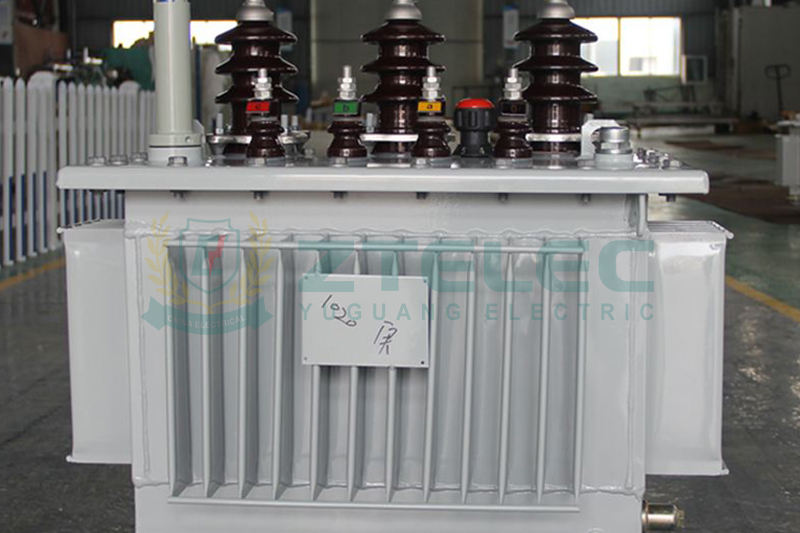
What Is a 3500 kVA 23 kV Oil-Immersed Transformer?
It is a three-phase power or distribution transformer rated at 3.5 MVA with a primary voltage of 23 kV. The core and windings are immersed in insulating oil inside a sealed tank. The oil serves two purposes: it insulates the live parts and carries heat away to the radiators.
The 23 kV level is common in medium-voltage networks in many regions, including parts of Asia, the Middle East, Latin America, and North America. The secondary side is usually 0.4 kV, 0.48 kV, 4.16 kV, 6.6 kV, or 11 kV, depending on the load.
Typical Technical Specifications
The table below shows representative values for a standard unit. Actual figures depend on the applicable standard, customer requirements, and manufacturer design.
| Parameter | Typical Value |
|---|---|
| Rated capacity | 3500 kVA |
| Phases and frequency | Three-phase, 50 Hz or 60 Hz |
| Primary voltage | 23 kV |
| Secondary voltage | 0.4 kV, 0.48 kV, 4.16 kV, 6.6 kV, or 11 kV |
| Tap range | Off-circuit, plus or minus 2 x 2.5 percent |
| Vector group | Dyn11 or Dyn1 (Yyn0 on request) |
| Impedance voltage | 6 percent to 7 percent at rated current |
| Cooling method | ONAN |
| Insulation liquid | Mineral oil, natural ester, or synthetic ester |
| Insulation level | AC 50 kV, lightning impulse 125 kV (higher levels available) |
| Temperature rise | Winding 65 K, top oil 60 K |
| Altitude | Up to 1000 m (derating or special design above) |
| Winding material | Copper or aluminum |
Voltage Ratio and Tapping
The most common ratio for industrial use is 23 kV to 0.4 kV or 0.48 kV, supplying motors, production lines, and building services. For plant distribution or step-up between medium-voltage levels, 23 kV to 4.16 kV, 6.6 kV, or 11 kV is also seen.
An off-circuit tap changer is installed on the high-voltage winding. It lets operators correct the output voltage in steps of 2.5 percent. The unit must be de-energized before the position is changed. For networks with large voltage swings, an on-load tap changer can be specified, although this raises cost and complexity.
Losses and Efficiency
Losses are a major part of the life cycle cost, so they deserve careful attention.
No-Load Loss
No-load loss occurs in the core whenever the transformer is energized. For a 3500 kVA unit with a high-grade silicon steel core, typical no-load loss falls in the range of 3 kW to 4.5 kW. Amorphous metal cores can reduce this by well over half, which is attractive for lightly loaded or continuously energized sites.
Load Loss
Load loss comes from current flowing through the windings and rises with the square of the load. At rated current and reference temperature, typical values range from about 26 kW to 34 kW for this size, depending on the efficiency class and conductor choice.
Efficiency
At typical operating loads between 50 and 75 percent, efficiency usually exceeds 99 percent. Many markets apply minimum efficiency rules, such as DOE in the United States, Ecodesign Tier 2 in the European Union, or national energy labels in Asia. Always confirm which rule applies to your project.
Impedance and Short-Circuit Performance
Impedance of 6 to 7 percent is typical at this rating. It limits the fault current on the low-voltage side and helps protective devices operate within their ratings. A higher impedance reduces fault current but increases voltage regulation and losses, so the value should be coordinated with the system design.
The transformer must withstand the mechanical and thermal stress of external short circuits. Windings are braced with insulated spacers and pressed assemblies, and the design is verified by calculation or by type test according to IEC 60076-5 or IEEE C57.12.00.
Insulation Level and Dielectric Tests
For the 24 kV equipment class, a common specification is a power-frequency withstand voltage of 50 kV and a lightning impulse withstand voltage of 125 kV. Higher levels may be required in regions with frequent lightning or for overhead line connections.
Routine dielectric tests include applied voltage and induced overvoltage tests. Partial discharge measurement may also be requested for critical projects. These checks confirm that the insulation system is sound before the transformer leaves the factory.
Construction Features
Core
The core is made from cold-rolled grain-oriented silicon steel laminations. Step-lap joints and precision cutting reduce magnetizing current, loss, and noise. The core is clamped firmly to resist vibration and transport stress.
Windings
High-voltage windings are usually layered or disc type, and low-voltage windings are often foil or helical. Copper offers lower losses and higher mechanical strength. Aluminum reduces material cost and weight, but needs a larger cross-section and careful joint design.
Tank and Radiators
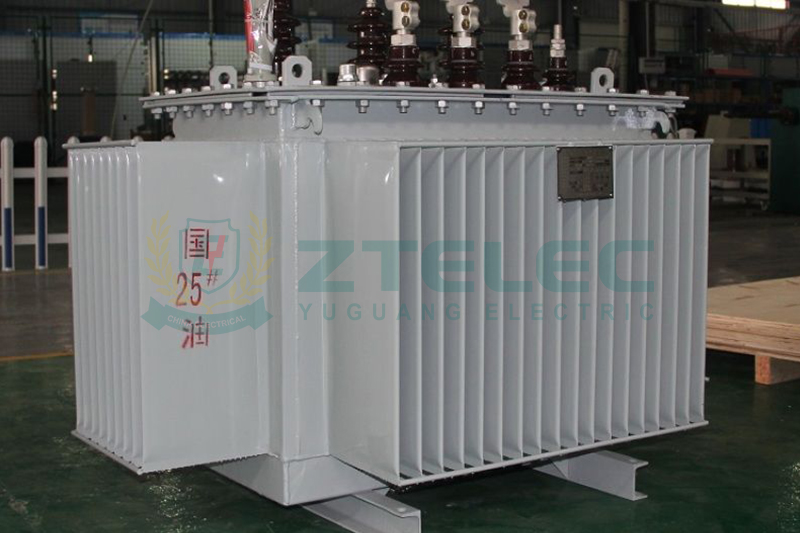
The tank is welded from steel plate, tested for leaks, and finished with a protective paint system. Corrugated tanks provide a hermetically sealed design with no conservator, while conventional tanks with radiators and a conservator allow oil expansion and are common for larger units.
Bushings
Porcelain or epoxy bushings are installed on the cover or the side. For cable connections, cable boxes or air-insulated terminal chambers can be added to protect against dust, rain, and accidental contact.
Standard Accessories and Protection
A 3500 kVA oil-immersed transformer is normally supplied with a set of monitoring and protection devices. These include an oil level gauge, an oil temperature indicator with alarm and trip contacts, a pressure relief device, a drain and sampling valve, a filling plug, and grounding terminals.
For conservator-type units, a Buchholz relay detects gas accumulation and sudden oil flow caused by internal faults, and a silica gel breather keeps moisture out of the conservator. Optional extras include winding temperature indicators, remote monitoring sensors, and surge arresters.
Typical Weight and Dimensions
Exact size depends on the design, loss level, and fluid used. As a rough guide, a 3500 kVA unit often weighs between 7 and 10 tonnes in total, with about 1.5 to 2.5 tonnes of oil. Overall dimensions are commonly in the range of 3 meters in length, 2 meters in width, and 2.5 meters in height.
These figures matter for foundation design, transport, lifting equipment, and room layout. Always request a certified outline drawing before civil works begin.
Sound Level and Environmental Considerations
Noise in oil-immersed transformers comes mainly from core magnetostriction and cooling equipment. Sound power levels for this size are generally in the 60 to 70 dB(A) range, and low-noise designs are available for sites near offices or homes.
Oil containment pits or bunds are recommended to capture leaks. Natural ester fluids offer a higher fire point and better biodegradability, which can be valuable in sensitive locations or where fire codes are strict.
Applications
This transformer class is widely used in factories, steel and cement plants, mining operations, water treatment works, ports, and large commercial complexes. It also serves as a step-down transformer in utility substations and as a step-up unit in solar and wind farms.
Its capacity is large enough to feed a group of motors or a whole building, yet small enough to transport and install without specialized heavy-haul equipment in most cases.
How to Select the Right Unit
Confirm the Load Profile
Calculate the maximum demand, starting currents of large motors, harmonic content, and expected growth. Aim for a loading that keeps the transformer efficient while leaving a sensible margin.
Define Voltage and Connection
Verify the primary and secondary voltages, frequency, vector group, tapping range, and grounding method with the utility or system designer. Mismatched vector groups are a frequent cause of paralleling problems.
Choose the Efficiency Class
Compare the capitalized cost of losses with the purchase price. A lower-loss design often pays back within a few years, particularly for transformers that stay energized around the clock.
Specify the Standards
State clearly whether IEC 60076, IEEE C57.12, ANSI, GB, or another standard applies. Include test requirements, accessories, paint color, and marking language in the inquiry.
Check the Manufacturer
Ask for type test reports, factory test procedures, quality certificates, and references from similar installations. A transparent supplier will share data and welcome a factory inspection.
Installation and Maintenance Tips
Install the transformer on a level concrete foundation with proper drainage, adequate ventilation, and clear access for inspection. Maintain safe distances from buildings and combustible materials, and follow local fire and environmental rules.
Routine maintenance includes checking oil level and temperature, inspecting bushings and gaskets, testing the oil for moisture and dissolved gases, and tightening connections. A well-maintained unit can serve for 25 to 35 years.
Frequently Asked Questions
Is a 3500 kVA transformer the same as a 3.5 MVA transformer?
Yes. One MVA equals 1000 kVA, so 3500 kVA and 3.5 MVA describe the same rating.
What is the full-load current at 23 kV?
On the 23 kV side, the rated current is about 88 A. On a 0.4 kV secondary, it is roughly 5051 A, which requires heavy busbar or multiple cables.
Should I choose copper or aluminum windings?
Copper gives lower losses and stronger short-circuit performance, while aluminum offers lower material cost. The best choice depends on budget, efficiency targets, and the manufacturer's design experience.
Can this transformer use natural ester oil?
Yes. Many manufacturers offer natural or synthetic ester options with the same ratings. Design adjustments may be made for viscosity and cooling, so mention it clearly in your specification.
The 3500 kVA 23 kV oil-immersed transformer is a proven, cost-effective solution for medium-voltage power distribution. Understanding its key specifications, losses, impedance, insulation level, and accessories helps you write a precise inquiry and compare offers on equal terms.
Values in this article are typical references and may differ by standard and manufacturer. To receive an accurate datasheet and quotation, send your voltage levels, vector group, loss requirements, applicable standards, and site conditions to a qualified transformer supplier.
3500 kVA oil immersed transformer specifications
3500 kVA transformer
23 kV oil-immersed transformer
underground distribution transformer
pad mount transformer applications
- more+releated article
- 2026-10-143500 kVA 23 kV Oil-Immersed Transformer: Speci
- 2026-10-13Pad-Mounted Transformer: Applications in Under
- 2026-10-12Meet ZTELEC at Powerexpo Almaty 2026
- 2026-10-10S11 vs. S13 vs. S20 Oil Immersed Transformers:
- 2026-10-09KYN28-12 Switchgear: Technical Specifications
- 2026-10-08Transformer Price List 2026: Cost per kVA in C
- 2026-09-30Chinese Transformer Factory Tour: Behind the S
- 2026-09-302026 China National Day Holiday Notice from zt
- 2026-09-29Oil Immersed vs. Dry Type Transformer: Which O
- 2026-09-29ZTELEC Group Debuts at Data Centre World Singa
- ELECTRICAL INSULATION BOARD MATERIALS
- ELECTRICAL INSULATION MATERIALS
- POWER TRANSFORMER
- ENAMELED WIRE
- SWITCHGEAR


FR-4 Copper-Free Laminate | High-Performance Insulation Material

FR-4 Copper Clad Laminate Manufacturer & Supplier
3500 kVA oil immersed transformer specifications
3500 kVA transformer
23 kV oil-immersed transformer
pad mount transformer applications
underground distribution transformer
pad-mounted transformer
Powerexpo Almaty 2026
transformer supplier Kazakhstan
ZTELEC Yuguang Electric
Almaty power exhibition
S11 vs S13 vs S20
S11 transformer
oil immersed transformer comparison
S20 transformer
S13 transformer
metal-clad withdrawable switchgear
KYN28-12 switchgear
KYN28-12 specifications
12kV switchgear
KYN28A-12
transformer cost per kVA
China transformer price
oil immersed transformer price
transformer price list 2026
transformer factory China