
Power Transformers VS Distribution Transformers
As a very important part of the transmission and distribution network, the transformer is the hub of the power grid system.
What is the difference between a power transformer and a distribution transformer? There are mainly the following aspects:
1. The type of network used
2. Installation location
3. Use of low or high pressure
4. Various ratings of power and distribution transformers available in the market
5. Other
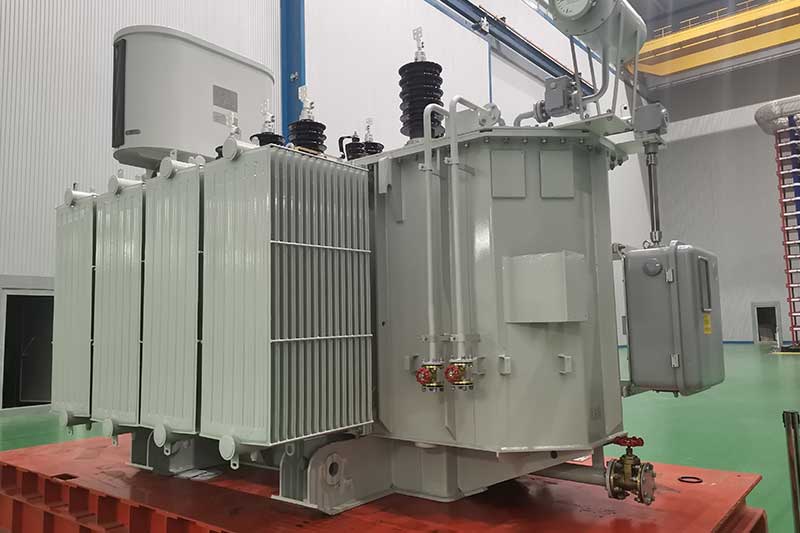
Let's talk about the differences in specific details
1. Function
A power transformer is installed in each power station for the generation and transmission of electricity. It acts as a step-up or step-down transformer, increasing or decreasing the voltage level as required. It can also be used to connect two power stations.
Distribution transformers reduce voltage and current to safe levels, which are used by end-user consumers such as homes and factories.
2. Distribution network
Power transformers are used in higher voltage transmission networks, while distribution transformers are used in lower voltage distribution networks.
3. Transformer Voltage Rating
Power transformers are marketed in various ratings such as: 400 kV, 200 kV, 110 kV, 66 kV, 33 kV . Electric power distribution are marketed in various ratings such as: in 11 kV, 6.6 kV, 3.3 kV, 440 V, 230 V.
4. Load change
Power transformers always operate at rated full load, so load fluctuations are very small. But distribution transformers operate at less than full load, so load variations are very large.
5. Efficiency
Efficiency = output power/input power. Power transformers have a maximum efficiency of 100%, while distribution transformers vary between 50-70%.
6. Application place
Power transformers are mainly used in power stations and power transmission substations. Distribution transformers are mainly installed in distribution stations to distribute electricity to industries and households
7. Size
Generally power transformers are larger in size compared to distribution transformers.
8. Loss
As long as the power transformer is running, iron loss and copper loss will always exist. In distribution transformers, only the iron loss will always exist, and the copper loss depends on the load cycle.
9.Type
Types of Power Transformers. Power transformers may be classified into several different types based on the device's construction and application.
Common types include auto transformers, isolation transformers, flyback transformers, distribution transformers, and substation transformers.
Generally, you will see two different types of distribution transformer:
Pole mounted transformers (if transmission lines run above ground) and pad mounted transformers (transmission lines underground).
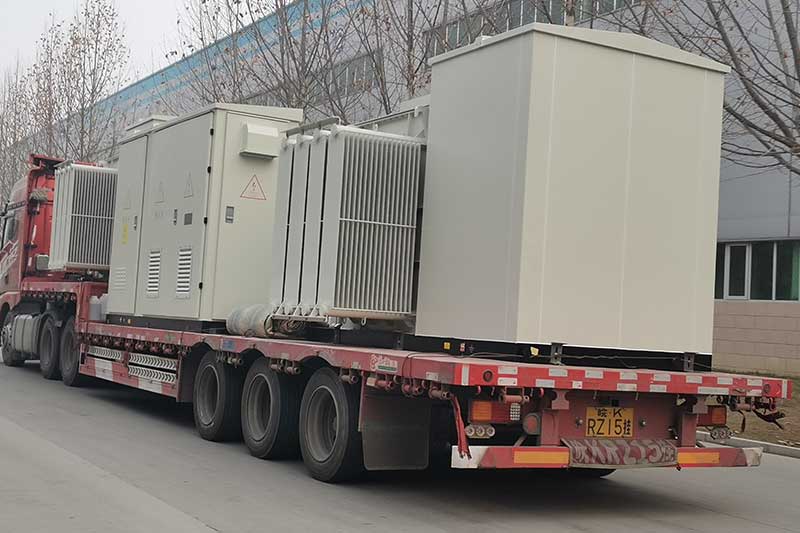
ZTelec Group transformer products can achieve high voltage 38.5kv, low voltage 0.4kv, capacity 50-12.5MKA.
oil immersed transformer lifespan
oil immersed transformer maintenance
transformer lifecycle
transformer insulation aging
dry type transformer temperature monitoring
- more+releated article
- 2026-05-11How Long Does an Oil-Immersed Transformer Last
- 2026-05-08Modern Power System Dry-Type Transformer Insta
- 2026-05-07Oil-Immersed Transformer Overheating: Causes,
- 2026-05-07Dry-Type Transformers for Data Centers: 2026 R
- 2026-04-30Air-Core Reactor vs Iron-Core Reactor: How to
- 2026-04-29Compact Enclosed Transformer for Smart Grid: T
- 2026-04-2812-Pulse and 24-Pulse Phase-Shifting Transform
- 2026-04-27Oil-Immersed Transformers for Industrial Plant
- 2026-04-25Why Dry-Type Transformers Are Preferred for Ho
- 2026-04-24Enclosed Transformer Outdoor Solutions: IP Pro
- ELECTRICAL INSULATION BOARD MATERIALS
- ELECTRICAL INSULATION MATERIALS
- POWER TRANSFORMER
- ENAMELED WIRE
- SWITCHGEAR



transformer insulation aging
transformer lifecycle
oil immersed transformer lifespan
oil immersed transformer maintenance
dry type transformer installation
dry type transformer temperature monitoring
dry type transformer maintenance
dry type transformer sizing
transformer cooling system failure
transformer overheating causes
oil immersed transformer overheating
transformer oil temperature
harmonic mitigation
dry type transformer
K factor transformer
data center transformer
Cast resin transformer
insulation oil degradation
DGA analysis transformer
transformer fault analysis
oil immersed transformer failure
smart grid transformer
compact enclosed transformer
integrated distribution transformer
compact transformer substation