
Applications of Heat-Resistant Crepe Paper in Transformers
In power equipment manufacturing, the performance of insulation materials directly affects transformer operational safety, service life, and long-term reliability. Heat-resistant crepe paper features excellent electrical insulation properties, high-temperature resistance, and outstanding mechanical flexibility. It has been widely used in oil-immersed transformers and certain special transformers, serving as a key component of the winding insulation system.
Overview of Heat-Resistant Crepe Paper
Heat-resistant crepe paper is a cellulose-based insulation material processed through special treatment. It is manufactured using a creping process that forms a corrugated surface structure. This insulation material is typically made from high heat-resistance insulating pulp and further enhanced through chemical treatments to improve thermal stability and mechanical strength. Its thermal class generally ranges from 120°C (Class E) to above 220°C (Class C), which is significantly higher than that of conventional insulating paper.
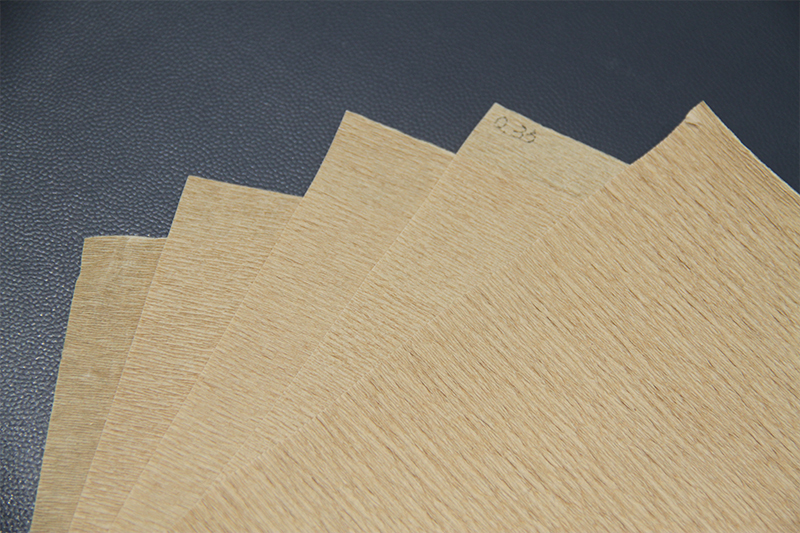
Core Applications of Heat-Resistant Crepe Paper in Transformers
Interlayer Insulation of Windings:
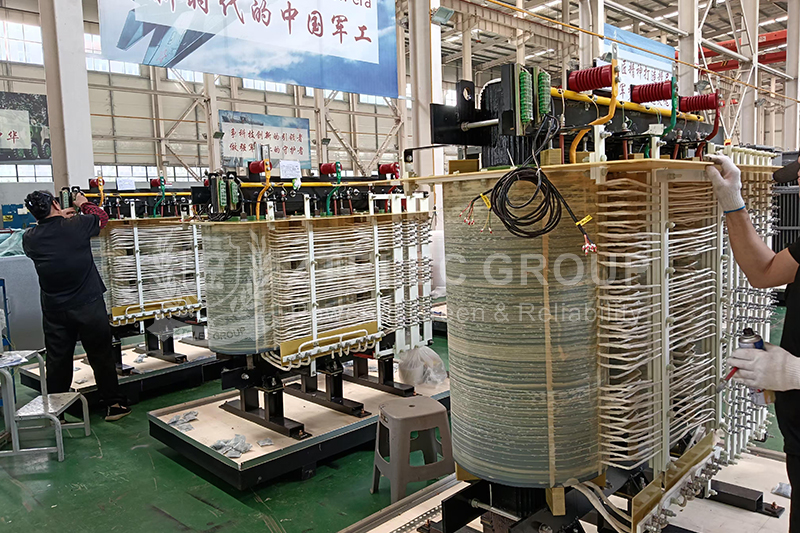
Heat-resistant crepe paper is widely used for interlayer insulation in both high-voltage and low-voltage windings. Its creped surface structure enhances oil impregnation, improves heat dissipation efficiency, and reduces the occurrence of local hot spots.
Turn-to-Turn and Section-to-Section Insulation:
Between winding turns and sections, crepe paper provides stable electrical isolation. At the same time, it offers effective cushioning, reducing damage to the winding structure caused by short-circuit forces.
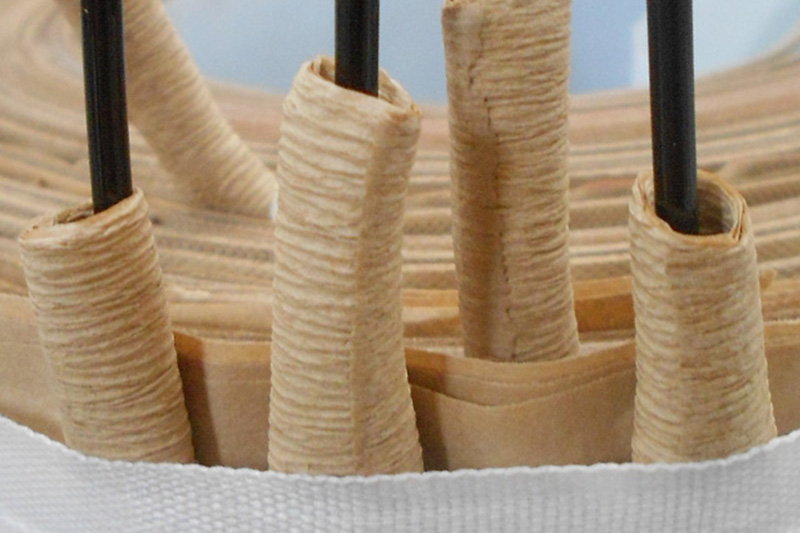
Lead and Conductor Wrapping:
Heat-resistant crepe paper is commonly used for wrapping transformer leads and copper conductors, ensuring reliable insulation protection even under conditions of vibration and temperature rise.
Structural Filling and Support Insulation:
Within the internal transformer structure, crepe paper can be used for gap filling and auxiliary support, enhancing the integrity and stability of the overall insulation system.
Five Key Technical Advantages of Heat-Resistant Crepe Paper
1. Thermal Resistance
The long-term operating temperature can reach 120-220°C, and it is suitable for temperature rise during transformer operation.
Crepe paper has excellent thermal aging performance and helps extend transformer service life.
Effectively reduces insulation failures caused by overheating.
2. Electrical Properties
High dielectric strength (typically > 12 kV/mm).
Low dielectric loss factor.
Heat-resistant crepe paper effectively suppresses partial discharge.
3. Mechanical Performance
The creped structure provides good flexibility and extensibility.
Crepe paper has high tensile strength, and is capable of withstanding mechanical stress during winding and operation.
Good tear resistance and abrasion resistance.
4. Oil Absorption and Impregnation Performance
The creped structure increases surface area, improving insulating oil impregnation efficiency.
Ensures full impregnation of the insulation system, eliminating bubbles and voids.
Enhances the overall dielectric performance of the insulation system.
5. Environmental Adaptability
Good moisture resistance and chemical resistance.
High compatibility with transformer oil.
An environmentally friendly material that complies with international standards such as RoHS.

Current Application Areas of Heat-Resistant Crepe Paper
Dry-Type Transformers: Suitable for locations with high fire safety requirements, such as high-rise buildings and metro systems.
Oil-Immersed Transformers: Used in distribution transformers and power transformers.
Special Transformers: Applications in high-temperature environments, such as electric furnace transformers and rectifier transformers.
Renewable Energy Sector: Transformers used in wind power and solar power generation systems.
Selection Recommendations for Different Application Scenarios
Distribution Transformers:
B-class or higher heat-resistant crepe paper is recommended to achieve a balance between cost and performance.
Power Transformers:
F-class heat-resistant crepe paper is preferred to meet the requirements of long-term, high-load operation.
Renewable Energy and Special Transformers:
High heat-resistance, high-purity insulation paper is recommended to enhance overall system reliability.
When selecting heat-resistant crepe paper, key factors such as voltage level, operating temperature, insulating oil type, and design service life should be comprehensively considered.
Thanks to its unique creped structure and excellent thermal resistance, heat-resistant crepe paper provides transformers with a reliable and efficient insulation solution. As power equipment continues to develop toward higher efficiency, compact design, and environmental sustainability, ongoing technological innovation in heat-resistant crepe paper will continue to drive progress in the transformer industry. Proper selection and correct application of heat-resistant crepe paper can significantly improve transformer operational reliability, extend equipment service life, and reduce total life-cycle costs, ensuring stable and secure operation of power systems.
oil immersed transformer lifespan
oil immersed transformer maintenance
transformer lifecycle
transformer insulation aging
dry type transformer temperature monitoring
- more+releated article
- 2026-05-11How Long Does an Oil-Immersed Transformer Last
- 2026-05-08Modern Power System Dry-Type Transformer Insta
- 2026-05-07Oil-Immersed Transformer Overheating: Causes,
- 2026-05-07Dry-Type Transformers for Data Centers: 2026 R
- 2026-04-30Air-Core Reactor vs Iron-Core Reactor: How to
- 2026-04-29Compact Enclosed Transformer for Smart Grid: T
- 2026-04-2812-Pulse and 24-Pulse Phase-Shifting Transform
- 2026-04-27Oil-Immersed Transformers for Industrial Plant
- 2026-04-25Why Dry-Type Transformers Are Preferred for Ho
- 2026-04-24Enclosed Transformer Outdoor Solutions: IP Pro
- ELECTRICAL INSULATION BOARD MATERIALS
- ELECTRICAL INSULATION MATERIALS
- POWER TRANSFORMER
- ENAMELED WIRE
- SWITCHGEAR


transformer insulation aging
transformer lifecycle
oil immersed transformer lifespan
oil immersed transformer maintenance
dry type transformer installation
dry type transformer temperature monitoring
dry type transformer maintenance
dry type transformer sizing
transformer cooling system failure
transformer overheating causes
oil immersed transformer overheating
transformer oil temperature
harmonic mitigation
dry type transformer
K factor transformer
data center transformer
Cast resin transformer
insulation oil degradation
DGA analysis transformer
transformer fault analysis
oil immersed transformer failure
smart grid transformer
compact enclosed transformer
integrated distribution transformer
compact transformer substation