
How to Choose Power Transformers for High-Rise Buildings in 2025
With the continuous advancement of urbanization and increasingly stringent building energy efficiency standards, the reliability and energy performance of electrical systems in high-rise buildings have become key concerns for developers, designers, and facility managers. As the core equipment of the building power supply system, transformer selection directly influences operational safety, long-term energy costs, and maintenance efficiency.
Based on updated technical standards and market trends in 2025, this article provides a systematic analysis of how to select suitable power transformers for high-rise buildings, focusing on performance, safety, energy efficiency, and lifecycle value.
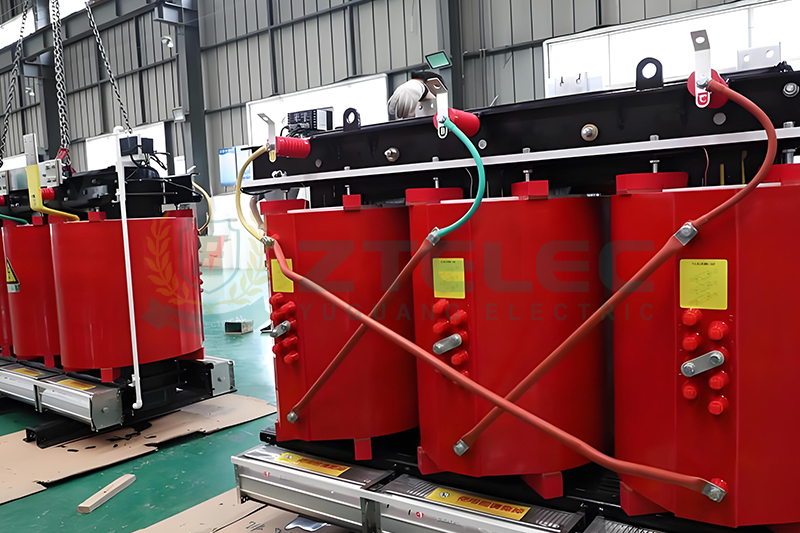
Common Types of Power Transformers for High-Rise Buildings
Dry-Type Transformers
Dry-type transformers are widely used in high-rise buildings due to their high safety level and strong environmental adaptability. Their oil-free design significantly reduces fire risk, making them suitable for installation in basements, distribution rooms, and intermediate floors within buildings.
These transformers feature simple maintenance requirements, stable operation, and excellent environmental performance. By 2025, epoxy resin cast dry-type transformers have become the mainstream choice for most high-rise building applications.
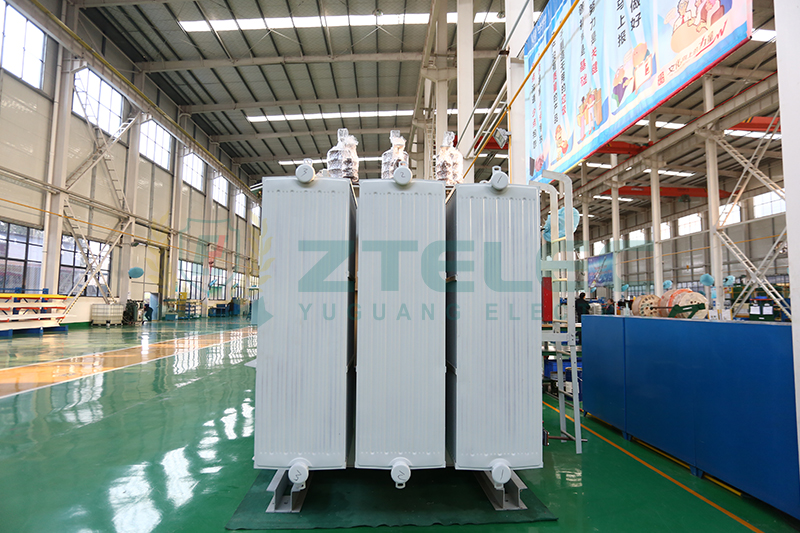
Oil-Immersed Transformers
Oil-immersed transformers are suitable for high-rise projects equipped with independent substations or installations located away from densely populated areas. Their superior heat dissipation capability allows them to support higher capacity requirements.
With high operating efficiency and low energy losses, oil-immersed transformers remain a practical option when appropriate fire protection and oil leakage prevention measures are in place.
Key Selection Parameters for High-Rise Building Transformers
Rated Capacity Selection
Transformer capacity should be determined based on accurate load calculations and reasonable future expansion planning. Commercial complexes typically require a reserved capacity margin of 15% to 25%, while office buildings and hotels benefit from multiple distributed transformer configurations.
For buildings with concentrated data centers or intelligent systems, peak load characteristics and harmonic impacts must be carefully evaluated. Oversizing transformers should be avoided to prevent unnecessary no-load losses and reduced efficiency.
Voltage Level and Wiring Configuration
In high-rise building power systems, the high-voltage side is commonly configured at 10 kV or 20 kV, while the low-voltage side is generally 0.4 kV. The Dyn11 wiring method is widely adopted, as it helps suppress harmonics and improves overall system stability.
Energy Efficiency Performance
By 2025, high-rise buildings face stricter requirements for energy conservation and carbon reduction. Priority should be given to high-efficiency energy-saving transformers with optimized no-load and load loss performance.
Transformers should comply with relevant national standards and IEC energy efficiency regulations. Over the long term, high-efficiency transformers significantly reduce electricity costs and contribute to lower carbon emissions.
Fire Protection and Operational Safety
Fire safety is a critical consideration in high-rise buildings. Dry-type transformers should meet or exceed F1 fire resistance standards, while insulation materials must be low-smoke, halogen-free, and flame-retardant.
Temperature monitoring systems, cooling fan protection, and fault alarm devices should be integrated to ensure safe and stable operation under varying load conditions.
Noise Control and Installation Constraints
Electrical rooms in high-rise buildings are often located close to offices or residential areas. Selecting transformers with low-noise structural designs is essential to maintaining indoor comfort.
Vibration-damping foundations and proper installation practices should be applied, and operating noise levels must comply with relevant building acoustic standards.
Procurement and Market Considerations in 2025
Supplier Evaluation
When selecting transformer suppliers, priority should be given to manufacturers with proven experience in high-rise building projects. Local technical service capability, response speed, and complete certification systems covering energy efficiency, safety, and environmental compliance are essential evaluation criteria.
Key Contractual Technical Clauses
Procurement contracts should clearly define guaranteed energy efficiency values and corresponding testing methods. Noise limits must be explicitly specified, especially for residential buildings, and acceptance standards for intelligent monitoring functions should be agreed upon in advance.
Cost Optimization Strategies
To reduce initial investment pressure, project owners may consider transformer leasing models or energy performance contracting schemes. Utilizing local energy-saving subsidies and incentive policies can further lower the total lifecycle cost of transformer deployment.
By 2025, transformer selection for high-rise buildings has evolved from simple equipment procurement to comprehensive system solution planning. Successful projects require early-stage collaboration among developers, designers, and equipment suppliers to ensure that transformer performance aligns with actual building demands.
A well-chosen transformer not only ensures reliable power supply but also delivers long-term benefits in energy efficiency, operational stability, and maintenance cost control throughout the building’s entire lifecycle.
For customized transformer selection solutions or detailed technical support, please contact us. We provide end-to-end services from product selection to installation guidance and can develop tailored solutions based on specific project requirements.
oil immersed transformer lifespan
oil immersed transformer maintenance
transformer lifecycle
transformer insulation aging
dry type transformer temperature monitoring
- more+releated article
- 2026-05-11How Long Does an Oil-Immersed Transformer Last
- 2026-05-08Modern Power System Dry-Type Transformer Insta
- 2026-05-07Oil-Immersed Transformer Overheating: Causes,
- 2026-05-07Dry-Type Transformers for Data Centers: 2026 R
- 2026-04-30Air-Core Reactor vs Iron-Core Reactor: How to
- 2026-04-29Compact Enclosed Transformer for Smart Grid: T
- 2026-04-2812-Pulse and 24-Pulse Phase-Shifting Transform
- 2026-04-27Oil-Immersed Transformers for Industrial Plant
- 2026-04-25Why Dry-Type Transformers Are Preferred for Ho
- 2026-04-24Enclosed Transformer Outdoor Solutions: IP Pro
- ELECTRICAL INSULATION BOARD MATERIALS
- ELECTRICAL INSULATION MATERIALS
- POWER TRANSFORMER
- ENAMELED WIRE
- SWITCHGEAR


transformer insulation aging
transformer lifecycle
oil immersed transformer lifespan
oil immersed transformer maintenance
dry type transformer installation
dry type transformer temperature monitoring
dry type transformer maintenance
dry type transformer sizing
transformer cooling system failure
transformer overheating causes
oil immersed transformer overheating
transformer oil temperature
harmonic mitigation
dry type transformer
K factor transformer
data center transformer
Cast resin transformer
insulation oil degradation
DGA analysis transformer
transformer fault analysis
oil immersed transformer failure
smart grid transformer
compact enclosed transformer
integrated distribution transformer
compact transformer substation