
Do you know how to distinguish between good and bad phenolic cloth tubes?
Phenolic cloth tube is a commonly used key insulating structural component in transformers, switchgear, motors, power equipment, and industrial electrical systems. Its main functions are insulation protection, mechanical support, and heat insulation. Currently, the quality of phenolic cloth tube on the market varies greatly. Improper selection or procurement can easily lead to insulation failure, cracking, deformation, and even equipment malfunction.
This article explains the methods for identifying the quality of phenolic cloth tube from the dimensions of appearance, raw materials, performance indicators, and testing standards.
1. Appearance Inspection
Surface Smoothness
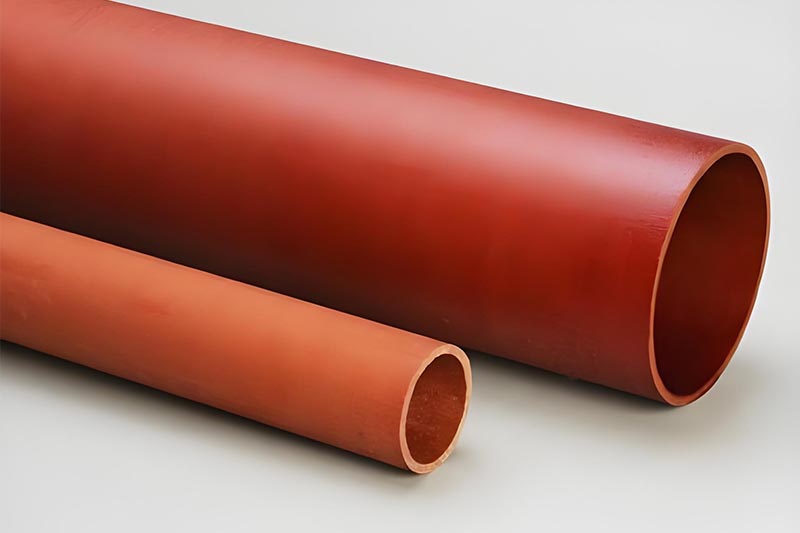
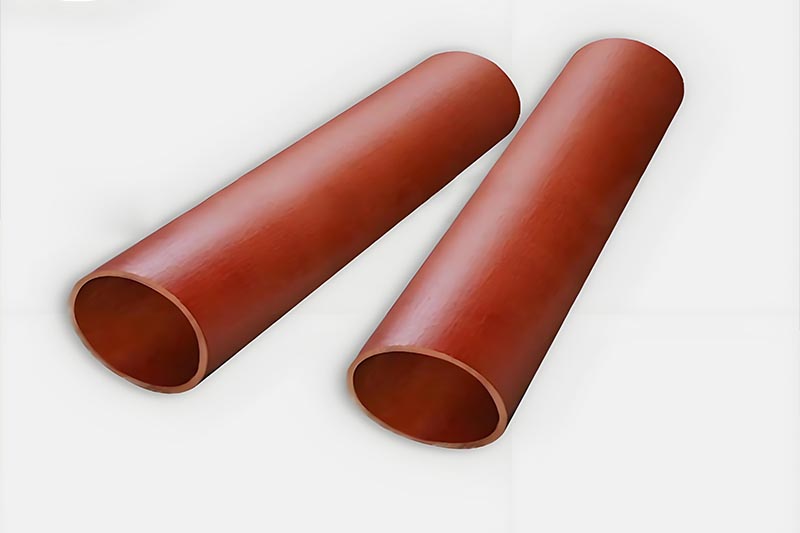
High-quality phenolic cloth tube should have a smooth and flat surface, without obvious bumps, burrs, or cracks.
Inferior products have a rough surface and are prone to spots caused by uneven resin distribution.
Color Uniformity
Good phenolic cloth tube is yellowish-brown or dark brown in color, with a uniform overall color distribution.
Avoid choosing tube with mottled colors, or areas that are too light or too dark.
Edges and Cut Surfaces
The cut end face should be neat, without delamination or chipping.
Observe whether the fabric texture on the cross-section is clear and tight.
2. Raw Material Identification
Cotton Fabric Quality
High-quality phenolic cloth tubes use high-density industrial cotton fabric, with tightly packed fibers and high tensile strength.
If inferior cotton fabric is used in phenolic cloth tubes, the mechanical strength of the tube will decrease, making it prone to cracking.
Phenolic Resin System
High-quality products use modified thermosetting phenolic resin. This type of resin has excellent heat resistance, complete curing, and strong adhesion.
If the resin quality is poor or the ratio is unreasonable, it will directly reduce the heat resistance and dielectric properties of the pipe.
3.Physical performance testing
Hardness test
Gently scratch the surface with your fingernail or a hard object, and no obvious scratches should be produced.
The hardness should not be too high. Excessively brittle and hard usually indicates an excessive resin content or over-curing.
Weight and density
For phenolic cloth tubes of the same size, the product with uniform density and moderate values is of better quality.
If the weight is too light, it may be insufficient resin content, while if the weight is too heavy, there might be a problem of excessive fillers.
Knock test
Lightly tap the pipe with a hard object. High-quality pipes will produce a clear and solid sound.
If the sound is dull, it is likely that there are cavities or layering defects inside the pipe.
4.Key performance indicators
Mechanical properties
It mainly includes compressive strength, bending strength, and impact resistance.
High-quality products are less likely to crack during processing and installation, ensuring long-term stable operation.
Electrical performance
It mainly includes dielectric strength, volume resistivity, and dielectric loss.
This indicator is the core performance of phenolic cloth tubes as an insulating material, directly related to the operation safety of power equipment.
Heat resistance and aging resistance
Meet the requirements for long-term heat resistance
Do not soften or carbonize in high-temperature environments
Have stable anti-heat aging performance
5. Testing Standards and Certification Documents
A reliable phenolic cloth tube supplier should provide the following documents:
♦ IEC, GB, and ASTM relevant standards documents
♦ Test reports for key indicators such as dielectric strength and mechanical properties
♦ Test data issued by a third-party testing organization
♦ Products without test reports or with vaguely labeled parameters pose a higher procurement risk and should be selected with caution.
Purchase Considerations
Clearly define requirements: Select the appropriate grade of phenolic cloth tube based on the temperature, humidity, and electrical parameters of the application environment.
Sample Testing: Before bulk purchases, always request samples for comprehensive performance testing.
Price Verification: Products priced significantly below the market average often involve substandard materials or workmanship.
Supplier Evaluation: Prioritize suppliers with strong technical capabilities and a good market reputation. If necessary, request a visit to the production site.
Document Verification: Require suppliers to provide complete technical documents such as material certificates and test reports.
Common Characteristics of Low-Quality Phenolic Cloth Tubes
Obvious surface cracks, bubbles, or depressions.
Uneven color distribution, with dark resin-rich areas or light, overly dry zones.
Products of the same specifications have different weights.
Delamination and fragmentation are prone to occur during the processing.
The product exhibits a pungent odor, indicating incomplete resin curing.
Dimensional tolerance is poor, and diameter or thickness deviations exceed the standard range.
Inability to provide any test reports or product certification documents.
Selecting high-quality phenolic cloth tubes can effectively enhance the safety and reliability of power equipment while reducing long-term maintenance and replacement costs.
If you need to purchase high-quality phenolic cloth tubes, please feel free to contact us at any time.
oil immersed transformer lifespan
oil immersed transformer maintenance
transformer lifecycle
transformer insulation aging
dry type transformer temperature monitoring
- more+releated article
- 2026-05-11How Long Does an Oil-Immersed Transformer Last
- 2026-05-08Modern Power System Dry-Type Transformer Insta
- 2026-05-07Oil-Immersed Transformer Overheating: Causes,
- 2026-05-07Dry-Type Transformers for Data Centers: 2026 R
- 2026-04-30Air-Core Reactor vs Iron-Core Reactor: How to
- 2026-04-29Compact Enclosed Transformer for Smart Grid: T
- 2026-04-2812-Pulse and 24-Pulse Phase-Shifting Transform
- 2026-04-27Oil-Immersed Transformers for Industrial Plant
- 2026-04-25Why Dry-Type Transformers Are Preferred for Ho
- 2026-04-24Enclosed Transformer Outdoor Solutions: IP Pro
- ELECTRICAL INSULATION BOARD MATERIALS
- ELECTRICAL INSULATION MATERIALS
- POWER TRANSFORMER
- ENAMELED WIRE
- SWITCHGEAR

transformer insulation aging
transformer lifecycle
oil immersed transformer lifespan
oil immersed transformer maintenance
dry type transformer installation
dry type transformer temperature monitoring
dry type transformer maintenance
dry type transformer sizing
transformer cooling system failure
transformer overheating causes
oil immersed transformer overheating
transformer oil temperature
harmonic mitigation
dry type transformer
K factor transformer
data center transformer
Cast resin transformer
insulation oil degradation
DGA analysis transformer
transformer fault analysis
oil immersed transformer failure
smart grid transformer
compact enclosed transformer
integrated distribution transformer
compact transformer substation