
Customized G11 Insulating Machined Parts: Process Analysis
In the fields of transformers, motors, new energy, and high-temperature electrical equipment, G11 epoxy fiberglass machining parts are often designed as non-standard customized structural components due to their high-temperature insulation performance and mechanical strength. Compared to standard sheet metal, the performance stability of customized G11 machining parts is mainly determined by the machining process.
This article will systematically elaborate on the main machining process flow, key technical points, and quality control elements of customized G11 machining parts, starting from the material characteristics.
The Influence of G11 Material Characteristics on Machining Process
G11 is a thermosetting laminate with high fiberglass content. Its structural characteristics bring the following machining difficulties:
High material hardness and strong wear resistance
The fiberglass has directionality
It is prone to burrs and delamination during cutting
High requirements for cutting tools and process parameters
Therefore, G11 machining cannot directly use the machining methods for metals or ordinary plastics.
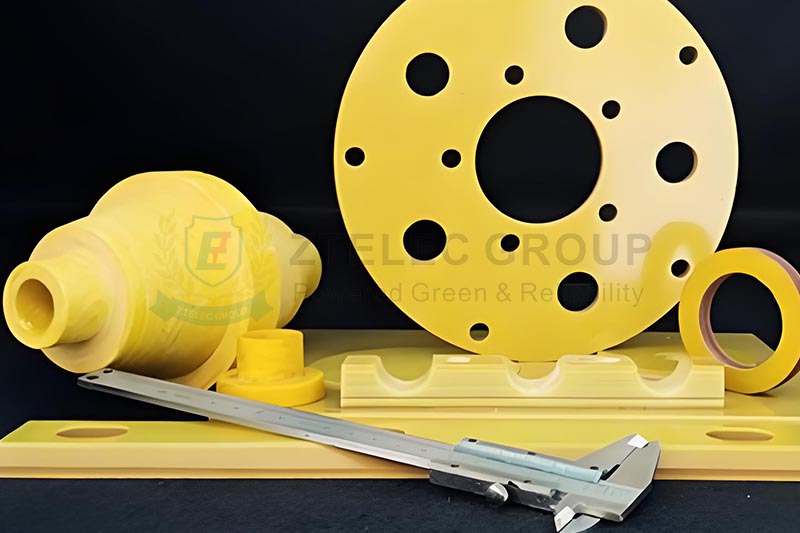
Typical Process Flow for Customized G11 Insulating Machined Parts
1. Raw Material Selection and Pre-treatment
Before machining, the following requirements must be confirmed:
G11 grade and temperature rating (Class F/H)
Sheet thickness, tolerance range, and lamination quality
Existence of warping, delamination, or surface defects in the sheet material
Conduct constant temperature and humidity pre-treatment if necessary to reduce deformation during subsequent machining.
2. Precision Cutting Process
Cutting, as the first process, affects all subsequent machining stages:
CNC Milling: Using carbide tools, high-precision cutting of complex shapes is achieved through a CNC system.
Laser Cutting: Suitable for thin sheets ≤3mm thick. The cut is smooth and burr-free, but the heat-affected zone must be controlled.
Waterjet Cutting: No heat-affected zone, suitable for sheets of various thicknesses, but the cutting speed is slower.
3. CNC Precision Machining
CNC machining is a key step in achieving complex structures and high-precision dimensions:
Use polycrystalline diamond (PCD) or carbide tools.
Use high speed and small feed rate parameters to prevent overheating during machining.
Use compressed air for cooling to prevent the resin from softening at high temperatures.
4. Drilling and Tapping Process
Drilling: Use stepped drilling, first pre-drilling with a small diameter drill bit, then gradually enlarging the hole to the target size.
Hole Wall Quality Control: Adjust feed rate and spindle speed to reduce burrs at the hole opening and delamination on the hole wall.
Thread Machining: Use shaped taps to prevent glass fiber shedding from affecting thread strength.
5. Surface Treatment Process
Depending on the actual application requirements, the following treatment methods can be selected:
Mechanical Polishing: Improves surface finish and reduces dust adhesion.
Chamfering: Prevents edge breakage and improves safety.
Surface Coating: Apply a special coating to enhance arc resistance.
6. Quality Inspection
Dimensional Inspection: Use calipers, micrometers, height gauges, projectors, or coordinate measuring machines (CMMs) to check critical dimensions and tolerances.
Visual Inspection: Inspect the surface under sufficient light for defects such as cracks, delamination, missing adhesive, and obvious scratches.
Electrical Performance Testing: Mainly includes withstand voltage testing and insulation resistance testing.
Sampling performance testing (applicable to first article or batch verification): including high temperature aging test, mechanical strength test, etc.
7. Packaging and Shipment
Use anti-static packaging materials.
A quality inspection report is included to ensure product traceability.
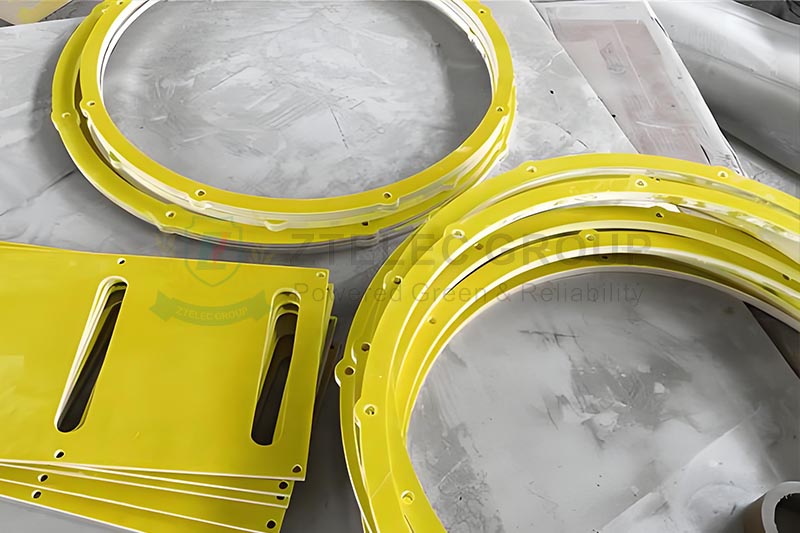
Quality Control Points for Customized G11 Machining
1. Anti-Delamination and Anti-Chipping
Select appropriate tool angles.
Machine along the fiber direction.
Use multiple shallow cuts instead of a single deep cut to reduce damage.
2. Dimensional Stability Control
Control the heat generated during machining.
Avoid localized overheating of the machined part.
Allow natural cooling after machining to reduce deformation.
3. Electrical Performance Consistency
The following situations are prohibited during machining:
Scorching or carbonization of the machined part.
Damage to the laminated structure of the material.
Both of these situations will affect the dielectric strength and insulation life of the machined part.
The quality of customized G11 machined parts depends on both material properties and the overall level of the machining process. By developing a reasonable process route, setting appropriate machining parameters, and implementing strict quality control, G11 material can fully realize its insulation and structural advantages in high-temperature, high-voltage applications.
oil immersed transformer lifespan
oil immersed transformer maintenance
transformer lifecycle
transformer insulation aging
dry type transformer temperature monitoring
- more+releated article
- 2026-05-11How Long Does an Oil-Immersed Transformer Last
- 2026-05-08Modern Power System Dry-Type Transformer Insta
- 2026-05-07Oil-Immersed Transformer Overheating: Causes,
- 2026-05-07Dry-Type Transformers for Data Centers: 2026 R
- 2026-04-30Air-Core Reactor vs Iron-Core Reactor: How to
- 2026-04-29Compact Enclosed Transformer for Smart Grid: T
- 2026-04-2812-Pulse and 24-Pulse Phase-Shifting Transform
- 2026-04-27Oil-Immersed Transformers for Industrial Plant
- 2026-04-25Why Dry-Type Transformers Are Preferred for Ho
- 2026-04-24Enclosed Transformer Outdoor Solutions: IP Pro
- ELECTRICAL INSULATION BOARD MATERIALS
- ELECTRICAL INSULATION MATERIALS
- POWER TRANSFORMER
- ENAMELED WIRE
- SWITCHGEAR


transformer insulation aging
transformer lifecycle
oil immersed transformer lifespan
oil immersed transformer maintenance
dry type transformer installation
dry type transformer temperature monitoring
dry type transformer maintenance
dry type transformer sizing
transformer cooling system failure
transformer overheating causes
oil immersed transformer overheating
transformer oil temperature
harmonic mitigation
dry type transformer
K factor transformer
data center transformer
Cast resin transformer
insulation oil degradation
DGA analysis transformer
transformer fault analysis
oil immersed transformer failure
smart grid transformer
compact enclosed transformer
integrated distribution transformer
compact transformer substation