
Procurement Guide for 1250kVA 35kV Level 1 Oil-Immersed Transformer: Five Key Parameters
In industrial power distribution systems, power grid construction, and renewable energy projects, the 1250kVA 35kV oil-immersed transformer is a widely used piece of electrical equipment. Its primary function is to convert 35kV medium voltage into 0.4kV low voltage, providing stable power for factories, commercial facilities, and infrastructure systems. As a critical component in the power supply chain, selecting the right transformer directly impacts the safety, reliability, and efficiency of the entire electrical network.
With global regulations placing increasing emphasis on energy efficiency—such as IE3 / IE4 efficiency levels and strict international transformer standards—along with fluctuations in raw material prices, procurement decisions have become more complex. Understanding the key technical specifications before purchasing can help engineers and project managers choose the most suitable equipment. This guide explains five important parameters to consider when procuring a 1250kVA 35kV Level 1 energy-efficient oil-filled transformer.
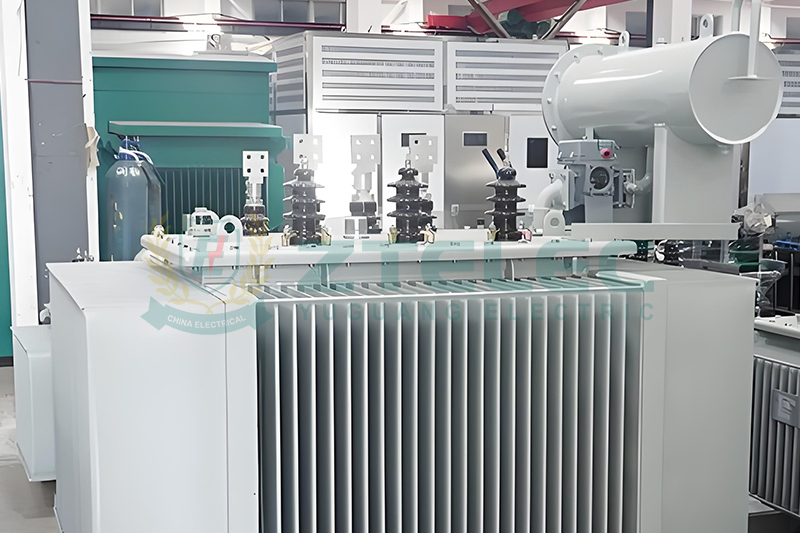
Overview of 1250kVA 35kV Level 1 Oil-Immersed Transformer
A 1250kVA 35kV oil-immersed transformer uses mineral insulating oil or environmentally friendly ester oil as both the insulation and cooling medium. Oil circulation inside the transformer effectively dissipates heat generated during operation, ensuring long-term stability and reliability.
In terms of capacity, 1250kVA belongs to the medium-capacity distribution transformer category. It is widely used in medium-sized factories, commercial complexes, mining facilities, infrastructure projects, and distributed renewable energy grid connections.
The typical voltage configuration is 35kV on the high-voltage side connected to the utility grid, and 0.4kV on the low-voltage side supplying electricity to industrial equipment, motors, lighting systems, and other loads.
The designation Level 1 Energy Efficiency indicates that the transformer meets the highest energy efficiency requirements defined in standards such as GB 20052-2020 or IEC 60076. Compared with Level 2 efficiency transformers, Level 1 models significantly reduce both no-load losses and load losses. Although the initial purchase cost is slightly higher, the energy savings during long-term operation can typically recover the additional investment within 3–5 years.
Five Core Technical Parameters When Procuring a 1250kVA 35kV Transformer
1. Core Material and No-Load Loss
The transformer core plays a major role in determining efficiency. Most high-efficiency transformers use high magnetic permeability oriented silicon steel sheets, while some advanced models use amorphous alloy cores to further reduce losses.
When evaluating suppliers, buyers should request the measured no-load loss value from the factory test report. Lower no-load loss means the transformer consumes less electricity during idle operation. Modern manufacturing processes such as step-lap core joints and optimized magnetic circuits also help reduce energy losses.
2. Winding Material and Temperature Rise
At the 1250kVA capacity level, transformers can be manufactured with either copper or aluminum windings. Copper windings provide better electrical conductivity, higher mechanical strength, and improved short-circuit resistance. Although aluminum windings reduce initial cost, copper windings generally offer greater long-term reliability.
Temperature rise is another important indicator of transformer performance. For high-efficiency oil-immersed transformers, the typical temperature rise limit is 65K. Buyers should confirm that this value is verified in the official type test report.
3. Insulation Level and Partial Discharge Performance
Because the transformer operates at the 35kV voltage level, insulation reliability is critical. Key parameters include the lightning impulse withstand voltage and power-frequency withstand voltage, which must comply with international standards.
Another important indicator is partial discharge. Excessive partial discharge can significantly shorten transformer insulation life. High-quality transformers usually maintain partial discharge levels below 10 pC under 1.5 times rated voltage, ensuring long-term operational stability.
4. Structural Components and Protection Devices
Modern oil-immersed transformers often adopt a fully sealed corrugated tank structure. This design eliminates the need for frequent oil maintenance and prevents moisture from entering the insulating oil, improving reliability.
Protection components are also essential. A reliable transformer should be equipped with devices such as a Buchholz relay, oil level indicator, and pressure relief valve. These safety components help detect internal faults early and protect the transformer from severe damage.
5. Tap-Changing Method
Voltage regulation is achieved through tap-changing devices. The most common options include off-circuit tap changers (DETC) and on-load tap changers (OLTC).
DETC systems allow voltage adjustment when the transformer is disconnected from the power supply. They are suitable for power systems with relatively stable voltage, typically offering a regulation range of ±2 × 2.5%.
OLTC systems allow voltage adjustment while the transformer is operating. These are commonly used in applications where voltage fluctuations are frequent, such as solar photovoltaic plants, wind farms, and grid stabilization systems.
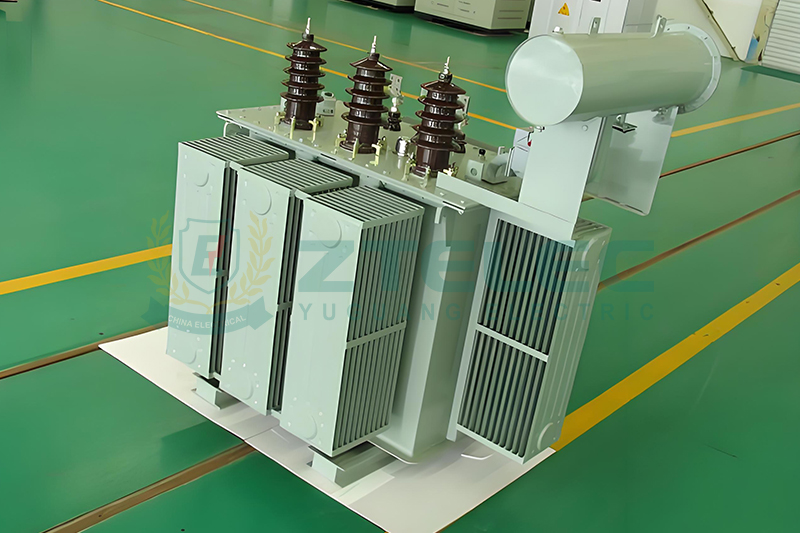
How to Choose a Reliable Transformer Supplier
For international engineering procurement, selecting an experienced and reliable transformer manufacturer is essential. Buyers should evaluate suppliers based on several important factors, including whether the company is a direct transformer manufacturer, whether it has extensive export experience, and whether it can provide customized transformer designs according to project requirements.
In addition, manufacturers that support OEM and ODM cooperation can help EPC contractors and equipment distributors build their own brands while maintaining consistent product quality.
A professional supplier with strong engineering capability can significantly improve project implementation efficiency and ensure timely delivery of reliable electrical equipment.
Frequently Asked Questions
How much load can a 1250kVA transformer support?
If the power factor is between 0.8 and 0.9, a 1250kVA transformer can support approximately 1000 kW to 1125 kW of active load. For long-term operation, it is recommended to maintain a load rate of 85% to 90%, equivalent to about 1060 kW, to ensure adequate safety margin and extend equipment life.
What is the price difference between Level 1 and Level 2 efficiency transformers?
In most cases, Level 1 energy-efficient transformers are approximately 10% to 20% more expensive than Level 2 models. However, for applications with annual operating times exceeding 5000 hours, the energy savings can offset the price difference and significantly reduce operating costs.
What are the fire safety requirements for oil-immersed transformers?
Oil-filled transformers must follow building fire safety regulations. Adequate fire separation distance should be maintained between the transformer and nearby structures. For indoor installations, a dedicated transformer room with pressure relief walls and oil containment facilities is usually required to ensure safe operation.
oil immersed transformer lifespan
oil immersed transformer maintenance
transformer lifecycle
transformer insulation aging
dry type transformer temperature monitoring
- more+releated article
- 2026-05-11How Long Does an Oil-Immersed Transformer Last
- 2026-05-08Modern Power System Dry-Type Transformer Insta
- 2026-05-07Oil-Immersed Transformer Overheating: Causes,
- 2026-05-07Dry-Type Transformers for Data Centers: 2026 R
- 2026-04-30Air-Core Reactor vs Iron-Core Reactor: How to
- 2026-04-29Compact Enclosed Transformer for Smart Grid: T
- 2026-04-2812-Pulse and 24-Pulse Phase-Shifting Transform
- 2026-04-27Oil-Immersed Transformers for Industrial Plant
- 2026-04-25Why Dry-Type Transformers Are Preferred for Ho
- 2026-04-24Enclosed Transformer Outdoor Solutions: IP Pro
- ELECTRICAL INSULATION BOARD MATERIALS
- ELECTRICAL INSULATION MATERIALS
- POWER TRANSFORMER
- ENAMELED WIRE
- SWITCHGEAR



transformer insulation aging
transformer lifecycle
oil immersed transformer lifespan
oil immersed transformer maintenance
dry type transformer installation
dry type transformer temperature monitoring
dry type transformer maintenance
dry type transformer sizing
transformer cooling system failure
transformer overheating causes
oil immersed transformer overheating
transformer oil temperature
harmonic mitigation
dry type transformer
K factor transformer
data center transformer
Cast resin transformer
insulation oil degradation
DGA analysis transformer
transformer fault analysis
oil immersed transformer failure
smart grid transformer
compact enclosed transformer
integrated distribution transformer
compact transformer substation