
50–5000 kVA Three-Phase High-Efficiency Oil-Immersed Transformers: Cost-Benefit Analysis
In modern industrial facilities, commercial complexes, and public infrastructure projects, reliable power distribution systems are essential for stable operations. Three-phase oil-immersed transformers ranging from 50 kVA to 5000 kVA are widely used as key components of medium- and low-voltage power distribution networks.
With the implementation of global energy efficiency standards such as IE3 and IE4, high-efficiency transformers have become increasingly important in power system design. Although the initial purchase cost of high-efficiency oil-immersed transformers is higher than that of conventional models, their long-term energy savings and operational reliability make them a valuable investment for utilities and industrial users.
This article analyzes the cost structure, energy consumption, lifecycle investment return, and long-term economic benefits of oil-immersed transformers within the 50–5000 kVA capacity range to help engineers and procurement managers make informed equipment selection decisions.
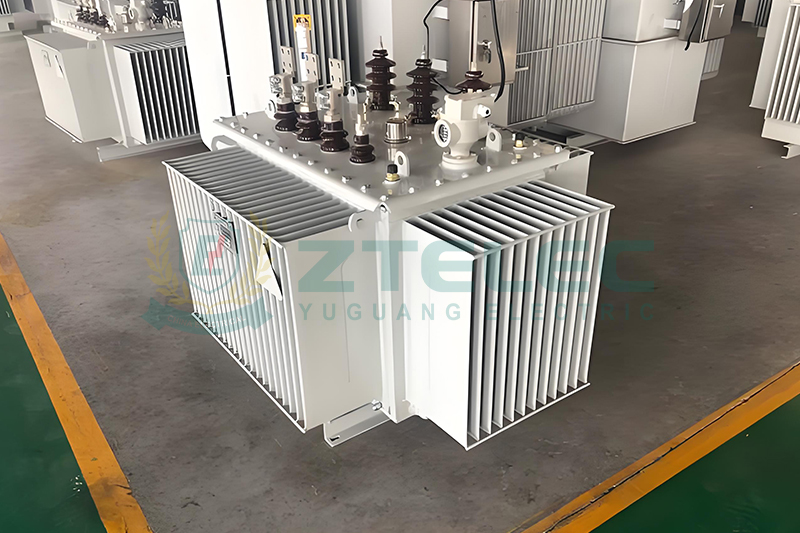
Applications of 50–5000 kVA Oil-Immersed Transformers
Oil-immersed transformers use insulating mineral oil as both an electrical insulation medium and a cooling agent. This design provides excellent thermal performance, strong overload capability, and stable operation in demanding environments.
Transformers in the 50 kVA to 5000 kVA capacity range are commonly used in a variety of power distribution scenarios, including industrial park distribution systems, commercial building power supply networks, photovoltaic and renewable energy projects, and public infrastructure facilities such as airports, railway stations, and metro systems.
Energy efficiency is a key indicator of transformer performance. Traditional transformer designs often experience relatively high no-load and load losses, while high-efficiency oil-immersed transformers significantly reduce these losses through advanced materials and optimized electrical design.
Cost Structure of High-Efficiency Oil-Immersed Transformers
A proper cost-benefit analysis must consider the total lifecycle cost of a transformer. This includes not only the purchase price but also the energy consumption and maintenance expenses throughout its service life.
Initial Investment Cost
High-efficiency transformers generally require more advanced materials and manufacturing technologies. As a result, their initial purchase cost is typically higher than that of conventional transformer models.
One of the main cost factors is the transformer core material. High-efficiency designs often use amorphous alloy cores or high-permeability cold-rolled grain-oriented silicon steel sheets. These materials significantly reduce no-load losses but increase material costs by approximately 20% to 40% compared with standard core materials.
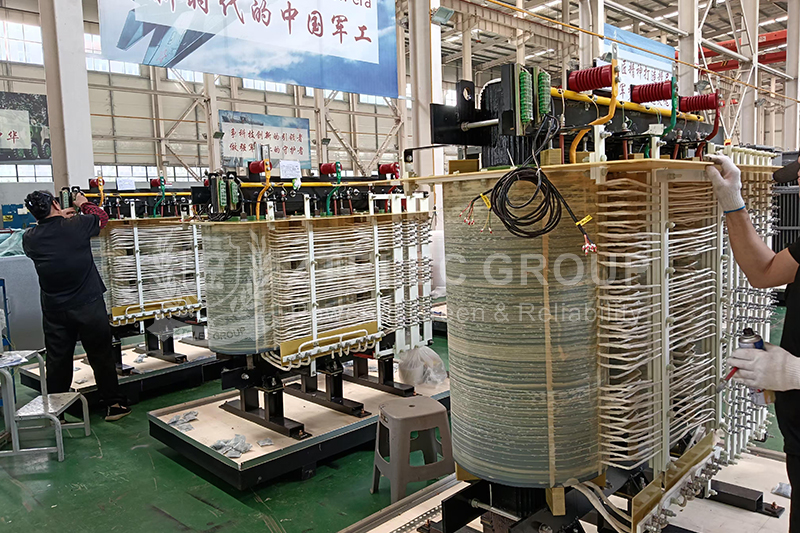
In addition, the winding structure of high-efficiency transformers is optimized to minimize load losses. This often involves larger conductor cross-sections and higher copper usage, which increases raw material costs.
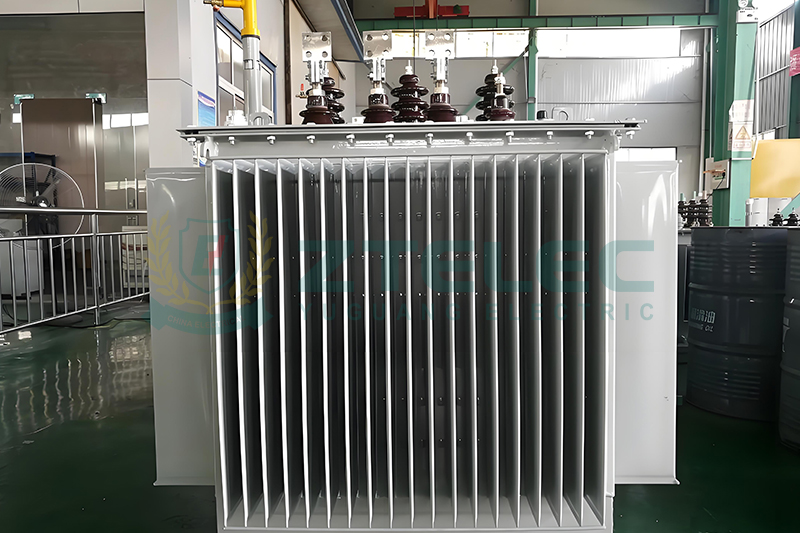
Thermal management is another important factor. High-efficiency transformers require improved insulation systems and optimized heat dissipation structures to control temperature rise during operation. As a result, the tank design and cooling system are typically more complex.
For example, the purchase price of a 500 kVA high-efficiency oil-immersed transformer can be approximately 15% to 25% higher than a traditional S11-type transformer of the same capacity.
Operation and Maintenance Cost
During operation, oil-immersed transformers require periodic inspection to ensure proper oil levels, insulation performance, and sealing conditions. However, high-efficiency transformers typically generate less heat because of reduced electrical losses.
Lower operating temperatures slow down insulation aging and extend the overall service life of the transformer. In addition, auxiliary cooling systems such as fans or pumps operate less frequently, reducing maintenance requirements and operating costs.
Energy Consumption Analysis
Transformer energy losses mainly consist of two components: no-load loss and load loss. These losses directly influence the operating cost of power distribution systems.
No-Load Loss
No-load loss occurs when the transformer is energized but not supplying load. It mainly results from magnetic hysteresis and eddy current losses in the transformer core. Because the transformer remains connected to the grid continuously, this type of loss occurs 24 hours a day regardless of load conditions.
Load Loss
Load loss occurs when current flows through the transformer windings while supplying electrical load. It is proportional to the square of the current and varies depending on the operating load of the transformer.
High-efficiency transformer designs reduce both no-load and load losses through improved core materials, optimized winding structures, and advanced manufacturing techniques. This significantly improves overall energy conversion efficiency.
Long-Term Cost Savings of High-Efficiency Transformers
Although high-efficiency transformers require a larger initial investment, their energy-saving performance produces substantial economic benefits over time.
For example, a 1000 kVA oil-immersed transformer operating for approximately 20 years can achieve significant reductions in electricity losses when compared with conventional models.
Typical annual electricity savings may range from 10,000 kWh to 20,000 kWh depending on the operating load and energy efficiency level. Based on average electricity prices, this can translate into annual cost savings of approximately US$1,000 to US$2,500.
Over a typical 20-year service life, the total savings from reduced energy losses may reach US$20,000 to US$50,000. In most cases, the additional upfront investment for a high-efficiency transformer can be recovered within three to five years.
Additional Benefits of High-Efficiency Oil-Immersed Transformers
Beyond direct energy cost reductions, high-efficiency transformers provide several additional operational and environmental advantages.
Lower energy losses lead to reduced carbon emissions from power generation. On average, saving 1 kWh of electricity can reduce approximately 0.7 kg of carbon dioxide emissions. For companies focused on sustainability and environmental responsibility, high-efficiency transformers support carbon reduction goals.
Advanced transformer designs can also help reduce reactive power losses and improve overall power factor performance in distribution systems. This allows more efficient use of electrical infrastructure and improves system capacity utilization.
Another important benefit is regulatory compliance. Many countries and regions continue to tighten transformer efficiency regulations, including the European Union EC 548/2014 regulation and China’s GB 20052-2020 efficiency standard. Selecting high-efficiency transformers in advance helps avoid the need for premature equipment replacement when future standards become stricter.
From a lifecycle cost perspective, 50–5000 kVA three-phase high-efficiency oil-immersed transformers provide significant long-term economic and environmental advantages. Although their initial purchase price is slightly higher, the reduction in energy losses, lower maintenance requirements, and improved operational stability make them a more cost-effective choice over the lifespan of the equipment.
For industrial enterprises, infrastructure projects, and utility operators, investing in high-efficiency transformers can reduce energy consumption, enhance the reliability of power distribution systems, and improve long-term return on investment while supporting global energy efficiency and sustainability goals.
oil immersed transformer lifespan
oil immersed transformer maintenance
transformer lifecycle
transformer insulation aging
dry type transformer temperature monitoring
- more+releated article
- 2026-05-11How Long Does an Oil-Immersed Transformer Last
- 2026-05-08Modern Power System Dry-Type Transformer Insta
- 2026-05-07Oil-Immersed Transformer Overheating: Causes,
- 2026-05-07Dry-Type Transformers for Data Centers: 2026 R
- 2026-04-30Air-Core Reactor vs Iron-Core Reactor: How to
- 2026-04-29Compact Enclosed Transformer for Smart Grid: T
- 2026-04-2812-Pulse and 24-Pulse Phase-Shifting Transform
- 2026-04-27Oil-Immersed Transformers for Industrial Plant
- 2026-04-25Why Dry-Type Transformers Are Preferred for Ho
- 2026-04-24Enclosed Transformer Outdoor Solutions: IP Pro
- ELECTRICAL INSULATION BOARD MATERIALS
- ELECTRICAL INSULATION MATERIALS
- POWER TRANSFORMER
- ENAMELED WIRE
- SWITCHGEAR



transformer insulation aging
transformer lifecycle
oil immersed transformer lifespan
oil immersed transformer maintenance
dry type transformer installation
dry type transformer temperature monitoring
dry type transformer maintenance
dry type transformer sizing
transformer cooling system failure
transformer overheating causes
oil immersed transformer overheating
transformer oil temperature
harmonic mitigation
dry type transformer
K factor transformer
data center transformer
Cast resin transformer
insulation oil degradation
DGA analysis transformer
transformer fault analysis
oil immersed transformer failure
smart grid transformer
compact enclosed transformer
integrated distribution transformer
compact transformer substation