
Oil Immersed vs. Dry Type Transformer: Which One to Choose?
Oil immersed and dry type transformers both step voltage up or down safely and efficiently, but they achieve this in very different ways. The choice between them affects safety planning, civil works, maintenance budgets and long-term reliability.
This guide compares the two technologies across the factors that matter most in a real project, so you can select the right transformer type with confidence rather than guesswork.
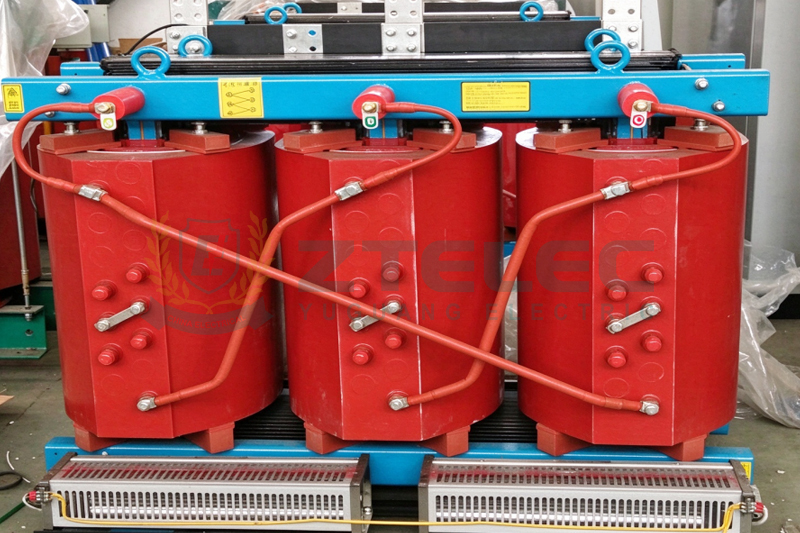
What Makes These Two Transformer Types Different
An oil immersed transformer uses mineral oil or a synthetic ester fluid to insulate and cool the windings. The oil circulates through the tank, carrying heat away to radiators or fins, and also provides strong dielectric strength.
A dry type transformer has no liquid insulation. Windings are either open and air-cooled or, in cast resin designs, encapsulated in epoxy resin under vacuum. Cooling relies on natural or forced air movement around the coils.
This single design difference cascades into nearly every practical comparison that follows.
Fire Safety
Fire risk is usually the deciding factor for indoor or densely occupied sites. Transformer oil is combustible, and although modern designs include pressure relief devices, Buchholz relays and fire barriers, the fuel load remains a real consideration for fire engineers.
Dry type transformers, especially cast resin units built to Class F1 per IEC 60076-11, are self-extinguishing and do not sustain combustion after the ignition source is removed. This makes them the preferred choice for hospitals, shopping malls, high-rise buildings, data centers, underground substations and metro stations.
For outdoor substations with adequate separation distances and proper fire protection, oil immersed transformers remain a safe and proven option used worldwide. Many national electrical codes set minimum clearance distances between oil filled transformers and buildings, walkways or flammable materials, and meeting these distances is often the simplest way to satisfy fire authorities.
Installation Environment
Indoor and Space-Constrained Sites
Dry type transformers avoid the need for oil containment pits, fire walls and large clearance zones, which can save valuable floor space inside a building. Many local fire codes also permit dry type units closer to occupied areas than oil filled equipment.
Outdoor and Utility Sites
Oil immersed transformers handle outdoor exposure well and are the standard choice for pole-mounted, pad-mounted and substation applications where space is less restricted and long-standing infrastructure practices already exist.
Humid, Coastal or Polluted Environments
Sealed oil filled tanks resist moisture and airborne contamination effectively. Dry type transformers can also perform well in these conditions when specified with an appropriate enclosure rating, such as IP54, and suitable coil coatings.
Cost Comparison
Purchase Price
For the same kVA rating, oil immersed transformers generally have a lower purchase price than cast resin dry type units. The gap narrows at smaller ratings and can widen at higher voltage classes.
Installation Cost
Oil immersed transformers often need oil containment systems, fire barriers and sometimes a separate transformer room or bund wall, which adds civil and fire protection cost. Dry type units typically install faster with simpler civil requirements, partly offsetting their higher equipment price.
Lifetime Operating Cost
Both types are available in a range of efficiency classes. No-load and load losses should be compared using guaranteed values from the datasheet rather than assumptions about the technology, since a well-designed unit of either type can achieve low losses. Buyers evaluating tenders often calculate the capitalized cost of losses over the expected operating life and add it to the purchase price, which sometimes reverses the apparent price advantage of the lower-cost option.
Maintenance Requirements
Oil Immersed Transformers
Routine maintenance includes oil sampling and dissolved gas analysis, checking oil level and color, inspecting gaskets for leaks, and testing protection devices such as the Buchholz relay. Oil may need filtering or replacement over the unit's service life.
Dry Type Transformers
Maintenance is generally simpler, focused on cleaning dust from windings, checking temperature sensors and fans, and inspecting insulation condition. There is no oil to sample, filter or dispose of, which suits sites where specialist oil maintenance skills are not readily available. Scheduled inspections typically involve a visual check, a resistance test of the winding insulation and cleaning of the enclosure and cooling fans, tasks that in-house electrical staff can often perform without external contractors.
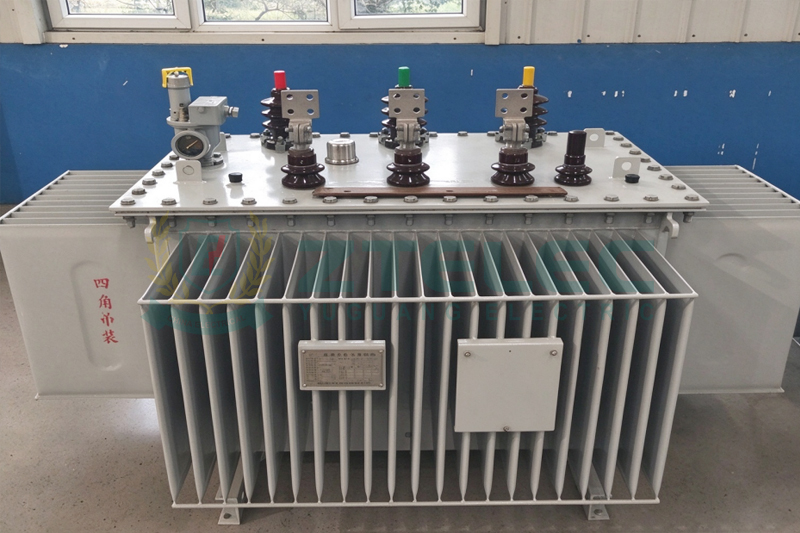
Performance and Loading Characteristics
Oil immersed transformers typically offer strong overload capacity because oil circulation removes heat efficiently, and many designs support short-term overloads without major derating.
Dry type transformers handle overloads too, particularly with forced air cooling, but they are generally more sensitive to ambient temperature and altitude. Both types must be derated for high altitude and high ambient temperature according to the relevant standard.
Noise Levels
Noise is produced mainly by magnetostriction in the core, and levels depend on core design more than on liquid versus dry construction. However, dry type transformers can sometimes sound louder in open indoor spaces because there is no oil tank to help dampen vibration, so acoustic enclosures are occasionally used in noise-sensitive buildings.
Environmental Considerations
Mineral oil poses a contamination risk if a leak occurs, so environmentally sensitive sites near water sources sometimes require secondary containment or biodegradable ester fluids. Ester-filled transformers combine high fire points with better environmental profiles, bridging some of the gap with dry type units.
Dry type transformers eliminate oil leak and disposal concerns entirely, which simplifies environmental compliance for many building projects.
Typical Applications by Type
Where Oil Immersed Transformers Are Usually Preferred
Utility substations, outdoor distribution networks, industrial plants with ample space, renewable energy projects such as wind and solar farms, and large power transformers where oil cooling efficiency supports higher ratings economically.
Where Dry Type Transformers Are Usually Preferred
Hospitals, schools, shopping centers, high-rise buildings, data centers, underground and basement installations, ships and offshore platforms, and any site where fire safety codes restrict oil filled equipment.
Voltage and Rating Limits
Oil immersed transformers dominate at higher voltage classes and larger power ratings because oil cooling scales efficiently to large sizes. Dry type transformers are most common in distribution voltage ranges, typically up to 36kV, though higher voltage dry type designs exist for specialized applications.
Standards and Testing
Both technologies are covered by well-established international standards. Oil immersed transformers are typically designed and tested to IEC 60076 series standards, while dry type units follow IEC 60076-11 in addition to the general series.
Routine tests for both include winding resistance, ratio, no-load loss, load loss and dielectric withstand tests. Dry type transformers add specific tests such as partial discharge measurement and, for cast resin designs, climatic and environmental class verification under conditions like C2, E2 and F1.
Requesting type test certificates from an accredited laboratory, regardless of which technology you choose, gives independent confirmation that the design meets its stated performance.
Transportation and Handling
Weight and handling requirements differ noticeably between the two types. An oil filled transformer of a given rating is usually heavier once the oil is included, and it may ship oil-drained with nitrogen protection or fully filled, depending on size and destination.
Dry type transformers are generally lighter for the same rating and avoid the risk of oil leakage during transport, which simplifies logistics for projects with difficult access, such as upper floors of a building or remote sites reached by narrow roads.
Decision Checklist
Start with fire safety regulations for your building type and location, since codes often settle the choice before cost is even considered. Next, check available space for containment, clearance and ventilation requirements.
Then compare guaranteed losses and total cost of ownership between qualified offers of each type, review maintenance resources and skills available on site, and confirm environmental requirements such as proximity to water sources or sensitive ecosystems.
A Practical Way to Decide
If your project is outdoors with adequate space and standard fire protection, an oil immersed transformer is usually the more economical and proven choice. If your project is indoors, inside an occupied building, or subject to strict fire codes, a dry type transformer is generally the safer and often mandatory option.
For projects in between, such as an indoor substation room with dedicated fire protection, evaluate both options on total installed cost, maintenance capability and long-term reliability rather than assuming one technology is automatically correct.
Frequently Asked Questions
Is a dry type transformer always safer than an oil immersed one?
Dry type units carry a lower fire fuel load, but oil immersed transformers with proper protection devices and containment have an excellent safety record in appropriate outdoor settings. Safety depends on correct application, not the technology alone.
Can dry type transformers handle the same power ratings as oil immersed units?
Dry type transformers are widely available up to several thousand kVA and are used at higher ratings in some markets, but oil immersed designs remain more common and more economical at very large power and voltage levels.
Which type has a longer service life?
Both types can operate reliably for 25 years or more when properly specified, installed and maintained. Service life depends more on load management, environmental conditions and maintenance quality than on the cooling medium itself.
Is switching between oil and dry type possible during a retrofit?
Yes, retrofits do occur, particularly when a building upgrades fire protection standards or expands into new areas. This usually requires reviewing space, ventilation and electrical connections, since the two types are not always physically interchangeable.
Oil immersed and dry type transformers each have clear strengths. Oil immersed units offer proven performance, strong overload capacity and lower purchase cost for outdoor and utility applications. Dry type units provide superior fire safety, simpler maintenance and easier indoor installation.
The right choice comes from matching the technology to your site conditions, fire safety requirements, budget and maintenance capability, rather than picking one type by default. A clear specification and a careful comparison of qualified offers will lead to the transformer that best serves your project for decades to come.
dry type transformer
oil filled transformer
oil immersed vs dry type transformer
data center transformers
oil-immersed transformer
- more+releated article
- 2026-09-29Oil Immersed vs. Dry Type Transformer: Which O
- 2026-09-29ZTELEC Group Debuts at Data Centre World Singa
- 2026-09-28Dry Type Transformer Manufacturers: How to Eva
- 2026-09-24Prefabricated Substation Price and HS Code: Pr
- 2026-09-23How to Select a Transformer for a Solar Power
- 2026-09-22Dry Type Transformer Sizing Chart: How to Sele
- 2026-09-22ZTELEC Opens Day 1 at Enlit Asia x MKI Electri
- 2026-09-21Ring Main Unit vs Switchgear: Key Differences
- 2026-09-20Dry Type Transformer vs Oil Filled: Which Shou
- 2026-09-18What Is a Ring Main Unit (RMU)? Function, Purp
- ELECTRICAL INSULATION BOARD MATERIALS
- ELECTRICAL INSULATION MATERIALS
- POWER TRANSFORMER
- ENAMELED WIRE
- SWITCHGEAR


FR-4 Copper-Free Laminate | High-Performance Insulation Material

FR-4 Copper Clad Laminate Manufacturer & Supplier
oil immersed vs dry type transformer
oil filled transformer
dry type transformer
dry-type transformer
Data Centre World Singapore 2026
ZTelec
data center transformers
oil-immersed transformer
dry type transformer supplier
how to choose transformer manufacturer
dry type transformer manufacturers
prefabricated substation HS code
prefabricated substation price
PV transformer selection
solar power plant transformer
transformer sizing solar
solar step up transformer
kVA rating selection
dry type transformer sizing chart
how to size a transformer
Enlit Asia 2026
Jakarta power exhibition
MKI Electricity Connect
Oil immersed transformer
RMU