
Transformer Price List 2026: Cost per kVA in China
If you are importing power equipment, one of the first questions is simple: how much does a transformer cost per kVA in China? The honest answer is that it depends on type, capacity, materials and efficiency level.
This guide gives you an indicative 2026 price framework for Chinese distribution transformers. It also explains what moves the price, which costs buyers often miss, and how to compare quotations fairly.
Important Note on Price Ranges
The figures in this article are indicative planning ranges in US dollars, based on ex-works (EXW) pricing for standard three-phase distribution transformers from Chinese factories. They are not a quotation.
Real prices change with copper, silicon steel and oil markets, exchange rates, order quantity and technical specification. Always request a written quotation for your exact project before budgeting.
Why Price per kVA Is a Useful Benchmark
Price per kVA lets you compare transformers of different sizes on the same basis. You divide the total price by the rated capacity. For example, a 630 kVA unit priced at 7,000 USD costs about 11 USD per kVA.
The benchmark is only a starting point. Two transformers with the same kVA rating can differ widely in efficiency, winding material and build quality, so always compare full specifications.
Oil-Immersed Transformer Price per kVA
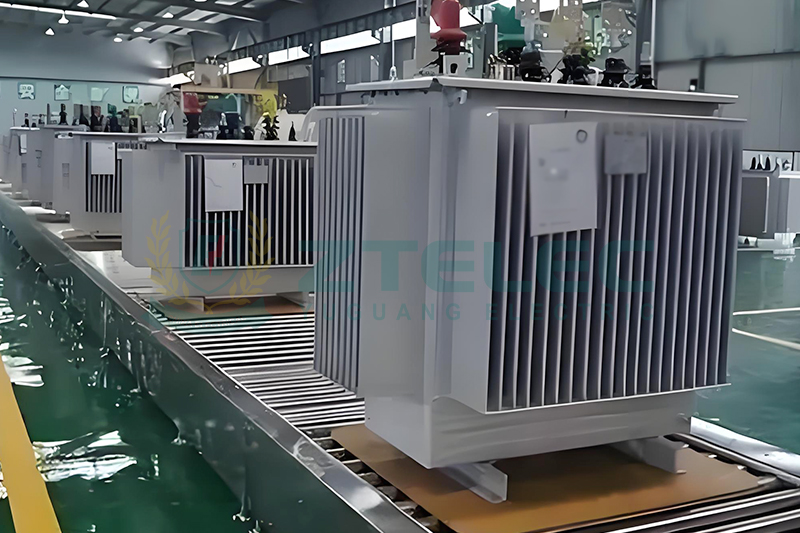
Oil-immersed distribution transformers are the most common choice for utilities, outdoor sites and industrial plants. They cost less than dry type units of equal capacity. The table below shows indicative ranges for 10 kV or 11 kV to 0.4 kV copper-winding units in the S13 efficiency class.
| Capacity (kVA) | Indicative price per kVA (USD) | Indicative unit price (USD) |
|---|---|---|
| 100 | 20 to 32 | 2,000 to 3,200 |
| 315 | 12 to 17 | 3,800 to 5,500 |
| 630 | 9 to 13 | 5,500 to 8,000 |
| 1000 | 7.5 to 11 | 7,500 to 11,000 |
| 1600 | 7 to 10 | 11,000 to 16,000 |
| 2500 | 6.5 to 9.5 | 16,000 to 24,000 |
Dry Type Transformer Price per kVA
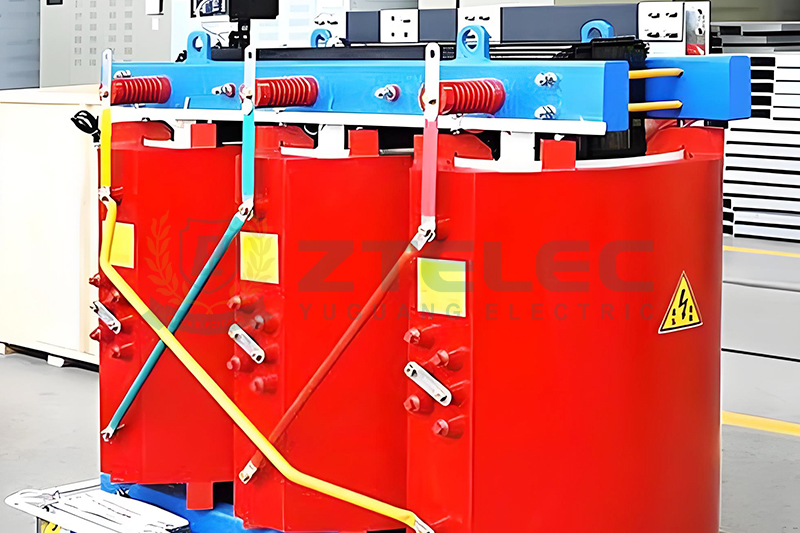
Dry type cast resin transformers cost more because of the resin, the insulation process and the stricter manufacturing controls. They are popular indoors, in buildings, data centers, hospitals and areas with fire safety requirements. The ranges below are for copper-winding SCB13 units with a standard enclosure.
| Capacity (kVA) | Indicative price per kVA (USD) | Indicative unit price (USD) |
|---|---|---|
| 100 | 35 to 50 | 3,500 to 5,000 |
| 315 | 19 to 27 | 6,000 to 8,500 |
| 630 | 14 to 21 | 9,000 to 13,000 |
| 1000 | 12.5 to 18 | 12,500 to 18,000 |
| 1600 | 11 to 16 | 18,000 to 26,000 |
| 2500 | 10.5 to 15 | 26,000 to 38,000 |
Why Cost per kVA Falls as Capacity Rises
You will notice that larger transformers cost less per kVA. This is normal. Many costs do not increase in proportion to size, including design work, testing, labor setup, tank or enclosure fabrication and packaging.
Material use also scales efficiently. A bigger core and winding carry more power per unit of copper and steel. As a result, a 2500 kVA transformer is far cheaper per kVA than a 100 kVA unit.
This has a practical meaning for buyers. If your load is growing, one larger transformer can be more economical than several small ones, as long as the load profile and redundancy needs support it.
Main Factors That Drive Transformer Price
Winding Material: Copper vs Aluminum
Copper windings cost more than aluminum but offer lower losses, better conductivity and higher mechanical strength. Aluminum-wound units are cheaper at purchase, though they may be larger and have higher losses. The price gap depends on the metal market at the time of quotation.
Core Material and Efficiency Class
Core steel quality has a direct effect on both price and performance. Higher efficiency classes such as S13 or S15 for oil-immersed units, and SCB13 or SCB14 for dry type units, use better core material and refined designs. They cost more but save electricity throughout the transformer's life.
Amorphous alloy cores sit at the top of the efficiency range. They can reduce no-load loss by a large margin, and the purchase premium is often in the range of 15% to 30% over a comparable silicon steel unit.
Raw Material Prices
Copper, electrical steel and insulating oil together make up the majority of the cost of a transformer. When copper prices rise, quotations follow quickly. Many Chinese suppliers therefore limit the validity of their quotations to a short period, sometimes only a few days.
Voltage Class and Insulation Level
A 35 kV transformer needs more insulation, larger clearances and more testing than a 10 kV unit of the same capacity. Expect a clear price increase as the voltage class goes up.
Cooling, Enclosure and Accessories
Optional features add cost. Common examples include on-load tap changers, forced-air cooling fans, temperature controllers, protective enclosures with higher IP ratings, surge arresters and monitoring devices. Always check whether the quotation covers these items.
Standards and Certifications
Transformers built to IEC, ANSI or local utility standards, and supported by type test reports, cost more than basic domestic designs. Third-party witness testing and special certificates also add to the price. These costs are worth it for utility and large industrial projects.
Order Quantity
Volume matters. Orders for multiple units of the same specification allow the factory to buy materials in bulk and run production efficiently. Buyers who order ten units usually obtain a better unit price than those who order one.
Price Impact of Common Specification Choices
| Specification Choice | Typical Effect on Price |
|---|---|
| Aluminum instead of copper winding | Lower purchase price |
| Higher efficiency class | Higher price, lower running cost |
| Amorphous alloy core | Price premium, very low no-load loss |
| 35 kV instead of 10 kV | Noticeable price increase |
| On-load tap changer | Additional cost for voltage regulation |
| Outdoor or high IP enclosure | Additional enclosure cost |
| Custom paint, nameplate or testing | Small to moderate extra cost |
What Is Shaping Transformer Prices in 2026
Global demand for transformers remains strong in 2026. Grid modernization, renewable energy projects and new data center construction are all increasing orders, and that pressure can lengthen delivery times for popular ratings.
For buyers, the practical lesson is to request quotations early, confirm production schedules in writing and avoid last-minute specification changes. Strong demand rarely lowers prices, but good planning helps you secure fair terms and reliable delivery.
Efficiency regulations are also tightening in many markets, which pushes more buyers toward low-loss designs. Budget for a higher efficiency class from the start instead of treating it as an upgrade.
Understanding Trade Terms: EXW, FOB and CIF
A low headline price can be misleading if you do not know which trade term it uses. Make sure every quotation states the term clearly.
EXW means the buyer arranges collection at the factory and handles everything after that. FOB includes delivery to the Chinese port of loading and export clearance. CIF adds sea freight and insurance to the named destination port.
Freight for transformers can be significant because the units are heavy. Ocean freight, container loading, inland transport and port charges may add a noticeable percentage to the factory price, depending on route and capacity.
Hidden Costs Buyers Often Overlook
Import Duties and Taxes
Customs duty, VAT and local taxes vary by country. Confirm the correct HS code and the rates that apply before you finalize the budget.
Packaging and Spare Parts
Export-grade wooden cases, shock protection and moisture protection protect the transformer on a long sea journey. Spare bushings, gaskets and fuses are also worth including in the order.
Installation and Commissioning
Site work, cable connections, grounding and commissioning tests are separate from the equipment price. Ask whether the supplier offers technical support or remote guidance.
Losses Over the Product's Life
The cheapest transformer is often not the cheapest to own. A unit with higher no-load and load losses will cost more in electricity over 20 years than the saving you made at purchase. Calculate the total cost of ownership, not just the invoice.
How to Compare Quotations Fairly
When you receive offers from several Chinese suppliers, put them side by side and check the same points in each one. Confirm the rated capacity, voltage ratio, vector group and impedance. Check the winding material, efficiency class and guaranteed loss values.
Compare the cooling method, temperature rise, insulation class and enclosure rating. Review the list of accessories, the standards followed, the test reports provided and the warranty period.
Finally, confirm the delivery time, payment terms and quotation validity. A price that looks 10% lower may simply leave out items that another supplier has included.
Practical Tips to Reduce Transformer Cost
Right-Size the Transformer
Oversizing wastes money twice, first in the purchase price and then in higher no-load loss. Size the unit based on realistic load and a sensible growth margin.
Standardize Specifications
Using the same specification across several sites simplifies production and spare parts, and it strengthens your negotiating position.
Plan Ahead
Placing orders early avoids rush charges and lets you buy when raw material prices are favorable. Lead times for large or customized units can be several weeks to a few months.
Evaluate the Supplier, Not Only the Price
Look at factory capability, test equipment, export experience and customer references. A reliable manufacturer protects you from delays, quality problems and hidden costs that wipe out any initial saving.
Frequently Asked Questions
How much does a 630 kVA transformer cost in China?
As a general planning range, a standard oil-immersed 630 kVA unit may fall between about 5,500 and 8,000 USD ex-works, while a dry type unit may range from about 9,000 to 13,000 USD. Your final price depends on specification and market conditions.
Is a dry type transformer always more expensive than oil-immersed?
For the same capacity, yes in most cases. Dry type units offer fire safety and low maintenance for indoor use, which many projects value above the price difference.
Do transformer prices change often?
Yes. Because copper and electrical steel make up a large share of the cost, prices can move within weeks. Ask for a validity date on every quotation.
Can I get a lower price by choosing aluminum windings?
Usually, yes. However, check the loss values and the total cost of ownership before deciding, because copper often pays back over the transformer's life.
Transformer pricing in China follows a clear logic. Cost per kVA falls as capacity rises, dry type units cost more than oil-immersed units, and material, efficiency and voltage class shape the final figure.
Use the indicative ranges in this price list as a planning tool, then confirm them with detailed quotations. Compare specifications carefully, include freight and taxes in your budget, and think about lifetime energy cost as well as purchase price.
To receive an accurate price, send your supplier the capacity, voltage ratio, transformer type, standard, quantity and destination port. A clear request leads to a clear, comparable quotation.
transformer price list 2026
China transformer price
transformer cost per kVA
oil immersed transformer price
Chinese transformer factory tour
- more+releated article
- 2026-10-08Transformer Price List 2026: Cost per kVA in C
- 2026-09-30Chinese Transformer Factory Tour: Behind the S
- 2026-09-302026 China National Day Holiday Notice from zt
- 2026-09-29Oil Immersed vs. Dry Type Transformer: Which O
- 2026-09-29ZTELEC Group Debuts at Data Centre World Singa
- 2026-09-28Dry Type Transformer Manufacturers: How to Eva
- 2026-09-24Prefabricated Substation Price and HS Code: Pr
- 2026-09-23How to Select a Transformer for a Solar Power
- 2026-09-22Dry Type Transformer Sizing Chart: How to Sele
- 2026-09-22ZTELEC Opens Day 1 at Enlit Asia x MKI Electri
- ELECTRICAL INSULATION BOARD MATERIALS
- ELECTRICAL INSULATION MATERIALS
- POWER TRANSFORMER
- ENAMELED WIRE
- SWITCHGEAR
FR-4 Copper-Free Laminate | High-Performance Insulation Material
FR-4 Copper Clad Laminate Manufacturer & Supplier
transformer cost per kVA
oil immersed transformer price
transformer price list 2026
China transformer price
Transformer Manufacturing Process
Chinese transformer factory tour
transformer factory China
dry type transformer production
National Day holiday schedule
ztelecgroup holiday notice
China National Day holiday 2026
oil immersed vs dry type transformer
oil filled transformer
dry type transformer
oil-immersed transformer
Data Centre World Singapore 2026
dry-type transformer
ZTelec
data center transformers
dry type transformer supplier
how to choose transformer manufacturer
dry type transformer manufacturers
prefabricated substation HS code
prefabricated substation price
solar power plant transformer