
Dry Type Transformer Manufacturers: How to Evaluate and Source Reliably
Choosing among dry type transformer manufacturers is one of the most important decisions in any power project. A transformer usually runs for 25 to 30 years, and a weak unit can cause outages, safety risks and costly replacements long after the purchase price is forgotten.
This guide gives buyers, EPC contractors and facility managers a practical framework to evaluate suppliers, compare offers and source dry type and cast resin transformers with confidence.
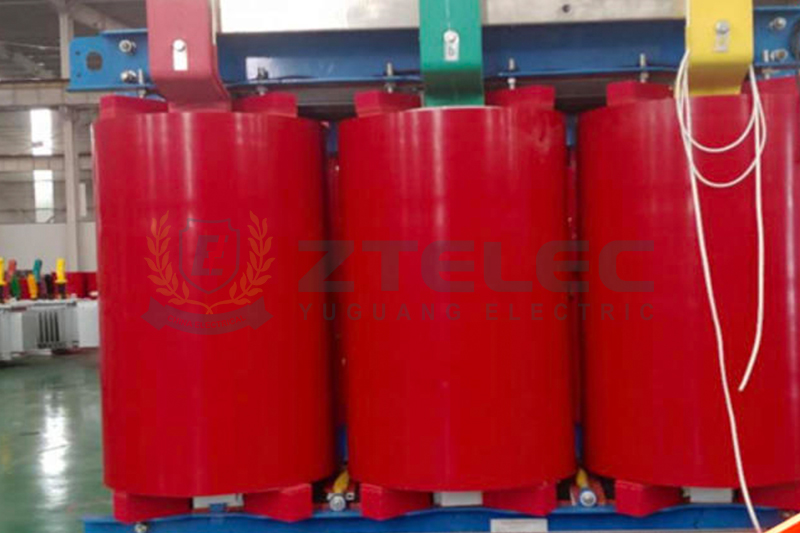
Why Manufacturer Selection Matters More Than Price
Dry type transformers are used in hospitals, data centers, commercial buildings, factories, metro systems, wind farms and solar plants. In these places fire safety, uptime and low maintenance are essential.
Two transformers with the same kVA rating and voltage class on paper can differ greatly in real life. Core steel grade, winding quality, insulation system, casting process and testing discipline all decide how the unit behaves under load, overload and short circuit.
A low quotation often hides thinner copper, lower-grade steel, shortcuts in vacuum casting or skipped routine tests. Sourcing reliably means comparing total value over the equipment's life, not only the invoice.
Step 1: Define Your Requirements Before You Contact Suppliers
A supplier can only quote accurately if your specification is clear. Vague inquiries attract vague answers and make quotations impossible to compare.
Core Technical Data
Prepare the rated power in kVA, primary and secondary voltage, frequency, vector group, impedance, tap changer range and insulation level. Also state whether you need a cast resin or open-wound design.
Site and Environmental Conditions
Include altitude, ambient temperature range, humidity, pollution level and whether the unit is installed indoors or outdoors. These factors affect temperature rise limits, enclosure protection such as IP20, IP23 or IP54, and cooling design.
Applicable Standards and Efficiency Rules
Name the standard you require, such as IEC 60076-11, IEEE C57.12.01 or a national standard. If your market has efficiency regulations, such as EU Ecodesign requirements or US DOE rules, say so clearly. Suppliers who understand these rules will ask smart questions; those who do not are a warning sign.
Step 2: Verify Real Manufacturing Capability
Many companies in the market are traders or assemblers rather than true manufacturers. That is not always a problem, but you should know who actually builds your transformer.
Ask for Factory Facts
Request the factory address, floor area, number of employees, annual production capacity and the maximum rating and voltage class the plant has produced. A serious manufacturer will share these details and welcome an audit.
Check Key Production Equipment
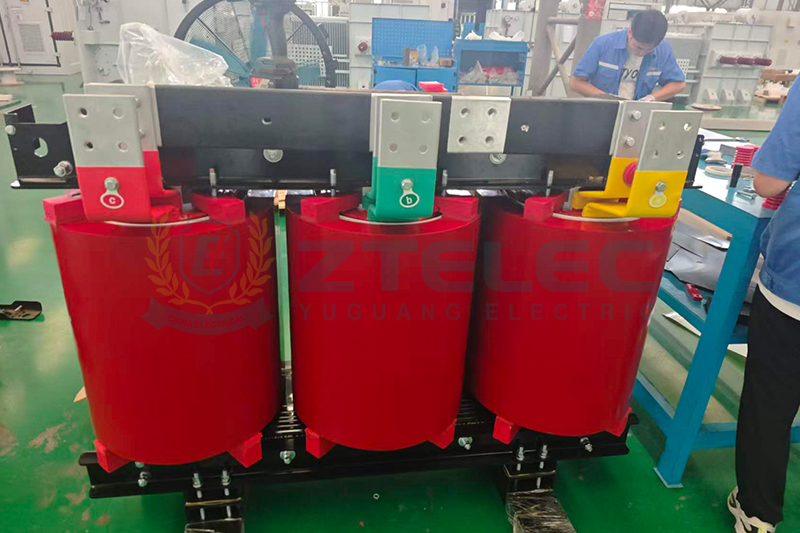
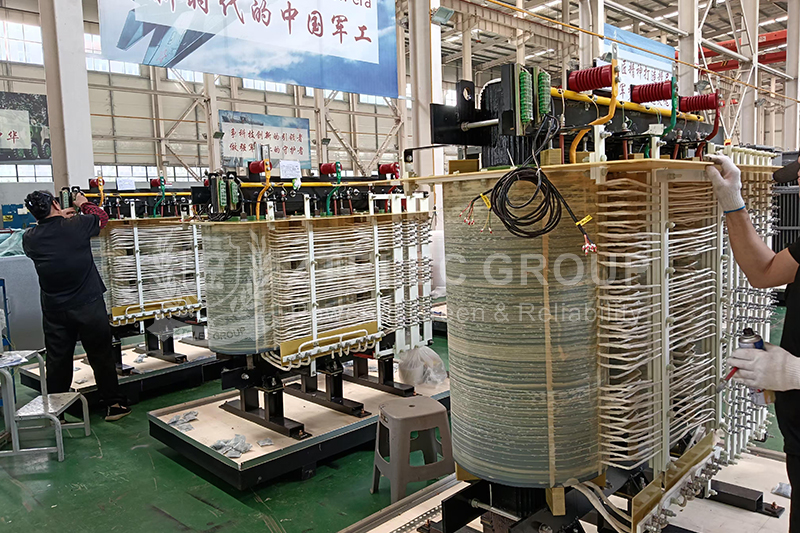
Look for core cutting lines, automatic winding machines, vacuum casting equipment, curing ovens and a dedicated test room. Owning these processes in-house gives better control over quality and lead time than outsourcing critical steps.
Audit in Person or Remotely
If travel is difficult, ask for a live video walkthrough or hire an independent inspection agency. Watching a winding line and a test bay in operation tells you more than any brochure.
Step 3: Confirm Certifications and Standards Compliance
Certificates do not guarantee quality, but their absence is a serious concern. They show that a third party has reviewed the company's systems and products.
Management System Certificates
Look for ISO 9001 for quality management, ISO 14001 for environmental management and ISO 45001 for occupational health and safety. Check that the certificate is valid, issued by a recognized body and covers transformer manufacturing.
Product Type Test Reports
For dry type units, type tests under IEC 60076-11 include temperature rise, lightning impulse and, for cast resin designs, climatic and environmental class tests such as C2, E2 and F1 where relevant. Short-circuit withstand testing under IEC 60076-5 is also valuable.
Ask that reports come from an accredited independent laboratory, such as KEMA or a comparable institute, and that the tested design is truly similar to the unit you are buying.
Step 4: Inspect Materials and Design Quality
The materials inside a transformer determine losses, noise, lifetime and price. This is where the cheapest suppliers usually cut corners.
Core Steel
Good manufacturers use high-grade grain-oriented silicon steel, and some offer amorphous alloy cores for very low no-load loss. Ask for the steel grade, thickness, supplier name and the guaranteed no-load loss figure.
Winding Material
Copper and aluminium are both used. Copper offers lower resistance and better mechanical strength, while aluminium reduces cost and weight. Neither is wrong, but the offer must state which is used so that quotations can be compared fairly.
Insulation System and Temperature Class
Confirm the insulation class, typically F or H, and the design temperature rise, such as 100K or 125K. A lower temperature rise at rated load leaves more thermal margin and generally extends service life.
Casting Process for Cast Resin Units
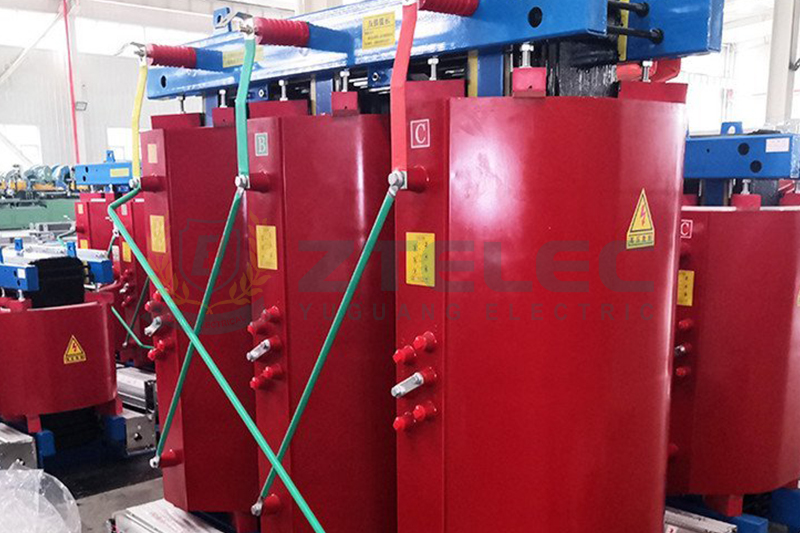
Vacuum casting with quality epoxy resin and glass fiber reinforcement reduces voids and partial discharge. Ask whether casting is done under vacuum and whether partial discharge is measured on every unit.
Step 5: Examine Testing and Quality Control
A transformer is only as reliable as the checks it passes before shipment. Strong manufacturers test every unit and record the results.
Routine Tests on Every Transformer
These include winding resistance, voltage ratio and vector group, no-load loss and current, load loss and impedance, applied voltage and induced voltage tests. For cast resin transformers, partial discharge measurement is an important extra.
Incoming and In-Process Inspection
Ask how raw materials are inspected on arrival and how windings are checked during production. Traceability of copper, steel and resin batches shows a mature quality system.
Witness Testing and Test Reports
You should be able to witness factory acceptance tests or appoint a third-party inspector. Each unit should ship with its own test report showing serial number and measured values, not a generic sample report.
Step 6: Review Track Record and References
Experience in your application matters. A factory that has supplied hundreds of transformers to solar plants understands inverter duty loads better than one that has only built distribution units.
Project References
Ask for a reference list with project names, capacities, countries and years. Where possible, contact a past customer and ask about delivery accuracy, product performance and how problems were handled.
Export Experience
If you are buying internationally, confirm the manufacturer has shipped to your region. Experience with export packing, documentation, HS codes, customs paperwork and local voltage or frequency requirements avoids expensive delays.
Step 7: Compare Quotations Correctly
The lowest number is rarely the best offer. Before comparing prices, make sure every supplier has quoted against the same specification.
Compare Losses, Not Just Price
No-load loss runs 24 hours a day, and load loss depends on utilization. A transformer with slightly higher purchase cost but lower losses can save far more in electricity over its lifetime. Ask each supplier to state guaranteed loss values and calculate total cost of ownership.
Check Scope and Accessories
Confirm what is included: enclosure, temperature controller, cooling fans, surge arresters, wheels, lifting lugs, bushings and spare parts. Missing accessories are a common way to make one quotation look cheaper than another.
Understand Commercial Terms
Review Incoterms, payment terms, validity period, lead time and penalties for late delivery. Clear terms protect both sides and show that the supplier is organized.
Step 8: Plan for Logistics, Warranty and After-Sales Support
Reliable sourcing does not end when the transformer leaves the factory. Transport, installation and long-term support all influence the total result.
Packing and Shipping
Dry type transformers are sensitive to moisture and impact. Ask about protective packing, shock indicators, container loading methods and marine insurance.
Warranty and Technical Support
A typical warranty runs 12 to 24 months, and some manufacturers offer longer terms. Read exactly what is covered, how claims are handled and how quickly engineers can respond. Availability of installation guidance, commissioning support and spare parts is a real advantage.
How to Build a Reliable Shortlist
Start with a broad search, then narrow the field quickly. Industry exhibitions, utility approved-vendor lists, engineering consultants and past project data are all good places to find qualified dry type transformer manufacturers.
Send the same technical inquiry to every candidate and set a firm response date. Note how fast and how completely each company replies. Clear answers, drawings and datasheets within a few days usually signal a well-run sales and engineering team.
Finally, request a technical clarification call. Ask engineers to explain their design choices, such as flux density, cooling method and short-circuit strength. Real manufacturers answer with confidence and detail, while resellers often need to pass questions back to the factory.
Red Flags When Evaluating Transformer Suppliers
Certain signs should slow down any purchase decision. Watch for prices far below the market average, unwillingness to share factory details or test reports, certificates that cannot be verified, and pressure to pay in full before any production milestone.
Other warning signs include vague material descriptions, refusal to allow third-party inspection, and sample test reports that do not match the model quoted. A manufacturer who is confident in its product will answer these questions openly.
A Simple Supplier Scorecard
To keep your evaluation objective, score each candidate from one to five in the areas discussed above: manufacturing capability, certifications, material quality, testing discipline, references, commercial terms and after-sales support.
Weight the categories according to your project priorities. A hospital may weigh reliability and fire safety most heavily, while a utility tender may focus on losses and delivery schedule. Recording scores also makes your decision easier to justify to management and auditors.
Frequently Asked Questions
How many manufacturers should I shortlist?
Three to five qualified suppliers is usually enough. Fewer limits competition, and more makes the evaluation slow without improving results.
Is a factory audit really necessary?
For large or critical orders, yes. If a visit is not practical, a video audit or an independent inspection service provides useful assurance at a modest cost.
Should I choose a local supplier or an overseas manufacturer?
Both can work. Local suppliers offer faster service and simpler logistics, while overseas manufacturers may provide broader product ranges and competitive pricing. The right choice depends on your project schedule, budget and support needs.
Cast resin or open-wound dry type: does the manufacturer matter?
Yes. Cast resin designs depend heavily on casting quality and partial discharge control, so process capability is especially important for these units.
Reliable sourcing of dry type transformers comes down to disciplined evaluation. Define your requirements clearly, verify real manufacturing capability, check certifications and test reports, inspect materials and quality control, and compare offers on total cost rather than price alone.
Take the time to shortlist carefully, audit where possible and negotiate clear terms. The effort you invest before ordering will pay back many times over in safe operation, low losses and dependable service across the transformer's full life.
how to choose transformer manufacturer
dry type transformer supplier
dry type transformer manufacturers
prefabricated substation price
prefabricated substation HS code
- more+releated article
- 2026-09-28Dry Type Transformer Manufacturers: How to Eva
- 2026-09-24Prefabricated Substation Price and HS Code: Pr
- 2026-09-23How to Select a Transformer for a Solar Power
- 2026-09-22Dry Type Transformer Sizing Chart: How to Sele
- 2026-09-22ZTELEC Opens Day 1 at Enlit Asia x MKI Electri
- 2026-09-21Ring Main Unit vs Switchgear: Key Differences
- 2026-09-20Dry Type Transformer vs Oil Filled: Which Shou
- 2026-09-18What Is a Ring Main Unit (RMU)? Function, Purp
- 2026-09-17Dry Type Transformer Maintenance: What You Act
- 2026-09-16What Is an Oil Immersed Transformer? Construct
- ELECTRICAL INSULATION BOARD MATERIALS
- ELECTRICAL INSULATION MATERIALS
- POWER TRANSFORMER
- ENAMELED WIRE
- SWITCHGEAR


FR-4 Copper-Free Laminate | High-Performance Insulation Material

FR-4 Copper Clad Laminate Manufacturer & Supplier
dry type transformer supplier
how to choose transformer manufacturer
dry type transformer manufacturers
prefabricated substation price
prefabricated substation HS code
solar step up transformer
PV transformer selection
solar power plant transformer
transformer sizing solar
dry type transformer sizing chart
how to size a transformer
kVA rating selection
Jakarta power exhibition
Oil immersed transformer
MKI Electricity Connect
ZTelec
dry type transformer
Enlit Asia 2026
Ring Main Unit
RMU vs switchgear
RMU
ring main unit vs switchgear
Medium Voltage Switchgear
dry type transformer vs oil filled
ring main unit function