
3500 kVA vs 2×1750 kVA Transformers: Cost & Reliability
When a project needs 3500 kVA of capacity, the first design question is simple: install one large transformer or split the load across two 1750 kVA units? Both options deliver the same nameplate power. The cost, the reliability and the long-term operating experience are very different.
This guide compares a single 3500 kVA transformer with a 2×1750 kVA arrangement. It covers purchase price, installation, losses, redundancy, fault levels and maintenance, so you can match the choice to your site and your risk tolerance.
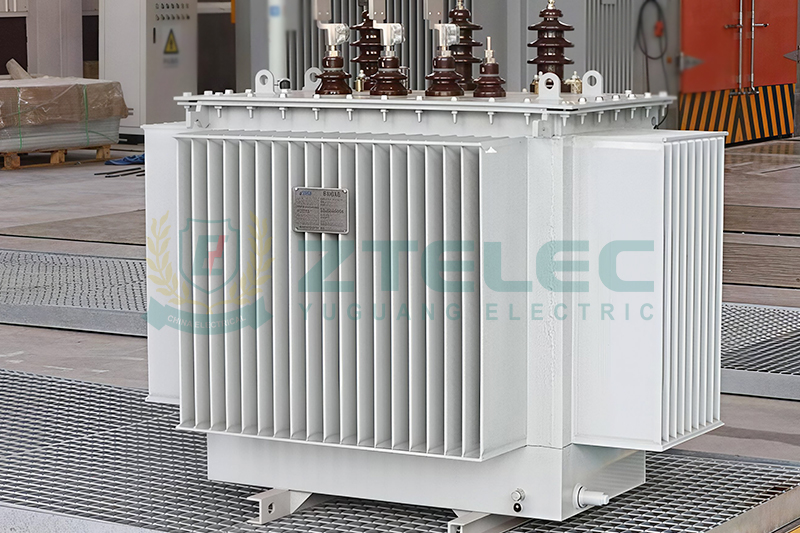
Quick Answer: Which Option Is Better?
A single 3500 kVA transformer usually has the lower initial cost, the smaller footprint and simpler wiring. Two 1750 kVA transformers usually give better availability, easier maintenance and a lower fault level on each low-voltage bus.
If an outage is cheap, choose one unit. If an outage stops production, loses data or puts safety at risk, two units are normally the safer investment. The rest of this article explains why.
Understanding the Two Configurations
Option A: One 3500 kVA Transformer
All load connects to one transformer, one low-voltage main breaker and one busbar system. It is the simplest layout to design, build and operate. It also creates a single point of failure for the whole facility.
Option B: Two 1750 kVA Transformers
Each transformer feeds its own low-voltage bus section. The two sections are normally joined by a bus tie breaker, either operated open (split bus) or closed (parallel operation). The tie lets one transformer pick up load from the other when needed.
Why the Sizing Matters
Having 2×1750 kVA installed does not automatically mean redundancy. If the connected load is close to 3500 kVA, losing one transformer leaves only 1750 kVA available. True N+1 redundancy means each unit can carry the critical load alone, which we cover below.
Cost Comparison
Purchase Price of the Transformers
Transformer price does not rise in a straight line with kVA. Material cost per kVA falls as size increases, so one 3500 kVA unit normally costs less than two 1750 kVA units combined. The gap depends on the type (oil-immersed or cast resin), the loss class and the market, and it is often noticeable but not huge.
Always request quotations for both layouts on the same specification. Compare voltage, impedance, loss levels, temperature rise and accessories on equal terms.
Switchgear, Cables and Civil Works
The transformer is only part of the bill. Two units need two medium-voltage feeders or breakers, two low-voltage main breakers, a bus tie, extra protection relays, more cabling and two foundations or enclosures. These items can erase much of the saving you expect from smaller transformers.
On the other hand, one 3500 kVA unit at 400 V carries roughly 5000 A on the secondary side. That demands large busbars, a high-rated main breaker and heavy cable runs, all of which are expensive. Two 1750 kVA units carry about 2500 A each, which fits more common and cheaper switchgear frames.
Space and Transport
One large unit takes less floor area than two smaller ones, but it is heavier and harder to move. Two units mean more floor space and more clearances, yet each is easier to lift, transport and place. For rooftop, basement or retrofit projects, the lighter units can be the only practical choice.
Losses and Operating Cost
Every transformer has no-load loss (core loss) that runs 24 hours a day, plus load loss that rises with the square of current. Two 1750 kVA units together have higher total no-load loss than one 3500 kVA unit, because each core carries its own fixed loss.
Two units also offer a real advantage at low demand. If the plant often runs at 30 to 40 percent of capacity, one transformer can be switched off and the other carries the load at a healthier loading point. This can cut no-load loss during nights, weekends or seasonal low periods.
Over a 20 to 30 year life, energy loss often costs more than the purchase price. Use a total cost of ownership calculation, not just the quotation, when you compare the two options.
Reliability Comparison
Single Point of Failure
With one transformer, any internal fault, bushing failure or cooling problem de-energizes the entire load. Repair or replacement can take weeks or months, depending on the type and the supplier lead time. For a factory, hospital or data room, that downtime may cost far more than the equipment.
Redundancy with Two Units
Two transformers give you the option of continuing operation after a failure. The key is how you size and load them. Three common approaches exist.
First, full redundancy: each unit is sized for the full critical load. This needs more capacity than 2×1750 kVA if the critical load is 3500 kVA.
Second, partial redundancy: the second unit supports only essential loads after a failure, while non-critical loads are shed automatically. This is the most common use of a 2×1750 kVA layout.
Third, load sharing: both units run together, and total capacity is used when needed, with limited backup. This maximizes capacity but offers the least protection.
Maintenance Without Shutdown
Transformers need periodic inspection, oil testing, tightening of connections and protection testing. With a single unit, every maintenance task means a planned outage. With two units, one can be isolated while the other keeps the site running, so maintenance can be done safely and on schedule.
Fault Level and Protection
Short-circuit current on the low-voltage side depends on transformer rating and impedance. For a 3500 kVA unit at 400 V with 6 percent impedance, the prospective fault current is roughly 84 kA. A 1750 kVA unit under the same conditions gives about 42 kA.
If the two 1750 kVA units run split, each bus sees the lower level, which allows more economical breakers and reduces arc flash energy. If you run them in parallel, the fault level approaches that of the single large unit, so the benefit disappears. Always confirm the figures with a proper short-circuit study.
Spare Parts and Lead Time
Mid-size ratings such as 1750 kVA are more widely stocked and more easily replaced than very large units. If one of two identical transformers fails, you also gain the option of keeping one spare coil set or one spare unit for the whole fleet. Lead time for a replacement 3500 kVA transformer can be longer, so a spare strategy matters even more for the single-unit option.
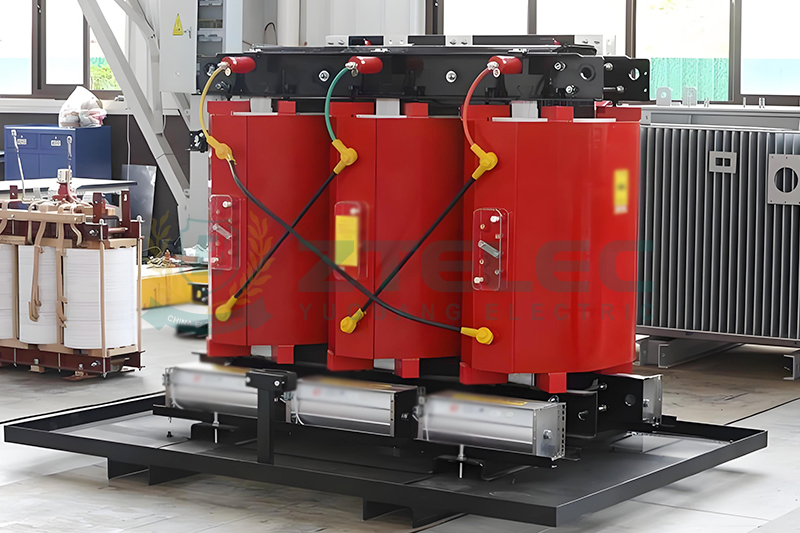
Side-by-Side Summary
| Factor | 1 × 3500 kVA | 2 × 1750 kVA |
|---|---|---|
| Transformer purchase cost | Lower | Higher |
| Switchgear and cabling | Fewer items, but very high current ratings | More items, but standard current ratings |
| Floor space | Smaller total footprint | Larger total footprint |
| No-load loss | Lower in total | Higher in total, but one unit can be switched off |
| Redundancy | None | Possible, depending on sizing |
| Maintenance without outage | Not possible | Possible |
| LV fault level | Higher | Lower when run split |
| Transport and installation | Heavier single lift | Lighter, easier lifts |
When to Choose One 3500 kVA Transformer
A single unit makes sense when the budget is tight and the load can tolerate a planned or unplanned outage. It also fits sites with limited design complexity, such as simple commercial buildings, warehouses and many solar or utility connection points where the grid operator already provides backup elsewhere.
It is also a good choice when the load is steady and close to full capacity, since running one well-loaded transformer is efficient. Consider keeping a spare transformer in stock or agreeing a fast replacement plan with your supplier.
When to Choose Two 1750 kVA Transformers
Two units are the better choice when continuity of supply matters. Typical examples include manufacturing lines with costly stoppages, hospitals, data centers, process industries, mines and critical infrastructure.
They are also attractive when the load will grow in phases. You can install one 1750 kVA unit first and add the second later, which spreads the capital cost. The same applies to sites with strong seasonal variation, where one unit can be shut down during low demand.
Design Tips for a Two-Transformer Layout
Specify Matching Units
Use identical transformers with the same ratio, vector group and impedance. If you plan parallel operation, impedance should be within about 10 percent between the two units, and their voltage ratios must match closely. Mismatched units share load unevenly and can overheat.
Plan the Bus Tie Logic
Decide early whether the tie breaker is normally open or normally closed. Add an automatic transfer scheme and interlocks to prevent unsafe paralleling. Test the scheme during commissioning, not only on paper.
Set the Loading Target
For real backup, size the normal load so that one transformer can carry all critical loads alone. A common target is to keep each unit below 50 to 60 percent of its rating in normal operation, depending on the allowed overload and cooling method.
Consider Type and Cooling
Oil-immersed units are efficient and economical at this size, while cast resin dry-type units suit indoor sites with strict fire safety rules. Forced cooling fans can add a short-term overload margin, which helps in emergency operation with one unit out of service.
Frequently Asked Questions
Is 2×1750 kVA the same as 3500 kVA?
Only in total installed capacity. Two units do not share load perfectly, and a failed unit takes its capacity with it. Redundancy, fault level and cost all behave differently.
Which option has lower long-term cost?
It depends on the load profile. A steady, high load favors the single unit. A fluctuating load, with long low-demand periods, can favor two units because one can be switched off to save no-load loss.
Can I upgrade later?
Two smaller units make staged expansion easier. A single 3500 kVA unit gives no easy upgrade path beyond its rating without replacement.
Do I need a short-circuit study?
Yes. Fault levels, breaker ratings, protection settings and arc flash results all depend on the final layout, so a study should be part of the design before ordering equipment.
There is no universal winner between one 3500 kVA transformer and two 1750 kVA transformers. The single unit wins on first cost, space and simplicity. The dual-unit layout wins on availability, maintenance flexibility and fault-level control.
Start from the cost of downtime, then check the load profile, the available space and the switchgear budget. Ask your supplier to quote both options with the same specification, and compare total cost of ownership rather than purchase price alone. If you share your voltage level, load profile and site conditions, our engineering team can help you size and quote the best configuration.
1750 kVA transformer
3500 kVA vs 2x1750 kVA transformer
two transformers vs one
3500 kVA transformer
23 kV transformer design
- more+releated article
- 2026-10-263500 kVA vs 2×1750 kVA Transformers: Cost &am
- 2026-10-2150 Hz vs 60 Hz Transformer: Design Differences
- 2026-10-20ZTELEC to Showcase Power Equipment at POWER GR
- 2026-10-19How to Size a 3500 kVA Transformer: Load &
- 2026-10-163500 kVA Transformer Nameplate Guide: Ratings,
- 2026-10-1523 kV Transformer Secondary Voltage: 400 V vs
- 2026-10-143500 kVA 23 kV Oil-Immersed Transformer: Speci
- 2026-10-13Pad-Mounted Transformer: Applications in Under
- 2026-10-12Meet ZTELEC at Powerexpo Almaty 2026
- 2026-10-10S11 vs. S13 vs. S20 Oil Immersed Transformers:
- ELECTRICAL INSULATION BOARD MATERIALS
- ELECTRICAL INSULATION MATERIALS
- POWER TRANSFORMER
- ENAMELED WIRE
- SWITCHGEAR


FR-4 Copper-Free Laminate | High-Performance Insulation Material

FR-4 Copper Clad Laminate Manufacturer & Supplier
3500 kVA transformer
1750 kVA transformer
two transformers vs one
3500 kVA vs 2x1750 kVA transformer
23 kV transformer design
50 Hz vs 60 Hz transformer
transformer frequency difference
POWER GRIDS 2026 exhibition
compact substation
ZTELEC Yuguang Electric
Power transformer
load factor
how to size a transformer
transformer sizing
demand factor
vector group
transformer nameplate guide
3500 kVA transformer nameplate
23 kV transformer secondary voltage
416 V transformer
400 V vs 416 V
400 V transformer
23 kV oil-immersed transformer
3500 kVA oil immersed transformer specifications
pad-mounted transformer