
3500 kVA Oil-Immersed Transformer: Altitude Derating
A 3500 kVA oil-immersed transformer is a common choice for industrial plants, mines, solar farms and distribution substations. Many of these projects sit in mountain regions, far above sea level.
At altitude, the air is thinner. That changes both how the transformer cools and how its external insulation performs. This guide explains what altitude derating means, how much correction you need, and how to specify the transformer correctly.
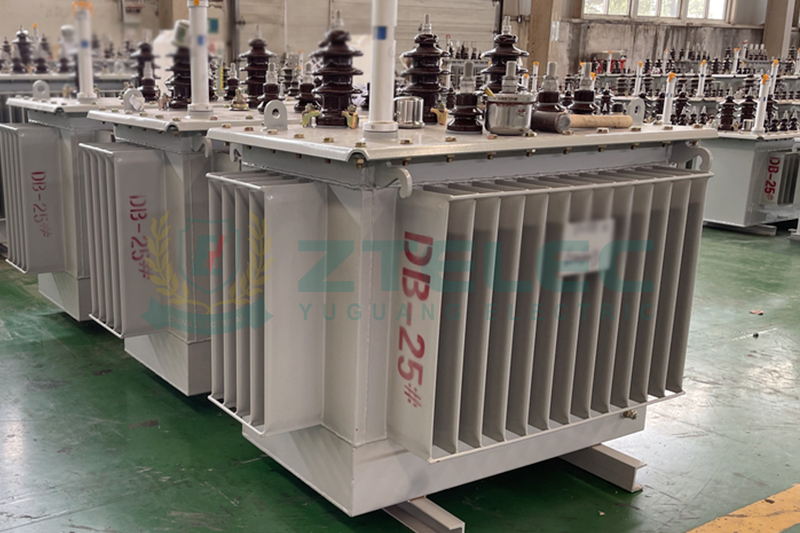
Why Altitude Matters for a 3500 kVA Transformer
An oil-immersed transformer depends on the surrounding air to remove heat. Losses heat the core and windings, the oil carries that heat to the radiators, and the air takes it away.
When air density falls, each radiator removes less heat. Temperature rise goes up for the same load. If nothing is corrected, the insulation ages faster and service life drops.
Altitude also weakens the dielectric strength of air. This affects bushings, air clearances and any exposed live parts. The oil and paper inside the tank are not affected, but the parts outside the tank are.
The 1000 m Standard Service Condition
Transformer standards such as IEC 60076 assume normal service conditions. One of them is an installation altitude not exceeding 1000 m above sea level.
Below 1000 m, no altitude correction is needed. Above 1000 m, you have two separate questions to answer:
Cooling: can the transformer carry its rated 3500 kVA without exceeding temperature rise limits?
Insulation: do the external insulation distances and bushings still withstand the required test voltages in thinner air?
How Altitude Affects Capacity and Temperature Rise
Why Cooling Capacity Falls
At 3000 m, atmospheric pressure is roughly 30% lower than at sea level. Lower air density means weaker natural convection around the radiators and less effective fan cooling on ONAF units.
The oil circuit inside the tank behaves the same way. Only the air side is affected. That is why the correction depends on the cooling method.
IEC Method: Reduce the Temperature Rise Limit
IEC 60076-2 handles this through temperature rise limits. When a transformer is tested at low altitude but will operate above 1000 m, the permitted temperature rise at test is reduced.
The commonly applied correction is 1 K per 400 m above 1000 m for natural air cooling (ONAN), and 1 K per 250 m for forced air cooling (ONAF). The transformer must then be designed with enough cooling surface to meet the tighter limit.
IEEE Method: Reduce the kVA Rating
IEEE C57.12.00 takes a different approach. It reduces the rated kVA of a standard unit by a fixed percentage for each 100 m above 1000 m. Typical values are about 0.4% per 100 m for self-cooled units and about 0.5% per 100 m for forced-air cooled units.
Both methods lead to the same practical result: either the transformer is built with more cooling margin, or it carries less load.
| Item | IEC 60076-2 approach | IEEE C57.12.00 approach |
|---|---|---|
| What is corrected | Temperature rise limit at test | Rated kVA of a standard unit |
| Natural cooling (ONAN) | About 1 K per 400 m above 1000 m | About 0.4% per 100 m above 1000 m |
| Forced air (ONAF) | About 1 K per 250 m above 1000 m | About 0.5% per 100 m above 1000 m |
Always confirm the exact factors in the standard edition named in your contract. Values can differ between editions and between national standards.
The Ambient Temperature Offset
Air usually gets colder as altitude rises, roughly 6 °C per 1000 m. This can partly cancel the loss of cooling.
However, the standards apply their corrections regardless of site climate. If you want credit for a cold climate, it must be written into the specification and agreed with the manufacturer. Do not assume it.
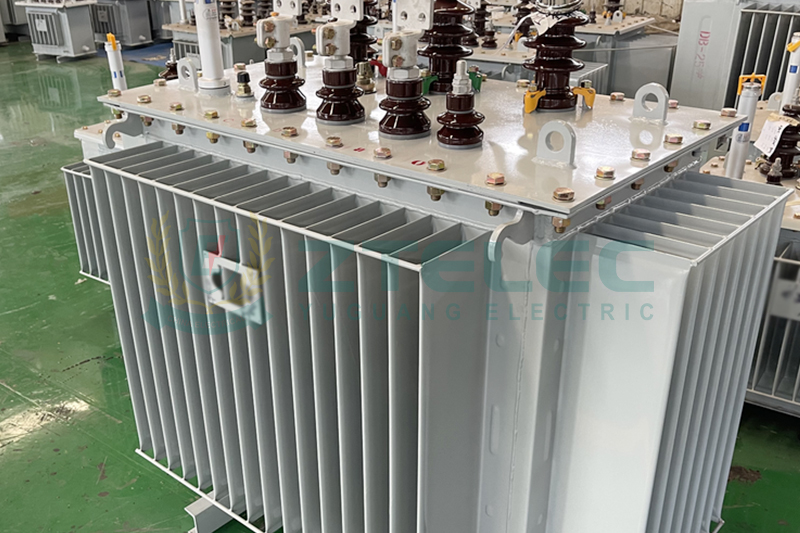
How Altitude Affects Insulation
Internal Insulation: No Correction
The windings, core and oil-paper insulation inside the sealed tank do not depend on air pressure. A 3500 kVA transformer needs no internal insulation change for altitude.
External Insulation: Correction Required
Bushings, air clearances between live parts, and cable boxes are exposed to the air. At altitude, the same distance withstands a lower voltage.
IEC 60076-3 and IEC 60071-2 give correction methods. A common rule of thumb is to increase the required external withstand voltage by about 1% for every 100 m above 1000 m.
In practice, this means one or more of the following:
Higher-rated bushings with a greater insulation level and longer creepage distance.
Larger air clearances between phases and to earth in the cable box or air terminal compartment.
Longer bushing shed profiles if pollution and altitude combine at the site.
Worked Example: 3500 kVA ONAN at 3000 m
Here is a simple example using round numbers. It shows the scale of the correction. It is not a design calculation.
| Parameter | Value |
|---|---|
| Transformer | 3500 kVA, oil-immersed, ONAN |
| Site altitude | 3000 m |
| Altitude above 1000 m | 2000 m |
| Winding temperature rise limit | 65 K standard |
| IEC correction (2000 m ÷ 400 m) | 5 K reduction, so 60 K at test |
| Approximate allowable load if a standard unit is used | About 3300 kVA |
| IEEE-style kVA reduction (0.4% × 20) | 8%, so about 3220 kVA |
| External lightning impulse requirement (example 125 kV) | About 150 kV equivalent at 1% per 100 m |
The message is clear. A standard 3500 kVA unit installed at 3000 m could safely deliver only about 3200 to 3300 kVA. And the external insulation would be underrated by around 20%.
If your project needs the full 3500 kVA at 3000 m, the transformer must be designed for that altitude from the start.
Two Ways to Handle Altitude
Option 1: Derate a Standard Transformer
You buy a standard design and accept a lower usable capacity. This can work when the load is well below nameplate or when a spare margin already exists.
The external insulation still needs attention. Derating does not fix underrated bushings or short air clearances.
Option 2: Order a Transformer Designed for the Site
You specify the site altitude and require the full 3500 kVA at that altitude. The manufacturer then increases radiator surface, adds fans if needed, and selects bushings and clearances for the corrected insulation level.
This costs more at purchase. But you keep your full capacity and avoid buying a bigger transformer just to compensate for derating. For continuous industrial loads, this is usually the better route.
What to Include in Your Specification
A clear specification prevents disputes and redesign. Make sure your inquiry states the following:
Site altitude in meters, not just a range such as "high altitude".
Maximum, average and minimum ambient temperature at the site.
Required rating at site conditions, for example 3500 kVA at 3000 m, not just 3500 kVA nameplate.
Cooling class: ONAN, ONAF, or ONAN/ONAF with the kVA at each stage.
Applicable standard and edition: IEC 60076, IEEE C57.12.00, or a national standard.
Insulation levels: required lightning impulse and power-frequency withstand voltages, stated at site altitude or at sea level with the correction method named.
Pollution level if the site is dusty, coastal or industrial, since this affects creepage distance as well.
Common Mistakes to Avoid
Treating altitude as only a cooling issue. Many buyers correct the kVA but forget the bushings and air clearances.
Quoting altitude as a range. A site at 2500 m and one at 4500 m need very different designs.
Mixing the two correction methods. Applying both an IEC temperature rise reduction and an IEEE kVA reduction can double count the correction and oversize the unit.
Ignoring transport and installation. A larger radiator bank changes the shipping dimensions and the foundation plan. Check these early.
Frequently Asked Questions
Does a 3500 kVA oil-immersed transformer need derating at 1000 m?
No. 1000 m is the standard service limit. Corrections apply only to the portion above 1000 m.
Is altitude derating the same for dry-type and oil-immersed transformers?
No. Dry-type transformers rely entirely on air for both cooling and insulation, so they are usually affected more strongly. Oil-immersed units are affected mainly through radiator cooling and external insulation.
Can I just buy a bigger transformer instead?
Sometimes, yes. A 4000 kVA unit could carry 3500 kVA at moderate altitude. But it does not solve the external insulation issue, and it costs more in material and losses than a purpose-designed 3500 kVA unit.
Is a test at the actual site altitude required?
No. Tests are done in the factory at low altitude. The temperature rise limits are tightened to prove the transformer will perform at the site altitude.
Altitude derating for a 3500 kVA oil-immersed transformer comes down to two checks: cooling and external insulation. Above 1000 m, both need correction.
State the exact site altitude, the ambient temperatures and the required rating at site conditions in your inquiry. Then ask the manufacturer to confirm temperature rise limits, bushing ratings and air clearances in writing. That one step avoids most altitude-related problems on high-elevation projects.
transformer altitude derating
high altitude transformer
3500 kVA oil-immersed transformer
transformer derating above 1000 m
3500 kVA vs 2x1750 kVA transformer
- more+releated article
- 2026-10-273500 kVA Oil-Immersed Transformer: Altitude De
- 2026-10-263500 kVA vs 2×1750 kVA Transformers: Cost &am
- 2026-10-2150 Hz vs 60 Hz Transformer: Design Differences
- 2026-10-20ZTELEC to Showcase Power Equipment at POWER GR
- 2026-10-19How to Size a 3500 kVA Transformer: Load &
- 2026-10-163500 kVA Transformer Nameplate Guide: Ratings,
- 2026-10-1523 kV Transformer Secondary Voltage: 400 V vs
- 2026-10-143500 kVA 23 kV Oil-Immersed Transformer: Speci
- 2026-10-13Pad-Mounted Transformer: Applications in Under
- 2026-10-12Meet ZTELEC at Powerexpo Almaty 2026
- ELECTRICAL INSULATION BOARD MATERIALS
- ELECTRICAL INSULATION MATERIALS
- POWER TRANSFORMER
- ENAMELED WIRE
- SWITCHGEAR

FR-4 Copper-Free Laminate | High-Performance Insulation Material

FR-4 Copper Clad Laminate Manufacturer & Supplier
transformer derating above 1000 m
3500 kVA oil-immersed transformer
transformer altitude derating
high altitude transformer
3500 kVA transformer
two transformers vs one
1750 kVA transformer
3500 kVA vs 2x1750 kVA transformer
23 kV transformer design
50 Hz vs 60 Hz transformer
transformer frequency difference
compact substation
POWER GRIDS 2026 exhibition
ZTELEC Yuguang Electric
Power transformer
demand factor
load factor
how to size a transformer
transformer sizing
transformer nameplate guide
vector group
3500 kVA transformer nameplate
23 kV transformer secondary voltage
400 V transformer
416 V transformer