
10/35 kV Dry-Type Distribution Transformer Price Composition and Configuration Selection Guide
10/35 kV dry-type distribution transformers feature high safety, environmental protection, low maintenance requirements, and strong short-circuit withstand capability. They are widely used in substations, industrial parks, commercial complexes, renewable energy projects, and urban power grid construction. In transformer procurement, understanding price composition and selecting the right configuration are crucial for project cost control. This guide provides a professional analysis of the major factors influencing the price of 10/35 kV dry-type distribution transformers.
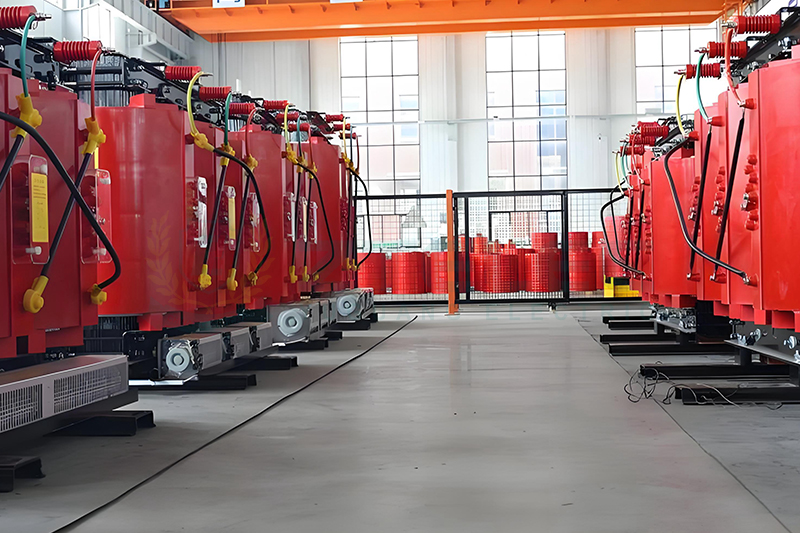
Analysis of Dry-Type Distribution Transformer Price Composition
1. Core Material Costs
Core materials significantly affect transformer cost. High-grade cold-rolled silicon steel sheets such as B30P105 cost 20–30% more than ordinary silicon steel, directly impacting no-load loss and overall price. Oxygen-free copper windings are 25–40% more expensive than aluminum windings, but offer lower losses and longer service life. For insulation systems, Class H (180℃) materials cost approximately 10–15% more than Class F (155℃).
2. Manufacturing Process and Technology Costs
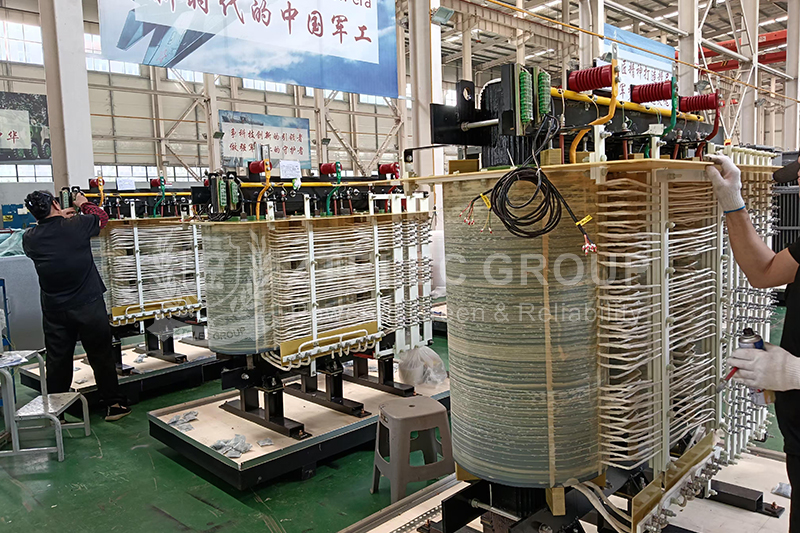
Foil winding processes cost 5–10% more than layer winding but provide stronger short-circuit withstand capability. Additionally, vacuum casting is more expensive than conventional casting. Cooling technologies—such as natural air cooling (ANAN) or forced air cooling (AFAF)—also influence the overall cost based on different structural configurations.
3. Energy Efficiency Grade Premium
The cost of a Level 1 energy efficiency transformer (e.g., SCB18) is 15–25% higher than a Level 3 transformer (e.g., SCB13). Although the initial investment is higher, the improved efficiency typically recovers additional cost within 3–5 years through reduced energy consumption.
4. Additional Configuration Costs
IP protection rating significantly affects cost. An IP23 transformer is 3–5% more expensive than IP20. Intelligent temperature controllers add 800–2000 RMB, while communication interfaces such as RS485/Modbus add 500–1500 RMB.
5. Brand and Service Premium
Top-tier transformer brands usually cost 10–30% more but offer extended warranties (5–10 years) and value-added services including installation, commissioning, and technical training.
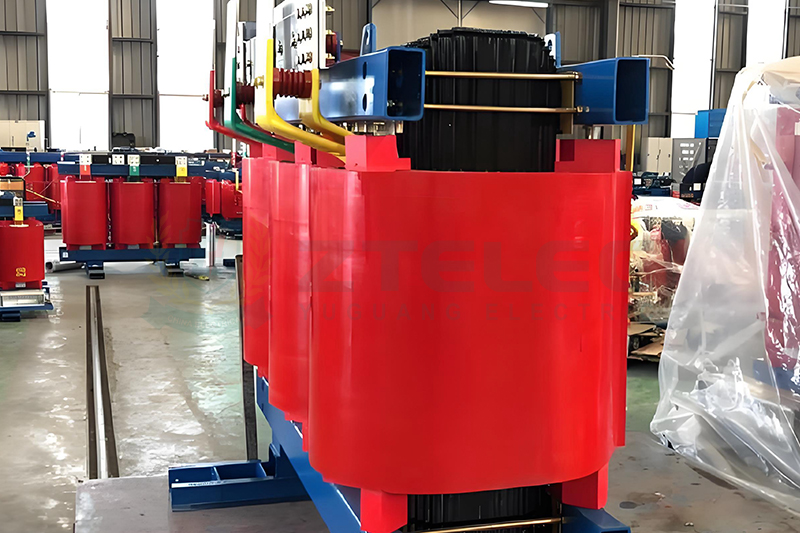
10/35 kV Dry-Type Transformer Configuration Selection Guide
1. Reasonable Capacity Selection (kVA)
Capacity selection must consider load type, maximum demand (MD), diversity factor (DU), and future expansion. A common calculation is:
Rated transformer capacity ≈ Actual load capacity ÷ Allowable load rate (0.6–0.8)
2. Tap Range Selection
Typical tap configurations include ±2×2.5% for standard scenarios and ±3×2.5% or ±5% for grids with greater fluctuations. A wider tap range offers better adaptability but slightly increases cost.
3. Determining Energy Efficiency Requirements
For industrial and commercial users with high energy consumption, high-efficiency models are recommended to reduce long-term electricity costs. For limited budgets or general applications, national or European Level 3 efficiency products are adequate.
4. Enclosure and Protection Rating (IP Standard)
IP20 is suitable for indoor environments, IP23 provides basic drip protection, and IP54 is recommended for outdoor locations requiring dustproof and waterproof designs. Higher protection ratings increase enclosure cost.
5. Special Environmental Configuration
In humid environments (≤95% RH), moisture-proof transformers should be selected. For high altitudes, the rated capacity must be reduced by 5–6% per 1000 meters. Polluted or seismic zones require enhanced IP ratings or structural reinforcement.
How to Reduce Procurement Costs?
1. Choose Copper or Aluminum Windings Wisely
For applications without continuous high-load operation, aluminum windings offer a more economical choice without compromising performance.
2. Avoid Over-Configuration
Indoor transformers typically only require IP20. Choosing unnecessarily high specifications such as IP54 increases costs without providing extra value for normal conditions.
3. Select Reliable Manufacturers
Manufacturers certified to IEC, GB, and IEEE standards minimize after-sales risks and ensure long-term stability.
4. Request Detailed Loss Parameters
Understanding no-load and load losses helps evaluate long-term operating costs. Procurement decisions should consider total life-cycle cost rather than purchase price alone.
Choosing the right 10/35 kV dry-type distribution transformer requires a comprehensive assessment of technical performance, energy efficiency, operating environment, and total cost of ownership. Conducting a detailed load analysis and consulting experienced electrical engineers ensures the selected configuration meets current project needs while allowing for future expansion. Although high-efficiency transformers involve greater upfront cost, they deliver substantial long-term economic benefits.
oil immersed transformer lifespan
oil immersed transformer maintenance
transformer lifecycle
transformer insulation aging
dry type transformer temperature monitoring
- more+releated article
- 2026-05-11How Long Does an Oil-Immersed Transformer Last
- 2026-05-08Modern Power System Dry-Type Transformer Insta
- 2026-05-07Oil-Immersed Transformer Overheating: Causes,
- 2026-05-07Dry-Type Transformers for Data Centers: 2026 R
- 2026-04-30Air-Core Reactor vs Iron-Core Reactor: How to
- 2026-04-29Compact Enclosed Transformer for Smart Grid: T
- 2026-04-2812-Pulse and 24-Pulse Phase-Shifting Transform
- 2026-04-27Oil-Immersed Transformers for Industrial Plant
- 2026-04-25Why Dry-Type Transformers Are Preferred for Ho
- 2026-04-24Enclosed Transformer Outdoor Solutions: IP Pro
- ELECTRICAL INSULATION BOARD MATERIALS
- ELECTRICAL INSULATION MATERIALS
- POWER TRANSFORMER
- ENAMELED WIRE
- SWITCHGEAR


transformer insulation aging
transformer lifecycle
oil immersed transformer lifespan
oil immersed transformer maintenance
dry type transformer installation
dry type transformer temperature monitoring
dry type transformer maintenance
dry type transformer sizing
transformer cooling system failure
transformer overheating causes
oil immersed transformer overheating
transformer oil temperature
harmonic mitigation
dry type transformer
K factor transformer
data center transformer
Cast resin transformer
insulation oil degradation
DGA analysis transformer
transformer fault analysis
oil immersed transformer failure
smart grid transformer
compact enclosed transformer
integrated distribution transformer
compact transformer substation