
How Does Advanced Insulation Technology Improve the Operating Efficiency of 35kV Oil-Immersed Transformers?
35kV oil-immersed transformers are a key component in medium-voltage power transmission and distribution systems. They are widely used in utility substations, industrial facilities, and renewable energy projects. As energy efficiency standards become stricter and grid reliability requirements continue to rise, conventional insulation designs are no longer sufficient to meet modern operating demands.
Advanced insulation technology has therefore become a critical factor in improving the operating efficiency, reliability, and service life of 35kV oil-immersed transformers. This article analyzes how insulation innovation contributes to performance improvement from three perspectives: insulation material upgrades, insulation structure optimization, and customized system-level solutions.
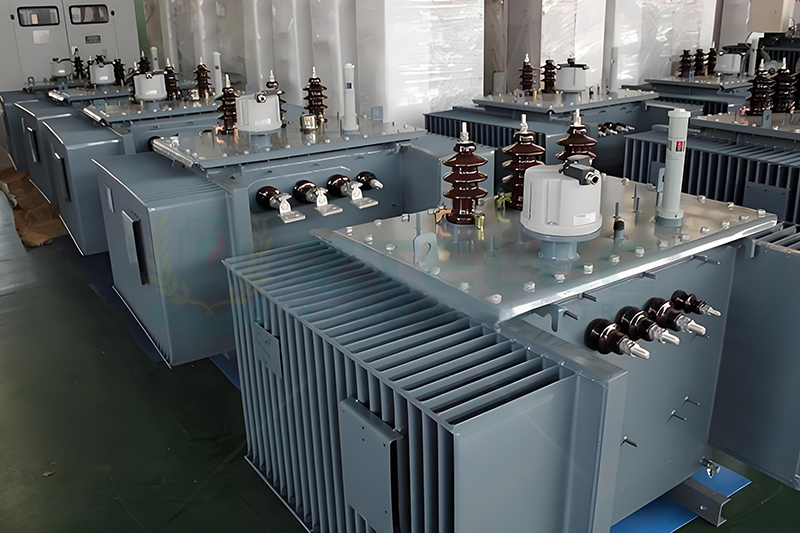
Upgraded Application of Insulation Materials
The selection and performance of insulation materials directly affect transformer losses, thermal stability, and long-term reliability. Recent advances in insulation materials have significantly enhanced transformer efficiency.
High-Purity Electrical Paper and Modified Insulating Paperboard
Modern high-purity electrical paper and modified insulating paperboard are designed with dense and uniform fiber structures. This improves dielectric strength and enhances the overall insulation margin of the transformer.
Optimized oil absorption properties strengthen the oil-paper composite insulation system, while a lower dielectric loss tangent (tanδ) reduces dielectric losses during operation. Together, these improvements help maintain high efficiency and stable performance over long service periods.
Thermally Upgraded Insulation (TUP)
Thermally upgraded insulation paper, commonly known as TUP, offers significantly higher heat resistance compared with conventional cellulose insulation. This allows transformers to operate safely at higher temperatures without accelerating insulation aging.
In 35kV oil-immersed transformers, the use of TUP can either increase transformer capacity within the same physical size or reduce operating losses under identical load conditions. As a result, overall efficiency and design life are both improved.
Low-Loss Insulating Oil and New Insulating Fluids
Insulating oil plays a vital role in both insulation and cooling. Advanced insulation technology includes the use of low-dielectric-loss mineral oils with improved oxidation resistance, which helps maintain stable insulation performance over time.
In addition, ester-based insulating oils with high ignition points and excellent heat dissipation characteristics are increasingly adopted. These oils reduce the risk of partial discharge, improve thermal performance, and minimize energy losses caused by insulation degradation.
Optimized Insulation Structure Design
Beyond material improvements, insulation structure design has a direct impact on electric field distribution and thermal behavior inside the transformer. Advanced insulation systems often adopt multi-layer composite insulation structures.
By precisely controlling electric field distribution, these designs reduce localized electrical stress and improve winding space utilization. This enables smaller transformer size and lower weight for the same capacity, while also reducing energy loss during load operation.
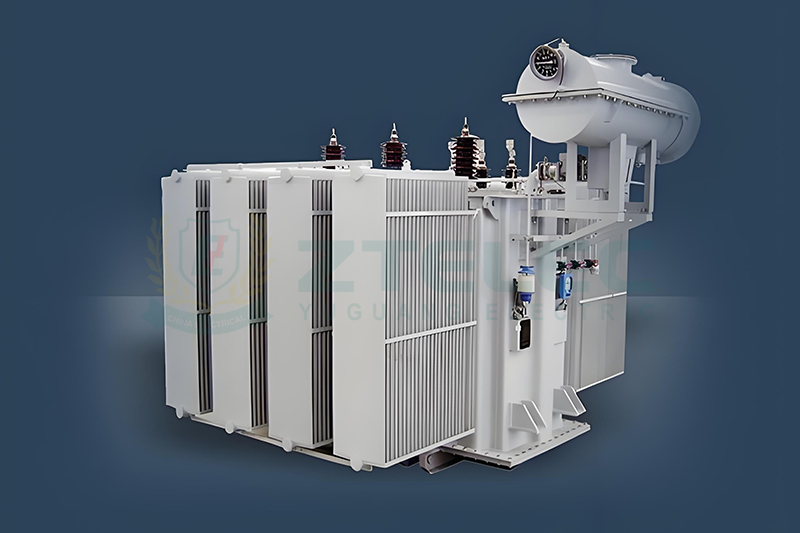
Customized Insulation Solutions
Customized insulation solutions are increasingly used to meet specific operating conditions and performance targets. One key approach involves using irregularly shaped insulation components to reduce local electric field concentration and prevent partial discharge.
At the same time, optimized cooling channel design improves oil circulation and internal temperature distribution. Lower operating temperatures slow insulation aging, enhance reliability, and contribute directly to higher operating efficiency.
Core Value of High-Efficiency Insulation Systems
High-efficiency insulation systems deliver benefits that extend far beyond immediate efficiency gains. They significantly reduce the probability of partial discharge and sudden transformer failures, improving overall system reliability.
By slowing down transformer oil deterioration and solid insulation aging, advanced insulation technologies extend maintenance intervals and lower operation and maintenance costs. They also improve transformer adaptability under complex operating conditions, which is especially important for public power grids and industrial users requiring continuous operation.
Advanced insulation technology has evolved from a basic protective function into a core driver of transformer performance improvement. Through material innovation, structural optimization, and system-level integration, 35kV oil-immersed transformers can achieve substantial gains in operating efficiency, reliability, and service life.
These technological upgrades not only reduce energy losses, but also support energy saving, emission reduction, and the sustainable development of modern power systems. In response to grid modernization and energy transition demands, power utilities, industrial users, and equipment manufacturers should actively adopt advanced insulation technology solutions to achieve both economic and environmental benefits.
oil immersed transformer lifespan
oil immersed transformer maintenance
transformer lifecycle
transformer insulation aging
dry type transformer temperature monitoring
- more+releated article
- 2026-05-11How Long Does an Oil-Immersed Transformer Last
- 2026-05-08Modern Power System Dry-Type Transformer Insta
- 2026-05-07Oil-Immersed Transformer Overheating: Causes,
- 2026-05-07Dry-Type Transformers for Data Centers: 2026 R
- 2026-04-30Air-Core Reactor vs Iron-Core Reactor: How to
- 2026-04-29Compact Enclosed Transformer for Smart Grid: T
- 2026-04-2812-Pulse and 24-Pulse Phase-Shifting Transform
- 2026-04-27Oil-Immersed Transformers for Industrial Plant
- 2026-04-25Why Dry-Type Transformers Are Preferred for Ho
- 2026-04-24Enclosed Transformer Outdoor Solutions: IP Pro
- ELECTRICAL INSULATION BOARD MATERIALS
- ELECTRICAL INSULATION MATERIALS
- POWER TRANSFORMER
- ENAMELED WIRE
- SWITCHGEAR


transformer insulation aging
transformer lifecycle
oil immersed transformer lifespan
oil immersed transformer maintenance
dry type transformer installation
dry type transformer temperature monitoring
dry type transformer maintenance
dry type transformer sizing
transformer cooling system failure
transformer overheating causes
oil immersed transformer overheating
transformer oil temperature
harmonic mitigation
dry type transformer
K factor transformer
data center transformer
Cast resin transformer
insulation oil degradation
DGA analysis transformer
transformer fault analysis
oil immersed transformer failure
smart grid transformer
compact enclosed transformer
integrated distribution transformer
compact transformer substation