
Oil Immersed Transformers Explained: Construction & Cooling Systems
Oil immersed transformers are essential components in modern power transmission and distribution systems. They are widely used in utility substations, industrial facilities, renewable energy projects, commercial power networks, and large infrastructure developments.
These transformers convert electrical voltage levels while managing the heat generated by the transformer core and windings. Their ability to combine electrical insulation with efficient thermal management makes oil immersed transformers a reliable solution for medium-voltage and high-voltage applications.
Understanding oil immersed transformer construction and cooling systems can help engineers, procurement teams, and facility managers select equipment that matches their voltage, capacity, load profile, installation environment, and long-term maintenance requirements.
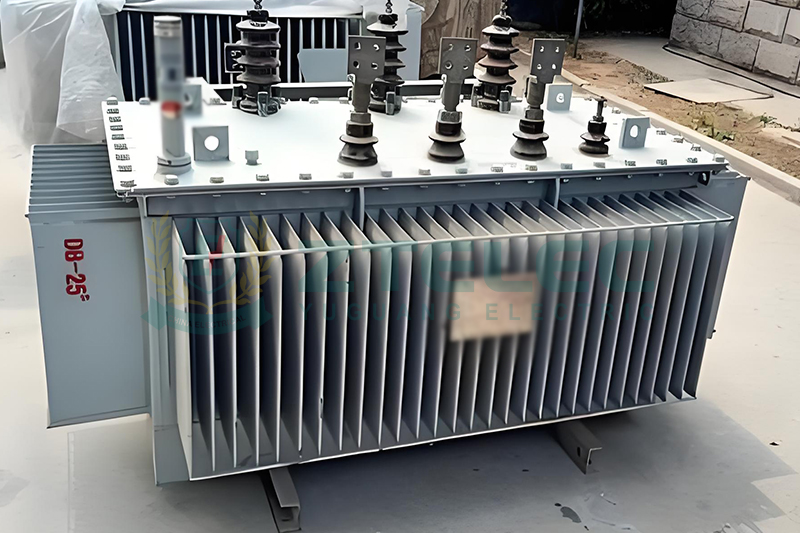
What Is an Oil Immersed Transformer?
An oil immersed transformer, also known as an oil-filled transformer or liquid-filled transformer, is a power transformer in which the transformer core and windings are immersed in insulating liquid inside a sealed steel tank.
The insulating oil performs two essential functions. First, it provides electrical insulation between energized components. Second, it transfers heat generated during operation away from the transformer core and windings.
Heat produced inside the transformer is absorbed by the insulating oil and transferred to the transformer tank, radiators, or external cooling equipment. The cooled oil then returns to the active parts of the transformer, creating a continuous cooling cycle.
Compared with dry-type transformers, oil immersed transformers can typically support higher voltage levels and larger power ratings while maintaining effective cooling. For this reason, they are commonly selected for outdoor substations, utility distribution networks, industrial plants, renewable energy facilities, and large power systems.
Main Components of an Oil Immersed Transformer
The performance and reliability of an oil immersed transformer depend on several critical components. Each part contributes to electrical insulation, mechanical strength, heat dissipation, and safe long-term operation.
Transformer Core
The transformer core is usually manufactured from laminated grain-oriented electrical steel. The steel laminations are designed to reduce eddy current losses while providing high magnetic permeability and efficient magnetic flux distribution.
Two common transformer core configurations are core-type construction and shell-type construction.
In a core-type transformer, the windings are arranged around the transformer core legs. This design provides effective cooling and convenient access during manufacturing and maintenance.
In a shell-type transformer, the magnetic core structure surrounds a larger portion of the windings. This configuration can provide high mechanical strength and strong resistance to electromagnetic forces during short-circuit conditions.
The final core design depends on factors such as transformer capacity, voltage class, efficiency requirements, manufacturing technology, and application conditions.
Transformer Windings
The primary and secondary windings are typically manufactured from copper or aluminum conductors. Copper windings are often selected for high conductivity and mechanical strength, while aluminum windings can provide a cost-effective alternative when properly designed.
The conductors are insulated using materials compatible with transformer oil, including insulating paper and high-temperature insulation systems. These materials help maintain dielectric strength and reduce the risk of electrical breakdown.
Winding design must also withstand mechanical forces generated during short circuits. Proper mechanical support is essential to prevent deformation and maintain long-term transformer reliability.
Transformer Tank
The transformer tank contains the core, windings, and insulating liquid. It is generally manufactured from welded steel plates and designed to withstand internal pressure, vacuum conditions during manufacturing and maintenance, and external environmental stresses.
Depending on the transformer design, the tank may include a conservator tank, breather assembly, pressure relief device, oil level monitoring equipment, and other protective components.
A conservator tank provides space for insulating oil to expand and contract as the operating temperature changes. Breather systems help reduce moisture entering the transformer, while pressure relief devices protect the equipment during abnormal internal pressure conditions.
Large conservator-type transformers may also use a Buchholz relay to detect gas accumulation caused by developing internal faults.
Transformer Bushings
Transformer bushings provide insulated pathways for high-voltage and low-voltage conductors to pass through the grounded transformer tank.
They must maintain sufficient dielectric strength while supporting electrical and mechanical loads. Porcelain bushings remain widely used, while composite silicone bushings are increasingly selected because of their lighter weight and strong performance in polluted or demanding environments.
Insulating Oil
Insulating oil is one of the most important components in an oil immersed transformer. It provides electrical insulation while also acting as a heat transfer medium.
Mineral oil remains the most widely used transformer insulating liquid because of its proven performance and cost efficiency. However, natural ester and synthetic ester fluids are becoming increasingly popular in applications where higher fire safety, biodegradability, and improved environmental performance are required.
Transformer oil must maintain suitable dielectric strength and controlled levels of moisture and chemical degradation. Regular oil testing is therefore an important part of transformer maintenance.
Why Transformer Cooling Systems Are Important
Every transformer generates heat during operation. Core losses, including hysteresis and eddy current losses, generate heat in the magnetic core. Winding losses, commonly referred to as I²R losses, generate additional heat in the transformer conductors.
If this heat is not removed effectively, transformer temperatures can increase beyond recommended operating limits. Excessive temperature accelerates insulation aging, reduces oil quality, and can shorten the overall service life of the transformer.
An efficient oil immersed transformer cooling system helps maintain acceptable operating temperatures, improve reliability, and support higher loading capacity.
The selected cooling method can also influence transformer size, rated capacity, energy consumption, noise levels, maintenance requirements, and installation costs.
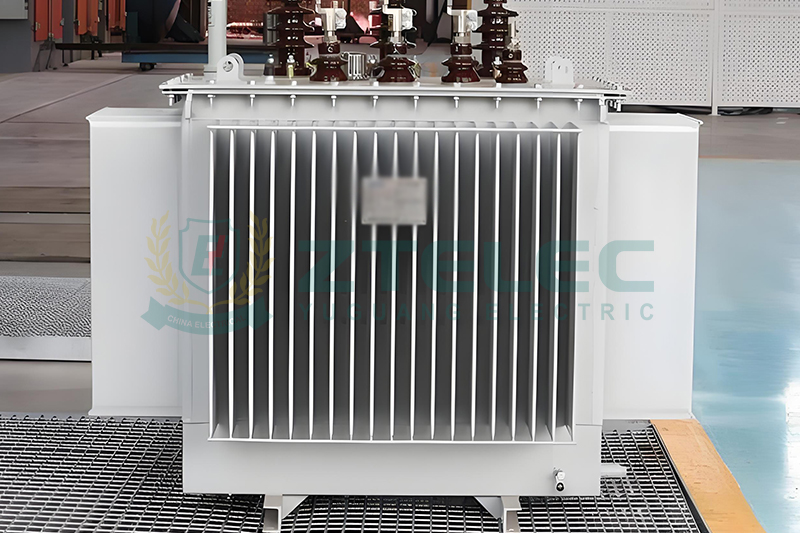
Types of Oil Immersed Transformer Cooling Systems
Oil immersed transformer cooling systems are commonly identified using standardized letter designations. These designations describe the cooling medium and whether natural or forced circulation is used.
ONAN Cooling: Oil Natural, Air Natural
ONAN, meaning Oil Natural Air Natural, is one of the most common cooling methods for small and medium-sized oil immersed transformers.
During operation, heated oil naturally rises from the transformer windings and core. The oil transfers heat to radiators or cooling surfaces, where the heat is released naturally into the surrounding air. The cooled oil then returns to the lower part of the transformer tank.
ONAN cooling does not require cooling fans or oil pumps. As a result, the system is relatively simple, quiet, energy-efficient, and easy to maintain.
This cooling method is suitable for transformers with moderate load levels where natural oil circulation and natural air convection provide sufficient cooling capacity.
ONAF Cooling: Oil Natural, Air Forced
ONAF, meaning Oil Natural Air Forced, increases cooling performance by using fans to force air across the transformer radiators.
The transformer oil continues to circulate naturally, but the forced airflow removes heat from the radiator surfaces more quickly than natural air convection.
Many large distribution and power transformers use a combination of ONAN and ONAF cooling. The transformer may operate in ONAN mode under normal conditions and automatically activate cooling fans when the load or oil temperature increases.
This approach provides flexible cooling capacity while reducing fan energy consumption during lower-load operating periods.
OFAF Cooling: Oil Forced, Air Forced
OFAF, meaning Oil Forced Air Forced, uses both oil pumps and cooling fans to increase heat dissipation.
Oil pumps circulate the insulating liquid through the transformer cooling circuit, while fans force air across the radiators. This combination provides significantly greater cooling capacity than natural oil circulation systems.
OFAF cooling is commonly used for large power transformers operating under high continuous loads. Forced oil circulation also helps improve temperature distribution within the transformer.
OFWF Cooling: Oil Forced, Water Forced
OFWF, meaning Oil Forced Water Forced, uses pumps to circulate transformer oil through a heat exchanger. Water flows through separate channels and absorbs heat from the oil.
Because water has excellent heat transfer properties, OFWF cooling can provide high cooling efficiency in suitable installations.
This system may be used where a reliable water supply is available, including certain power generation facilities and specialized industrial applications.
Careful maintenance and monitoring are essential because water contamination of transformer oil can significantly reduce insulation performance.
ODAF Cooling: Oil Directed, Air Forced
ODAF cooling is designed for large transformers with high thermal loads. Instead of allowing oil to circulate freely through the transformer, the oil flow is directed through specific cooling channels within the windings.
Oil pumps and internal flow paths help deliver cooling directly to areas where heat generation is highest. Fans then remove heat from the external cooling equipment.
Directed oil flow can improve cooling performance at transformer hot spots and support higher power ratings.
ODWF Cooling: Oil Directed, Water Forced
ODWF cooling combines directed oil circulation with water-based heat exchangers.
The oil is guided through targeted winding cooling paths and then circulated through heat exchangers where water removes the heat.
This advanced cooling method is generally used in very large transformers or applications where maximum heat transfer efficiency is required.
How to Choose the Right Transformer Cooling System
Selecting the correct oil immersed transformer cooling system requires evaluating the transformer rating, expected load, installation environment, available space, and maintenance resources.
Transformer Capacity and Voltage Rating
Smaller distribution transformers can often operate effectively with ONAN cooling. Larger power transformers generally require additional cooling capacity through ONAF, OFAF, ODAF, or other forced cooling systems.
Ambient Temperature
High ambient temperatures reduce the ability of radiators to release heat into the surrounding environment. Transformers installed in hot climates may require larger radiator systems or forced cooling to maintain acceptable operating temperatures.
Load Profile
Transformers with fluctuating loads can benefit from multi-stage cooling systems. ONAN/ONAF configurations, for example, allow the transformer to increase cooling capacity when load or temperature rises.
Water Availability
Water-cooled systems such as OFWF and ODWF require a reliable and properly controlled water supply. These systems are generally unsuitable for locations where water availability or water quality cannot be maintained.
Noise and Installation Space
Cooling fans and pumps can increase operational noise and require additional installation space. These factors should be considered when transformers are installed near residential areas, commercial buildings, or noise-sensitive facilities.
Maintenance of Oil Immersed Transformers
Regular maintenance is essential for extending the service life of an oil immersed transformer and reducing the risk of unexpected failure.
Dissolved gas analysis, commonly known as DGA, can help identify early signs of internal overheating, arcing, or insulation problems by analyzing gases dissolved in the transformer oil.
Periodic oil testing can also monitor dielectric strength, moisture levels, acidity, and other indicators of insulation condition.
Maintenance programs should also include inspection of transformer breathers, seals, gaskets, bushings, radiators, cooling fans, pumps, pressure relief devices, and protection systems.
Keeping radiators clean and ensuring cooling equipment operates correctly are particularly important because reduced heat dissipation can increase transformer operating temperatures.
Advantages of Oil Immersed Transformers
Oil immersed transformers remain a preferred solution for medium and large power applications because they provide strong electrical insulation and efficient heat dissipation.
The use of insulating liquid allows these transformers to achieve high voltage and power ratings in compact designs. Their cooling systems can also be adapted to different operating conditions, from simple natural convection to advanced forced and directed cooling configurations.
When properly specified, installed, and maintained, an oil immersed transformer can provide reliable operation and a long service life.
Oil immersed transformers combine proven electrical insulation technology with highly effective cooling performance. Their construction includes critical components such as the magnetic core, windings, transformer tank, bushings, and insulating oil, all of which work together to ensure safe and efficient power transformation.
The cooling system is equally important. ONAN cooling provides a simple and reliable solution for many distribution transformers, while ONAF, OFAF, OFWF, ODAF, and ODWF systems provide additional cooling capacity for larger and more demanding applications.
Understanding oil immersed transformer construction and cooling systems helps engineers, project developers, and procurement teams select equipment that matches their capacity requirements, environmental conditions, and long-term operational goals. Choosing the right transformer design and cooling method can improve reliability, support efficient operation, and extend the service life of the entire power distribution system.
oil transformer cooling system
oil immersed transformer construction
Oil immersed transformer
oil filled transformer
1250 kVA cast resin transformer price
- more+releated article
- 2026-09-02Oil Immersed Transformers Explained: Construct
- 2026-09-011250 kVA Dry Type Transformer Price 2026: Cast
- 2026-08-31ZTELEC GROUP to Exhibit High-Performance Elect
- 2026-08-29Summer in the Mountains, Stronger Together | Z
- 2026-08-26Dry Type Transformer Supply Chain in 2026: Lea
- 2026-08-2633kV Prefabricated Substation for Utility Grid
- 2026-08-2433kV Gas Insulated Switchgear (GIS): Compact S
- 2026-08-24ZTELEC to Exhibit at Enlit Asia & MKI Elec
- 2026-08-21Dry Type Transformer for Data Centers: Why Rel
- 2026-08-19How to Read a 1000 kVA Oil-Filled Transformer
- ELECTRICAL INSULATION BOARD MATERIALS
- ELECTRICAL INSULATION MATERIALS
- POWER TRANSFORMER
- ENAMELED WIRE
- SWITCHGEAR


FR-4 Copper-Free Laminate | High-Performance Insulation Material

FR-4 Copper Clad Laminate Manufacturer & Supplier
oil filled transformer
Oil immersed transformer
oil transformer cooling system
oil immersed transformer construction
1250 kVA dry type transformer price
1250 kVA transformer price 2026
1250 kVA VPI transformer price
1250 kVA cast resin transformer price
electrical insulation materials
ZTelec Group
epoxy glass cloth laminat
Data Centre World Singapore 2026
company team building
employee team building activity
ZTELEC team building
dry type transformer lead time
transformer tariffs 2026
dry type transformer sourcing
dry type transformer supply chain 2026
33kV substation specifications
33kV compact substation
33kV prefabricated substation
prefabricated substation for utility grid
Gas Insulated Switchgear
33kV gas insulated switchgear