
Dry Type Transformer for Data Centers: Why Reliability Matters
Data centers are the foundation of modern digital infrastructure, supporting cloud computing, financial services, telecommunications, artificial intelligence, and enterprise applications. Because these facilities operate around the clock, a reliable power distribution system is essential.
A dry type transformer for data centers plays a critical role in converting and distributing electrical power safely and efficiently. Unlike oil-filled transformers, dry type transformers use solid insulation instead of liquid dielectric fluids, making them well suited to indoor environments where fire safety, reliability, space efficiency, and low maintenance are important.
This article explains why transformer reliability matters in data centers, the advantages of dry type transformers, key reliability features, and the factors to consider when selecting a transformer for a modern data center.
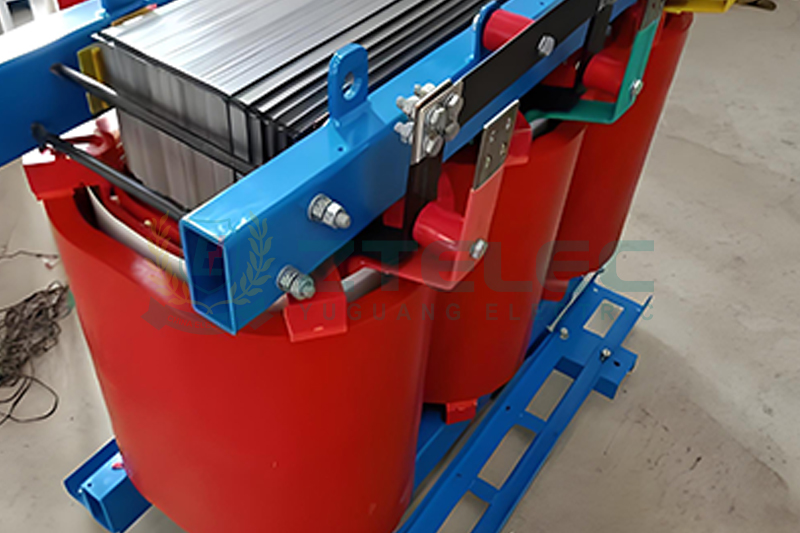
The Role of Transformers in Data Centers
Transformers are essential components of data center power infrastructure. They step voltage up or down to match the requirements of electrical distribution systems, UPS equipment, servers, cooling systems, lighting, and other critical loads.
Because data centers require continuous and stable power, transformer performance directly affects power quality, equipment protection, and overall facility availability.
Why Transformer Reliability Is Critical
Continuous operation: Data centers are designed for 24/7 operation. A transformer failure can interrupt power distribution and contribute to costly downtime.
Power quality: Stable voltage is essential for sensitive IT equipment. Properly selected transformers help maintain dependable electrical performance throughout the facility.
Safety: Transformer faults can create electrical and thermal hazards. A properly designed dry type transformer can reduce risks associated with liquid leakage and fire.
Business continuity: Reliable power infrastructure helps protect critical applications, digital services, and business operations from unexpected electrical interruptions.
Advantages of Dry Type Transformers for Data Centers
1. Enhanced Fire Safety
Dry type transformers do not use mineral oil as an insulating medium. Cast resin designs use solid epoxy insulation around the windings, reducing the risks associated with oil leakage and combustible liquid insulation. This makes them an attractive solution for indoor data center installations.
2. Low Maintenance Requirements
Dry type transformers eliminate routine oil-related maintenance such as oil sampling, filtering, and oil replacement. Regular inspection, cleaning, connection checks, and temperature monitoring are generally sufficient when the transformer is properly installed and operated.
3. Reliable Insulation Performance
Cast resin dry type transformers use high-quality insulation systems designed to provide strong dielectric performance and resistance to moisture, dust, and environmental stresses. This can contribute to stable operation in demanding data center environments.
4. Space-Efficient Installation
Data centers often require efficient use of electrical rooms and equipment areas. Dry type transformers can be installed indoors without the oil containment infrastructure required by many liquid-filled transformer installations, providing greater flexibility in facility design.
5. Environmentally Friendly Operation
Because dry type transformers do not contain insulating oil, there is no risk of oil leakage contaminating the surrounding environment. This can simplify indoor installation and support sustainability objectives for modern data center projects.
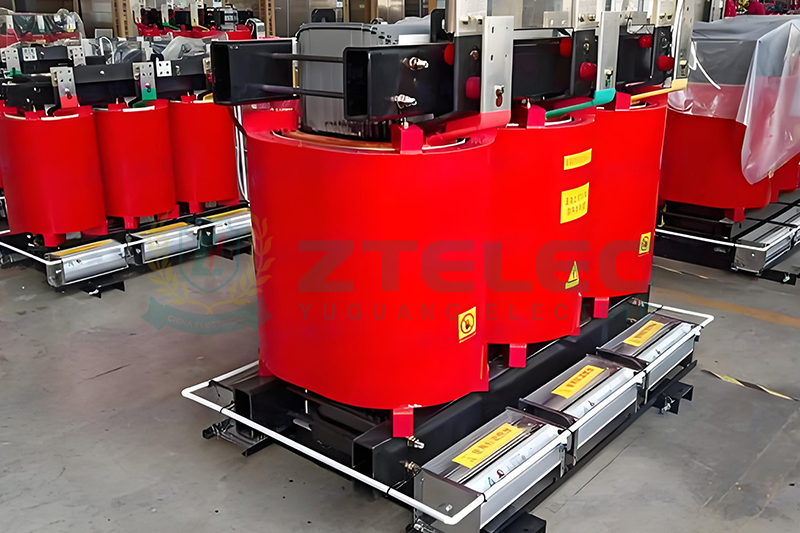
Key Reliability Features of Data Center Dry Type Transformers
High-Quality Insulation System
A reliable data center dry type transformer requires a robust insulation system. Epoxy resin cast insulation provides electrical insulation and mechanical protection for the windings while supporting stable operation under thermal and electrical stress.
Temperature Monitoring
Temperature monitoring systems can continuously track winding temperatures and provide alarms when operating temperatures approach preset limits. This allows facility operators to identify abnormal conditions before they develop into serious equipment problems.
Redundant Transformer Configuration
Critical data centers commonly use redundant electrical architectures. Depending on the power distribution design, multiple transformers can be configured to support redundancy and load-sharing requirements. Proper coordination between transformers, switchgear, UPS systems, and protection devices is essential for reliable operation.
Standards and Testing
Transformers for data centers should be designed, manufactured, and tested according to the applicable international and project-specific standards. Depending on the market and application, relevant requirements may include IEC, IEEE, and other national or regional standards.
Dry Type Transformer Applications in Data Centers
Dry type transformers can be used in various stages of data center power distribution, including medium-voltage distribution, facility electrical systems, UPS-related power infrastructure, and low-voltage distribution.
They are particularly suitable for indoor electrical rooms where fire safety, low maintenance, compact installation, and dependable long-term operation are important design considerations.
Challenges and Considerations
Initial Investment
Depending on the specification, insulation system, capacity, cooling method, accessories, and certification requirements, a dry type transformer may have a higher initial purchase cost than some conventional liquid-filled alternatives. However, lower maintenance requirements and installation advantages can improve its overall lifecycle value.
Capacity and Thermal Management
Transformer capacity must be carefully matched to the data center's present and future electrical load. Engineers should consider continuous load, peak demand, redundancy requirements, ambient temperature, ventilation, harmonic currents, and future expansion.
Noise Control
Transformer noise can be an important consideration in indoor electrical rooms located near occupied areas. Appropriate transformer construction, installation methods, vibration control, and acoustic design can help reduce noise levels.
Future Trends in Data Center Transformers
Smart Monitoring and Predictive Maintenance
Digital monitoring is becoming increasingly important in critical power infrastructure. Sensors and monitoring systems can provide information about temperature, load conditions, and operating status, helping operators identify abnormal conditions and plan maintenance more effectively.
Higher Efficiency
As data center power demand continues to increase, transformer efficiency is becoming increasingly important. High-efficiency transformer designs can help reduce electrical losses and support lower operating costs over the equipment's service life.
Support for High-Density Data Centers
AI computing, high-performance servers, and advanced cooling systems are increasing power density in modern data centers. Transformer manufacturers are therefore developing solutions with higher capacities, improved thermal performance, and enhanced monitoring capabilities to meet evolving power requirements.
How to Choose a Dry Type Transformer for a Data Center
1. Determine the Required Capacity
Calculate the current electrical load and consider future expansion. Transformer capacity should provide sufficient operating margin while avoiding unnecessary oversizing and associated costs.
2. Evaluate Voltage and Distribution Requirements
Confirm the primary and secondary voltage, frequency, phase configuration, impedance, connection group, and other electrical parameters required by the data center power distribution system.
3. Consider the Installation Environment
Evaluate ambient temperature, humidity, altitude, ventilation, dust, installation space, and cooling requirements. These environmental factors can influence transformer selection and rated performance.
4. Check Harmonic Loads
Modern data centers contain nonlinear loads such as UPS systems, power electronic equipment, and variable-speed drives. Harmonic currents can increase transformer losses and heating, so the transformer design should be evaluated for the actual harmonic environment.
5. Verify Standards and Certifications
Ensure that the transformer meets the applicable project specifications and required international or local standards. Factory testing and appropriate certification can provide additional confidence in product quality and performance.
6. Select an Experienced Transformer Manufacturer
Choose a manufacturer with proven experience in dry type transformers for data centers and other critical power applications. Technical support, customization capabilities, factory testing, documentation, warranty terms, and after-sales service should all be considered during supplier evaluation.
Reliability is one of the most important requirements in data center power distribution. A high-quality dry type transformer can provide dependable voltage transformation while offering important advantages such as fire safety, low maintenance, compact installation, and environmentally responsible operation.
For data center operators, EPC contractors, electrical engineers, and facility developers, selecting the right transformer requires more than simply matching capacity. Electrical characteristics, insulation performance, thermal management, harmonics, redundancy, applicable standards, and future expansion should all be evaluated.
As data centers continue to support increasingly power-intensive digital infrastructure, reliable dry type transformers will remain an important part of safe, efficient, and resilient power distribution systems.
Cast resin transformer
dry type transformer
dry type transformer for data centers
data center transformer
cast resin dry-type transformer
- more+releated article
- 2026-08-21Dry Type Transformer for Data Centers: Why Rel
- 2026-08-19How to Read a 1000 kVA Oil-Filled Transformer
- 2026-08-18Dry Type Transformer Noise Levels: What to Exp
- 2026-08-17What Is IEC 60076-11? A Complete Guide to Dry
- 2026-08-175000kVA Oil-Filled Transformer in Wind and Sol
- 2026-08-17China 3500kVA Dry-Type Transformer Source Fact
- 2026-08-17ZTELEC to Exhibit at Enlit Asia & MKI Elec
- 2026-08-14Noise Control in 11kV Prefabricated Substation
- 2026-08-122000 kVA Oil-Filled Transformer Price 2026: Ma
- 2026-08-11Prefabricated Substations: Flexible, Scalable
- ELECTRICAL INSULATION BOARD MATERIALS
- ELECTRICAL INSULATION MATERIALS
- POWER TRANSFORMER
- ENAMELED WIRE
- SWITCHGEAR


FR-4 Copper-Free Laminate | High-Performance Insulation Material

FR-4 Copper Clad Laminate Manufacturer & Supplier
Cast resin transformer
dry type transformer for data centers
dry type transformer
data center transformer
dry-type transformer Belarus
vacuum cast resin transformer
cast resin dry-type transformer
industrial power transformer
1000 kVA oil-filled transformer
oil-filled transformer test report
1000 kVA transformer test report
oil-immersed transformer testing
transformer noise reduction
dry type transformer noise
transformer sound level
dry type transformer noise levels
transformer manufacturer Indonesia
Enlit Asia 2026
MKI Electricity Connect 2026
Indonesia electrical exhibition
CEM-3 PCB material
CEM-3 copper clad laminate
CEM-3 laminate
copper clad glass mat composite laminate
dry type transformer standard