
33kV Gas Insulated Switchgear (GIS): Compact Substation Solution
As electrical networks become increasingly dense and power demand continues to grow, utilities, industrial facilities and infrastructure projects need compact, reliable and high-performance switchgear. 33kV Gas Insulated Switchgear (GIS) is widely used where limited installation space, high reliability and environmental resistance are important design requirements.
Compared with conventional Air Insulated Switchgear (AIS), GIS integrates high-voltage components inside a sealed metal enclosure and uses an insulating gas system to provide electrical insulation. This design significantly reduces the required clearance between energized components and enables a more compact substation layout.
33kV GIS is suitable for urban substations, industrial plants, renewable energy projects, rail transit systems, commercial facilities and space-constrained power distribution applications. This guide explains the structure, advantages, applications, selection factors, installation requirements and technology trends of 33kV GIS.
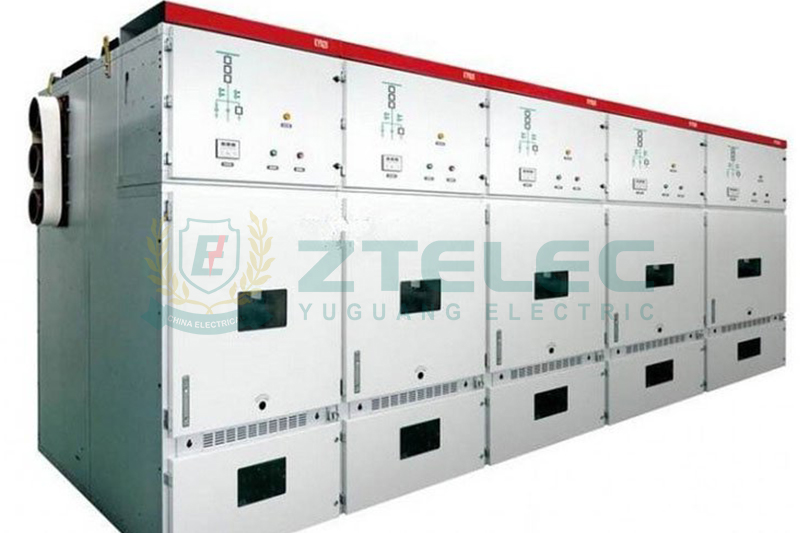
What Is 33kV Gas Insulated Switchgear?
33kV Gas Insulated Switchgear is a medium-voltage switchgear system designed for power distribution and substation applications around the 33kV voltage class. Depending on the system design and applicable standards, equipment in this class may have a maximum rated voltage such as 36kV.
Unlike AIS, which uses atmospheric air as the primary insulation medium, GIS places energized components inside a sealed metal enclosure. Traditional GIS commonly uses SF6 gas for insulation and, depending on the equipment design, interruption. Modern GIS technology is increasingly moving toward alternative insulation and interruption technologies with lower environmental impact.
The enclosed structure protects internal electrical components from dust, humidity, salt contamination and other external environmental conditions. This makes 33kV GIS particularly suitable for locations where conventional air-insulated equipment would require extensive space or environmental protection.
Main Components of a 33kV GIS System
A typical 33kV GIS installation integrates several switching, protection, measurement and control components into a coordinated metal-enclosed system.
Circuit Breaker
The circuit breaker interrupts load and fault currents and provides reliable protection during abnormal operating conditions.
Disconnector
The disconnector provides electrical isolation of specific sections of the switchgear for inspection and maintenance.
Earthing Switch
The earthing switch safely connects isolated electrical sections to ground, helping protect maintenance personnel during service operations.
Current Transformer
Current transformers provide measurement and protection signals for metering, protection relays and monitoring systems.
Voltage Transformer
Voltage transformers reduce system voltage to suitable measurement levels for protection, metering and control applications.
Busbar System
The busbar connects different functional sections of the switchgear and distributes electrical power within the GIS assembly.
Gas Compartments and Enclosure
Internal energized components are installed inside sealed compartments. The enclosure helps provide insulation, environmental protection and controlled operating conditions.
Protection and Control System
Modern 33kV GIS can be integrated with protection relays, intelligent electronic devices, remote monitoring systems and substation automation platforms to improve operational visibility and reliability.
Key Advantages of 33kV GIS
Compact and Space-Saving Design
One of the primary advantages of 33kV GIS is its compact footprint. Because electrical insulation is provided within an enclosed gas-insulated system, the equipment generally requires much less clearance than conventional outdoor AIS.
This makes GIS particularly attractive for urban substations, underground substations, commercial buildings, industrial plants and renewable energy facilities where available land is limited.
Depending on the equipment configuration and project layout, GIS can substantially reduce the overall substation footprint compared with an equivalent AIS installation. Actual space savings vary according to voltage level, equipment arrangement, maintenance clearances and site requirements.
High Operational Reliability
The sealed metal-enclosed construction protects critical components from external contamination and environmental conditions. This can improve reliability in areas affected by humidity, dust, industrial pollution and salt contamination.
GIS is also designed as a coordinated modular system, reducing exposure of energized components to the surrounding environment and helping maintain stable operating conditions.
Enhanced Personnel Safety
The metal enclosure prevents routine access to energized components and provides a controlled environment for switching operations. Proper interlocking and earthing arrangements further improve operational safety during inspection and maintenance.
Low Maintenance Requirements
Because internal components are enclosed and protected from atmospheric contamination, GIS can require less routine cleaning and environmental maintenance than exposed AIS equipment. Maintenance requirements still depend on the manufacturer's design, operating conditions and applicable maintenance schedule.
Excellent Environmental Resistance
33kV GIS is well suited to demanding environments. The enclosed design can help protect internal electrical components from dust, humidity, salt spray, pollution and temperature variations, making GIS suitable for coastal areas, industrial facilities, underground installations and other challenging locations.
Long Service Life
Properly designed, installed and maintained GIS equipment can provide a long operating life. Service life depends on insulation technology, switching frequency, environmental conditions, maintenance practices and manufacturer specifications.
Environmental Considerations of SF6 GIS
Traditional GIS commonly uses SF6 because of its excellent dielectric and arc-interruption characteristics. However, SF6 has a very high global warming potential, making gas management an important environmental consideration.
Modern GIS projects increasingly consider SF6-free or reduced-SF6 technologies, including alternative gas mixtures and vacuum interruption technologies. Equipment selection should therefore consider both electrical performance and applicable environmental regulations.
When SF6 equipment is used, proper gas handling, leak monitoring, recovery and recycling procedures are essential to minimize emissions throughout the equipment lifecycle.
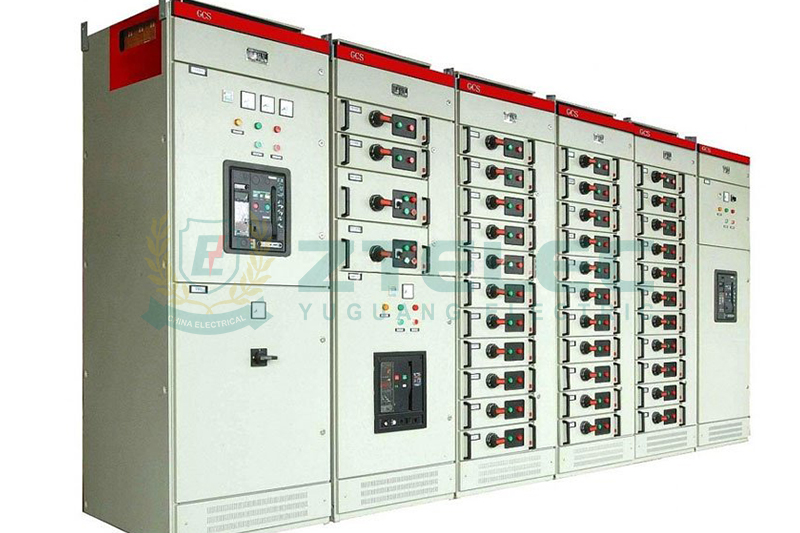
Applications of 33kV Gas Insulated Switchgear
Urban and Underground Substations
Land availability is often limited in major cities. The compact construction of 33kV GIS allows substations to be installed in restricted spaces, including indoor and underground facilities where appropriate ventilation, access and safety requirements are provided.
Industrial Power Distribution
Steel mills, cement plants, chemical facilities, mining operations and manufacturing plants require reliable medium-voltage power distribution. GIS can provide a compact and environmentally protected switching solution for demanding industrial environments.
Solar and Wind Power Projects
Renewable energy projects often require reliable medium-voltage collection and grid connection equipment. 33kV GIS can be integrated into solar plants, wind farms, energy storage systems and other renewable energy facilities where compactness and environmental protection are important.
Railway and Metro Systems
Railway and metro infrastructure frequently has strict space requirements. Compact GIS can be used in traction substations, auxiliary substations and underground electrical rooms where conventional AIS would require excessive installation space.
Oil, Gas and Offshore Facilities
Offshore platforms and industrial energy facilities require compact electrical equipment capable of operating in demanding environments. GIS can help reduce the footprint of electrical rooms while providing enclosed and controlled switching equipment.
33kV GIS vs. Air Insulated Switchgear (AIS)
| Feature | 33kV GIS | Air Insulated Switchgear (AIS) |
|---|---|---|
| Insulation | Gas-insulated system or alternative insulation technology, depending on design | Atmospheric air |
| Footprint | Compact | Generally larger |
| Environmental Protection | High due to enclosed construction | More exposed to external conditions |
| Maintenance | Generally lower routine environmental maintenance | Generally requires more inspection and cleaning |
| Installation | Suitable for indoor, underground and space-constrained applications | Commonly used where sufficient outdoor space is available |
| Initial Investment | Generally higher | Generally lower |
| Space Requirement | Low | Higher |
| Environmental Impact | Depends on insulation gas and gas-management technology | No SF6 gas required for air insulation |
| Typical Applications | Urban substations, industrial plants, renewable energy and underground facilities | Outdoor substations and projects with sufficient land availability |
The choice between GIS and AIS should be based on the complete project lifecycle rather than initial equipment cost alone. Site area, environmental conditions, installation requirements, maintenance strategy, reliability targets and total cost of ownership should all be evaluated.
Future Trends in 33kV GIS Technology
SF6-Free and Low-GWP Insulation Technologies
Environmental regulations and sustainability targets are accelerating the development of SF6-free GIS. Alternative gases, vacuum interruption technology and optimized insulation systems are becoming increasingly important in new switchgear designs.
Digital and Smart GIS
Digitalization is transforming medium-voltage switchgear. Modern GIS can integrate sensors and intelligent monitoring systems for condition assessment, temperature monitoring, partial discharge detection, switching operation analysis and remote diagnostics.
These technologies support condition-based and predictive maintenance, helping operators identify potential problems before they develop into major failures.
Modular and Hybrid Substation Solutions
Hybrid GIS-AIS configurations and modular substations provide additional flexibility for projects with specific space, budget or expansion requirements. Prefabricated solutions can also shorten installation time and simplify project deployment.
Integration with Renewable Energy and BESS
As solar power, wind power and battery energy storage systems (BESS) expand, GIS is increasingly integrated into compact renewable energy substations and grid connection systems. This creates opportunities for more flexible and digitally controlled medium-voltage networks.
How to Select the Right 33kV GIS
Rated Voltage and Current
Confirm the GIS rated voltage, continuous current, short-time withstand current, peak withstand current and short-circuit interruption capability according to the electrical system requirements.
Insulation and Switching Technology
Evaluate whether conventional SF6 technology, SF6-reduced technology or SF6-free alternatives are appropriate for the project. Environmental regulations and lifecycle requirements should be considered during equipment selection.
Site and Installation Conditions
Consider indoor or outdoor installation, available floor space, access routes, altitude, ambient temperature, humidity, pollution level and seismic requirements before selecting the GIS configuration.
Protection and Automation
Ensure the GIS is compatible with the project's protection relays, SCADA system, substation automation architecture and communication protocols.
Lifecycle Cost
A comprehensive evaluation should include equipment cost, civil works, transportation, installation, commissioning, maintenance, spare parts and eventual decommissioning. A higher initial GIS investment may be justified when land, reliability and maintenance costs are significant project factors.
Manufacturer and Technical Support
Select a supplier with proven experience in 33kV switchgear manufacturing, testing and commissioning. Technical documentation, spare parts availability, warranty coverage and after-sales support should also be evaluated.
33kV GIS Installation and Maintenance
Installation Requirements
GIS installation should be carried out by qualified personnel according to the manufacturer's installation manual and applicable electrical standards. The foundation must be level and stable, and adequate access should be provided for equipment installation and future maintenance.
During assembly, particular attention should be paid to enclosure cleanliness, sealing surfaces, connections, grounding and gas-system integrity. Factory acceptance testing and site acceptance testing should be completed according to the approved project test plan.
Commissioning
Before energization, engineers should verify mechanical interlocks, electrical interlocks, protection settings, control circuits, grounding systems, circuit breaker operation and communication functions. Applicable insulation, withstand and functional tests should also be completed.
Routine Maintenance
GIS maintenance may include inspection of circuit breakers and operating mechanisms, gas density or pressure monitoring where applicable, partial discharge monitoring, protection system testing and condition assessment of critical components.
For SF6 equipment, gas quality, leakage and handling procedures should be managed according to the manufacturer's requirements and applicable environmental regulations.
Why 33kV GIS Is Suitable for Compact Substations
For projects where land availability, reliability and environmental protection are critical, 33kV GIS offers several important advantages. Its enclosed construction allows high-voltage switching equipment to be installed in a compact arrangement while reducing exposure to external contamination.
This makes GIS particularly suitable for compact substations, urban power networks, industrial distribution systems, renewable energy plants and underground electrical installations.
33kV Gas Insulated Switchgear is an important technology for modern medium-voltage substations where compactness, reliability, safety and environmental resistance are key requirements. Compared with conventional AIS, GIS can significantly reduce installation space while providing an enclosed and controlled operating environment.
As electrical networks become more digitalized and renewable energy capacity continues to expand, the market is moving toward smart monitoring, modular substations, SF6-free insulation technologies and integrated renewable energy solutions.
When selecting 33kV GIS, project owners and electrical engineers should evaluate rated electrical performance, installation conditions, insulation technology, environmental requirements, lifecycle cost and after-sales support. With the right configuration and professional installation, 33kV GIS can provide a reliable and space-efficient solution for modern power distribution systems.
FAQs About 33kV GIS
What is 33kV GIS?
33kV GIS is a medium-voltage gas insulated switchgear system used for power distribution and substation applications around the 33kV voltage class. It integrates switching, protection and measurement components inside a metal-enclosed system.
What is the difference between 33kV GIS and AIS?
GIS uses an enclosed insulation system and requires significantly less installation space, while AIS relies on atmospheric air insulation and generally requires larger clearances and a larger substation footprint.
Is 33kV GIS suitable for underground substations?
Yes. Its compact and enclosed construction makes 33kV GIS well suited to underground and indoor substations, provided that ventilation, access, drainage, fire protection and other project-specific requirements are properly addressed.
Does 33kV GIS require SF6 gas?
Traditional GIS commonly uses SF6, but newer switchgear designs can use alternative low-GWP or SF6-free technologies. The appropriate insulation technology depends on the equipment design, electrical requirements and applicable regulations.
How long can 33kV GIS operate?
A properly designed and maintained GIS system can provide a long service life, commonly measured in several decades. Actual service life depends on equipment quality, operating conditions, maintenance and manufacturer specifications.
What maintenance does 33kV GIS require?
Maintenance typically includes inspection of switching mechanisms, protection and control systems, condition monitoring and, for SF6-based equipment, gas density, leakage and gas-quality management. The exact maintenance schedule should follow the manufacturer's instructions.
33kV switchgear
33kV gas insulated switchgear
33kV GIS
Gas Insulated Switchgear
dry type transformer
- more+releated article
- 2026-08-2433kV Gas Insulated Switchgear (GIS): Compact S
- 2026-08-24ZTELEC to Exhibit at Enlit Asia & MKI Elec
- 2026-08-21Dry Type Transformer for Data Centers: Why Rel
- 2026-08-19How to Read a 1000 kVA Oil-Filled Transformer
- 2026-08-18Dry Type Transformer Noise Levels: What to Exp
- 2026-08-17What Is IEC 60076-11? A Complete Guide to Dry
- 2026-08-175000kVA Oil-Filled Transformer in Wind and Sol
- 2026-08-17China 3500kVA Dry-Type Transformer Source Fact
- 2026-08-14Noise Control in 11kV Prefabricated Substation
- 2026-08-122000 kVA Oil-Filled Transformer Price 2026: Ma
- ELECTRICAL INSULATION BOARD MATERIALS
- ELECTRICAL INSULATION MATERIALS
- POWER TRANSFORMER
- ENAMELED WIRE
- SWITCHGEAR


FR-4 Copper-Free Laminate | High-Performance Insulation Material

FR-4 Copper Clad Laminate Manufacturer & Supplier
33kV switchgear
Gas Insulated Switchgear
33kV GIS
33kV gas insulated switchgear
dry type transformer for data centers
dry type transformer
data center transformer
Cast resin transformer
vacuum cast resin transformer
cast resin dry-type transformer
dry-type transformer Belarus
industrial power transformer
1000 kVA oil-filled transformer
1000 kVA transformer test report
oil-filled transformer test report
oil-immersed transformer testing
transformer noise reduction
dry type transformer noise
transformer sound level
dry type transformer noise levels
MKI Electricity Connect 2026
Indonesia electrical exhibition
transformer manufacturer Indonesia
Enlit Asia 2026
copper clad glass mat composite laminate