
Dry Type Transformer Supply Chain in 2026: Lead Times, Tariffs & Sourcing Strategy
The dry type transformer supply chain in 2026 remains under pressure as data center construction, grid modernization, renewable energy projects, EV charging infrastructure, and industrial electrification continue to increase demand. At the same time, manufacturers are managing constraints involving electrical steel, copper, insulation materials, skilled labor, factory capacity, certification requirements, and international trade policy.
For engineers, EPC contractors, electrical distributors, developers, and facility owners, transformer procurement has therefore become an important early-stage project decision. Understanding dry type transformer lead times, tariff exposure, manufacturing capacity, and sourcing options can help reduce schedule risk and control total project cost.
This guide examines the major supply-chain factors affecting dry type transformers in 2026 and explains practical sourcing strategies that buyers can use to improve delivery reliability.
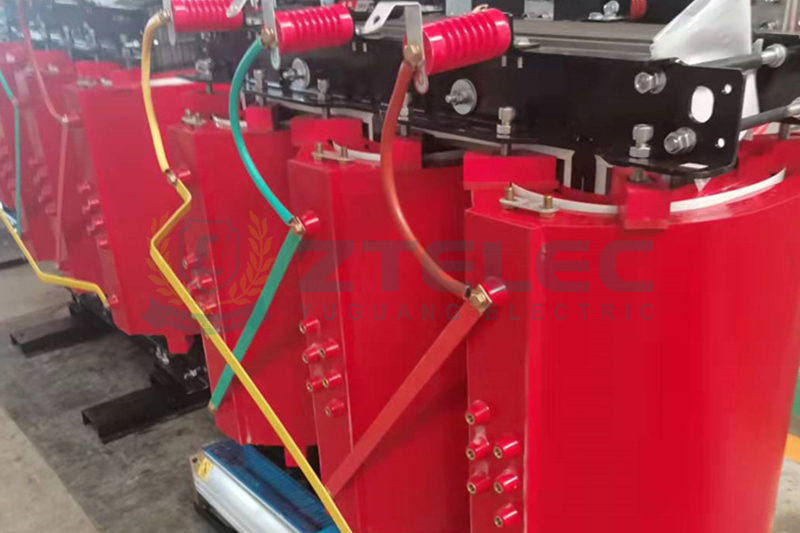
Why Are Dry Type Transformers Still in High Demand in 2026?
Dry type transformers use solid insulation and air rather than liquid insulation. This makes them particularly suitable for indoor electrical rooms, commercial buildings, hospitals, industrial facilities, data centers, renewable energy installations, and other applications where fire safety, environmental protection, and simplified maintenance are important.
The growing demand for data centers, AI infrastructure, renewable energy, EV charging systems, and industrial electrification has increased the need for medium- and low-voltage transformers. Dry type transformers are particularly attractive for projects where oil-filled equipment presents additional fire protection, containment, or environmental requirements.
At the same time, the transformer industry is competing for many of the same raw materials and manufacturing resources used by larger distribution and power transformers. This creates additional pressure on production schedules, even when the transformer itself is a relatively standardized product.
Electrical Steel, Copper and Insulation Materials
Grain-oriented electrical steel (GOES), copper, aluminum, insulation systems, and other specialized materials have a direct effect on transformer manufacturing capacity. Core steel availability is particularly important because the transformer core is one of the most material-intensive components and requires specialized processing.
Copper prices and availability also affect the cost and production planning of transformers with copper windings. Manufacturers must coordinate material purchasing with confirmed production schedules, which means sudden increases in demand can quickly translate into longer manufacturing queues.
Skilled Manufacturing Capacity
Transformer manufacturing is not simply an assembly operation. Core cutting, winding, insulation, coil assembly, vacuum or pressure processes where applicable, curing, testing, and final inspection all require specialized equipment and experienced personnel.
As order volumes increase, expanding factory floor space alone does not immediately solve the problem. Manufacturers also need trained technicians, testing capacity, engineering resources, and qualified suppliers.
Standardization and Specification Complexity
Another important supply-chain issue is the large number of transformer specifications used across different markets and projects. Voltage ratio, frequency, impedance, insulation level, enclosure design, cooling method, temperature rise, tap configuration, noise requirements, seismic requirements, certifications, and accessories can all affect manufacturing time.
The U.S. Department of Energy has specifically identified specification diversity as a supply-chain challenge and noted that the U.S. distribution transformer market contains more than 80,000 varieties. Greater standardization can help manufacturers improve production efficiency and reduce unnecessary engineering time.
Dry Type Transformer Lead Times in 2026
There is no single dry type transformer lead time for 2026. Delivery depends on kVA rating, voltage class, winding material, insulation technology, enclosure, certification, factory workload, and whether the unit is a standard or customized design.
Current market reports show that smaller or standardized dry type transformers can sometimes be produced within approximately 8 to 16 weeks, while other North American market quotes for common dry-type units can reach approximately 20 to 32 weeks. Custom, large-capacity, or highly certified equipment can require substantially longer schedules.
Standard Dry Type Transformer Lead Time
For commonly requested ratings and configurations, manufacturers with available production capacity may offer relatively short lead times. Standard three-phase dry type transformers with conventional voltage ratios, standard enclosures, and established insulation systems are generally easier to schedule than highly customized equipment.
However, buyers should distinguish between factory production time and total procurement lead time. Engineering approval, drawing approval, material purchasing, production, testing, export documentation, ocean freight, customs clearance, and site delivery can all add time to the project schedule.
Custom Dry Type Transformer Lead Time
Customized transformers require additional engineering and production coordination. Special voltage ratios, unusual kVA ratings, high BIL requirements, special impedance, low-noise designs, seismic certification, unusual enclosure dimensions, harmonic-duty requirements, or project-specific testing can increase lead time.
For this reason, buyers should request a detailed production schedule rather than relying only on a headline delivery estimate. A reliable quotation should clearly identify drawing approval time, material procurement time, manufacturing time, routine testing, type or special testing where required, and shipping time.
Quoted Lead Time vs. Confirmed Factory Capacity
One of the most important procurement lessons in 2026 is the difference between a sales quotation and an actual production reservation. A supplier may quote an attractive delivery date without having a confirmed production slot available.
For schedule-critical projects, buyers should request written confirmation of the production slot, expected material availability, testing date, and shipment date. A purchase order with clearly defined delivery milestones provides considerably more protection than a verbal lead-time estimate.
How Tariffs Affect Dry Type Transformer Sourcing in 2026
Tariffs and trade policy have become major variables in international transformer procurement. The final cost of an imported transformer can depend on its country of origin, tariff classification, applicable trade measures, customs valuation, freight costs, and certification requirements.
U.S. tariff schedules and trade measures continue to change, making it risky to use a tariff assumption from an earlier project. The U.S. International Trade Commission published an updated 2026 Harmonized Tariff Schedule revision in August 2026, highlighting why import classification should be checked against the current tariff schedule when placing an order.
Country of Origin Matters
When comparing suppliers from China, Southeast Asia, Europe, Mexico, Canada, or the United States, buyers should evaluate more than the factory quotation. The relevant figure is the landed cost, which can include the transformer price, inland transportation, international freight, insurance, duties, customs fees, testing, certification, and other compliance costs.
It is also important not to assume that sourcing from Canada or Mexico automatically eliminates tariff exposure. The actual treatment depends on the specific product, classification, origin rules, and trade measures in effect when the goods enter the United States. Trade policy in 2026 remains dynamic, so tariff treatment should be verified for each purchase order rather than copied from a previous project.
Why Landed Cost Is More Important Than Factory Price
A transformer with the lowest factory price is not necessarily the lowest-cost option for the project. A lower-priced overseas unit can become less competitive after freight, tariffs, certification, customs clearance, and extended inventory carrying costs are included.
Conversely, a supplier with a higher initial quotation may offer a shorter lead time, better documentation, local technical support, or lower compliance costs. For large projects, these factors can have a greater financial impact than a small difference in the initial equipment price.
U.S. Transformer Efficiency Requirements and the 2026 Supply Chain
Energy-efficiency regulations should also be considered when purchasing distribution transformers for the U.S. market. The current DOE distribution transformer rules include requirements for low-voltage and medium-voltage dry type distribution transformers.
Importantly, the major amended efficiency standards adopted by DOE in 2024 do not become mandatory for applicable equipment until April 23, 2029. Therefore, it is more accurate to describe 2026 as a preparation and transition period rather than a year in which manufacturers are universally required to meet a new efficiency tier.
In June 2026, DOE also initiated additional information gathering concerning distribution transformer efficiency standards and their interaction with domestic manufacturing capacity, supply-chain resilience, and material availability. This makes regulatory monitoring particularly relevant for manufacturers and buyers planning multi-year projects.
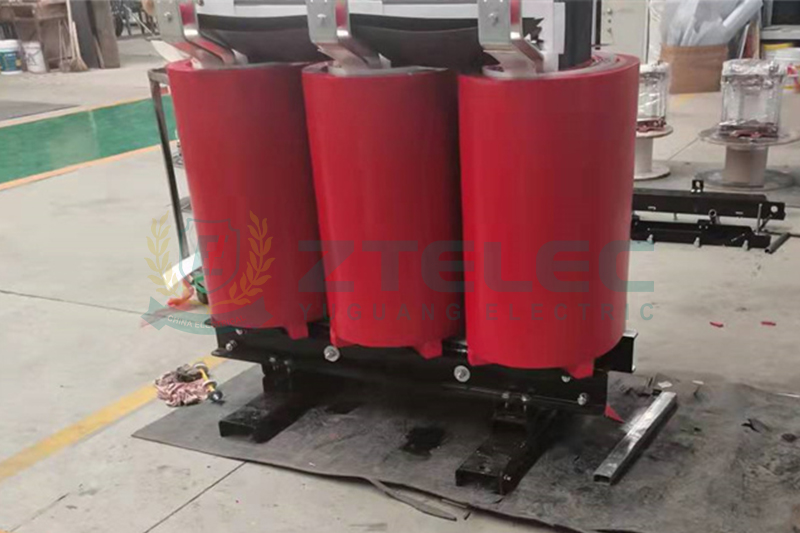
Six Dry Type Transformer Sourcing Strategies That Work in 2026
1. Order Early and Reserve Production Capacity
The most effective way to reduce transformer delivery risk is to start procurement before the equipment becomes a critical-path item. For major commercial, industrial, renewable energy, and data center projects, transformer specifications should ideally be finalized during the design and procurement phase rather than after construction has already started.
For long-lead or customized equipment, buyers should ask suppliers to reserve a production slot in writing. The purchase order should identify key milestones for engineering approval, material procurement, manufacturing, testing, and shipment.
2. Standardize Transformer Specifications
Standardization can significantly simplify procurement. Where project requirements allow, using common kVA ratings, voltage ratios, impedance ranges, enclosure designs, accessories, and protection configurations can reduce engineering work and increase the possibility of using established production designs.
For organizations purchasing transformers for multiple facilities, developing an internal standard specification can also make supplier qualification and future replacement procurement faster.
3. Split Deliveries According to Project Criticality
Large projects do not always need every transformer on the same day. Buyers can consider dividing deliveries according to construction and energization requirements.
Schedule-critical transformers can be prioritized for early production, while spare units, future expansion equipment, and non-critical equipment can follow later. This approach can reduce the risk that one customized transformer delays an entire project.
4. Qualify Multiple Suppliers
Single-source procurement can expose a project to manufacturing delays, material shortages, shipping disruptions, tariff changes, or unexpected factory capacity constraints.
A stronger approach is to qualify at least two technically acceptable manufacturers where project requirements permit. Buyers can then compare manufacturing capacity, certifications, production schedules, technical support, pricing, and country-of-origin risks before placing the final order.
5. Evaluate Certified Used and Retrofit Equipment Carefully
For emergency replacements or projects facing extreme delivery constraints, tested used transformers or retrofit solutions may provide an alternative to waiting for a new customized unit.
However, used equipment should not be treated as an automatic substitute for new equipment. Buyers should verify insulation condition, winding resistance, insulation resistance, turns ratio, nameplate information, temperature-rise requirements, dielectric test history, physical condition, and compatibility with the intended electrical system.
For critical facilities, any used or refurbished transformer should be evaluated and tested by qualified professionals before being placed into service.
6. Include Tariff and Freight Contingencies in the Budget
International transformer procurement should include a realistic landed-cost model rather than relying exclusively on the manufacturer's EXW or FOB quotation.
The purchasing team should review the expected tariff classification, country of origin, freight quotation, insurance, customs charges, certification requirements, inland transportation, and potential exchange-rate exposure close to the actual purchase date.
How to Compare Dry Type Transformer Suppliers in 2026
Price should not be the only supplier-selection criterion. A practical dry type transformer supplier evaluation should consider manufacturing capacity, product range, technical standards, quality control, testing facilities, export experience, certifications, lead-time reliability, and after-sales support.
| Evaluation Factor | What Buyers Should Check |
|---|---|
| Manufacturing Capacity | Factory production lines, annual capacity, current backlog, and confirmed production availability |
| Technical Capability | Voltage range, kVA range, insulation technology, cooling methods, enclosure options, and custom engineering capability |
| Testing Capability | Routine testing, type testing, special testing, and availability of certified test reports |
| Standards Compliance | Applicable IEC, IEEE, UL, CSA, GB/T, or other project-specific standards |
| Lead Time | Engineering, material procurement, manufacturing, testing, shipping, and total delivery schedule |
| Supply Chain | Core steel, copper, insulation material, component suppliers, and production continuity |
| Commercial Risk | Incoterms, payment terms, warranty, price validity, tariff responsibility, and delivery terms |
| After-Sales Support | Technical documentation, installation guidance, troubleshooting, spare parts, and warranty service |
What to Expect for the Dry Type Transformer Market Through 2026 and 2027
The transformer supply chain is likely to remain a strategic procurement issue through the remainder of 2026 and into 2027. Demand from data centers, electrification, renewable energy, grid upgrades, and EV infrastructure continues to compete for manufacturing resources.
At the same time, new manufacturing investments are gradually expanding capacity. However, additional factory capacity does not immediately eliminate supply constraints because new facilities require equipment installation, workforce development, supplier qualification, testing capability, and production ramp-up.
The DOE's 2026 supply-chain work also indicates that transformer availability remains closely connected to manufacturing capacity, specification standardization, and the availability of critical materials.
For buyers, the most practical expectation is therefore not that transformer shortages will disappear overnight, but that lead times will continue to vary substantially between standard products, customized products, and highly certified equipment.
How Buyers Can Reduce Dry Type Transformer Procurement Risk
A successful transformer procurement strategy in 2026 should begin with early technical specification and supplier qualification. Once the required voltage, capacity, insulation class, enclosure, cooling method, standards, testing requirements, and accessories are defined, buyers can obtain comparable quotations from multiple qualified manufacturers.
The next step is to compare total landed cost and confirmed delivery capacity rather than factory price alone. Production slots should be documented, and critical milestones should be incorporated into the purchase order.
For international projects, procurement teams should also monitor tariff classification and trade policy throughout the purchasing cycle. The tariff environment can change between quotation, purchase order, shipment, and customs clearance, so assumptions made several months earlier may no longer be valid.
Key Takeaways for Dry Type Transformer Procurement in 2026
Dry type transformer lead times vary significantly in 2026. Standard units may be available in roughly 8–16 weeks from some manufacturers, while other market quotes extend to 20–32 weeks. Custom and highly specialized equipment can require considerably longer schedules.
Tariff exposure must be evaluated by actual product and origin. Buyers should verify current tariff classification and applicable trade measures instead of assuming that previous project rates still apply.
Landed cost is more meaningful than factory price. Freight, tariffs, certification, customs, logistics, and delivery risk should all be included when comparing suppliers.
Standardization can shorten procurement cycles. Common kVA ratings, voltage configurations, accessories, and enclosure designs can reduce engineering complexity and improve manufacturing efficiency.
Early capacity reservation is increasingly important. Buyers should obtain written production schedules and confirm factory capacity before a transformer becomes a project-critical item.
Supplier diversification provides additional protection. Qualifying multiple technically acceptable manufacturing regions can reduce exposure to factory delays, shipping disruptions, material shortages, and trade-policy changes.
The dry type transformer supply chain in 2026 is defined by strong demand, constrained manufacturing resources, volatile trade conditions, and increasing procurement complexity. While standard dry type transformers can still have relatively manageable lead times compared with large power transformers, customized and certified equipment can become a significant project bottleneck.
For EPC contractors, electrical engineers, distributors, and project owners, the best strategy is to treat transformer procurement as an early project milestone. Reserve manufacturing capacity, standardize specifications, compare landed costs, qualify multiple suppliers, verify tariff classifications, and maintain realistic schedule contingencies.
Manufacturers with established production capacity, international standards experience, strong testing capabilities, and flexible engineering resources are well positioned to support customers navigating the 2026 transformer supply chain. For global projects, selecting the right manufacturing partner can be just as important as selecting the transformer itself.
transformer tariffs 2026
dry type transformer supply chain 2026
dry type transformer sourcing
dry type transformer lead time
33kV compact substation
- more+releated article
- 2026-08-26Dry Type Transformer Supply Chain in 2026: Lea
- 2026-08-2633kV Prefabricated Substation for Utility Grid
- 2026-08-2433kV Gas Insulated Switchgear (GIS): Compact S
- 2026-08-24ZTELEC to Exhibit at Enlit Asia & MKI Elec
- 2026-08-21Dry Type Transformer for Data Centers: Why Rel
- 2026-08-19How to Read a 1000 kVA Oil-Filled Transformer
- 2026-08-18Dry Type Transformer Noise Levels: What to Exp
- 2026-08-17What Is IEC 60076-11? A Complete Guide to Dry
- 2026-08-175000kVA Oil-Filled Transformer in Wind and Sol
- 2026-08-17China 3500kVA Dry-Type Transformer Source Fact
- ELECTRICAL INSULATION BOARD MATERIALS
- ELECTRICAL INSULATION MATERIALS
- POWER TRANSFORMER
- ENAMELED WIRE
- SWITCHGEAR


FR-4 Copper-Free Laminate | High-Performance Insulation Material

FR-4 Copper Clad Laminate Manufacturer & Supplier
dry type transformer lead time
dry type transformer supply chain 2026
transformer tariffs 2026
dry type transformer sourcing
33kV substation specifications
33kV prefabricated substation
prefabricated substation for utility grid
33kV compact substation
33kV GIS
33kV gas insulated switchgear
Gas Insulated Switchgear
33kV switchgear
dry type transformer
data center transformer
Cast resin transformer
dry type transformer for data centers
industrial power transformer
vacuum cast resin transformer
dry-type transformer Belarus
cast resin dry-type transformer
oil-filled transformer test report
oil-immersed transformer testing
1000 kVA transformer test report
1000 kVA oil-filled transformer
dry type transformer noise levels