
33kV Prefabricated Substation for Utility Grid Projects: Specifications & Procurement Process
Utility grids need faster and more reliable power distribution solutions. At the same time, many projects face limited space and tight construction schedules.
For these projects, a 33kV prefabricated substation offers a practical solution. It combines medium-voltage switchgear, a transformer, low-voltage switchgear, protection, and control equipment in one factory-built unit.
As a result, utilities and EPC contractors can reduce site work and simplify installation. Factory assembly also helps improve quality control and commissioning efficiency.
This guide explains the main 33kV prefabricated substation specifications. It also covers common configurations, procurement steps, testing requirements, and supplier selection.
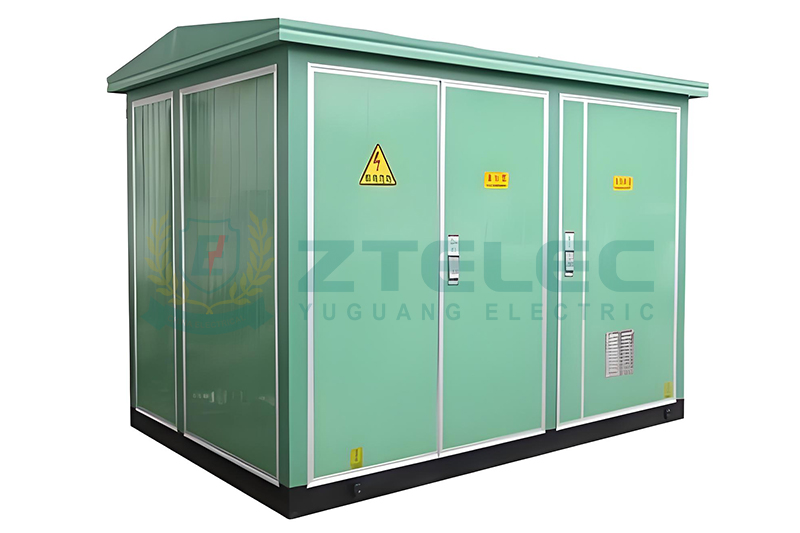
What Is a 33kV Prefabricated Substation?
A 33kV prefabricated substation is a compact power distribution unit. The manufacturer assembles the main electrical equipment in a controlled factory environment.
The unit can include a 33kV RMU, vacuum circuit breaker, power transformer, LV switchgear, protection relay, metering system, and control equipment.
Unlike a traditional substation, the prefabricated design reduces the amount of field construction. The project site usually needs a prepared foundation, cable connections, grounding, and final commissioning.
Therefore, this solution can help shorten the construction period. It also reduces the need for separate switchgear rooms and extensive cable trenches.
Where Are 33kV Prefabricated Substations Used?
33kV prefabricated substations serve many medium-voltage power distribution applications. Utilities often use them when they need a compact and reliable solution.
Common applications include urban grid expansion, industrial parks, manufacturing plants, solar farms, wind farms, data centers, commercial buildings, mining projects, and rural electrification.
In addition, containerized designs can support temporary power projects and remote sites. Their modular construction makes transportation and relocation easier.
Key 33kV Prefabricated Substation Specifications
1. Rated Voltage and Insulation Level
The medium-voltage system normally uses a 33kV rated voltage. For this voltage class, equipment may use a maximum system voltage of 36kV.
However, the final insulation level depends on the local grid standard. Engineers should consider power-frequency withstand voltage and lightning impulse withstand voltage during the design stage.
For example, 36kV-class equipment may use a lightning impulse withstand level of around 170kV. The project specification should confirm the exact value.
2. Transformer Capacity
Transformer capacity depends on the connected load and future power demand. Engineers should also consider the demand factor, power factor, and expected load growth.
Common transformer ratings include 315 kVA, 500 kVA, 630 kVA, 800 kVA, 1000 kVA, 1250 kVA, 1600 kVA, 2000 kVA, and 2500 kVA.
For larger industrial projects, manufacturers can provide higher capacities. The final rating should match the utility load profile and network design.
3. Oil-Immersed or Dry-Type Transformer
A 33kV prefabricated substation can use either an oil-immersed transformer or a dry-type transformer.
Oil-immersed transformers are common in outdoor distribution applications. They offer high power density and competitive project costs.
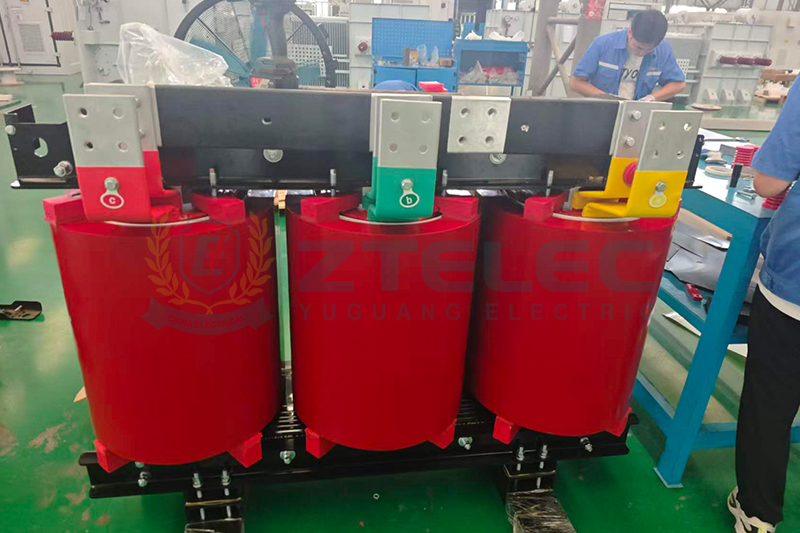
On the other hand, dry-type transformers can be a better choice for indoor and urban applications. They do not use liquid insulation, which can reduce fire and leakage concerns.
Therefore, buyers should select the transformer type according to the installation environment, fire protection requirements, maintenance strategy, and project budget.
4. Medium-Voltage Switchgear
The MV switchgear protects and controls the incoming and outgoing circuits. A typical 33kV system may include an RMU, load-break switch, vacuum circuit breaker, disconnector, and earthing switch.
It can also include current transformers, voltage transformers, protection relays, and metering equipment.
For compact installations, gas-insulated switchgear or solid-insulated switchgear can reduce the equipment footprint. In addition, utilities can consider alternative insulation technologies when environmental requirements restrict SF6 use.
5. Low-Voltage Switchgear
The LV section distributes power from the transformer to downstream loads. It can include air circuit breakers, molded-case circuit breakers, busbars, meters, surge protection, and outgoing feeders.
The exact LV configuration depends on the number of feeders and the connected load. The project specification should also define the rated voltage and short-circuit withstand level.
6. Enclosure and Protection Rating
The enclosure protects the electrical equipment from dust, moisture, mechanical impact, and environmental conditions.
Manufacturers may use galvanized steel, stainless steel, aluminum, or reinforced concrete. The choice depends on the installation location and project requirements.
Typical protection levels include IP33, IP43, IP44, and IP54. Coastal and industrial projects may require additional corrosion protection.
Engineers should also consider ambient temperature, altitude, humidity, wind load, seismic conditions, and noise requirements.
7. Protection and Automation
Modern 33kV prefabricated substations can support digital protection and remote monitoring.
For example, the system may include digital protection relays, RTUs, intelligent electronic devices, power meters, and temperature monitoring.
Furthermore, communication protocols such as IEC 61850 and DNP3 can support SCADA integration. This allows utility operators to monitor equipment status and respond to faults more quickly.
Common Types of 33kV Prefabricated Substations
European-Style Compact Substation
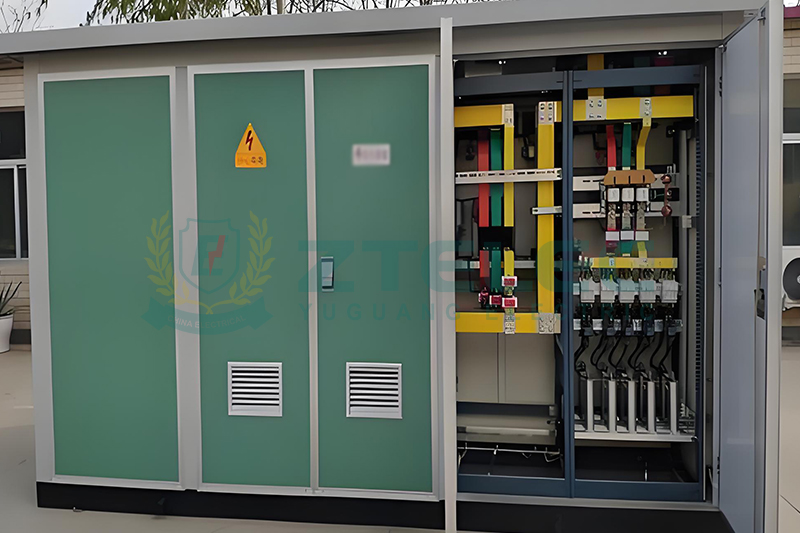
The European-style compact substation places the MV switchgear, transformer, and LV switchgear inside one enclosure.
Each section normally has its own compartment. This design provides a compact footprint and works well in urban distribution networks.
American-Style Pad-Mounted Substation
Pad-mounted substations place the transformer and switchgear on a concrete foundation. The enclosure normally provides secure access and tamper-resistant protection.
This configuration is widely used for outdoor utility distribution. It also offers a simple installation method for many grid projects.
Containerized 33kV Substation
A containerized substation places the main electrical equipment inside a 20-foot or 40-foot container.
This design offers excellent mobility. Therefore, it is suitable for mining, renewable energy, remote industrial sites, construction projects, and temporary power systems.
Underground or Semi-Buried Substation
Underground and semi-buried substations can help solve space limitations in dense urban areas.
However, these projects require careful engineering. Waterproofing, drainage, ventilation, fire protection, and equipment access all need attention.
33kV Prefabricated Substation Procurement Process
Step 1: Define the Project Requirements
First, define the electrical requirements of the project. These include system voltage, transformer capacity, load profile, short-circuit level, and protection requirements.
Next, evaluate the site conditions. Consider temperature, altitude, humidity, corrosion, seismic conditions, and available installation space.
Finally, consider future load growth. This step helps prevent undersizing the transformer and switchgear.
Step 2: Prepare the Technical Specification
After defining the project requirements, prepare a detailed technical specification.
The document should cover transformer capacity, voltage ratio, impedance, vector group, cooling method, MV switchgear rating, short-circuit rating, enclosure protection, protection functions, and communication requirements.
Common international standards include IEC 60076 for transformers and IEC 62271 for high-voltage switchgear and controlgear.
Where required, the specification should also include applicable IEEE standards and local utility requirements.
Step 3: Prequalify the Supplier
Before requesting quotations, evaluate the manufacturer's technical and production capabilities.
Check the supplier's experience with 33kV equipment and similar projects. Also review its factory testing facilities, quality management system, engineering team, and production capacity.
Useful documents include type test reports, routine test procedures, ISO 9001 certification, product drawings, quality plans, and project references.
Step 4: Tender and Technical Evaluation
Next, compare the technical and commercial proposals.
Do not focus only on the purchase price. Instead, evaluate the complete project cost.
Consider delivery time, installation support, warranty terms, spare parts, FAT procedures, commissioning support, and after-sales service.
As a result, the buyer can identify the supplier with the best overall value rather than simply the lowest initial price.
Step 5: Factory Acceptance Testing
Factory Acceptance Testing, or FAT, verifies the equipment before shipment.
The exact FAT scope depends on the project specification. Typical tests include dielectric tests, transformer routine tests, winding resistance measurement, voltage ratio testing, and insulation checks.
Engineers may also test switchgear operation, protection relays, control circuits, wiring, dimensions, and overall assembly quality.
For utility projects, the buyer should review the FAT results before approving shipment.
Step 6: Delivery and Site Acceptance Testing
After delivery, the installation team places the substation on the prepared foundation.
Next, technicians connect the MV cables, LV cables, grounding system, control wiring, and communication cables.
Site Acceptance Testing, or SAT, then confirms that the system operates correctly at the project site.
The SAT may include insulation testing, cable testing, relay testing, communication checks, grounding verification, and switchgear operation tests.
Step 7: Commissioning and Handover
Before energization, the commissioning team checks protection settings and interlocks. The team also verifies insulation, communication, grounding, and equipment operation.
After successful commissioning, the supplier should provide complete project documentation.
This documentation normally includes as-built drawings, test reports, certificates, protection settings, operation manuals, maintenance manuals, and commissioning records.
Advantages of 33kV Prefabricated Substations
Faster Installation
Factory assembly reduces the amount of electrical work required on site. Therefore, utilities can complete installation faster than with many conventional site-built designs.
Better Quality Control
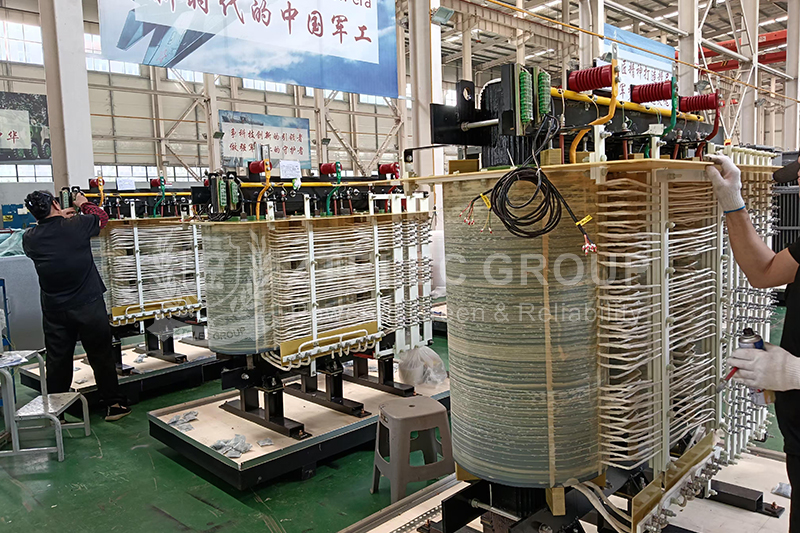
Manufacturers assemble and test the main equipment under controlled factory conditions. This approach helps reduce installation errors and improves consistency.
Lower Civil Construction Requirements
A prefabricated substation can reduce the need for large buildings, separate switchgear rooms, and extensive cable trenches.
As a result, the project may require less civil construction and fewer on-site workers.
Compact Design
The integrated enclosure saves space. This makes prefabricated substations especially useful for urban areas and industrial sites with limited land.
Standardized Maintenance
Utilities can use standardized designs across multiple projects. This can simplify operator training, spare-parts management, maintenance procedures, and future expansion.
How to Choose a 33kV Prefabricated Substation Manufacturer
Choosing the right manufacturer is critical for utility grid projects. Buyers should look beyond product price and evaluate the supplier's complete technical capability.
First, check the manufacturer's experience with 33kV transformers and medium-voltage switchgear. Then review its factory capacity, testing equipment, engineering resources, and quality control procedures.
In addition, ask for similar project references. These references can help confirm the supplier's experience with utility networks, industrial plants, renewable energy projects, or other demanding applications.
The manufacturer should also provide clear technical drawings, electrical schematics, protection settings, test reports, installation instructions, and commissioning support.
A 33kV prefabricated substation provides a compact and reliable solution for modern utility grid projects. It combines major electrical equipment into a factory-assembled unit and can simplify on-site installation.
Moreover, the design supports many applications. These include urban distribution, industrial power systems, renewable energy projects, mining, data centers, and rural grid expansion.
When selecting a 33kV prefabricated substation, buyers should evaluate the complete technical solution. Transformer capacity, MV switchgear, insulation level, short-circuit rating, enclosure protection, automation, and communication systems all matter.
At the same time, the procurement process should include supplier qualification, technical evaluation, FAT, SAT, commissioning, and document handover.
With the right design and an experienced manufacturer, a 33kV prefabricated substation can help utilities expand their networks faster while maintaining reliable and standardized power distribution.
prefabricated substation for utility grid
33kV compact substation
33kV substation specifications
33kV prefabricated substation
33kV gas insulated switchgear
- more+releated article
- 2026-08-2633kV Prefabricated Substation for Utility Grid
- 2026-08-2433kV Gas Insulated Switchgear (GIS): Compact S
- 2026-08-24ZTELEC to Exhibit at Enlit Asia & MKI Elec
- 2026-08-21Dry Type Transformer for Data Centers: Why Rel
- 2026-08-19How to Read a 1000 kVA Oil-Filled Transformer
- 2026-08-18Dry Type Transformer Noise Levels: What to Exp
- 2026-08-17What Is IEC 60076-11? A Complete Guide to Dry
- 2026-08-175000kVA Oil-Filled Transformer in Wind and Sol
- 2026-08-17China 3500kVA Dry-Type Transformer Source Fact
- 2026-08-14Noise Control in 11kV Prefabricated Substation
- ELECTRICAL INSULATION BOARD MATERIALS
- ELECTRICAL INSULATION MATERIALS
- POWER TRANSFORMER
- ENAMELED WIRE
- SWITCHGEAR


FR-4 Copper-Free Laminate | High-Performance Insulation Material

FR-4 Copper Clad Laminate Manufacturer & Supplier
33kV compact substation
33kV substation specifications
33kV prefabricated substation
prefabricated substation for utility grid
Gas Insulated Switchgear
33kV GIS
33kV gas insulated switchgear
33kV switchgear
Cast resin transformer
data center transformer
dry type transformer
dry type transformer for data centers
dry-type transformer Belarus
industrial power transformer
cast resin dry-type transformer
vacuum cast resin transformer
oil-filled transformer test report
oil-immersed transformer testing
1000 kVA transformer test report
1000 kVA oil-filled transformer
dry type transformer noise levels
transformer noise reduction
transformer sound level
dry type transformer noise
Indonesia electrical exhibition