
Medium Voltage Dry Type Transformers: 3.3kV–36kV Selection Guide
Medium voltage dry type transformers are a core component of modern power distribution systems, widely used in commercial buildings, industrial plants, data centers, renewable energy projects, and infrastructure applications where safety, reliability, and low maintenance are top priorities. Covering a voltage range from 3.3kV to 36kV, these transformers offer a safer alternative to oil-filled units by eliminating the risk of oil leakage and fire hazards, making them the preferred choice for indoor installations and environmentally sensitive locations. This guide walks through the key factors engineers and procurement teams should consider when selecting the right medium voltage dry type transformer for their project.
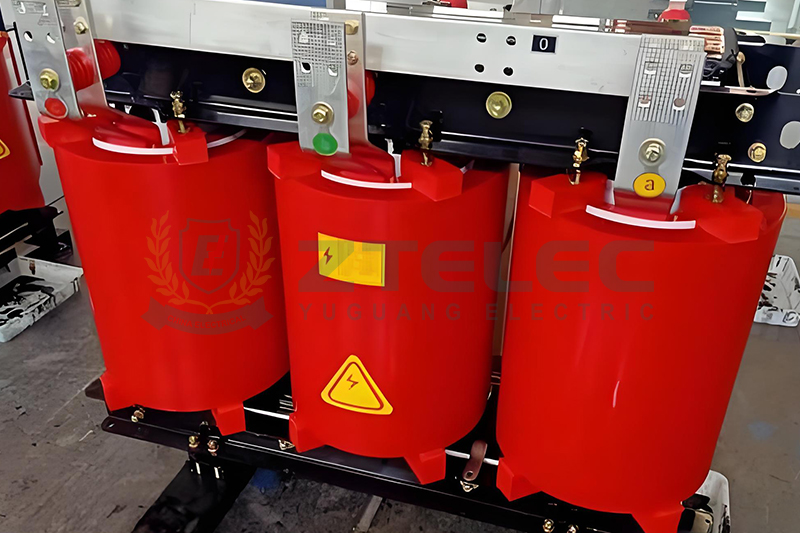
What Is a Medium Voltage Dry Type Transformer?
A dry type transformer uses air or a solid insulating material, such as epoxy resin, instead of oil to cool and insulate the windings. Medium voltage dry type transformers typically operate within the 3.3kV to 36kV range, bridging the gap between low voltage distribution equipment and high voltage transmission systems. Because they do not use flammable liquid insulation, they are classified as non-flammable equipment and are commonly installed indoors, in basements, on upper floors of buildings, and in other locations where fire safety codes restrict the use of oil-filled transformers.
Key Types of Medium Voltage Dry Type Transformers
Cast Resin Transformers
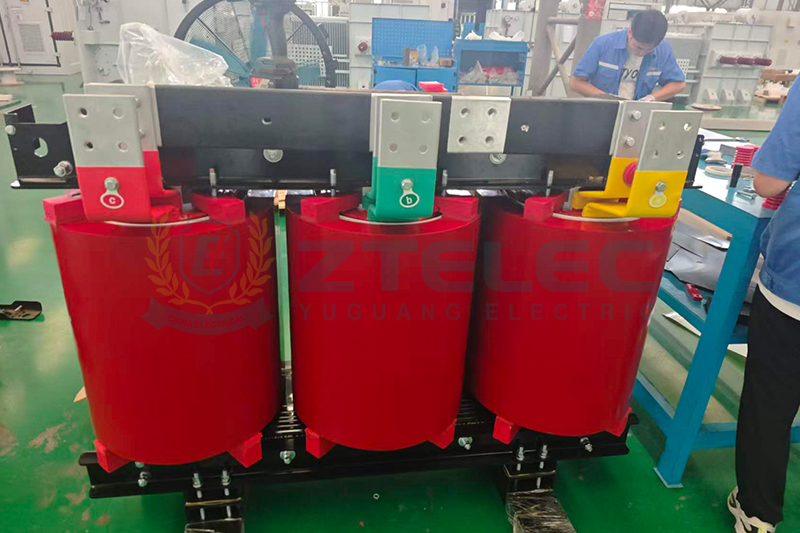
Cast resin dry type transformers encapsulate the windings in a vacuum-cast epoxy resin, providing excellent moisture resistance, mechanical strength, and protection against dust, humidity, and corrosive atmospheres. This design is well suited to harsh environments, coastal regions, and applications with high humidity levels. Cast resin units are the most common choice for medium voltage indoor applications due to their long service life and minimal maintenance requirements.
VPI (Vacuum Pressure Impregnated) Transformers
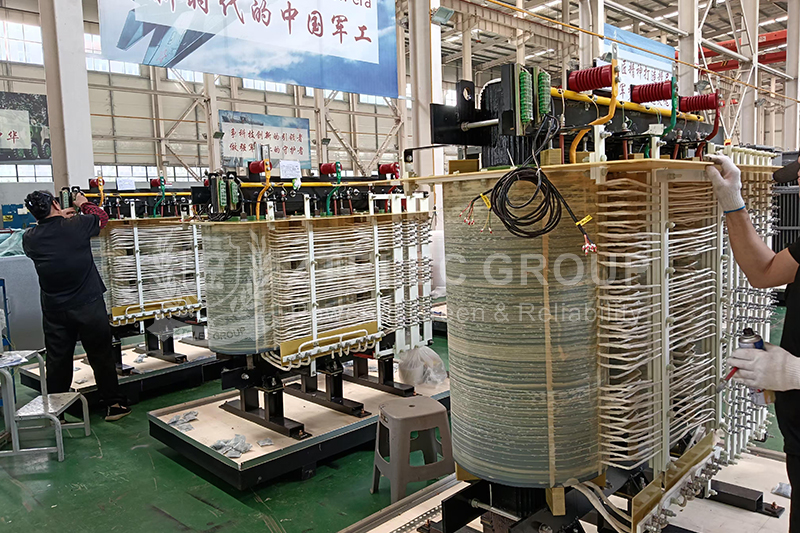
VPI transformers use a vacuum pressure impregnation process to seal the windings with resin-saturated insulation. This design offers good thermal performance and is generally more economical than cast resin transformers, though it may be less resistant to extreme moisture and pollution compared to fully encapsulated cast resin designs.
Core Selection Criteria
1. Voltage Rating
Selecting the correct primary and secondary voltage rating is the first step in specifying a medium voltage dry type transformer. Common primary voltage classes include 3.3kV, 6.6kV, 10kV, 11kV, 13.8kV, 20kV, 33kV, and up to 36kV, depending on regional grid standards and utility requirements. Matching the transformer's voltage class to the incoming supply and the downstream distribution system is essential to ensure compatibility and avoid costly rework.
2. Power Rating (kVA/MVA)
Power rating should be calculated based on the total connected load, including future expansion capacity. Medium voltage dry type transformers are typically available from a few hundred kVA up to several MVA. Oversizing a transformer increases upfront cost and reduces efficiency at partial loads, while undersizing leads to overheating and shortened equipment life. A load study, along with a growth margin of 15 percent to 25 percent, is generally recommended.
3. Insulation Class and Temperature Rise
Dry type transformers are rated according to insulation class, such as Class F (155°C) or Class H (180°C), which determines the maximum operating temperature the winding insulation can withstand. Temperature rise ratings, commonly 100K, 115K, or 150K, indicate how much the winding temperature rises above ambient conditions under full load. Selecting a higher insulation class provides greater thermal headroom, extending transformer lifespan and allowing for occasional overload conditions.
4. Impedance
Transformer impedance affects fault current levels, voltage regulation, and compatibility with protective devices. Standard impedance values usually range between 4 percent and 8 percent, though specific applications may require custom impedance to coordinate with existing switchgear or to limit short-circuit currents within acceptable design limits.
5. Vector Group and Connection Type
The vector group, such as Dyn11 or Dyn1, defines the winding configuration and phase displacement between primary and secondary windings. Selecting the correct vector group ensures compatibility with parallel operation, grounding schemes, and harmonic mitigation requirements, particularly in systems with non-linear loads.
6. Enclosure and IP Protection Rating
For indoor applications, an IP20 or IP2X enclosure is often sufficient, while outdoor or exposed installations require a higher protection rating such as IP23 or IP54 to guard against dust, moisture, and accidental contact. Ventilated enclosures with forced-air cooling (AF cooling) can also be specified to increase capacity for high-load applications without changing the transformer's physical footprint.
7. Noise Level Requirements
Dry type transformers installed near occupied spaces, hospitals, offices, or residential buildings often need to meet strict noise level limits. Low-noise winding designs and vibration-dampening mounts can reduce audible noise, helping projects comply with local noise ordinances and building codes.
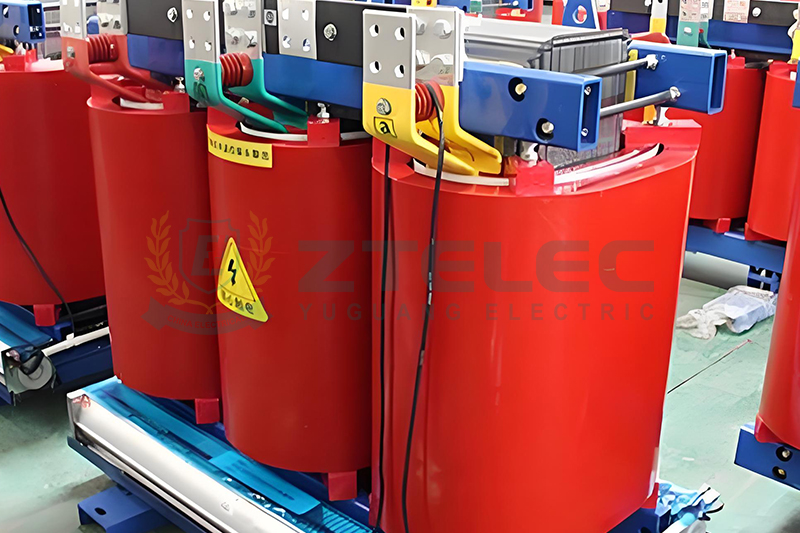
Applications of 3.3kV–36kV Dry Type Transformers
Medium voltage dry type transformers in this range serve a wide array of industries. Data centers rely on them for stable, safe power conversion in tightly controlled indoor environments. Commercial high-rise buildings use them to step down utility voltage for internal distribution without the fire risk associated with oil-filled units. Industrial plants, including manufacturing facilities and processing plants, depend on their durability to handle variable loads and harsh operating conditions. Renewable energy projects, such as solar farms and wind power installations, use dry type transformers to interconnect generation equipment with the grid, benefiting from their compact design and reduced environmental impact.
Standards and Certifications
Reputable manufacturers design and test medium voltage dry type transformers in accordance with international standards such as IEC 60076-11, IEEE C57.12.01, and relevant national grid codes. Compliance with these standards ensures the transformer meets requirements for thermal performance, dielectric strength, short-circuit withstand capability, and overall safety. Buyers should request type test reports and routine test certificates to verify compliance before finalizing a purchase.
Maintenance and Lifespan Considerations
One of the major advantages of dry type transformers is their low maintenance requirement compared to oil-filled alternatives. Without oil to test, filter, or replace, maintenance mainly involves periodic visual inspections, cleaning of windings to prevent dust accumulation, and checking insulation resistance. With proper installation and operating conditions, medium voltage dry type transformers typically offer a service life of 25 to 30 years or more.
Choosing the Right Manufacturer
When selecting a supplier for medium voltage dry type transformers, it is important to evaluate manufacturing experience, quality control processes, and after-sales support. Manufacturers with in-house testing laboratories, adherence to IEC and IEEE standards, and a track record of successful project deliveries across data centers, industrial facilities, and infrastructure projects are generally better positioned to provide reliable, long-term performance. Custom engineering capabilities are also valuable for projects with unique voltage, footprint, or environmental requirements.
Selecting the right medium voltage dry type transformer within the 3.3kV to 36kV range requires careful consideration of voltage rating, power capacity, insulation class, impedance, enclosure type, and compliance with international standards. By working closely with an experienced manufacturer and conducting a thorough load and site assessment, engineers can ensure a safe, efficient, and long-lasting power distribution solution tailored to their specific application.
3.3kV transformer
medium voltage dry type transformer
6.6kV transformer
10kV transformer
oil filled transformer
- more+releated article
- 2026-09-07Medium Voltage Dry Type Transformers: 3.3kV–
- 2026-09-02Oil Immersed Transformers Explained: Construct
- 2026-09-011250 kVA Dry Type Transformer Price 2026: Cast
- 2026-08-31ZTELEC GROUP to Exhibit High-Performance Elect
- 2026-08-29Summer in the Mountains, Stronger Together | Z
- 2026-08-26Dry Type Transformer Supply Chain in 2026: Lea
- 2026-08-2633kV Prefabricated Substation for Utility Grid
- 2026-08-2433kV Gas Insulated Switchgear (GIS): Compact S
- 2026-08-24ZTELEC to Exhibit at Enlit Asia & MKI Elec
- 2026-08-21Dry Type Transformer for Data Centers: Why Rel
- ELECTRICAL INSULATION BOARD MATERIALS
- ELECTRICAL INSULATION MATERIALS
- POWER TRANSFORMER
- ENAMELED WIRE
- SWITCHGEAR

FR-4 Copper-Free Laminate | High-Performance Insulation Material

FR-4 Copper Clad Laminate Manufacturer & Supplier
10kV transformer
3.3kV transformer
6.6kV transformer
medium voltage dry type transformer
Oil immersed transformer
oil transformer cooling system
oil filled transformer
oil immersed transformer construction
1250 kVA transformer price 2026
1250 kVA cast resin transformer price
1250 kVA VPI transformer price
1250 kVA dry type transformer price
electrical insulation materials
epoxy glass cloth laminat
Data Centre World Singapore 2026
ZTelec Group
employee team building activity
ZTELEC team building
company team building
dry type transformer supply chain 2026
transformer tariffs 2026
dry type transformer sourcing
dry type transformer lead time
prefabricated substation for utility grid
33kV prefabricated substation