
Case Study: 500 kVA 33/0.415 kV Transformer for a Commercial Site
When a mid-sized commercial development needed to bring utility power onto its site, the project team faced a fairly common but often underestimated challenge: matching a transformer to a site with limited space, a tight construction schedule, and a utility connection point that didn't quite match the building's internal distribution voltage. This case study walks through how a 500 kVA 33/0.415 kV transformer was specified, selected, and commissioned for the project, and what lessons came out of the process for anyone sourcing similar equipment.
The Project Background
The site was a five-story mixed-use commercial building housing retail units on the ground floor and office space above. The building's total connected load, once HVAC, lighting, elevators, and tenant fit-out allowances were factored in, came out to roughly 380 kVA at full occupancy. The local utility supplied power at 33kV, while the building's internal switchgear and distribution boards were designed to run at 415V, the standard low voltage used across the site for both three-phase equipment and single-phase circuits.
This meant a step-down transformer was required at the point of utility connection, converting 33kV down to 415V before power could be distributed through the building's main switchboard. The gap between 380 kVA of actual demand and the eventual 500 kVA transformer selection is worth explaining, because it illustrates a decision buyers run into constantly: how much headroom to build in above the calculated load.
Working Through the Load Calculation
The electrical consultant on the project started with a detailed load schedule, tenant by tenant, system by system. HVAC accounted for the largest single share of demand, followed by general lighting and power circuits, then elevators and life safety systems, which run on a smaller but non-negotiable allocation. After applying diversity factors, since not every circuit in the building draws its rated load simultaneously, the calculated demand landed at 380 kVA.
Rather than sizing the transformer to match that number exactly, the team added roughly 30 percent headroom. That decision came down to two practical considerations. First, the landlord wanted flexibility for future tenant fit-outs, particularly the possibility of a higher-density office tenant or a restaurant use on the ground floor, both of which would add meaningfully to electrical demand. Second, running a transformer consistently near its nameplate capacity shortens its service life and reduces efficiency, so a bit of margin protects both the equipment and the building's long-term operating costs. A 500 kVA unit gave the project comfortable headroom without oversizing to the point of wasting capital on unnecessary capacity.
Choosing Oil-Immersed Over Dry Type
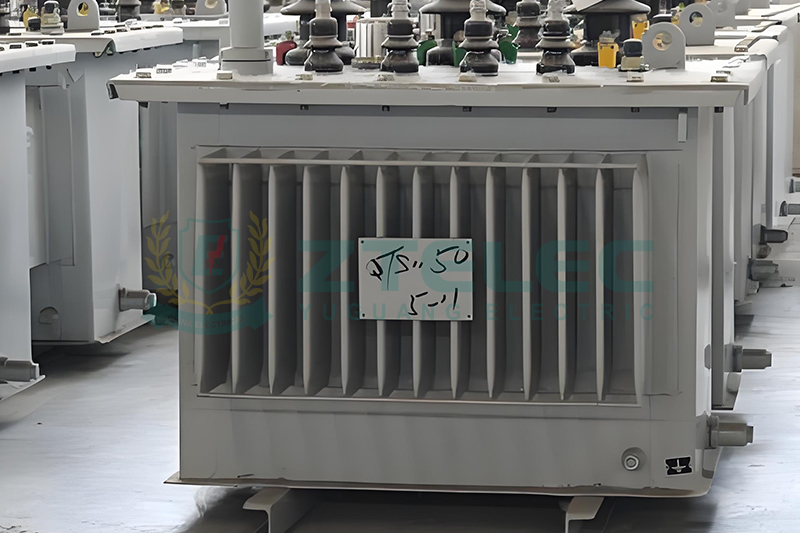
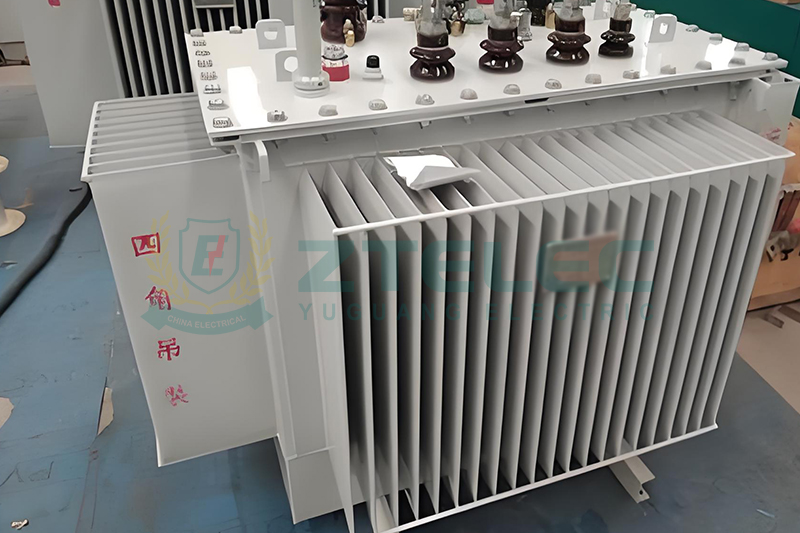
With the kVA rating settled, the next decision was construction type. The site had a dedicated ground-level transformer yard, separated from the main building by a fire-rated wall and located away from pedestrian areas, which meant an oil-immersed unit was an acceptable and, in this case, more cost-effective option compared to a dry type transformer. Had the transformer needed to sit inside the building or in a basement plant room, fire code requirements almost certainly would have pushed the specification toward a dry type or cast resin unit instead.
The team also had to account for local grid conventions. Since the utility supply was 33kV, a standard voltage class in this region, the transformer's primary winding was specified accordingly, with the secondary side matched to the building's 415V three-phase, four-wire distribution system. The vector group was set to Dyn11, a common configuration for this type of application, providing a stable neutral point for the low voltage side and good compatibility with the building's grounding scheme.
Site Constraints That Shaped the Final Design
Space was tight. The transformer yard had been sized during early design before the final load calculation was complete, which meant the physical footprint available for the transformer, its associated switchgear, and safety clearances was smaller than what a typical 500 kVA installation might ideally use. This pushed the design toward a more compact tank arrangement and careful coordination with the switchgear supplier to keep cable runs and clearance distances within code while still fitting the available space.
Noise was a secondary but real concern. Even though oil-immersed transformers are generally quieter than some alternatives at this capacity, the transformer yard sat close enough to a public walkway that the specification included a sound level cap, verified during factory testing before the unit shipped. This kind of requirement is easy to overlook early in a project but can become a real problem after installation if it's not addressed at the specification stage.
Procurement and Lead Time
Lead time turned out to be one of the more stressful parts of the project. The construction schedule had the transformer yard ready roughly fourteen weeks after the order was placed, which is a reasonably tight window for a custom-rated unit built to specific voltage, impedance, and noise requirements. The manufacturer confirmed the timeline was achievable but flagged that any changes to the specification after the design was frozen would push the delivery date back, so the project team held firm on finalizing all technical requirements before releasing the order.
Factory acceptance testing included the standard routine tests: winding resistance, ratio and polarity checks, no-load and load loss measurements, impedance voltage testing, and an induced and applied voltage withstand test. The sound level test was added as a special test given the project's proximity to the public walkway. All results were reviewed against IEC 60076 tolerances before the transformer was released for shipment.
Installation and Commissioning
On site, installation went largely according to plan, though the tight footprint in the transformer yard meant the crane lift and final positioning required careful sequencing with the civil contractor to avoid clashes with nearby cable trenches. Once positioned, the transformer was connected to the utility's 33kV ring main unit on the primary side and to the building's main low voltage switchboard on the secondary side.
Commissioning included insulation resistance testing, a check of all protective relay settings on the associated switchgear, and a controlled energization sequence coordinated with the utility. The transformer was brought up to full building load gradually over the first few weeks of tenant move-in, with temperature readings monitored to confirm the unit was operating within its expected temperature rise under real-world conditions rather than just factory test conditions.
Outcome and Lessons for Future Projects
Roughly a year after commissioning, the building had reached about 70 percent occupancy, with actual measured demand tracking close to the original 380 kVA calculation. The 500 kVA rating has held up well, giving the landlord room to accommodate the higher-demand tenant fit-outs they had anticipated without needing to revisit the transformer specification.
A few takeaways from this project are worth carrying into future work. Building headroom into a transformer's rating based on realistic future use, not just current demand, tends to pay off, particularly for commercial landlords who don't fully control tenant mix at the design stage. Site constraints like available footprint and noise sensitivity need to be part of the transformer conversation early, not treated as afterthoughts once the unit has already been ordered. And locking in the technical specification before releasing a purchase order is one of the more effective ways to protect a project's schedule, since custom-rated transformers don't leave much room for late changes without cascading delays.
For teams working through a similar 33kV to 415V step-down requirement, this project is a reasonably typical example of how a straightforward load calculation, combined with attention to site-specific constraints, leads to a transformer specification that performs reliably well beyond the day it's switched on.
33kV to 415V transformer
commercial transformer case study
500 kVA transformer
medium voltage dry type transformer
6.6kV transformer
- more+releated article
- 2026-09-08Case Study: 500 kVA 33/0.415 kV Transformer fo
- 2026-09-07Medium Voltage Dry Type Transformers: 3.3kV–
- 2026-09-02Oil Immersed Transformers Explained: Construct
- 2026-09-011250 kVA Dry Type Transformer Price 2026: Cast
- 2026-08-31ZTELEC GROUP to Exhibit High-Performance Elect
- 2026-08-29Summer in the Mountains, Stronger Together | Z
- 2026-08-26Dry Type Transformer Supply Chain in 2026: Lea
- 2026-08-2633kV Prefabricated Substation for Utility Grid
- 2026-08-2433kV Gas Insulated Switchgear (GIS): Compact S
- 2026-08-24ZTELEC to Exhibit at Enlit Asia & MKI Elec
- ELECTRICAL INSULATION BOARD MATERIALS
- ELECTRICAL INSULATION MATERIALS
- POWER TRANSFORMER
- ENAMELED WIRE
- SWITCHGEAR


FR-4 Copper-Free Laminate | High-Performance Insulation Material

FR-4 Copper Clad Laminate Manufacturer & Supplier
commercial transformer case study
33kV to 415V transformer
500 kVA transformer
3.3kV transformer
medium voltage dry type transformer
10kV transformer
6.6kV transformer
oil filled transformer
Oil immersed transformer
oil transformer cooling system
oil immersed transformer construction
1250 kVA VPI transformer price
1250 kVA cast resin transformer price
1250 kVA dry type transformer price
1250 kVA transformer price 2026
ZTelec Group
epoxy glass cloth laminat
Data Centre World Singapore 2026
electrical insulation materials
employee team building activity
ZTELEC team building
company team building
dry type transformer supply chain 2026
transformer tariffs 2026
dry type transformer sourcing