
Transformer Cost per kVA: How to Benchmark a 3500 kVA Quote
You have a quote for a 3500 kVA transformer in your hands. The number looks reasonable, or maybe it looks too high. How can you tell?
Cost per kVA is the quickest benchmark buyers use. It turns a single price into a figure you can compare across suppliers, technologies and projects. But used carelessly, it can also mislead you.
This guide shows how to calculate transformer cost per kVA, what sits behind the number, and how to compare dry cast resin transformers and oil filled transformers fairly.
What Is Transformer Cost per kVA?
Cost per kVA is the quoted price divided by the rated capacity of the transformer. The formula is simple.
Cost per kVA = Total quoted price ÷ Rated power in kVA
For a 3500 kVA unit, a hypothetical quote of USD 105,000 gives USD 30 per kVA. The figures here are illustrative only, used to show the method. Actual prices change with raw materials, specification, market conditions and delivery terms.
Why Buyers Use It
Transformers come in many sizes. A price on its own says little, but a price per kVA lets you compare a 2500 kVA quote with a 3500 kVA quote, or last year's project with this year's.
It also helps you spot outliers. A quote far below the rest may hide a weaker specification. A quote far above may include extras you do not need.
Where It Falls Short
Cost per kVA ignores energy losses, installation, accessories and lifetime maintenance. Two transformers with the same price per kVA can have very different running costs over 25 years. Treat the figure as a starting point, not a final verdict.
Why a 3500 kVA Transformer Is a Common Benchmark
A 3500 kVA rating sits in a popular range for factories, data centers, commercial complexes, hospitals and renewable energy plants. It is large enough to serve a significant load, yet still practical to ship and install as a single unit.
At this size, both technologies are realistic. Buyers regularly choose between dry cast resin transformers and oil filled transformers, and the price gap between them is one of the first things questioned.
Dry Cast Resin Transformers vs Oil Filled Transformers
Before benchmarking any quote, you need to know which technology you are comparing. The two types have different cost structures.
Dry Cast Resin Transformers
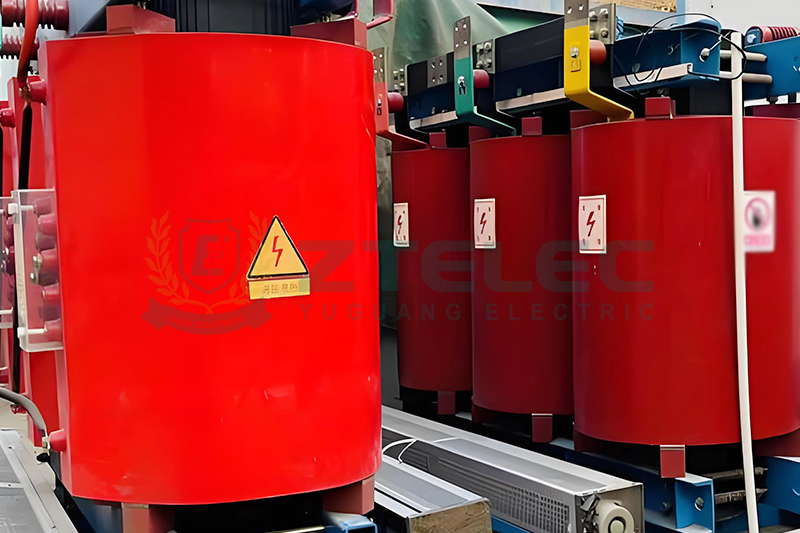
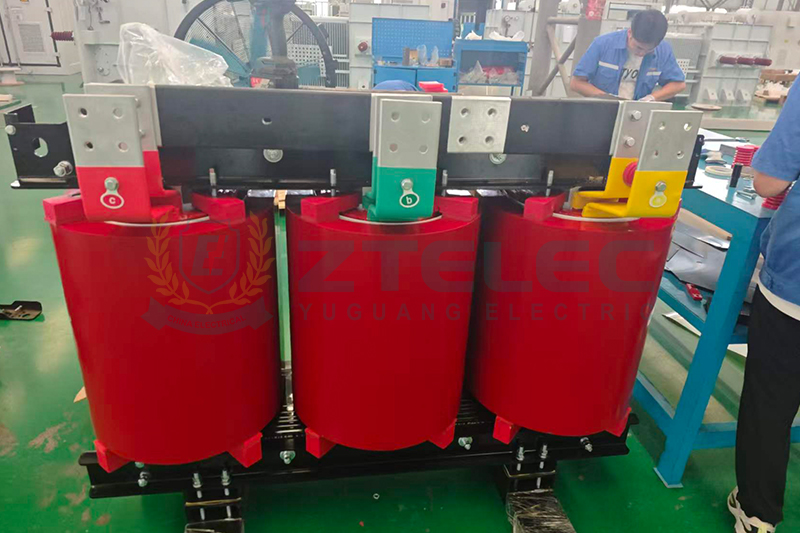
Dry cast resin transformers use epoxy resin to encapsulate the windings. They contain no insulating liquid, which lowers fire risk and removes the need for oil containment.
That makes them a strong fit for indoor installations, buildings, tunnels, hospitals and other places where fire safety is a priority. Their purchase price per kVA is usually higher than that of an equivalent liquid-filled unit, but installation can be simpler and cheaper.
Oil Filled Transformers
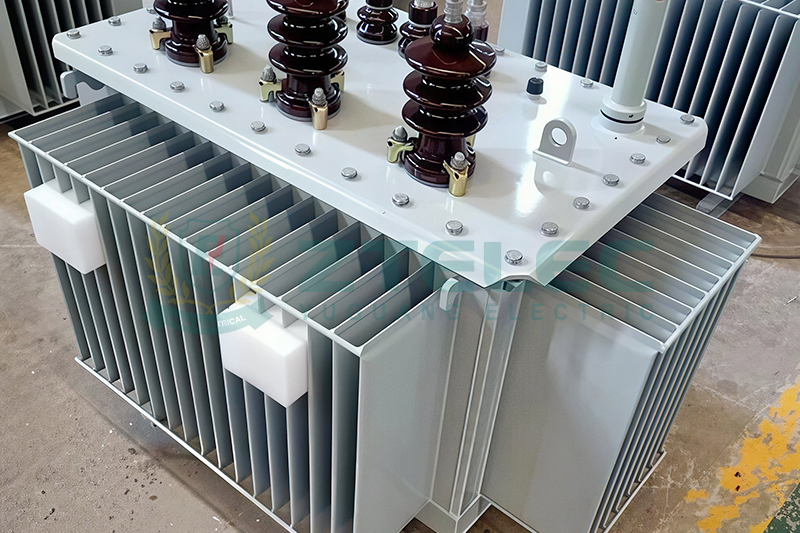
Oil filled transformers use mineral oil or an alternative fluid for both insulation and cooling. This design handles heat effectively and often delivers a lower initial price per kVA at larger ratings.
They are widely used outdoors, in utility substations and in industrial plants. Fire protection, oil containment and periodic oil testing need to be planned for, and those items affect the total project budget.
What This Means for Your Benchmark
Never compare a dry cast resin quote directly against an oil filled quote on price per kVA alone. Compare each against quotes of the same type first, then compare the total project cost across both options.
What Drives the Price of a 3500 kVA Quote
Several factors push the cost per kVA up or down. Understanding them lets you ask better questions.
Raw Materials
Copper or aluminum windings and grain-oriented electrical steel make up a large share of transformer cost. Metal prices move over time, so a quote from six months ago may not reflect today's market. Ask suppliers whether the price is fixed or tied to a metal index.
Voltage Class and Insulation Level
Higher primary voltage and basic insulation level (BIL) require more insulation and larger clearances. A 3500 kVA transformer at 33 kV costs more than one at 11 kV, even though the kVA rating is the same.
Losses and Efficiency
Low-loss designs use more or better core steel and more winding material, which raises the purchase price. They also reduce electricity costs for decades. This trade-off is the heart of total cost of ownership, covered below.
Cooling, Temperature Rise and Overload
Forced air fans for dry cast resin transformers, or radiators and extra cooling stages for oil filled transformers, add cost. Lower temperature rise or higher overload capacity also adds material and price.
Enclosure, Protection and Accessories
An IP-rated enclosure, temperature controllers, Buchholz relay, oil level gauge, pressure relief device, surge arresters or special bushings can all change the final price. Always check what is included in the quoted scope.
Standards and Testing
Oil filled units are commonly built to the IEC 60076 series, and dry type units to IEC 60076-11. Witnessed type tests, special tests or third-party inspection add cost but give you stronger assurance of quality.
Delivery Terms and Location
Ex-works, FOB, CIF and delivered-to-site prices are very different things. A 3500 kVA transformer is heavy, so freight, insurance and handling can be a significant part of the total.
Compare Total Cost of Ownership, Not Just Price
The lowest price per kVA rarely gives the lowest cost over the transformer's life. Energy losses run every hour of every year.
Understanding No-Load and Load Losses
No-load loss occurs in the core whenever the transformer is energized, even with no load connected. Load loss occurs in the windings and rises with current. Both should appear on the supplier's data sheet.
A Simple Total Cost Formula
Total cost = Purchase price + (A × no-load loss in kW) + (B × load loss in kW)
Here, A and B are the monetary values you assign to each kilowatt of loss, based on your electricity tariff, load profile and expected service life.
Consider this illustrative example. Suppose a quote is USD 90,000 with 3 kW of no-load loss and 25 kW of load loss. If you value no-load loss at USD 5,000 per kW and load loss at USD 1,500 per kW, the loss cost is USD 15,000 plus USD 37,500, or USD 52,500. The total cost becomes USD 142,500.
A competing quote at USD 98,000 with lower losses could easily beat it on total cost. These numbers are examples only, so use your own tariffs and load profile.
Check Local Efficiency Regulations
Many markets set minimum efficiency requirements for distribution transformers. Check the rules that apply where the unit will be installed, because a non-compliant design may be rejected regardless of price.
Quote Checklist for a 3500 kVA Transformer
Use the table below to make sure every quote you receive is complete and comparable.
| Item | What to Confirm |
|---|---|
| Type | Dry cast resin or oil filled, indoor or outdoor |
| Rating | 3500 kVA, primary and secondary voltage, frequency, vector group |
| Impedance | Percentage impedance and tolerance |
| Losses | Guaranteed no-load loss and load loss, with penalty terms |
| Temperature rise | Insulation class and rise limits at rated load |
| Windings | Copper or aluminum |
| Cooling | Natural or forced, fans and controls included |
| Accessories | Protection devices, enclosure, tap changer, terminals |
| Standards and tests | Applicable IEC or local standard, routine and type tests |
| Commercial terms | Incoterm, lead time, payment, warranty period |
How to Benchmark Your Quote Step by Step
Step 1: Normalize the Scope
Make sure every supplier quotes against the same specification. Different accessories or test requirements make price comparisons meaningless.
Step 2: Calculate Cost per kVA
Divide each price by 3500. Record the result next to the delivery terms so you compare like with like.
Step 3: Group by Technology
Compare dry cast resin transformers with each other, and oil filled transformers with each other. This shows which suppliers are truly competitive within each group.
Step 4: Add Loss Evaluation
Apply your own loss values to each quote and calculate total cost. This often changes the ranking.
Step 5: Add Installation and Site Costs
Include civil works, oil containment, fire protection, ventilation, cabling and commissioning. For indoor projects, the safety and space advantages of dry cast resin transformers can offset part of their higher price. For outdoor utility projects, oil filled transformers often remain the more economical choice.
Step 6: Review Supplier Capability
Check factory test facilities, past references at similar ratings, warranty terms and after-sales support. A transformer is a long-term asset, and supplier reliability matters as much as price.
Common Mistakes When Comparing Quotes
Comparing different scopes. One quote includes an enclosure and protection relays, another does not.
Ignoring losses. A cheap, high-loss transformer can cost far more over its lifetime.
Mixing delivery terms. An ex-works price cannot be compared with a delivered price.
Choosing the technology by price only. Fire safety, location, noise, maintenance and environment should guide the choice between dry cast resin transformers and oil filled transformers.
Forgetting metal price exposure. A fixed quote and an indexed quote carry different risks.
Frequently Asked Questions
Is a Lower Cost per kVA Always Better?
No. A low figure may reflect a smaller core, higher losses, fewer accessories or weaker testing. Always read the specification behind the price before treating a low quote as a bargain.
Does Cost per kVA Fall as Transformer Size Increases?
Generally, larger transformers spread fixed costs such as design, tank or mold, and testing over more kVA, so the price per kVA tends to decrease as rating grows. The trend is not perfectly smooth, because voltage class, losses and market conditions also play a role.
Should I Choose Dry Cast Resin or Oil Filled for 3500 kVA?
It depends on where the transformer will be installed. Dry cast resin transformers suit indoor and fire-sensitive locations. Oil filled transformers suit outdoor sites where containment and fire separation are practical. Compare the full installed cost of each option for your own site.
How Often Should I Refresh My Benchmark Data?
Update it whenever you receive new quotes, and at least every few months, since copper, steel and freight costs can change quickly. Old benchmarks can understate or overstate what a fair price looks like today.
Transformer cost per kVA is a fast, useful benchmark, as long as every quote covers the same scope and you look beyond the headline number. For a 3500 kVA project, combine cost per kVA with loss evaluation, installation costs and supplier credibility to find the best value.
Whether your project calls for dry cast resin transformers in a building or oil filled transformers in an outdoor substation, a clear specification is the best way to receive quotes you can trust.
Request a 3500 kVA Transformer Quotation
Planning a project and need a reliable price? Send us your voltage, impedance, installation environment and delivery requirements, and our team will prepare a detailed quotation for dry cast resin transformers or oil filled transformers, with guaranteed loss data and clear commercial terms.
dry cast resin transformers
ransformer cost per kVA
oil filled transformers
3500 kVA transformer price
3500 kVA transformer quote
- more+releated article
- 2026-10-28Transformer Cost per kVA: How to Benchmark a 3
- 2026-10-273500 kVA Oil-Immersed Transformer: Altitude De
- 2026-10-263500 kVA vs 2×1750 kVA Transformers: Cost &am
- 2026-10-2150 Hz vs 60 Hz Transformer: Design Differences
- 2026-10-20ZTELEC to Showcase Power Equipment at POWER GR
- 2026-10-19How to Size a 3500 kVA Transformer: Load &
- 2026-10-163500 kVA Transformer Nameplate Guide: Ratings,
- 2026-10-1523 kV Transformer Secondary Voltage: 400 V vs
- 2026-10-143500 kVA 23 kV Oil-Immersed Transformer: Speci
- 2026-10-13Pad-Mounted Transformer: Applications in Under
- ELECTRICAL INSULATION BOARD MATERIALS
- ELECTRICAL INSULATION MATERIALS
- POWER TRANSFORMER
- ENAMELED WIRE
- SWITCHGEAR


FR-4 Copper-Free Laminate | High-Performance Insulation Material

FR-4 Copper Clad Laminate Manufacturer & Supplier
ransformer cost per kVA
dry cast resin transformers
3500 kVA transformer price
oil filled transformers
3500 kVA transformer quote
transformer derating above 1000 m
high altitude transformer
transformer altitude derating
3500 kVA oil-immersed transformer
3500 kVA transformer
1750 kVA transformer
two transformers vs one
3500 kVA vs 2x1750 kVA transformer
23 kV transformer design
transformer frequency difference
50 Hz vs 60 Hz transformer
ZTELEC Yuguang Electric
POWER GRIDS 2026 exhibition
compact substation
Power transformer
how to size a transformer
demand factor
transformer sizing
load factor
3500 kVA transformer nameplate