
3500 kVA Oil-Immersed Transformer TCO: 20-Year Cost Breakdown
When buyers compare quotations for a 3500 kVA oil-immersed transformer, the first question is almost always the price. It is a fair question, but it is not the most important one.
Over a 20-year service life, the energy a transformer wastes can cost far more than the transformer itself. This guide breaks down the total cost of ownership (TCO) step by step, with a worked example you can adapt to your own project.
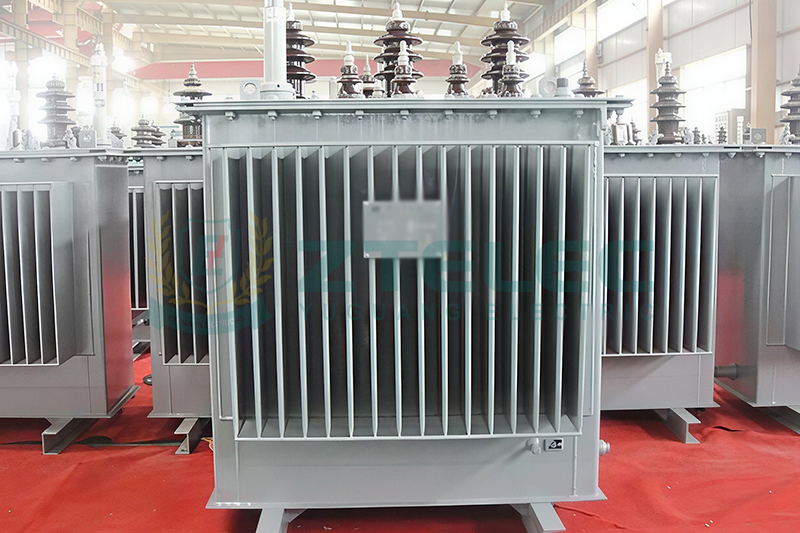
What Is Total Cost of Ownership for a Transformer?
Total cost of ownership is the sum of every cost you pay from purchase to retirement. For a 3500 kVA oil-immersed transformer, that means the equipment price, installation, electrical losses, maintenance and the cost of any failure.
TCO is also called life cycle cost. It lets you compare two quotations on equal terms, even when one is cheaper upfront and the other is cheaper to run.
Why Purchase Price Alone Is Misleading
A transformer is energized 24 hours a day, 365 days a year. Even at no load, the core draws power continuously.
A unit that saves you a few thousand dollars at purchase but wastes an extra 1 kW of core loss will quietly cost you thousands more over the following two decades. Many procurement teams only see this when it is too late to change the order.
The Five Cost Components Over 20 Years
1. Purchase Price
This is the ex-works or delivered price of the transformer, including standard accessories such as the conservator, Buchholz relay, thermometer and oil level gauge.
For a 3500 kVA unit it is usually the most visible cost, but rarely the largest over the full life.
2. Installation and Commissioning
This covers foundation work, oil containment, transport and lifting, cable termination, earthing, site testing and commissioning.
These costs are similar for most designs of the same rating, so they seldom change the ranking between suppliers. They still belong in the model.
3. Energy Losses
Losses are the largest hidden cost. They come in two forms: no-load loss in the core, and load loss in the windings.
Both turn directly into heat and into a monthly electricity bill you cannot avoid.
4. Maintenance and Oil Care
Oil-immersed transformers need routine inspection, oil sampling, dissolved gas analysis (DGA), bushing checks and periodic tightening or cleaning.
Annual cost is modest, but an oil treatment or filtration around mid-life is worth budgeting.
5. Downtime Risk and End-of-Life
A failure at a factory or plant can halt production for days. Quality of materials, short-circuit strength and testing standards all influence this risk.
At end of life, copper, steel and oil have scrap or recycling value that can partly offset disposal costs.
Assumptions for Our 20-Year Model
To make the numbers concrete, we compare two 3500 kVA oil-immersed transformers: a standard-efficiency design (Option A) and a high-efficiency, low-loss design (Option B). The figures below are illustrative. Replace them with your own quotation data.
| Parameter | Option A (Standard) | Option B (Low-Loss) |
|---|---|---|
| Purchase price | USD 42,000 | USD 47,000 |
| No-load loss | 4.0 kW | 2.9 kW |
| Load loss at rated current | 30 kW | 27 kW |
| Installation and commissioning | USD 8,000 | USD 8,000 |
| Maintenance per year | USD 600 | USD 600 |
| Oil treatment at year 12 | USD 3,000 | USD 3,000 |
General assumptions: electricity price of USD 0.10 per kWh, an average load of 60% of rated capacity, 8,760 operating hours per year, a 20-year life and a discount rate of 8%.
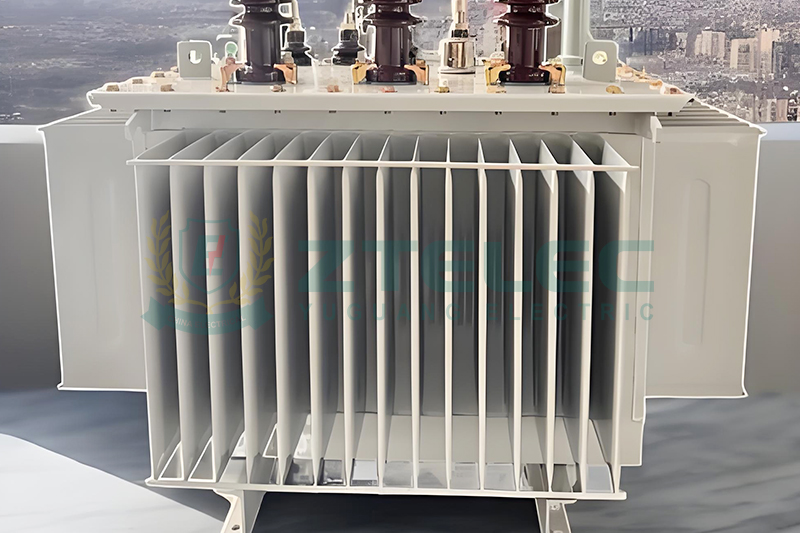
How No-Load Loss and Load Loss Behave
No-load loss stays almost constant whenever the transformer is energized. It does not care whether the plant is busy or idle.
Load loss changes with the square of the load. At 60% load, the winding loss is only 36% of its rated value. That is why a transformer running at moderate load is dominated by core loss in the annual energy balance.
For a deeper look, see our guide on no-load loss vs load loss in transformers.
Step-by-Step Loss Calculation
Option A: Standard Efficiency
No-load energy: 4.0 kW x 8,760 h = 35,040 kWh per year.
Load loss energy: 30 kW x 0.36 x 8,760 h = 94,608 kWh per year.
Total: about 129,650 kWh per year, or roughly USD 12,965 per year at USD 0.10 per kWh.
Option B: Low-Loss Design
No-load energy: 2.9 kW x 8,760 h = 25,404 kWh per year.
Load loss energy: 27 kW x 0.36 x 8,760 h = 85,147 kWh per year.
Total: about 110,550 kWh per year, or roughly USD 11,055 per year.
The Gap
Option B saves about 19,100 kWh each year, worth roughly USD 1,910. Over 20 years without discounting, that is about USD 38,000 in electricity.
20-Year TCO Results (Present Value)
Discounting future costs at 8% over 20 years gives an annuity factor of about 9.82. Applying it to the yearly loss cost and maintenance cost gives the following comparison.
| Cost Item | Option A | Option B |
|---|---|---|
| Purchase price | USD 42,000 | USD 47,000 |
| Installation and commissioning | USD 8,000 | USD 8,000 |
| Energy losses (20 years, PV) | USD 127,300 | USD 108,500 |
| Maintenance (20 years, PV) | USD 5,900 | USD 5,900 |
| Oil treatment (PV) | USD 1,200 | USD 1,200 |
| Total TCO | USD 184,400 | USD 170,600 |
Option B costs USD 5,000 more to buy, yet it is about USD 13,800 cheaper over 20 years. In both cases, energy losses make up roughly two-thirds of the total cost.
Payback Period
The extra USD 5,000 for Option B is recovered in about 2.6 years through lower electricity bills. After that, every year adds savings.
For most industrial users, a payback under four years is considered an easy decision.
Sensitivity: What Changes the Answer?
Electricity Price
At USD 0.15 per kWh, payback drops to about 1.7 years. At USD 0.06 per kWh, it stretches to roughly 4.4 years.
Average Load Factor
At a light 30% load, the yearly saving shrinks to about USD 1,200 and payback extends to around 4.2 years. At 80% load, the saving rises to about USD 2,650 and payback falls to roughly 1.9 years.
Discount Rate
A higher discount rate reduces the weight of future savings. Even so, Option B stays ahead in nearly every realistic scenario for continuously energized transformers.
The main exception is a transformer that is lightly loaded, rarely used or scheduled for early replacement.
Capitalized Loss Evaluation for Tenders
Many utilities and large buyers build TCO directly into the tender through loss capitalization. They assign a monetary value to each kilowatt of loss and add it to the bid price.
Using our assumptions, each kW of no-load loss is worth about USD 8,600 over 20 years. Each kW of load loss at 60% load is worth about USD 3,100.
Under this method, a bidder with higher losses is penalized automatically, and the evaluated price reflects true lifetime cost.
Practical Ways to Lower TCO
Specify Guaranteed Loss Values
Ask suppliers to state no-load loss and load loss in the quotation and in the contract. Include penalty clauses for measured values that exceed the guaranteed figures.
Choose the Right Efficiency Grade
Review S11, S13 and S20 designs against your load profile. The best grade is not always the highest, so run the numbers for your own electricity price.
Right-Size the Transformer
An oversized unit carries unnecessary core loss. An undersized unit runs hot and ages faster. Match the rating to the real load curve and a realistic growth plan.
Insist on Proper Testing
Request routine test reports and, where relevant, type test evidence. Loss measurements, temperature rise and short-circuit capability all affect lifetime cost.
Plan Condition Monitoring
Annual DGA, oil quality checks and thermal inspections catch problems early. Replacing a bushing is far cheaper than replacing a transformer.
Frequently Asked Questions
How long does a 3500 kVA oil-immersed transformer last?
With good loading and maintenance, 25 to 30 years is common. A 20-year TCO window is a conservative planning period that many buyers use.
Is the cheapest quotation ever the best choice?
Sometimes, when the transformer will run at very low load or for a short period. For continuous industrial service, the cheapest unit often turns out the most expensive.
Does ambient temperature or altitude affect TCO?
Yes. High temperature and high altitude reduce cooling performance and may require derating or a larger unit, which changes both price and losses.
The purchase price of a 3500 kVA oil-immersed transformer is only about one-third of what it will cost you over 20 years. Energy losses take the largest share, and they are fixed on the day you sign the order.
Compare quotations using guaranteed losses, your real load factor and your local electricity price. A slightly higher price for a low-loss design usually pays for itself within a few years.
To receive a quotation with full loss data and a TCO comparison for your project, contact our engineering team with your voltage level, load profile and installation conditions.
20-year transformer cost
total cost of ownership transformer
3500 kVA oil-immersed transformer
transformer TCO
ransformer cost per kVA
- more+releated article
- 2026-10-293500 kVA Oil-Immersed Transformer TCO: 20-Year
- 2026-10-28Transformer Cost per kVA: How to Benchmark a 3
- 2026-10-273500 kVA Oil-Immersed Transformer: Altitude De
- 2026-10-263500 kVA vs 2×1750 kVA Transformers: Cost &am
- 2026-10-2150 Hz vs 60 Hz Transformer: Design Differences
- 2026-10-20ZTELEC to Showcase Power Equipment at POWER GR
- 2026-10-19How to Size a 3500 kVA Transformer: Load &
- 2026-10-163500 kVA Transformer Nameplate Guide: Ratings,
- 2026-10-1523 kV Transformer Secondary Voltage: 400 V vs
- 2026-10-143500 kVA 23 kV Oil-Immersed Transformer: Speci
- ELECTRICAL INSULATION BOARD MATERIALS
- ELECTRICAL INSULATION MATERIALS
- POWER TRANSFORMER
- ENAMELED WIRE
- SWITCHGEAR

FR-4 Copper-Free Laminate | High-Performance Insulation Material

FR-4 Copper Clad Laminate Manufacturer & Supplier
20-year transformer cost
transformer TCO
3500 kVA oil-immersed transformer
total cost of ownership transformer
ransformer cost per kVA
oil filled transformers
3500 kVA transformer price
3500 kVA transformer quote
dry cast resin transformers
high altitude transformer
transformer altitude derating
transformer derating above 1000 m
1750 kVA transformer
two transformers vs one
3500 kVA vs 2x1750 kVA transformer
3500 kVA transformer
23 kV transformer design
50 Hz vs 60 Hz transformer
transformer frequency difference
POWER GRIDS 2026 exhibition
compact substation
ZTELEC Yuguang Electric
Power transformer
load factor
demand factor