
Copper vs Aluminium Windings: 3500 kVA Losses and Payback
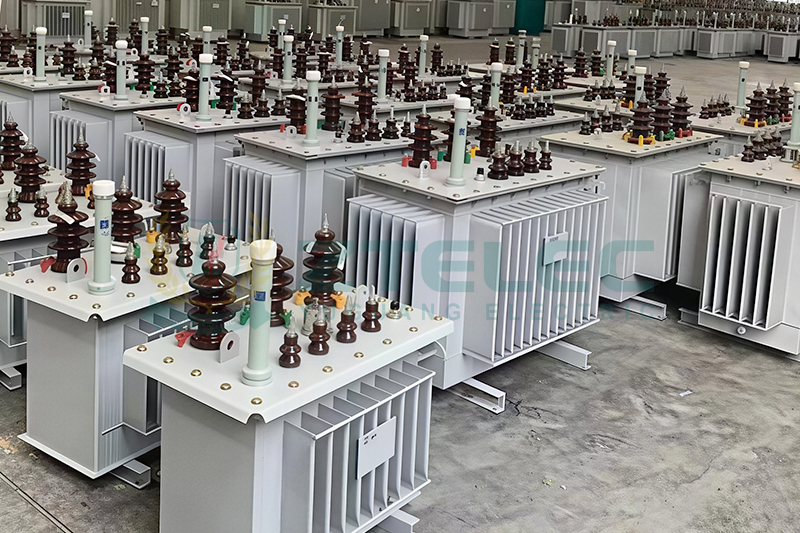
Winding material is one of the first choices a buyer faces when specifying a 3500 kVA oil immersed power transformer. Aluminium windings usually cost less upfront. Copper windings usually waste less energy.
So which one pays off? This article compares the two materials on electrical performance, losses, price and 20-year cost, with a worked payback example you can adapt to your own quotation.
Why Winding Material Matters
Windings carry the full load current. Every ampere flowing through a winding produces heat in proportion to its resistance, and that heat is the transformer's load loss.
Copper conducts electricity better than aluminium. That single physical fact drives most of the differences between the two designs.
Copper vs Aluminium: The Basic Properties
Conductivity
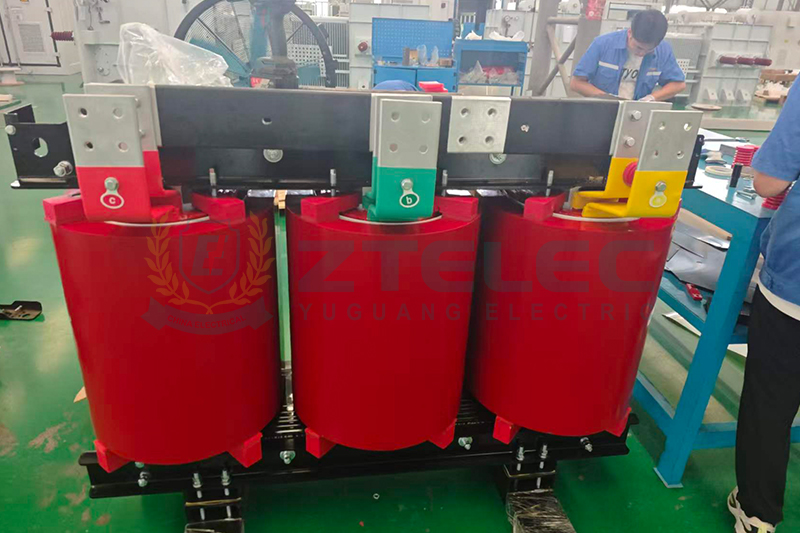
Aluminium has roughly 60% of the conductivity of copper. To carry the same current with the same resistance, an aluminium conductor needs about 1.6 times the cross-section area.
Density and Weight
Aluminium is about one-third as dense as copper. Even with a larger cross-section, an aluminium winding is much lighter than a copper one.
Mechanical Strength
Copper is stronger and handles the electromagnetic forces of a short circuit better. Aluminium is softer, so winding design and clamping need extra attention.
Raw Material Price
Aluminium costs far less per tonne than copper. The ratio changes with the market, but copper has often been several times more expensive.
How Winding Material Affects Transformer Losses
Load Loss Changes
Load loss, also called copper loss or I²R loss, depends directly on winding resistance. For a given size, an aluminium design has higher load loss than a copper one.
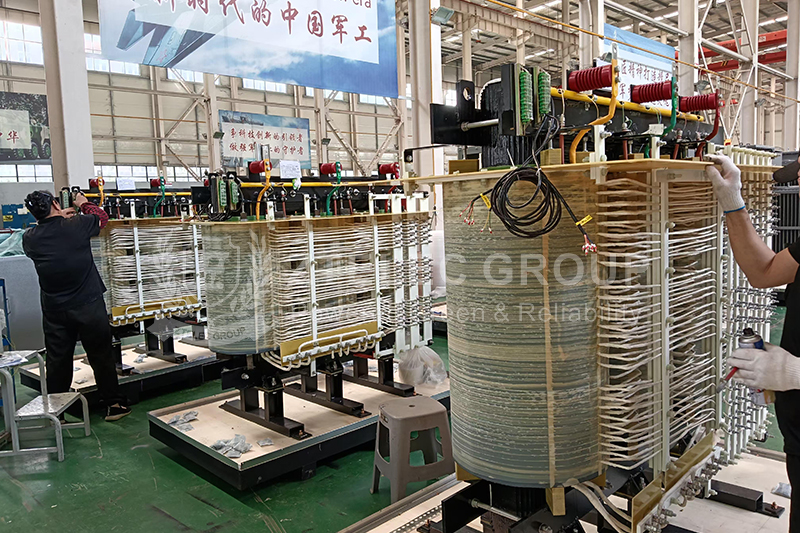
A manufacturer can reduce this gap by using more aluminium, but that makes the winding larger, the core window bigger and the transformer heavier and more expensive.
No-Load Loss Stays the Same
No-load loss comes from the magnetic core, not the windings. The core steel grade and design decide it, so copper and aluminium units can have the same no-load loss.
This matters for the calculation. Only the load-loss part of your energy bill changes with winding material.
Worked Example: 3500 kVA Oil-Immersed Transformer
The figures below are illustrative. They show how to run the comparison, and you should replace them with the guaranteed values in your own quotations.
| Parameter | Copper Winding | Aluminium Winding |
|---|---|---|
| Purchase price | USD 47,000 | USD 41,500 |
| No-load loss | 2.9 kW | 2.9 kW |
| Load loss at rated current | 27 kW | 32 kW |
| Installation and commissioning | USD 8,000 | USD 8,000 |
| Maintenance per year | USD 600 | USD 600 |
| Oil treatment at year 12 | USD 3,000 | USD 3,000 |
Other assumptions: electricity at USD 0.10 per kWh, average load of 60% of rated capacity, 8,760 operating hours a year, 20-year life and an 8% discount rate.
Step-by-Step Loss Calculation
Copper Winding
No-load energy: 2.9 kW x 8,760 h = 25,404 kWh per year.
Load-loss energy: 27 kW x 0.36 x 8,760 h = 85,147 kWh per year. The factor 0.36 is the square of the 60% load.
Total: about 110,550 kWh per year, or USD 11,055 at USD 0.10 per kWh.
Aluminium Winding
No-load energy: 25,404 kWh per year, the same as copper.
Load-loss energy: 32 kW x 0.36 x 8,760 h = 100,915 kWh per year.
Total: about 126,320 kWh per year, or USD 12,632.
The Annual Gap
Copper saves about 15,770 kWh every year, worth roughly USD 1,577. That saving comes entirely from the winding material.
Payback Period
The copper unit costs USD 5,500 more to buy. Dividing that by the yearly saving of USD 1,577 gives a simple payback of about 3.5 years.
After the payback point, the copper transformer keeps saving money every year until the end of its life.
20-Year Total Cost of Ownership
Discounting future costs at 8% over 20 years gives an annuity factor of about 9.82. The present-value comparison looks like this.
| Cost Item | Copper | Aluminium |
|---|---|---|
| Purchase price | USD 47,000 | USD 41,500 |
| Installation and commissioning | USD 8,000 | USD 8,000 |
| Energy losses (PV) | USD 108,500 | USD 124,000 |
| Maintenance (PV) | USD 5,900 | USD 5,900 |
| Oil treatment (PV) | USD 1,200 | USD 1,200 |
| Total TCO | USD 170,600 | USD 180,600 |
Copper is about USD 10,000 cheaper over 20 years, or roughly 5.5% lower in total cost. The extra purchase price is more than recovered through lower losses.
Sensitivity: When Does Aluminium Win?
Light Loading
Load loss depends on the square of the load. At an average load of 30%, the yearly saving from copper falls to only about USD 390, and payback stretches beyond ten years.
At 80% load, the saving rises to around USD 2,800 per year and payback drops to about 2 years.
Electricity Price
At USD 0.06 per kWh, payback extends to about 5.8 years. At USD 0.15 per kWh, it shortens to roughly 2.3 years.
Price Gap Between the Two Quotations
If copper prices rise and the gap grows to USD 9,000, payback becomes about 5.7 years. Under our assumptions, aluminium only comes out ahead over 20 years if the price gap exceeds roughly USD 15,500.
Short Planned Service Life
For a temporary site or a transformer you plan to replace within five to eight years, the lower purchase price of aluminium can make sense.
Other Factors Beyond Losses
Short-Circuit Strength
Copper windings tolerate short-circuit forces better. For networks with high fault levels, this can be a decisive advantage.
Connections and Jointing
Aluminium forms an oxide layer that increases contact resistance. Joints need proper brazing or welding, and cable connections need suitable lugs and treatment. Poor jointing is a common source of overheating.
Size, Weight and Transport
Aluminium units are lighter, which can reduce freight cost and ease lifting. The larger winding volume, however, may increase tank size and oil quantity in an oil immersed power transformer.
Dry Type Transformer Considerations
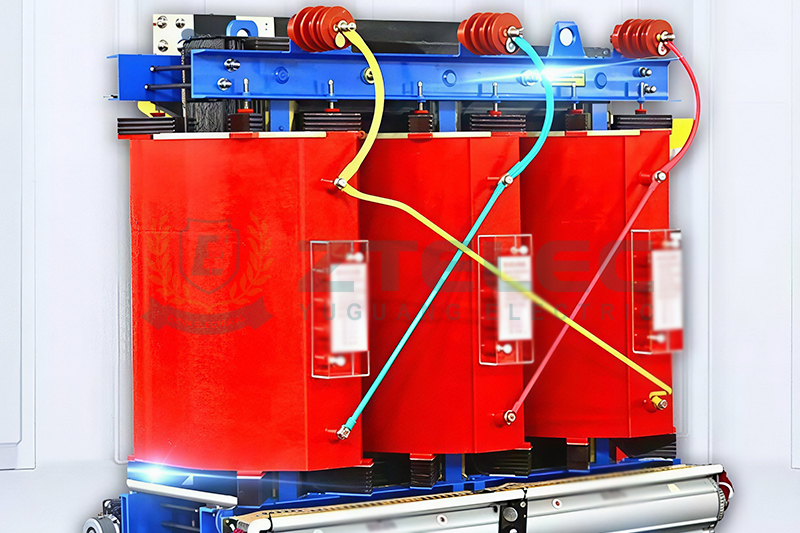
The same copper vs aluminium trade-off applies to a dry type transformer, with a few differences. Without oil to carry heat away, a dry type transformer relies on air cooling and insulation class, so higher winding losses translate more directly into temperature rise.
For indoor sites such as buildings, data centers and tunnels, buyers often choose a dry type transformer for fire safety. In that case, copper windings are common because they help keep losses and heat under control.
Scrap Value
Copper windings keep a high scrap value at end of life. Aluminium recovers much less, so the residual value narrows the gap even further.
Standards and Tender Rules
Some utilities specify copper only. Others accept both materials but evaluate losses through capitalization formulas, which automatically penalize the higher losses of aluminium. Check your tender documents early.
How to Choose: A Short Guide
Choose copper if the transformer runs continuously, the average load is above about 40%, the electricity price is moderate to high, or short-circuit duty is demanding.
Consider aluminium if the load is light, the budget is tight, the service life is short or weight restrictions apply. Always demand guaranteed load-loss values in writing.
For more on loss evaluation, see our guide on the 20-year TCO of a 3500 kVA oil-immersed transformer.
Frequently Asked Questions
Does aluminium winding reduce transformer lifespan?
Not by itself. A well-designed and properly jointed aluminium transformer can last as long as a copper one. Problems usually come from weak joints or poor design.
Do copper and aluminium units have different no-load losses?
No. No-load loss is set by the core, so it can be identical for both. The difference appears only in the load loss.
Can an aluminium transformer match copper losses?
Yes, with a larger conductor cross-section. The cost is a bigger and heavier unit, which usually removes much of the price advantage.
For a typical continuously loaded 3500 kVA oil immersed power transformer, copper windings cost more to buy but less to own. In our example, the extra USD 5,500 is recovered in about 3.5 years, and the 20-year saving is about USD 10,000.
Aluminium remains a sensible choice for lightly loaded, short-term or budget-limited projects. The right answer depends on your load profile, electricity price and the price gap in the quotations.
Send us your voltage level, load profile and target losses, and our engineers will prepare copper and aluminium options with a full payback comparison.
copper vs aluminium windings
aluminium winding transformer
3500 kVA transformer
copper winding transformer
transformer TCO
- more+releated article
- 2026-10-30Copper vs Aluminium Windings: 3500 kVA Losses
- 2026-10-293500 kVA Oil-Immersed Transformer TCO: 20-Year
- 2026-10-28Transformer Cost per kVA: How to Benchmark a 3
- 2026-10-273500 kVA Oil-Immersed Transformer: Altitude De
- 2026-10-263500 kVA vs 2×1750 kVA Transformers: Cost &am
- 2026-10-2150 Hz vs 60 Hz Transformer: Design Differences
- 2026-10-20ZTELEC to Showcase Power Equipment at POWER GR
- 2026-10-19How to Size a 3500 kVA Transformer: Load &
- 2026-10-163500 kVA Transformer Nameplate Guide: Ratings,
- 2026-10-1523 kV Transformer Secondary Voltage: 400 V vs
- ELECTRICAL INSULATION BOARD MATERIALS
- ELECTRICAL INSULATION MATERIALS
- POWER TRANSFORMER
- ENAMELED WIRE
- SWITCHGEAR
FR-4 Copper-Free Laminate | High-Performance Insulation Material
FR-4 Copper Clad Laminate Manufacturer & Supplier
aluminium winding transformer
copper winding transformer
3500 kVA transformer
copper vs aluminium windings
total cost of ownership transformer
transformer TCO
3500 kVA oil-immersed transformer
20-year transformer cost
3500 kVA transformer price
3500 kVA transformer quote
oil filled transformers
ransformer cost per kVA
dry cast resin transformers
transformer altitude derating
high altitude transformer
transformer derating above 1000 m
3500 kVA vs 2x1750 kVA transformer
two transformers vs one
1750 kVA transformer
transformer frequency difference
23 kV transformer design
50 Hz vs 60 Hz transformer
Power transformer
ZTELEC Yuguang Electric
POWER GRIDS 2026 exhibition