
Technical Specifications of 66 kV Oil-Immersed Power Transformers
The 66 kV oil-immersed power transformer is an essential component in medium- and high-voltage power grids. Its efficiency, structural stability, and insulation performance directly influence the operational reliability of the electrical system. This technical guide provides a professional analysis of three core parameters—design structure, cooling method, and applicable standards—offering valuable reference insights for power engineers, EPC contractors, and procurement decision-makers.
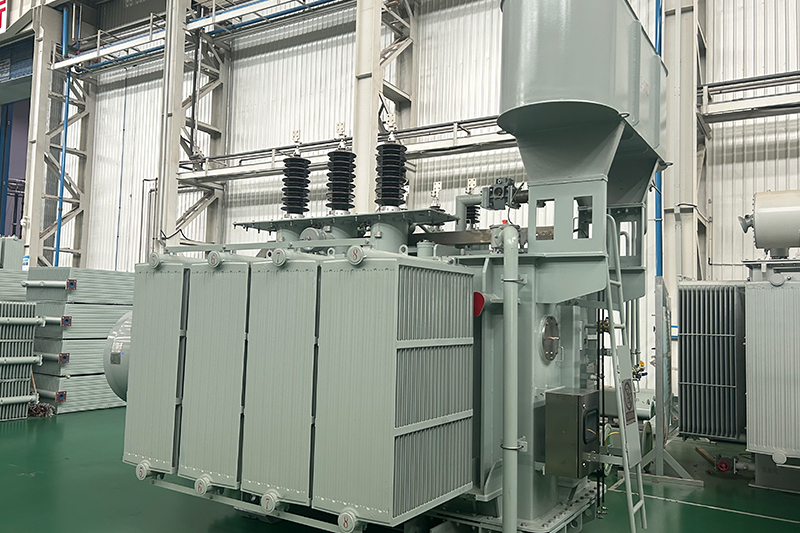
Design Structure of 66 kV Oil-Immersed Power Transformers
The design structure of a 66 kV transformer includes its core configuration, winding arrangement, insulation system, and tap-changing components. These features ensure low losses, high reliability, and stable performance under different operating conditions.
Core Design
Modern 66 kV transformers typically use a step-lap fully mitered core made of high-grade, cold-rolled grain-oriented silicon steel. This design minimizes no-load loss, reduces magnetizing current, and ensures a uniform magnetic flux distribution across the transformer core.
Winding Structure
High-voltage winding: The high-voltage side generally adopts a continuous or disc-type winding structure. With enhanced insulation processing, it significantly improves impulse voltage withstand capability.
Low-voltage winding: The low-voltage winding often uses a helical or continuous structure. By applying transposed conductors, the transformer effectively reduces eddy current losses during high-load operation.
Tap-changing winding: Depending on grid conditions, off-circuit tap changers or on-load tap changers can be selected. This allows precise voltage regulation and ensures compatibility with varying system requirements.
Insulation System
The 66 kV oil-immersed transformer uses a traditional yet highly reliable oil-paper insulation system. Insulation paper, transformer oil, and solid insulation materials work together to meet the required dielectric strength. Compliance with national insulation standards is essential, including a 140 kV power-frequency withstand voltage and a 325 kV lightning impulse withstand voltage.
Cooling Methods of 66 kV Oil-Immersed Power Transformers
The cooling system plays a vital role in maintaining the thermal stability and service life of the transformer. According to IEC and GB specifications, three cooling categories are commonly applied.
ONAN (Oil Natural Air Natural)
This cooling method relies on natural oil convection and natural airflow. It is typically used in transformers ≤10 MVA. The structure is simple, operation is stable, and maintenance requirements are low.
ONAF (Oil Natural Air Forced)
ONAF cooling adds forced-air fans to the ONAN system. It is suitable for medium-capacity transformers, usually between 10–31.5 MVA. The cooling efficiency is significantly improved while maintaining moderate equipment cost.
OFAF (Oil Forced Air Forced)
OFAF cooling uses oil pumps for forced oil circulation combined with air-cooling fans. This system is ideal for large-capacity transformers ≥31.5 MVA, offering the strongest heat dissipation performance for continuous high-load operation.
Intelligent Cooling Control
Advanced 66 kV transformers often integrate intelligent temperature control systems. Sensors monitor the oil temperature and load status in real time, automatically adjusting fan and pump operation to optimize cooling efficiency and minimize energy consumption.
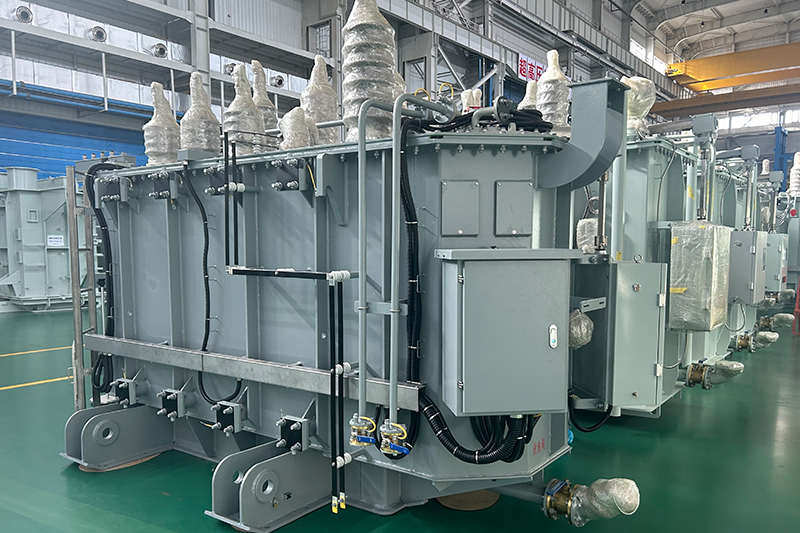
Applicable Standards
66 kV oil-immersed transformers must comply with international and national technical requirements to ensure safety, reliability, and energy efficiency.
International Standards
The major global standards include the IEC 60076 series issued by the International Electrotechnical Commission and the IEEE C57 series issued by the Institute of Electrical and Electronics Engineers.
Chinese National Standards
Relevant GB/GB/T standards for 66 kV transformers include: GB/T 1094.1-2013, GB/T 1094.2-2013, GB/T 1094.3-2017, and GB 20052-2020.
Key Performance Requirements
66 kV transformers must meet energy efficiency levels specified in GB 20052 Level 1 or Level 2. Noise performance must comply with GB/T 1094.10, and the insulating oil used must meet environmental and safety regulations. The design should also prioritize recyclability and long-term sustainability.
Selection Recommendations
When selecting a 66 kV oil-immersed transformer, engineers and procurement teams should consider load characteristics, installation environment, required capacity, energy efficiency standards, maintenance convenience, and the supplier’s technical qualifications. Proper evaluation ensures safe operation, optimized lifecycle cost, and long-term system reliability.
The technical specifications of a 66 kV oil-immersed power transformer greatly influence the performance and stability of the entire power grid. A thorough understanding of its structural design, cooling classifications, and applicable standards enables more accurate equipment selection and supports efficient long-term grid operation.
oil immersed transformer lifespan
oil immersed transformer maintenance
transformer lifecycle
transformer insulation aging
dry type transformer temperature monitoring
- more+releated article
- 2026-05-11How Long Does an Oil-Immersed Transformer Last
- 2026-05-08Modern Power System Dry-Type Transformer Insta
- 2026-05-07Oil-Immersed Transformer Overheating: Causes,
- 2026-05-07Dry-Type Transformers for Data Centers: 2026 R
- 2026-04-30Air-Core Reactor vs Iron-Core Reactor: How to
- 2026-04-29Compact Enclosed Transformer for Smart Grid: T
- 2026-04-2812-Pulse and 24-Pulse Phase-Shifting Transform
- 2026-04-27Oil-Immersed Transformers for Industrial Plant
- 2026-04-25Why Dry-Type Transformers Are Preferred for Ho
- 2026-04-24Enclosed Transformer Outdoor Solutions: IP Pro
- ELECTRICAL INSULATION BOARD MATERIALS
- ELECTRICAL INSULATION MATERIALS
- POWER TRANSFORMER
- ENAMELED WIRE
- SWITCHGEAR



transformer insulation aging
transformer lifecycle
oil immersed transformer lifespan
oil immersed transformer maintenance
dry type transformer installation
dry type transformer temperature monitoring
dry type transformer maintenance
dry type transformer sizing
transformer cooling system failure
transformer overheating causes
oil immersed transformer overheating
transformer oil temperature
harmonic mitigation
dry type transformer
K factor transformer
data center transformer
Cast resin transformer
insulation oil degradation
DGA analysis transformer
transformer fault analysis
oil immersed transformer failure
smart grid transformer
compact enclosed transformer
integrated distribution transformer
compact transformer substation