
How to Choose a 1000 kVA Compact Substation: Design, Parameters, and Applications
The rapid expansion of urban power networks, industrial parks, and renewable energy projects has increased demand for compact and reliable power distribution solutions. Among them, the 1000 kVA compact substation is one of the most commonly used options in medium-voltage distribution systems.
Thanks to its small footprint, integrated design, and fast installation, this type of substation is well suited for space-constrained sites and projects with tight schedules. However, incorrect selection can lead to higher operating costs, inefficient performance, and future expansion difficulties.
This article explains how to choose a suitable 1000 kVA compact substation by focusing on three key areas: design structure, technical parameters, and real-world applications.
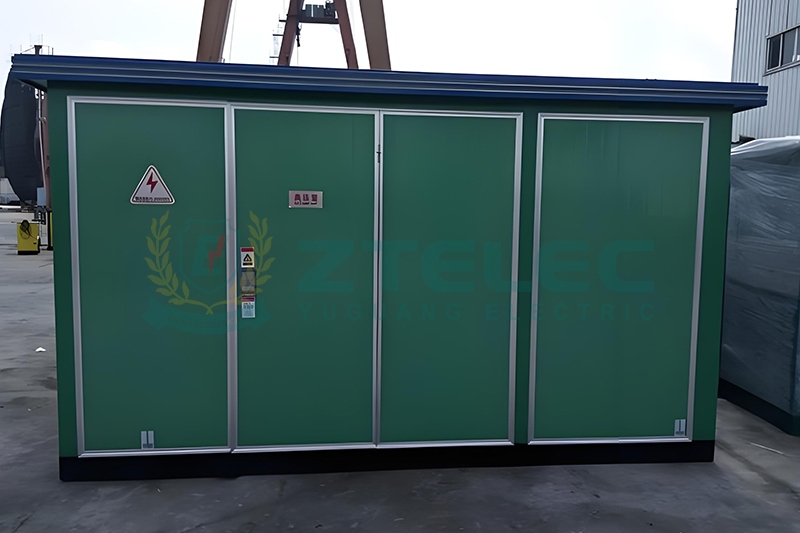
What Is a 1000 kVA Compact Substation?
A 1000 kVA compact substation is a fully integrated power distribution unit that combines medium-voltage switchgear, a distribution transformer, and low-voltage distribution equipment into a single enclosure or modular housing.
These substations are usually designed according to international standards such as IEC 62271 and IEC 60076. Most units are assembled, wired, and tested at the factory, which significantly reduces on-site installation time and commissioning risks.
Typical advantages include compact size, high operational safety, reliable performance, and simplified daily maintenance.
Design Considerations for a 1000 kVA Compact Substation
Structural Design Options
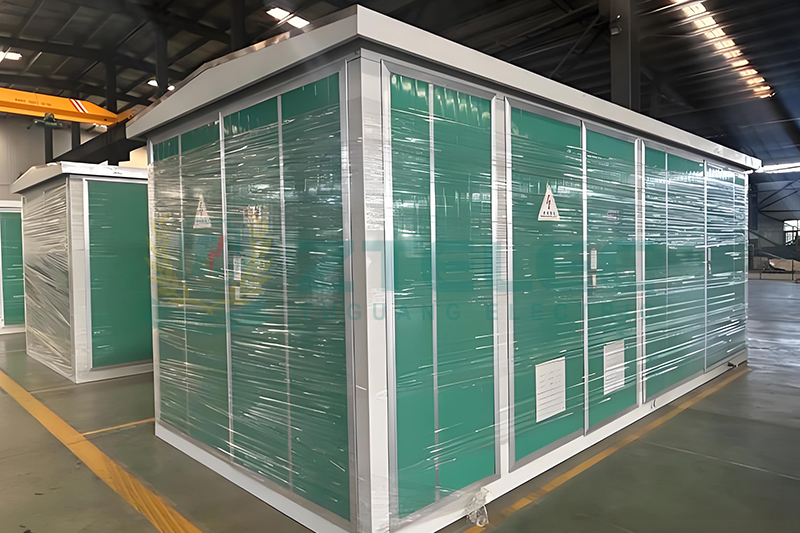
Several structural designs are commonly used for 1000 kVA compact substations. European-style compact substations adopt independent compartments for medium voltage, transformer, and low voltage sections, providing enhanced safety and clear functional separation.
American-style pad-mounted substations feature a more compact structure and convenient front-access maintenance, making them suitable for urban distribution networks. Prefabricated E-House substations are typically used in large industrial or overseas EPC projects where fast deployment and scalability are required.
When selecting the structure, factors such as installation environment, protection level, accessibility, and maintenance strategy should be carefully evaluated.
Transformer Type Selection
Transformers used in 1000 kVA compact substations are mainly divided into oil-immersed and dry-type transformers.
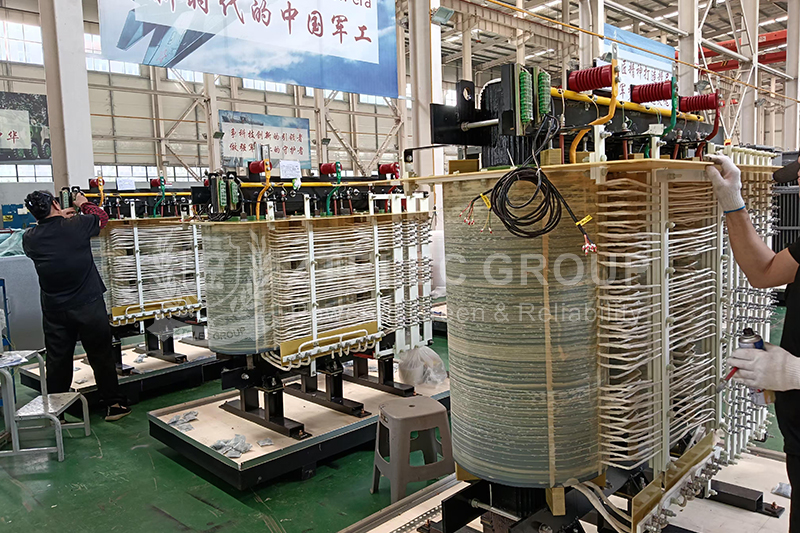
Oil-immersed transformers offer excellent cooling performance and are suitable for outdoor installations or continuous high-load operation. Dry-type epoxy cast transformers provide better fire resistance and environmental safety, making them ideal for commercial buildings, underground areas, and densely populated locations.
The final choice should be based on fire safety regulations, site conditions, and long-term operational requirements.
Enclosure Design and Protection Level
Common enclosure materials include galvanized steel, stainless steel, and composite materials. Protection ratings such as IP23, IP33, and IP44 are widely used, with optional features like anti-corrosion treatment, dust protection, and anti-condensation systems.
For harsh environments such as coastal regions, high-humidity zones, deserts, or high-temperature areas, enclosure design plays a critical role in ensuring long-term reliability.
Key Technical Parameters of a 1000 kVA Compact Substation
Transformer Parameters
The rated capacity is 1000 kVA, but actual load characteristics and future expansion plans should be considered. High-voltage ratings commonly include 10 kV, 11 kV, and 20 kV, while low-voltage ratings are typically 400 V or 230 V, depending on local grid standards.
The impedance voltage usually ranges from 4% to 6%, helping to limit short-circuit current while maintaining voltage stability. To reduce long-term energy losses, high-efficiency transformers such as SCB14 or SCB18 dry-type models and S13 or S20 oil-immersed models are recommended.
Medium-Voltage Switchgear Configuration
Medium-voltage systems can be configured using load switch and fuse combinations, ring main units, or circuit breaker solutions. Protection functions should include overcurrent, short-circuit, and earth fault protection.
For improved reliability and future upgrades, it is advisable to reserve one or two spare feeder bays.
Low-Voltage Distribution System
The main low-voltage circuit breaker typically has a rated current between 1600 A and 2000 A, with breaking capacity matched to the system short-circuit level. Outgoing feeders should be designed based on actual load demand, while reserving around 20% to 30% spare capacity.
Automatic power factor correction systems are often installed, with capacitor bank capacity generally set at 30% to 40% of the transformer rating.
Intelligent Monitoring System
An optional intelligent monitoring system allows real-time measurement of current, voltage, power, temperature, and load rate. Integration with SCADA systems enables remote operation, fault recording, and early warning, helping to reduce downtime and maintenance costs.
Typical Applications of 1000 kVA Compact Substations
Industrial and Manufacturing Facilities
In factories and industrial plants, 1000 kVA compact substations provide stable power for production lines, heavy equipment, and centralized distribution systems. Their modular design supports flexible future expansion.
Commercial and Public Buildings
Commercial complexes, hospitals, schools, and data centers often use compact substations to meet high safety and reliability requirements. Dry-type transformers are commonly selected to comply with fire protection and environmental standards.
Renewable Energy and Infrastructure Projects
Compact substations are widely used in photovoltaic power plants, wind farm auxiliary systems, and urban grid upgrades. Their compact structure enables fast installation and efficient grid connection.
A well-designed 1000 kVA compact substation is a key element of a reliable power distribution system. Careful selection based on structure, parameters, and application requirements ensures long-term stability, energy efficiency, and lower operating costs.
If you require customized configurations, detailed technical specifications, or pricing guidance for a 1000 kVA compact substation, contacting an experienced manufacturer is the most effective way to ensure project success.
oil immersed transformer lifespan
oil immersed transformer maintenance
transformer lifecycle
transformer insulation aging
dry type transformer temperature monitoring
- more+releated article
- 2026-05-11How Long Does an Oil-Immersed Transformer Last
- 2026-05-08Modern Power System Dry-Type Transformer Insta
- 2026-05-07Oil-Immersed Transformer Overheating: Causes,
- 2026-05-07Dry-Type Transformers for Data Centers: 2026 R
- 2026-04-30Air-Core Reactor vs Iron-Core Reactor: How to
- 2026-04-29Compact Enclosed Transformer for Smart Grid: T
- 2026-04-2812-Pulse and 24-Pulse Phase-Shifting Transform
- 2026-04-27Oil-Immersed Transformers for Industrial Plant
- 2026-04-25Why Dry-Type Transformers Are Preferred for Ho
- 2026-04-24Enclosed Transformer Outdoor Solutions: IP Pro
- ELECTRICAL INSULATION BOARD MATERIALS
- ELECTRICAL INSULATION MATERIALS
- POWER TRANSFORMER
- ENAMELED WIRE
- SWITCHGEAR



transformer insulation aging
transformer lifecycle
oil immersed transformer lifespan
oil immersed transformer maintenance
dry type transformer installation
dry type transformer temperature monitoring
dry type transformer maintenance
dry type transformer sizing
transformer cooling system failure
transformer overheating causes
oil immersed transformer overheating
transformer oil temperature
harmonic mitigation
dry type transformer
K factor transformer
data center transformer
Cast resin transformer
insulation oil degradation
DGA analysis transformer
transformer fault analysis
oil immersed transformer failure
smart grid transformer
compact enclosed transformer
integrated distribution transformer
compact transformer substation