
RMU vs. Switchgear: Key Differences in Medium-Voltage Distribution Systems
In medium-voltage power distribution system design, Ring Main Units (RMUs) and medium-voltage switchgear are two essential yet frequently confused pieces of equipment. For power system designers, EPC contractors, procurement teams, and project decision-makers, understanding the differences between RMUs and switchgear is critical to achieving reliable operation, cost efficiency, and long-term system flexibility.
This article provides a clear and practical comparison of RMUs and switchgear by analyzing their definitions, functions, structural characteristics, and application scenarios, helping you select the most suitable solution for your medium-voltage distribution project.
What Is a Ring Main Unit (RMU)?
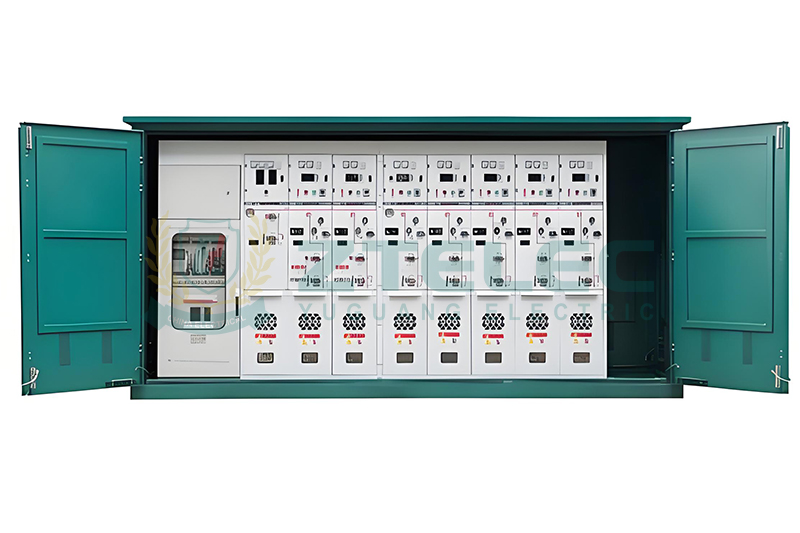
A Ring Main Unit (RMU) is a compact, fully enclosed medium-voltage switching device designed specifically for ring network distribution systems. Its primary functions include ring network power supply, feeder switching, and rapid fault isolation to maintain continuous power delivery.
RMUs are commonly applied in urban and industrial distribution networks where space is limited and high supply reliability is required. By isolating faulty sections without interrupting the entire network, RMUs significantly enhance distribution system continuity.
Typical RMU characteristics include compact dimensions, enclosed construction, and suitability for voltage levels such as 11kV, 12kV, 24kV, and 33kV. Most RMUs are equipped with load break switches, while selected configurations integrate vacuum circuit breakers for enhanced protection.
Due to their sealed design, RMUs offer high operational safety, reduced exposure to environmental factors, low routine maintenance requirements, and simplified operation, making them ideal for unattended or automated distribution systems.
What Is Medium-Voltage Switchgear?
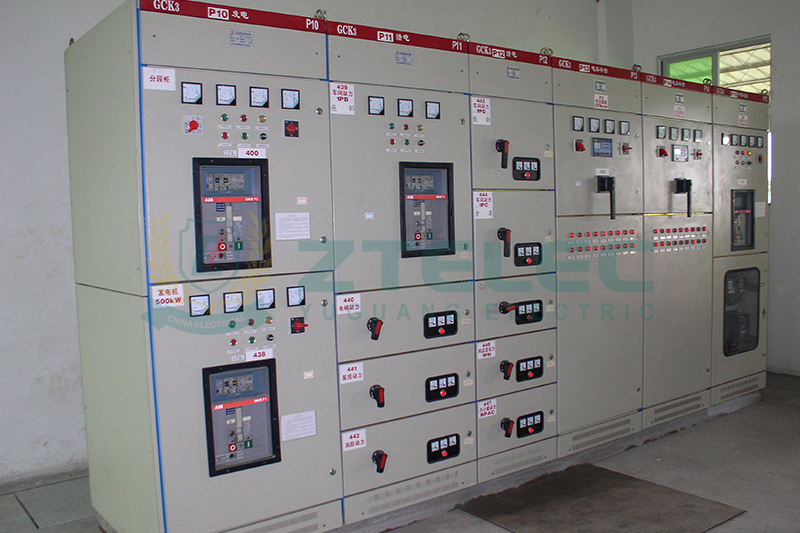
Medium-voltage switchgear is a comprehensive electrical system used for power distribution, protection, control, and monitoring within medium-voltage networks. It is capable of managing transformers, motors, feeders, and other electrical loads with high precision and reliability.
Switchgear systems integrate circuit breakers, disconnectors, protective relays, current and voltage transformers, and monitoring devices. They provide advanced protection against overloads, short circuits, and earth faults, while supporting real-time monitoring and remote control.
Depending on insulation type, medium-voltage switchgear can be classified as air-insulated switchgear (AIS) or gas-insulated switchgear (GIS). These systems are suitable for both indoor and outdoor installations and can be customized extensively to meet complex industrial or utility requirements.
Structural Differences Between RMUs and Switchgear
From a structural perspective, RMUs adopt a modular and highly compact design. Key components such as load break switches, fuses, and earthing switches are integrated into a sealed enclosure. This compact and enclosed structure allows RMUs to be installed in confined spaces or harsh outdoor environments with minimal civil work.
In contrast, medium-voltage switchgear features a larger and more complex structure. It is typically arranged into functional panels such as incoming feeders, outgoing feeders, bus couplers, and metering sections. The internal wiring and layout offer high flexibility, enabling customized configurations and future system expansion.
Application Scenarios for RMUs and Switchgear
Typical Applications of Ring Main Units
RMUs are widely used in urban distribution ring networks, serving as critical nodes in 10kV or 11kV loop systems. They are commonly installed in distribution substations, switching stations, and compact substations for feeder control and fault isolation.
They are also ideal for branch distribution to residential complexes, commercial buildings, industrial parks, and renewable energy projects. In smart grid and distribution automation systems, RMUs function as intelligent ring nodes enabling remote control and fault management.
Typical Applications of Medium-Voltage Switchgear
Medium-voltage switchgear is typically installed at key distribution points within substations, including transformer feeders, outgoing feeders, and bus sectionalizers. It is essential in applications requiring high protection levels and operational flexibility.
Industries with critical loads such as data centers, petrochemical plants, mining operations, and large manufacturing facilities rely on switchgear for primary grid protection and advanced relay coordination. Switchgear is also preferred in systems requiring centralized monitoring, SCADA integration, and complex protection schemes.
Selection Criteria: RMU or Switchgear?
When selecting between RMUs and medium-voltage switchgear, several technical and operational factors should be considered. Distribution network topology plays a key role, as RMUs are best suited for ring or loop networks, while switchgear excels in radial or complex network structures.
Installation space is another decisive factor. RMUs are ideal for space-constrained locations, whereas switchgear requires larger rooms or dedicated substations. From an operation and maintenance perspective, RMUs offer lower routine maintenance demands, while switchgear provides superior scalability and future expansion capabilities.
By clearly understanding these differences, engineers and project owners can select the most efficient and reliable medium-voltage distribution solution for their specific application.
If your project requires professional support in selecting RMUs, medium-voltage switchgear, or integrated transformer solutions, please contact us directly. Our technical team is ready to deliver customized, standards-compliant distribution solutions tailored to your project needs.
oil immersed transformer lifespan
oil immersed transformer maintenance
transformer lifecycle
transformer insulation aging
dry type transformer temperature monitoring
- more+releated article
- 2026-05-11How Long Does an Oil-Immersed Transformer Last
- 2026-05-08Modern Power System Dry-Type Transformer Insta
- 2026-05-07Oil-Immersed Transformer Overheating: Causes,
- 2026-05-07Dry-Type Transformers for Data Centers: 2026 R
- 2026-04-30Air-Core Reactor vs Iron-Core Reactor: How to
- 2026-04-29Compact Enclosed Transformer for Smart Grid: T
- 2026-04-2812-Pulse and 24-Pulse Phase-Shifting Transform
- 2026-04-27Oil-Immersed Transformers for Industrial Plant
- 2026-04-25Why Dry-Type Transformers Are Preferred for Ho
- 2026-04-24Enclosed Transformer Outdoor Solutions: IP Pro
- ELECTRICAL INSULATION BOARD MATERIALS
- ELECTRICAL INSULATION MATERIALS
- POWER TRANSFORMER
- ENAMELED WIRE
- SWITCHGEAR


transformer insulation aging
transformer lifecycle
oil immersed transformer lifespan
oil immersed transformer maintenance
dry type transformer installation
dry type transformer temperature monitoring
dry type transformer maintenance
dry type transformer sizing
transformer cooling system failure
transformer overheating causes
oil immersed transformer overheating
transformer oil temperature
harmonic mitigation
dry type transformer
K factor transformer
data center transformer
Cast resin transformer
insulation oil degradation
DGA analysis transformer
transformer fault analysis
oil immersed transformer failure
smart grid transformer
compact enclosed transformer
integrated distribution transformer
compact transformer substation