
Dry-Type Transformer Cleaning: Maintenance Practices and Safety Considerations
Dry-type transformers play a critical role in modern power distribution systems, supporting reliable electricity supply for industrial facilities, commercial buildings, data centers, and renewable energy projects. During long-term operation, dust, dirt, and airborne contaminants gradually accumulate on transformer surfaces and internal components. If not properly removed, these contaminants can significantly affect performance and operational safety.
Common issues caused by contamination include reduced insulation performance, impaired heat dissipation, accelerated corrosion of metal components, and an increased probability of electrical faults. Industry data shows that regular professional cleaning can extend the service life of a dry-type transformer by 20–30 percent while reducing the risk of unexpected downtime. Therefore, cleaning is a vital part of preventive maintenance programs.
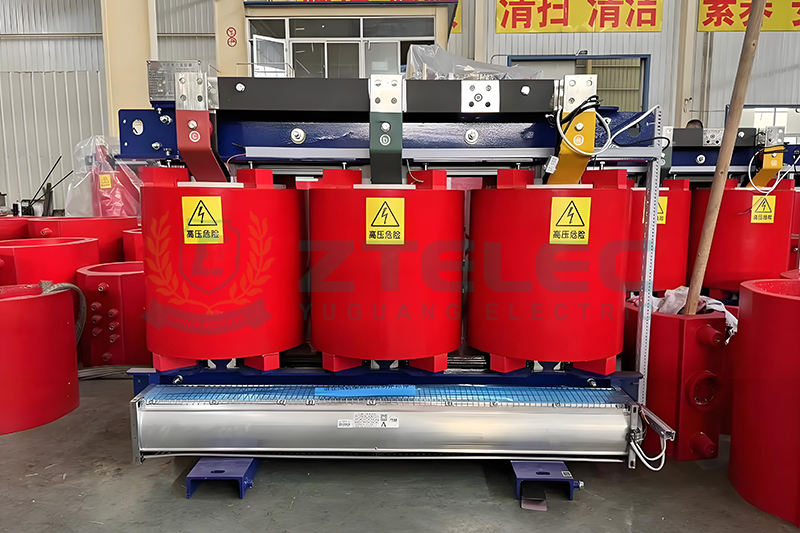
Dry-Type Transformer Cleaning Procedure
Power Disconnection and Safety Isolation
Before any cleaning work begins, the transformer must be completely de-energized. All power supplies on both the high-voltage and low-voltage sides should be disconnected. Lockout-Tagout (LOTO) procedures must be strictly implemented, and residual voltage must be verified as zero. Electrical isolation is the most critical safety principle during transformer cleaning and must always be prioritized.
Surface and Winding Dust Removal
Surface dust should be removed using an industrial vacuum cleaner or dry compressed air. The recommended air pressure should not exceed 0.3 MPa to avoid damaging insulation components. Direct contact with winding surfaces should be avoided. Key areas requiring attention include coil surfaces, insulation supports, and ventilation channels. Water, wet cloths, or liquid cleaning methods must never be applied directly to transformer windings.
Cooling System Cleaning
The air-cooling system has a direct impact on transformer thermal performance. Cleaning should focus on fan blades, air inlets, and filter elements. During this process, fan operation, vibration, and noise levels should be checked to ensure proper airflow and prevent localized overheating.
Insulation Component Inspection
While cleaning, insulation components should be carefully inspected for cracks, carbonization, or signs of partial discharge. Fasteners should be checked for looseness, and any abnormal findings must be repaired or replaced immediately to maintain insulation integrity.
Post-Cleaning Inspection and Electrical Testing
Comprehensive Visual Inspection
After cleaning, ensure that no cleaning agent residue remains on any surface. All components should be checked for damage, and it must be confirmed that no foreign objects are left inside or around the transformer enclosure.
Mandatory Electrical Testing
Electrical testing is essential before returning the transformer to service. Insulation resistance tests should be performed between windings and ground, as well as between windings, with results typically showing improvement after cleaning. Winding resistance tests confirm normal electrical connections, while turning ratio tests verify compliance with design standards. For high-voltage dry-type transformers, partial discharge testing is strongly recommended.
Final Commissioning Checks
All temporary grounding wires must be removed, covers and panels securely restored, and the surrounding area cleaned. Maintenance records should be fully completed, and cleaning and inspection data should be archived for future reference.
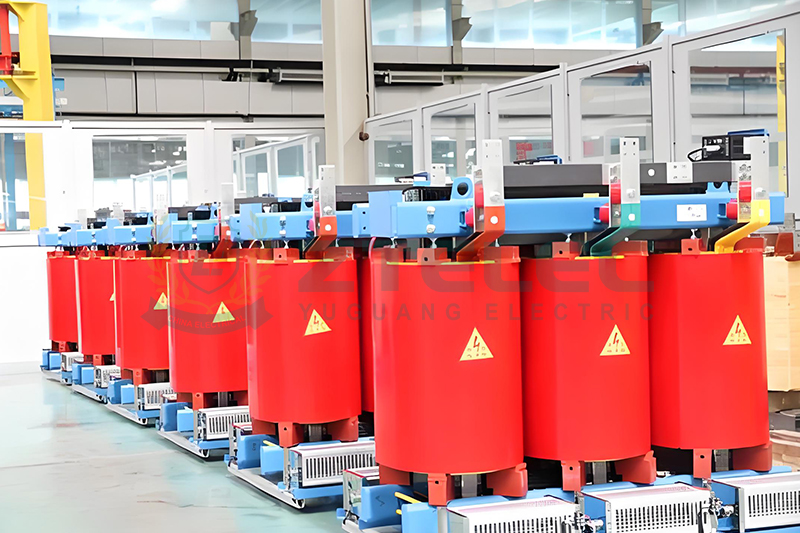
Professional Cleaning Methods for Dry-Type Transformers
Dry Cleaning for Light Contamination
Dry cleaning is suitable for routine maintenance when dust accumulation is light and no oil stains are present. Recommended tools include insulated soft brushes made from natural fibers, low-suction industrial vacuum cleaners with HEPA filters, and dry compressed air maintained at safe pressure and distance.
Wet Cleaning for Stubborn Stains
When oil stains, adhesives, or heavy contamination are present on external surfaces, specialized transformer cleaning agents may be used. These cleaners must be non-corrosive, electrically neutral, and quick-drying. Tap water, solvents, corrosive liquids, and conductive fluids are strictly prohibited.
Special Contamination Treatment
Salt spray deposits in coastal environments should only be wiped with a lightly damp cloth using distilled water after complete power isolation. Metal dust should be collected using magnetic tools before vacuum cleaning. Biological contamination can be treated with environmentally friendly disinfectants designed for electrical equipment.
Recommended Cleaning Cycle for Dry-Type Transformers
In normal operating environments, visual inspections are recommended monthly, surface cleaning every six to twelve months, and deep cleaning every three to five years depending on operating conditions. In harsh environments such as industrial zones, coastal areas, or high-dust locations, cleaning frequency should be increased by two to three times. After overloads, short circuits, or abnormal operation, immediate inspection and cleaning are strongly advised.
Proper cleaning and maintenance of dry-type transformers are essential for ensuring safe, stable, and efficient operation. By establishing合理 cleaning cycles, following standardized procedures, and enforcing strict safety management, operational risks can be significantly reduced while improving overall power system reliability.
If you require assistance with dry-type transformer maintenance planning, insulation material upgrades, or professional technical support, please contact us for expert services.
oil immersed transformer lifespan
oil immersed transformer maintenance
transformer lifecycle
transformer insulation aging
dry type transformer temperature monitoring
- more+releated article
- 2026-05-11How Long Does an Oil-Immersed Transformer Last
- 2026-05-08Modern Power System Dry-Type Transformer Insta
- 2026-05-07Oil-Immersed Transformer Overheating: Causes,
- 2026-05-07Dry-Type Transformers for Data Centers: 2026 R
- 2026-04-30Air-Core Reactor vs Iron-Core Reactor: How to
- 2026-04-29Compact Enclosed Transformer for Smart Grid: T
- 2026-04-2812-Pulse and 24-Pulse Phase-Shifting Transform
- 2026-04-27Oil-Immersed Transformers for Industrial Plant
- 2026-04-25Why Dry-Type Transformers Are Preferred for Ho
- 2026-04-24Enclosed Transformer Outdoor Solutions: IP Pro
- ELECTRICAL INSULATION BOARD MATERIALS
- ELECTRICAL INSULATION MATERIALS
- POWER TRANSFORMER
- ENAMELED WIRE
- SWITCHGEAR



transformer insulation aging
transformer lifecycle
oil immersed transformer lifespan
oil immersed transformer maintenance
dry type transformer installation
dry type transformer temperature monitoring
dry type transformer maintenance
dry type transformer sizing
transformer cooling system failure
transformer overheating causes
oil immersed transformer overheating
transformer oil temperature
harmonic mitigation
dry type transformer
K factor transformer
data center transformer
Cast resin transformer
insulation oil degradation
DGA analysis transformer
transformer fault analysis
oil immersed transformer failure
smart grid transformer
compact enclosed transformer
integrated distribution transformer
compact transformer substation