
Solar Duty Transformer: Sizing Challenges, Inverter Trends, and E-Shield Applications
The continuous expansion of global photovoltaic (PV) installations is accelerating the transition toward higher power density, modular system design, and intelligent operation. As a critical component in PV power systems, solar duty transformers play a key role in ensuring operational safety, improving energy conversion efficiency, and maintaining long-term system stability.
With the rapid evolution of inverter technologies and increasingly strict grid compliance requirements, engineers must address new technical challenges, including transformer sizing constraints, harmonic impacts from inverters, and electromagnetic interference (EMI) mitigation.
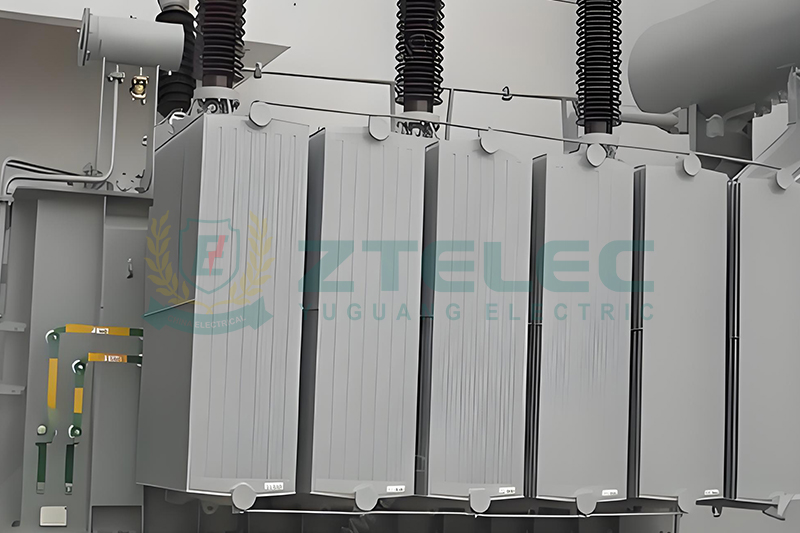
Challenges in Solar Duty Transformer Sizing
In large-scale and centralized PV plants, inverter capacities continue to increase, requiring transformers with higher ratings. However, installation environments such as compact substations, containerized systems, and prefabricated enclosures impose strict space limitations.
Transformer design must balance rated capacity with physical dimensions while ensuring proper thermal management and insulation performance. Engineers must also consider transportation, lifting, and on-site installation constraints. Poor sizing decisions can lead to project delays, higher operational costs, and reduced system reliability.
Voltage level selection further complicates transformer design. Common PV transformer voltages include 10 kV, 20 kV, and 33 kV. Higher voltage levels require increased insulation thickness, larger safety clearances, and more advanced insulation materials, significantly impacting transformer size and structural complexity.
Photovoltaic Inverter Trends and Their Impact
Photovoltaic inverter technology is evolving toward higher power ratings and higher voltage platforms. High-capacity inverters, such as 330 kW three-phase units, are increasingly deployed in distributed solar and agrivoltaic projects.
These developments demand transformers with enhanced overload capacity, improved thermal performance, and higher insulation reliability. Although global inverter shipments may experience short-term fluctuations, long-term growth is expected due to increasing electrification and rising power demand from emerging technologies.
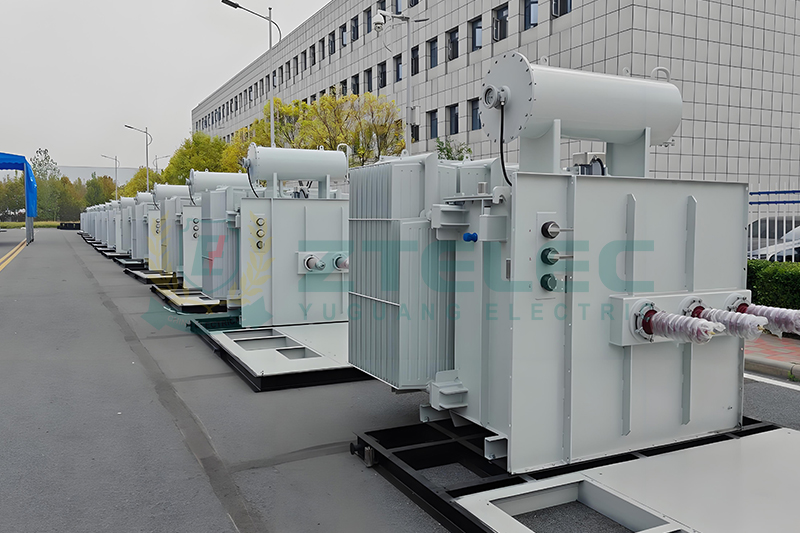
Electromagnetic Shielding (E-Shield) Applications
Modern PV systems operate under high-frequency switching conditions, making them susceptible to electromagnetic interference. EMI can manifest as radiated or conducted disturbances, potentially causing control signal instability, communication failures, or protection malfunctions.
Effective electromagnetic shielding is essential in solar duty transformer design. Typical solutions include integrating shielding layers within windings and cores, applying composite insulation materials with shielding properties, and isolating control circuits from power circuits.
A well-designed electromagnetic shielding system improves electromagnetic compatibility (EMC), enhances operational stability, and extends equipment lifespan while ensuring compliance with grid standards.
Solar duty transformers have evolved beyond simple power conversion devices. They are now essential components that link power generation, grid integration, and system reliability within photovoltaic plants.
As the renewable energy sector continues to grow, optimizing transformer sizing, adapting to inverter advancements, and implementing effective electromagnetic shielding will be key drivers of future innovation.
If you are seeking high-performance solar duty transformer solutions with strong system compatibility, our engineering team can provide customized sizing designs and advanced EMI shielding recommendations tailored to your project requirements.
oil immersed transformer lifespan
oil immersed transformer maintenance
transformer lifecycle
transformer insulation aging
dry type transformer temperature monitoring
- more+releated article
- 2026-05-11How Long Does an Oil-Immersed Transformer Last
- 2026-05-08Modern Power System Dry-Type Transformer Insta
- 2026-05-07Oil-Immersed Transformer Overheating: Causes,
- 2026-05-07Dry-Type Transformers for Data Centers: 2026 R
- 2026-04-30Air-Core Reactor vs Iron-Core Reactor: How to
- 2026-04-29Compact Enclosed Transformer for Smart Grid: T
- 2026-04-2812-Pulse and 24-Pulse Phase-Shifting Transform
- 2026-04-27Oil-Immersed Transformers for Industrial Plant
- 2026-04-25Why Dry-Type Transformers Are Preferred for Ho
- 2026-04-24Enclosed Transformer Outdoor Solutions: IP Pro
- ELECTRICAL INSULATION BOARD MATERIALS
- ELECTRICAL INSULATION MATERIALS
- POWER TRANSFORMER
- ENAMELED WIRE
- SWITCHGEAR



transformer insulation aging
transformer lifecycle
oil immersed transformer lifespan
oil immersed transformer maintenance
dry type transformer installation
dry type transformer temperature monitoring
dry type transformer maintenance
dry type transformer sizing
transformer cooling system failure
transformer overheating causes
oil immersed transformer overheating
transformer oil temperature
harmonic mitigation
dry type transformer
K factor transformer
data center transformer
Cast resin transformer
insulation oil degradation
DGA analysis transformer
transformer fault analysis
oil immersed transformer failure
smart grid transformer
compact enclosed transformer
integrated distribution transformer
compact transformer substation