
Why is Filament Wound Epoxy Tube More Expensive than Ordinary Fiberglass Tube?
Fiberglass tube is a commonly used structural and insulating material in fields such as power, machinery, new energy, and chemical equipment. Many purchasing personnel, when comparing prices of different products, often find that filament wound epoxy tube is typically significantly more expensive than ordinary fiberglass tubing.
This price difference is not accidental, but rather determined by differences in manufacturing processes, material properties, and application value.
Differences in Manufacturing Processes
1. Filament Wound Epoxy Tube: Utilizes a Continuous Fiber-Oriented Winding Process
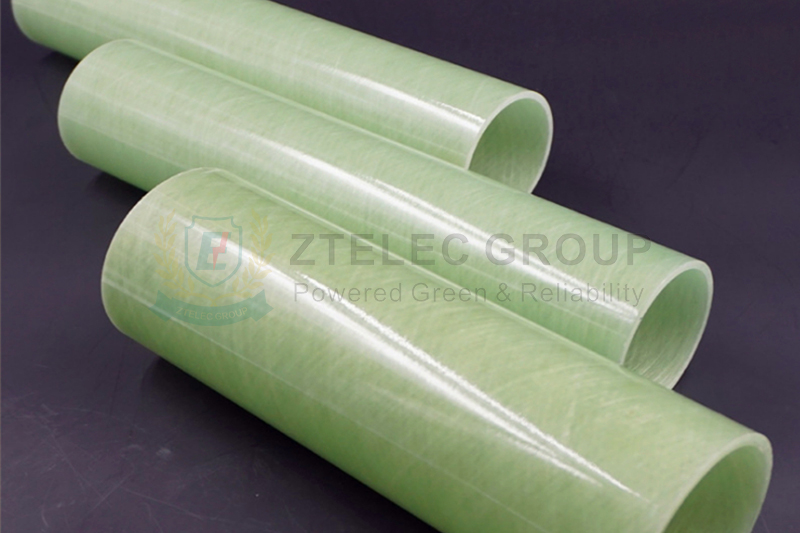
Filament wound epoxy tube is formed through a fiber winding process. During production, fiberglass is continuously wound onto a mandrel under preset angle control, while simultaneously impregnating it with epoxy resin, and finally cured by heat to form the tubing.
The characteristics of this process include:
The fiber remains continuous, intact, and regularly arranged.
The fiber direction can be designed according to stress requirements.
The bond between the resin and fiber is more complete.
Larger equipment investment, higher process control requirements, and greater production technical difficulty all directly increase manufacturing costs.
2. Ordinary Fiberglass Tubes: Mostly Produced Through Molding or Hand Lay-up Processes
Ordinary fiberglass tubes are mostly produced through molding, winding, or hand lay-up processes, using mostly chopped fibers with a relatively random laying pattern.
Their main characteristics are:
Fiber orientation is difficult to control precisely.
The tube structure has lower density.
Production efficiency is relatively high, and the cost is relatively low.
Therefore, ordinary fiberglass tubes have a certain price advantage, but their overall performance lags behind that of wound fiberglass tubes.
Differences in Mechanical Performance and Structural Strength
1. Pressure-Bearing Capability
The key advantage of the filament winding process lies in its high circumferential tensile strength and axial strength. By adjusting the winding angle (for example, an angle close to 55° is commonly used for internal pressure applications), the fiber orientation can be aligned with the main stress directions of the pipe. This allows the fibers’ load-bearing capacity to be utilized more effectively.
As a result, filament wound epoxy tubes are well suited for high-pressure pipelines, storage tanks, and similar applications, whereas conventional fiberglass tubes often struggle to meet the requirements of high-pressure operating conditions.
2. Structural Design Flexibility
Engineers can design specific winding patterns according to the service conditions of the pipe (such as internal pressure or external pressure), achieving an optimal balance between performance and cost. This level of design flexibility is difficult to achieve with conventional manufacturing processes.
Different Requirements for Raw Materials and Quality Control
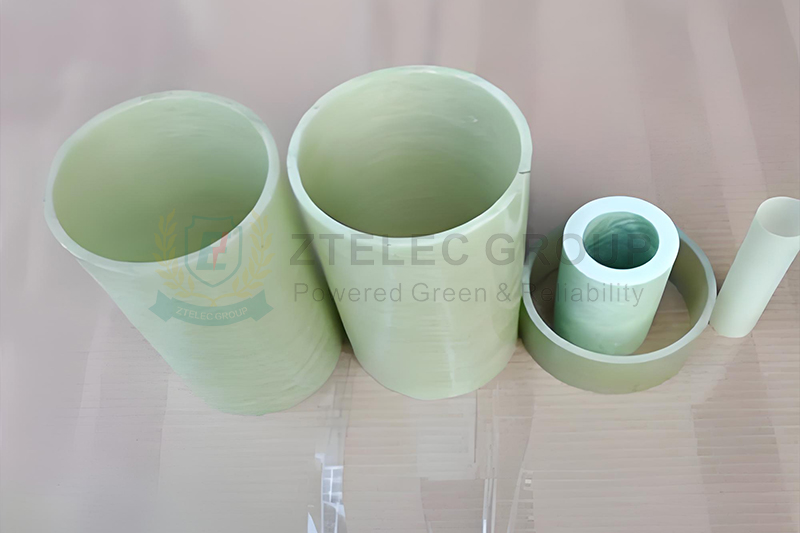
Filament wound epoxy tubes typically have higher requirements for material selection and quality control, and generally use:
High-strength continuous glass fiber rovings
Electrical-grade or structural-grade epoxy resins
More stringent curing and inspection procedures
In addition, comprehensive inspections of dimensions, tolerances, mechanical properties, and electrical performance are required during production. The higher quality control costs associated with these processes are also reflected in the final product price.
Difference Between Insulation Performance and Service Reliability
In power equipment and insulation systems, the long-term reliability of materials is paramount.
Filament wound epoxy tubes have a more uniform distribution of fibers and resin, fewer internal pores, higher dielectric strength, and relatively stable insulation performance. They are suitable for the long-term operation of medium- and high-voltage electrical equipment.
Ordinary fiberglass tubes have relatively weaker uniformity, and may exhibit problems such as localized resin accumulation or voids, resulting in relatively lower consistency in insulation performance.
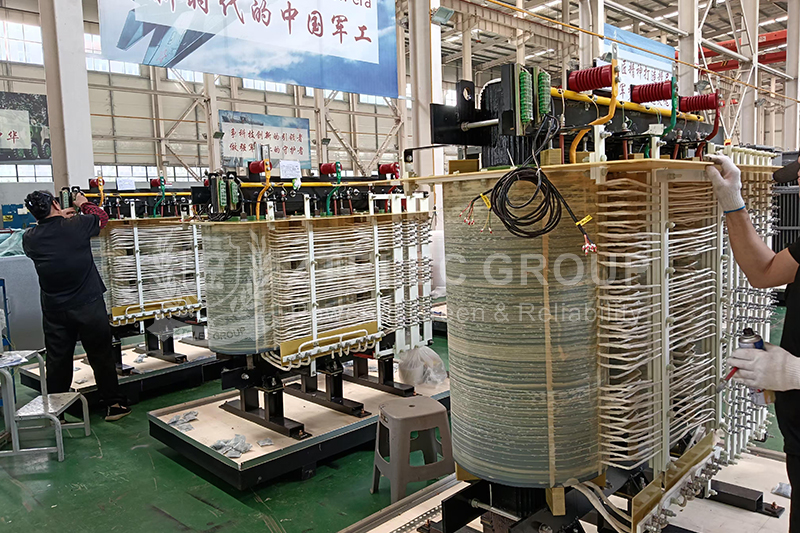
Therefore, in applications requiring high insulation reliability, such as transformers, switchgear, and insulating supports, engineers typically prefer filament wound epoxy tubes, even though they are more expensive.
Overall, the higher price of filament wound epoxy tubes compared to ordinary fiberglass tubes is mainly due to their characteristics in manufacturing processes, mechanical properties, insulation reliability, and service life. In applications with specific requirements for reliability and safety, filament wound epoxy tubes are usually the more economical choice in the long run.
If you are currently working on a related project or encounter problems selecting between filament wound epoxy tube and ordinary fiberglass tubes, our technicians can provide selection advice. Simply provide the operating environment, pressure requirements, and size requirements, and we can recommend a suitable filament wound epoxy tube solution for you.
oil immersed transformer lifespan
oil immersed transformer maintenance
transformer lifecycle
transformer insulation aging
dry type transformer temperature monitoring
- more+releated article
- 2026-05-11How Long Does an Oil-Immersed Transformer Last
- 2026-05-08Modern Power System Dry-Type Transformer Insta
- 2026-05-07Oil-Immersed Transformer Overheating: Causes,
- 2026-05-07Dry-Type Transformers for Data Centers: 2026 R
- 2026-04-30Air-Core Reactor vs Iron-Core Reactor: How to
- 2026-04-29Compact Enclosed Transformer for Smart Grid: T
- 2026-04-2812-Pulse and 24-Pulse Phase-Shifting Transform
- 2026-04-27Oil-Immersed Transformers for Industrial Plant
- 2026-04-25Why Dry-Type Transformers Are Preferred for Ho
- 2026-04-24Enclosed Transformer Outdoor Solutions: IP Pro
- ELECTRICAL INSULATION BOARD MATERIALS
- ELECTRICAL INSULATION MATERIALS
- POWER TRANSFORMER
- ENAMELED WIRE
- SWITCHGEAR


transformer insulation aging
transformer lifecycle
oil immersed transformer lifespan
oil immersed transformer maintenance
dry type transformer installation
dry type transformer temperature monitoring
dry type transformer maintenance
dry type transformer sizing
transformer cooling system failure
transformer overheating causes
oil immersed transformer overheating
transformer oil temperature
harmonic mitigation
dry type transformer
K factor transformer
data center transformer
Cast resin transformer
insulation oil degradation
DGA analysis transformer
transformer fault analysis
oil immersed transformer failure
smart grid transformer
compact enclosed transformer
integrated distribution transformer
compact transformer substation