
Enclosed Transformer Outdoor Solutions: IP Protection Ratings Guide 2026
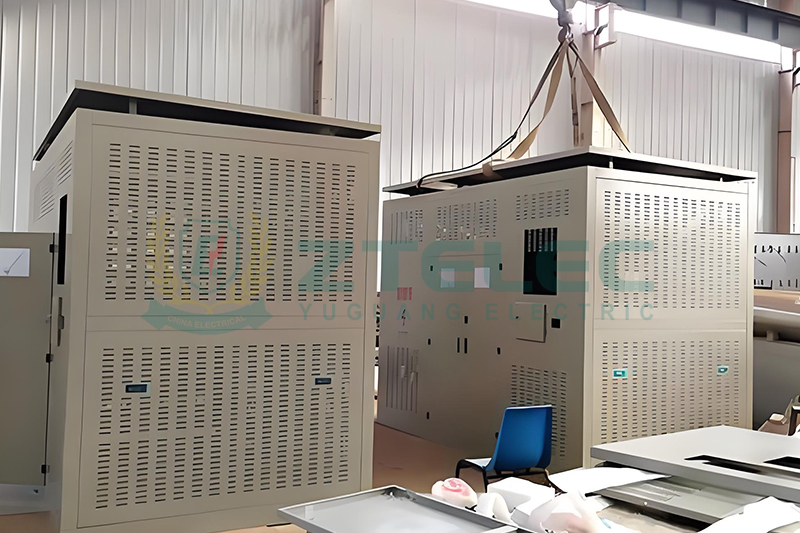
An enclosed transformer refers to a complete power supply unit where a transformer body is installed inside a protective metal enclosure. The enclosure is typically made of hot-dip galvanized steel, stainless steel, or aluminum alloy, and is equipped with ventilation louvers, cable entry points, grounding terminals, and access doors. This structure allows the transformer to be directly deployed in outdoor environments or harsh industrial conditions.
Compared with open-installed transformers, the biggest advantage of an enclosed transformer is the significant improvement in IP protection rating. IP (Ingress Protection) is defined by two digits: the first digit indicates protection against solid particles such as dust, while the second digit represents protection against water ingress.
For outdoor transformer applications, the IP rating directly determines whether the equipment can operate reliably under rain, dust, salt spray, sandstorms, and other complex environmental conditions over the long term.
In 2026, with the rapid growth of distributed energy systems, outdoor data centers, EV charging infrastructure, photovoltaic plants, and offshore wind projects, the demand for enclosed transformers continues to rise. Selecting the correct IP protection level has become a critical engineering decision.
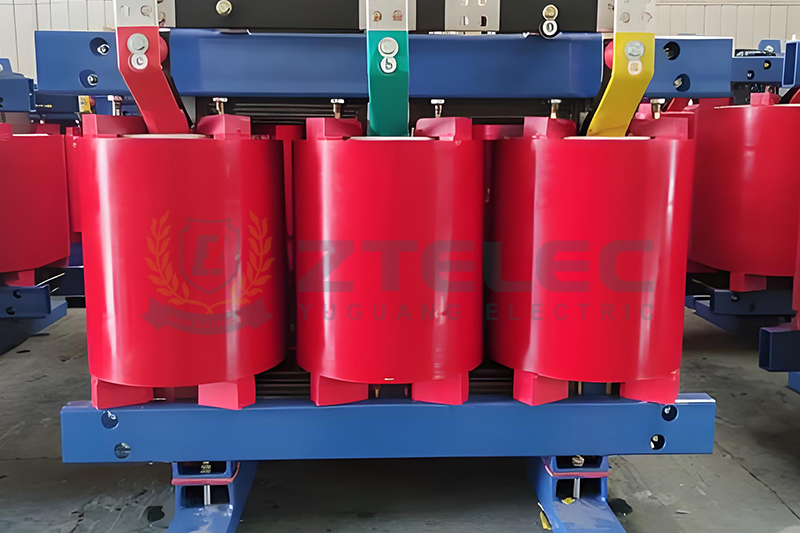
1. Understanding IP Protection Ratings
IP protection ratings are defined according to IEC 60529 international standard (corresponding to GB/T 4208 in China), covering two dimensions: solid particle protection and water protection.
1.1 First Digit: Protection Against Solid Particles
IP0X: No protection
IP1X: Protection against solid objects larger than 50 mm
IP2X: Protection against solid objects larger than 12.5 mm
IP3X: Protection against solid objects larger than 2.5 mm
IP4X: Protection against solid objects larger than 1 mm
IP5X: Dust protected, limited dust ingress allowed
IP6X: Completely dust-tight, no dust ingress
1.2 Second Digit: Protection Against Water
IPX0: No protection
IPX1: Protection against vertically falling water drops
IPX2: Protection against water drops up to 15° inclination
IPX3: Protection against spraying water
IPX4: Protection against splashing water from all directions
IPX5: Protection against low-pressure water jets
IPX6: Protection against powerful water jets
IPX7: Protection against temporary immersion
IPX8: Protection against continuous immersion
1.3 Common IP Ratings for Outdoor Transformers
IP23 for covered semi-outdoor corridors and sheltered equipment rooms
IP33 for light outdoor environments with limited rain exposure
IP44 for standard outdoor installations with splash water protection
IP54 for dusty outdoor environments such as construction sites and mining areas
IP55 for coastal, humid, and heavy rainfall regions
IP65 for complete dust protection and water jet resistance, the mainstream industrial outdoor choice
IP66 for complete dust-tight protection and strong water jet resistance, commonly used in offshore platforms and wind farms
2. Main Structural Components of Enclosed Transformers
2.1 Protective Enclosure
The enclosure material is commonly hot-dip galvanized steel with zinc coating thickness above 85 μm, 304 or 316L stainless steel, or aluminum alloy.
Surface treatment usually includes epoxy powder coating or polyurethane anti-corrosion coating. For coastal applications, salt spray resistance should exceed 1000 hours according to GB/T 2423.17, while high-end marine projects may require over 2000 hours.
Important design details include a rainproof top cover with slope angle above 5°, bottom drainage slope to prevent water accumulation, and EPDM rubber sealing strips for long-term weather resistance.
2.2 Ventilation and Cooling System
Dry-type transformers rely on air cooling, so enclosure design must balance IP protection and ventilation efficiency.
For AN natural air cooling, labyrinth rainproof louvers are commonly used, usually achieving IP33 to IP44.
For AF forced air cooling, centrifugal fans are installed with insect-proof mesh and filter cotton, allowing IP54 or higher protection.
The top exhaust outlet area should be at least 1.2 times larger than the air inlet area because hot air naturally rises upward.
2.3 Cable Entry Management
Cable entry holes are usually designed at the bottom or side of the enclosure and equipped with waterproof cable glands.
The high-voltage side commonly uses insulated bushings, while the low-voltage side uses copper busbars or insulated flexible connections.
Unused cable holes must be sealed with waterproof plugs to maintain the required IP rating.
2.4 Grounding and Lightning Protection
Independent grounding terminals should be installed at all four corners of the enclosure, with grounding resistance generally controlled below 4 Ω.
For high-altitude areas above 1000 meters or regions with frequent thunderstorms, surge arresters should be installed.
The enclosure, transformer core, and low-voltage neutral point should have independent grounding systems to prevent ground potential rise accidents.
3. Main Applicable Standards in 2026
IEC 60529 / GB/T 4208: IP code definition and testing methods for enclosure protection ratings
IEC 60076-11: Dry-type transformer temperature rise, insulation, and type tests
GB/T 10228—2023: Technical parameters, efficiency grading, and loss limits for dry-type transformers
GB/T 11022: General requirements for outdoor switchgear and enclosure systems
IEC 62271-202: Design standard for prefabricated substations integrating dry-type transformers
GB/T 2423.17: Salt spray corrosion testing method for coastal anti-corrosion verification
IEC 60068-2-52: International cyclic salt mist corrosion testing standard
4. IP Rating Selection Guide for Different Outdoor Applications
4.1 Urban Distribution Substations
Recommended rating: IP44 to IP54
Urban roadside substations face rainwater exposure and road dust, but water jet intensity is limited. IP44 is usually sufficient for normal outdoor installations, while IP54 is preferred near construction zones or main traffic roads.
4.2 Industrial Parks and Mining Areas
Recommended rating: IP54 to IP65
Mining sites, cement plants, and heavy industrial areas have high dust concentration. Full dust protection with first digit 6 is strongly recommended. Since equipment cleaning often uses water jets, water protection should not be lower than level 5.
4.3 Coastal and Island Projects
Recommended rating: IP55 to IP66 with enhanced anti-corrosion design
Salt spray is the biggest threat to coastal transformers. Besides IP rating, enclosure material should preferably be 316L stainless steel or aluminum alloy. Internal copper busbars should be tin-plated, and stainless steel fasteners are recommended.
4.4 Wind Power Projects
Recommended rating: IP55 for onshore wind farms and IP66 for offshore platforms
Wind farms face strong wind-driven rain and high humidity. Standard IP44 is often insufficient. Offshore substations require IP66 or higher together with forced dehumidification systems to prevent condensation and insulation failure.
4.5 Solar Power Plants and Energy Storage Systems
Recommended rating: IP44 to IP54
Photovoltaic power stations are often located in desert or dusty regions. IP54 is commonly recommended together with thermal insulation on the enclosure roof to reduce solar radiation heating.
5. Six Key Selection Points for Enclosed Transformers
5.1 Confirm Environmental Conditions First
Do not simply apply the common assumption that outdoor transformers only need IP44. Rainfall intensity, dust type, altitude, salt spray, and corrosive media must all be evaluated according to IEC 60529.
5.2 Optimize Heat Dissipation and Protection Together
Higher IP ratings improve sealing but reduce ventilation efficiency. Thermal simulation should be performed based on transformer loss data to ensure temperature rise remains within insulation class limits.
5.3 Focus on Weak Points
The real IP rating depends on the weakest sealing point. Cable glands, door sealing strips, and ventilation louver waterproof design are often the most critical areas.
5.4 Consider Maintenance Convenience
Outdoor transformers require regular inspection and cleaning. The enclosure should allow sufficient maintenance access, removable ventilation grilles, and practical cable routing positions.
5.5 Verify Certifications and Type Tests
Complete type testing should include IP verification, rain tests, dust tests, temperature rise tests, short-circuit withstand tests, and lightning impulse insulation tests. CCC certification is required for China, while CE and ErP compliance are required for Europe.
5.6 Reserve Interfaces for Smart Monitoring
High-end enclosed transformers in 2026 commonly reserve interfaces for temperature sensors, humidity meters, and partial discharge monitoring systems, supporting remote monitoring through 4G and NB-IoT communication.
6. Technology Trends in 2026
6.1 Modular Prefabricated Substations
Enclosed transformers integrated with medium-voltage ring main units and low-voltage switchgear provide plug-and-play installation and reduce construction time by 40% to 60%.
6.2 Advanced Thermal Insulation Materials
Nano thermal insulation coatings and aerogel sandwich panels are increasingly used in enclosure design, reducing internal temperature by 8 to 12°C in high solar radiation areas.
6.3 Maintenance-Free Sealing Technology
Silicone self-healing sealing strips can achieve service life above 15 years, significantly reducing IP protection failure caused by aging seals.
6.4 Intelligent Dual Cooling Switching
AN/AF automatic cooling control systems can switch fans on or off according to transformer load rate and ambient temperature, balancing energy efficiency and enclosure protection.
Selecting the correct IP protection rating for enclosed transformers is the foundation of safe and reliable outdoor power systems. From IP44 to IP66, each protection level corresponds to different environmental risks and project costs.
In 2026, with the rapid expansion of outdoor electrical infrastructure, understanding IP standards, selecting based on real operating conditions, and strictly verifying type test reports have become essential skills for every electrical engineer and procurement decision-maker.
Reasonable IP protection configuration helps avoid equipment failures and safety accidents caused by insufficient protection, while also preventing unnecessary costs from overdesign, achieving the best balance between technical reliability and economic efficiency.
oil immersed transformer lifespan
oil immersed transformer maintenance
transformer lifecycle
transformer insulation aging
dry type transformer temperature monitoring
- more+releated article
- 2026-05-11How Long Does an Oil-Immersed Transformer Last
- 2026-05-08Modern Power System Dry-Type Transformer Insta
- 2026-05-07Oil-Immersed Transformer Overheating: Causes,
- 2026-05-07Dry-Type Transformers for Data Centers: 2026 R
- 2026-04-30Air-Core Reactor vs Iron-Core Reactor: How to
- 2026-04-29Compact Enclosed Transformer for Smart Grid: T
- 2026-04-2812-Pulse and 24-Pulse Phase-Shifting Transform
- 2026-04-27Oil-Immersed Transformers for Industrial Plant
- 2026-04-25Why Dry-Type Transformers Are Preferred for Ho
- 2026-04-24Enclosed Transformer Outdoor Solutions: IP Pro
- ELECTRICAL INSULATION BOARD MATERIALS
- ELECTRICAL INSULATION MATERIALS
- POWER TRANSFORMER
- ENAMELED WIRE
- SWITCHGEAR


transformer insulation aging
transformer lifecycle
oil immersed transformer lifespan
oil immersed transformer maintenance
dry type transformer installation
dry type transformer temperature monitoring
dry type transformer maintenance
dry type transformer sizing
transformer cooling system failure
transformer overheating causes
oil immersed transformer overheating
transformer oil temperature
harmonic mitigation
dry type transformer
K factor transformer
data center transformer
Cast resin transformer
insulation oil degradation
DGA analysis transformer
transformer fault analysis
oil immersed transformer failure
smart grid transformer
compact enclosed transformer
integrated distribution transformer
compact transformer substation