
110kV Power Transformer: Oil-Immersed vs Dry-Type Comparison — Cost, Losses and Installation Differences
In modern transmission and distribution systems, the 110kV power transformer is a critical piece of equipment connecting high-voltage transmission networks with regional distribution grids. Its performance directly affects overall grid safety, operating efficiency, and long-term operational costs. With the rapid growth of urban power grid upgrades, industrial park expansion, data centers, and rail transit projects, selecting the right 110kV transformer has become a key consideration in power engineering design.
Currently, the two mainstream technical solutions on the market are oil-immersed transformers and dry-type transformers. These technologies differ significantly in insulation medium, cooling method, operating losses, fire protection requirements, and installation environment. For engineering design institutes, EPC contractors, transformer buyers, and project owners, understanding the technical and economic differences between these transformer types helps reduce lifecycle costs and improve power supply reliability.
This article provides a detailed comparison between 110kV oil-immersed transformers and 110kV dry-type transformers, covering technical principles, equipment costs, energy losses, installation conditions, environmental adaptability, and practical application scenarios to support professional transformer selection decisions.
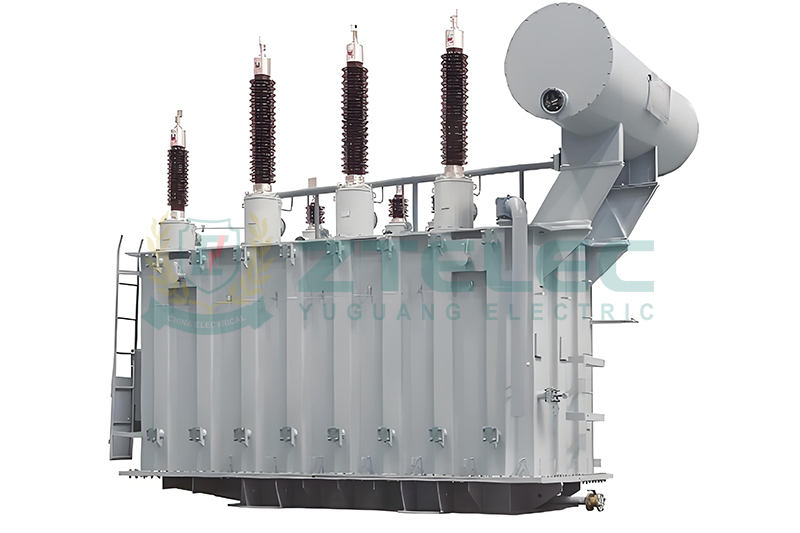
Technical Principle Differences Between 110kV Oil-Immersed and Dry-Type Transformers
Working Principle of Oil-Immersed Transformers
Oil-immersed transformers use mineral insulating oil as both the insulation and cooling medium. The core and windings are fully immersed inside a sealed oil tank. During operation, heat generated by the windings is transferred through the transformer oil to radiators, where it is dissipated into the surrounding environment through natural air circulation or forced cooling systems.
Because transformer oil provides excellent insulation and thermal conductivity, oil-immersed transformers can maintain stable performance under high-load conditions. As a result, they are widely used in large substations, industrial parks, utility transmission networks, and outdoor power distribution systems.
Common cooling methods for 110kV oil-immersed transformers include:
ONAN (Oil Natural Air Natural): relies on natural oil circulation and natural air cooling, featuring a simple structure and easy maintenance;
ONAF (Oil Natural Air Forced): uses cooling fans to improve heat dissipation performance under medium and high load conditions;
OFAF (Oil Forced Air Forced): suitable for large-capacity transformers requiring enhanced cooling efficiency.
Working Principle of Dry-Type Transformers
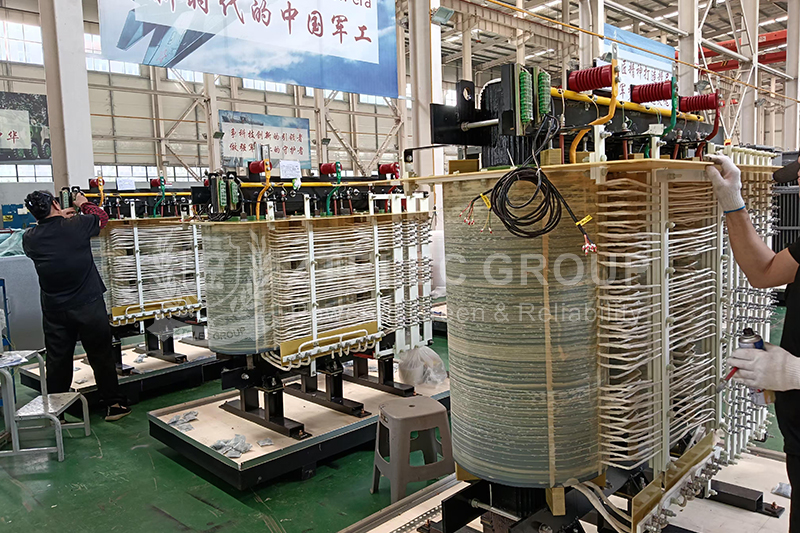
Dry-type transformers do not use insulating oil. Instead, they utilize air, epoxy resin, or other solid insulation materials. Most 110kV dry-type transformers adopt vacuum epoxy resin casting technology, encapsulating the high-voltage and low-voltage windings to improve insulation strength, moisture resistance, and mechanical stability.
Dry-type transformers mainly rely on natural air cooling or forced air cooling. Since they contain no flammable liquid medium, they offer inherent fire safety advantages and are particularly suitable for installations in densely populated or fire-sensitive environments.
With continuous improvements in resin casting technology and insulation materials, 110kV dry-type transformers are increasingly used in urban rail transit systems, underground substations, hospitals, and large commercial complexes.
110kV Transformer Cost Comparison
Equipment Procurement Cost Differences
From the perspective of transformer purchase price, 110kV oil-immersed transformers are generally significantly less expensive than dry-type transformers of the same capacity.
Taking a 50MVA transformer as an example:
| Transformer Type | Market Price Range | Cost Characteristics |
|---|---|---|
| 110kV Oil-Immersed Transformer | Approx. RMB 1.8–2.8 million | Mature manufacturing technology with high cost-effectiveness |
| 110kV Dry-Type Transformer | Approx. RMB 3.2–5 million | Higher insulation structure and resin material costs |
The higher cost of dry-type transformers is mainly due to:
Complex epoxy resin casting processes;
More demanding high-voltage insulation structure design;
Higher material costs compared to traditional oil-filled designs;
Extremely strict manufacturing precision requirements for 110kV dry-type units.
Auxiliary Engineering and Civil Construction Costs
Although oil-immersed transformers have lower equipment purchase costs, they usually require higher supporting infrastructure investments.
Because oil-immersed transformers contain large volumes of insulating oil, additional facilities are often required, including:
Oil containment pits;
Explosion-proof walls;
Pressure relief channels;
Fire suppression systems;
Emergency oil drainage facilities.
In underground substations and high-rise building projects, these supporting facilities can account for 10%–15% of the total project investment or even more.
In comparison, dry-type transformers do not require oil containment or fire isolation facilities and can be directly installed indoors, making them more cost-effective for projects in urban core areas.
Lifecycle Cost Analysis
Over a 20–30 year operating lifecycle, oil-immersed transformers generally provide better long-term economic performance.
The main reasons include:
Lower initial equipment investment;
Lower no-load losses;
Higher operational energy efficiency;
Higher residual value of recyclable metal materials;
Better stability under long-term heavy-load operation.
However, while dry-type transformers require higher upfront investment, they can significantly reduce costs related to fire protection systems and building space utilization, especially in underground and urban infrastructure projects.
110kV Transformer Loss Comparison
No-Load Loss Analysis
No-load losses mainly consist of hysteresis losses and eddy current losses in the transformer core. These losses occur continuously whenever the transformer is energized, regardless of load level.
Using a 110kV/50MVA transformer as a reference:
| Transformer Type | Typical No-Load Loss |
|---|---|
| Oil-Immersed Transformer (S13) | Approx. 45–55 kW |
| Dry-Type Transformer (SCB13) | Approx. 60–80 kW |
Dry-type transformers generally have higher no-load losses because their heat dissipation conditions and core insulation structures are less efficient than those in oil-filled systems.
For large industrial facilities operating continuously with low nighttime load rates, the difference in no-load losses can result in significant long-term electricity cost increases.
Load Loss Analysis
Load losses mainly originate from winding resistance heating and increase proportionally with the square of the load current.
| Transformer Type | Typical Load Loss |
|---|---|
| Oil-Immersed Transformer | Approx. 200–240 kW |
| Dry-Type Transformer | Approx. 200–250 kW |
In practical applications, the difference in load losses between the two transformer types is relatively small and mainly depends on conductor material quality, winding design, and manufacturing process.
Annual Energy Loss Cost Estimation
Assuming annual operation of 8,000 hours, an average load factor of 60%, and electricity costs of RMB 0.6/kWh, the annual operating cost difference caused by transformer losses can range from RMB 80,000 to RMB 180,000.
Therefore, in large industrial substations and long-term continuous operation scenarios, energy loss costs often become more important than the initial equipment purchase price difference.
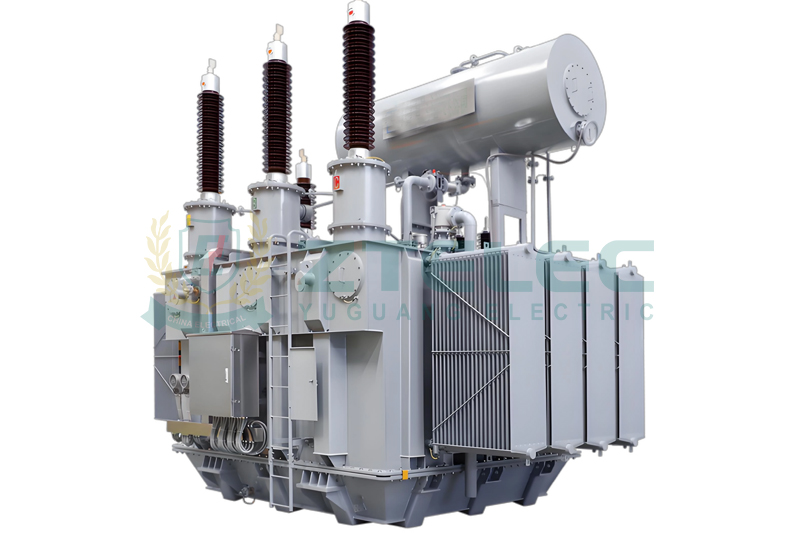
Installation Conditions and Environmental Adaptability Comparison
Installation Requirements for Oil-Immersed Transformers
Because oil-immersed transformers contain large amounts of flammable insulating oil, their installation must comply with strict fire protection regulations.
Typical requirements include:
Dedicated transformer rooms;
Oil containment pits;
Explosion-proof walls;
Automatic fire suppression systems;
Emergency pressure relief channels.
As a result, oil-immersed transformers are more suitable for outdoor substations, industrial parks, and installations with sufficient available space.
Installation Advantages of Dry-Type Transformers
Dry-type transformers contain no insulating oil and therefore pose much lower fire risks, allowing them to be installed directly inside buildings.
Typical applications include:
Metro and underground tunnel systems;
High-rise building power distribution rooms;
Hospitals and airports;
Data centers;
Large commercial complexes.
In urban core areas, dry-type transformers can significantly improve space utilization and reduce construction requirements.
Environmental Adaptability Analysis
| Environmental Factor | Oil-Immersed Transformer | Dry-Type Transformer |
|---|---|---|
| Moisture Resistance | Excellent | Good |
| Pollution Resistance | Excellent | Good |
| High-Altitude Adaptability | Requires derating | Requires derating |
| High-Temperature Cooling | Better performance | Higher cooling pressure |
| Low-Temperature Adaptability | Oil performance must be monitored | Strong adaptability |
Overall, oil-immersed transformers perform better in humid, dusty, coastal high-salt, and chemically polluted outdoor environments, which is why they remain the mainstream solution for utility transmission systems.
Noise Level Comparison
In terms of operating noise, dry-type transformers are generally louder than oil-immersed transformers.
Typical operating noise for 110kV dry-type transformers ranges from 65–75dB(A), while oil-immersed transformers typically operate at 55–65dB(A).
Therefore, in residential areas, office buildings, or other noise-sensitive environments, additional soundproofing measures may be required for dry-type transformers, increasing total project costs.
110kV Transformer Selection Recommendations
Projects Suitable for Oil-Immersed Transformers
Large outdoor substations;
Rural and suburban power grids;
Heavy-load industrial power systems;
Projects focused on operational economy;
Long-term continuous operation transmission systems.
Projects Suitable for Dry-Type Transformers
Urban underground substations;
High-rise building distribution systems;
Hospitals and airports;
Data centers and precision manufacturing facilities;
Projects with strict fire safety requirements.
In many large urban projects, a hybrid solution is often adopted, using oil-immersed transformers for outdoor main substations and dry-type transformers for indoor distribution systems to balance safety and cost efficiency.
Both 110kV oil-immersed transformers and dry-type transformers are mature and reliable power distribution solutions. Neither technology is universally superior, as each is optimized for different engineering environments and operational requirements.
Oil-immersed transformers remain dominant in large transmission networks and industrial substations thanks to their lower initial cost, lower no-load losses, and superior outdoor environmental adaptability. Meanwhile, dry-type transformers provide unmatched fire safety advantages and are widely used in urban grids, underground projects, and public infrastructure facilities.
For actual engineering projects, it is recommended to evaluate load characteristics, installation conditions, fire regulations, operating efficiency, and lifecycle costs comprehensively while prioritizing products certified to IEC, ANSI, or GB standards to ensure safe, reliable, and efficient long-term power system operation.
FAQ: Frequently Asked Questions About 110kV Oil-Immersed and Dry-Type Transformers
Is 110kV dry-type transformer technology mature?
Yes. 110kV dry-type transformer technology has become increasingly mature and has been successfully applied in urban rail transit systems, underground substations, and major public infrastructure projects. However, its overall market share is still lower than that of oil-immersed transformers.
How often should oil-immersed transformers undergo oil replacement?
It is generally recommended to conduct transformer oil testing every 5 to 10 years. Oil replacement, filtration, or regeneration should be based on the actual oil aging condition rather than fixed replacement intervals.
Is there a lifespan difference between the two transformer types?
Under normal operating conditions, both transformer types are designed for service lives of 30 to 40 years. Oil-immersed transformers can often last even longer if oil quality is properly maintained, while dry-type transformers may involve higher repair costs once insulation aging occurs.
110kV dry type transformer
dry type transformer
110kV oil immersed transformer
110kV transformer
Oil immersed transformer
- more+releated article
- 2026-05-26110kV Power Transformer: Oil-Immersed vs Dry-T
- 2026-05-251000 kVA Dry-Type Transformer — Resin Cast,
- 2026-05-23China vs Europe Oil-Immersed Transformer Manuf
- 2026-05-221250 kVA Dry-Type vs Oil-Immersed Transformer:
- 2026-05-21Data Center Substations vs Industrial Substati
- 2026-05-2066kV vs 110kV Oil Immersed Transformers: Which
- 2026-05-19CWIEME Berlin 2026 · Day 1 Exhibition Report
- 2026-05-19Cast Resin vs VPI Dry-Type Transformers: Key D
- 2026-05-18Oil-Immersed Transformer vs Dry-Type Transform
- 2026-05-15Dry-Type Transformer Energy Efficiency Standar
- ELECTRICAL INSULATION BOARD MATERIALS
- ELECTRICAL INSULATION MATERIALS
- POWER TRANSFORMER
- ENAMELED WIRE
- SWITCHGEAR



110kV oil immersed transformer
dry type transformer
110kV dry type transformer
110kV transformer
Oil immersed transformer
1000 kVA dry-type transformer
SCB10 transformer
resin cast transformer
low noise transformer
China transformer manufacturer
European transformer manufacturer
oil-immersed transformer
transformer procurement
1250kVA oil immersed transformer
1250kVA dry type transformer
oil immersed transformer cost
dry type transformer price
data center UPS
data center substation
industrial substation
IEC 60076 certified transformer
custom transformer manufacturer
66kV oil immersed transformer
dry-type transformer selection
Vacuum Pressure Impregnation Transformer