
Dry-Type Transformer Energy Efficiency Standards Explained: IEC, ANSI & Global Compliance Requirements
Energy efficiency has become one of the most important selection criteria for modern dry-type transformers. In industrial plants, data centers, hospitals, subway systems, renewable energy projects, and commercial buildings, transformers operate continuously for decades. Even small differences in transformer losses can create major impacts on electricity costs, carbon emissions, and long-term operating efficiency.
As governments strengthen energy regulations and carbon reduction policies, manufacturers and project developers must comply with various international transformer efficiency standards. Different markets such as Europe, North America, the Middle East, Southeast Asia, and Latin America often require different testing methods, efficiency grades, and certification documents.
For EPC contractors, electrical consultants, and transformer buyers, understanding IEC, ANSI, DOE, and other global standards is essential before selecting dry-type transformers for international projects.
This article explains the major dry-type transformer energy efficiency standards, compares global regulatory systems, and outlines the key compliance requirements affecting transformer exports and project approvals.
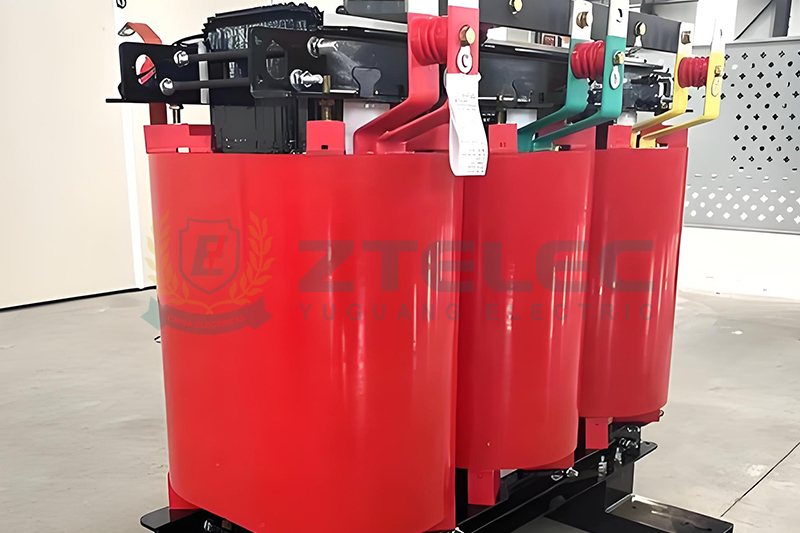
Why Transformer Energy Efficiency Matters
Unlike many electrical devices, transformers consume energy 24 hours a day even when the connected load is low. Transformer losses mainly include no-load loss and load loss.
No-load loss, also called core loss, occurs whenever the transformer is energized. It depends mainly on core material quality, magnetic flux density, and core manufacturing technology.
Load loss, also known as copper loss, increases with current and is affected by conductor resistance, winding design, and operating temperature.
In large commercial or industrial facilities, transformers may operate for 20 to 30 years. A low-efficiency transformer can waste significant electricity over its lifetime. In contrast, energy-efficient dry-type transformers reduce operational costs, lower cooling demand, and help projects meet green building or carbon neutrality targets.
Because of these long-term energy impacts, many countries now impose minimum efficiency requirements for transformers placed on the market.
Main International Standards for Dry-Type Transformer Efficiency
IEC Standards
The International Electrotechnical Commission (IEC) standards are widely adopted across Europe, Asia, the Middle East, Africa, and many international infrastructure projects.
For dry-type transformers, the most important standards include:
IEC 60076 Series
This is the core international transformer standard covering power transformers, dry-type transformers, testing methods, insulation levels, temperature rise, and operating requirements.
IEC 60076-11
Specifically applies to dry-type transformers. It defines thermal classes, insulation systems, environmental classes, climatic classes, and fire behavior classifications.
IEC 60076-20
Provides guidance on energy efficiency for power transformers and reactor equipment.
EU EcoDesign Regulation
The European Union introduced mandatory transformer efficiency requirements through EcoDesign regulations aligned with IEC principles. These regulations define maximum allowable losses for transformers sold within the European market.
European regulations classify transformers using efficiency tiers that specify allowable no-load and load loss values according to transformer rating and voltage class.
Today, most new European dry-type transformer projects require low-loss or ultra-low-loss transformer designs.
ANSI and IEEE Standards
In North America, transformer efficiency standards are primarily based on ANSI, IEEE, and DOE regulations.
ANSI C57 Series
ANSI standards define transformer design, testing procedures, insulation systems, and performance requirements for dry-type transformers used in the United States.
IEEE C57 Standards
IEEE standards provide detailed technical guidance for transformer testing, temperature rise limits, harmonic capability, and operational reliability.
DOE Energy Efficiency Regulations
The U.S. Department of Energy (DOE) enforces mandatory minimum efficiency requirements for distribution transformers. DOE regulations specify minimum efficiency values depending on transformer type, kVA rating, and load profile.
DOE-compliant transformers are now standard requirements in most U.S. commercial and industrial projects.
CSA Standards in Canada
Canada applies transformer efficiency regulations through CSA standards and Natural Resources Canada efficiency requirements.
Canadian efficiency rules are closely aligned with U.S. DOE requirements but may include additional labeling and reporting obligations.
GB Standards in China
China has also strengthened transformer energy efficiency regulations in recent years.
Key standards include:
GB 20052
Defines minimum allowable energy efficiency values and energy efficiency grades for power transformers.
GB/T 10228
Applies specifically to dry-type power transformers.
China’s latest transformer efficiency standards promote the use of amorphous alloy cores, low-loss silicon steel, and high-efficiency winding designs.
Differences Between IEC and ANSI Transformer Standards
Although IEC and ANSI standards share similar safety and performance goals, there are several important technical differences.
Frequency Differences
IEC systems typically use 50Hz frequency, while North American systems commonly use 60Hz.
This affects transformer core design, losses, magnetic flux density, and thermal performance.
Temperature Rise Ratings
IEC and ANSI standards may use different temperature rise limits and insulation class interpretations.
For example, common dry-type transformer temperature rise ratings include 80K, 115K, and 150K.
Lower temperature rise transformers generally provide longer insulation life and better overload capability.
Testing Procedures
Short-circuit testing, impulse testing, and sound level measurements may follow different procedures under IEC and ANSI standards.
Projects involving international procurement must ensure transformer test reports match the required regional standard.
Efficiency Calculation Methods
DOE efficiency calculations in the United States are based on specific loading conditions, while IEC and EU regulations may evaluate losses differently.
This means a transformer optimized for one market may not automatically comply with another region’s efficiency regulations.
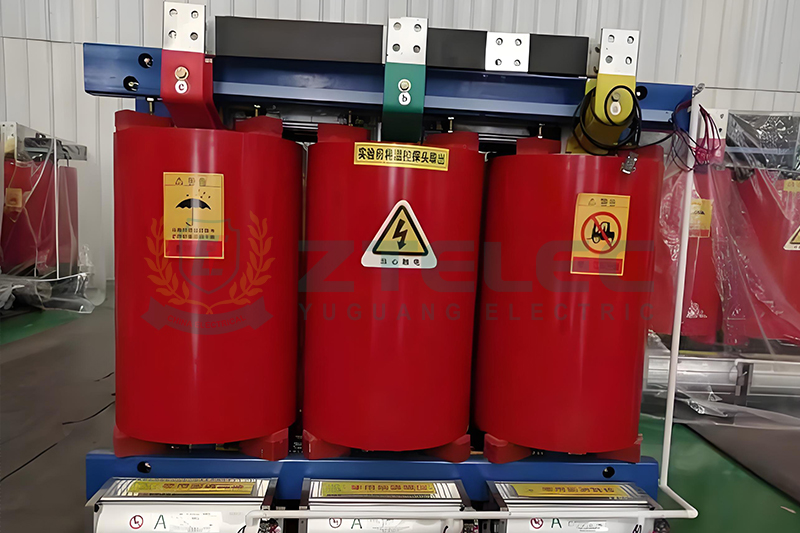
EU EcoDesign Requirements for Dry-Type Transformers
The European Union has some of the strictest transformer efficiency regulations in the world.
EcoDesign rules aim to reduce total electricity losses across the European power system by promoting high-efficiency transformers.
For dry-type transformers, manufacturers must meet maximum loss limits defined by transformer rating and voltage category.
Transformers sold in the EU typically require:
Compliance with IEC standards
CE marking
EcoDesign efficiency verification
Loss value documentation
Technical file submission
Routine factory testing records
Many European projects now specify low-loss cast resin transformers with enhanced environmental and fire protection characteristics.
DOE Efficiency Requirements in the United States
The U.S. DOE efficiency regulation has significantly influenced global transformer manufacturing.
DOE rules establish minimum efficiency values at specified load levels. Manufacturers selling transformers into the U.S. market must certify compliance through approved testing procedures.
DOE-compliant dry-type transformers often use:
High-grade silicon steel cores
Copper windings with reduced resistance
Optimized magnetic flux density
Improved cooling structures
Low-loss insulation systems
Failure to meet DOE efficiency requirements can prevent transformers from entering the U.S. market.
How Energy Efficiency Affects Transformer Design
Improving transformer efficiency requires balancing electrical performance, thermal behavior, material cost, and installation requirements.
Core Material Selection
Modern low-loss dry-type transformers often use cold-rolled grain-oriented silicon steel or amorphous alloy cores.
Amorphous alloy transformers can significantly reduce no-load losses compared with conventional silicon steel transformers.
However, they may involve higher manufacturing costs and larger dimensions.
Winding Optimization
Using high-conductivity copper windings helps reduce load losses and improve thermal performance.
Advanced winding structures can also improve short-circuit strength and reduce hotspot temperatures.
Cooling Design
Efficient ventilation channels and insulation systems help maintain stable operating temperatures.
Lower operating temperatures improve insulation life and increase transformer reliability.
Noise Reduction
High-efficiency transformers often require improved magnetic design and vibration control to reduce operational noise.
This is especially important for hospitals, office buildings, and urban infrastructure projects.
Global Compliance Challenges for Transformer Exporters
Transformer manufacturers serving international markets must manage increasingly complex compliance requirements.
Export projects may require:
IEC or ANSI test reports
Third-party laboratory certification
Energy efficiency verification
CE certification
UL certification
RoHS compliance
EcoDesign declarations
Factory audit approval
Grid operator technical approval
Some international tenders also specify maximum allowable transformer losses that exceed local regulatory minimums.
As a result, many manufacturers now develop customized transformer platforms optimized for specific regional markets.
Growing Demand for Green and Low-Carbon Transformers
Global energy transition policies are accelerating the adoption of energy-efficient transformer technologies.
Governments, utilities, and industrial operators increasingly prioritize:
Low carbon footprint equipment
Reduced energy consumption
Smart grid compatibility
Renewable energy integration
Environmentally friendly insulation systems
Digital monitoring capability
Dry-type transformers are particularly attractive for green buildings and renewable energy systems because they eliminate oil leakage risks and simplify indoor installation.
Future transformer efficiency standards are expected to become even stricter as countries pursue carbon neutrality targets.
How to Select a Globally Compliant Dry-Type Transformer
Before selecting a dry-type transformer for an international project, buyers should verify several key technical and regulatory factors.
The first step is identifying the target market standards, including IEC, ANSI, DOE, CSA, or regional utility specifications.
Buyers should also confirm transformer efficiency class requirements and maximum allowable losses specified in project documentation.
Third-party type test reports are important for verifying transformer performance and international compliance.
For projects involving harsh environments, additional requirements such as seismic resistance, high humidity protection, or fire performance certification may also apply.
Choosing an experienced transformer manufacturer with international export experience can significantly reduce approval delays and technical risks.
Dry-type transformer energy efficiency standards are becoming increasingly important in modern power systems and international infrastructure projects.
IEC, ANSI, DOE, CSA, and regional EcoDesign regulations all play critical roles in defining transformer performance, allowable losses, and market access requirements.
As energy costs rise and global carbon reduction policies expand, high-efficiency dry-type transformers are no longer optional for many industries. They have become essential components for sustainable electrical infrastructure.
Understanding global transformer standards helps project developers, consultants, utilities, and industrial users select compliant, reliable, and energy-efficient transformer solutions for long-term operational success.
IEC transformer standard
ANSI transformer efficiency
dry-type transformer energy efficiency standards
dry-type transformer capacity
2026 dry-type transformer
- more+releated article
- 2026-05-15Dry-Type Transformer Energy Efficiency Standar
- 2026-05-142026 Dry-Type Transformer Price Factors: Capac
- 2026-05-13What Is an Oil-Immersed Transformer? Working P
- 2026-05-13Medium Voltage Dry-Type Transformers in Solar
- 2026-05-11How Long Does an Oil-Immersed Transformer Last
- 2026-05-08Modern Power System Dry-Type Transformer Insta
- 2026-05-07Oil-Immersed Transformer Overheating: Causes,
- 2026-05-07Dry-Type Transformers for Data Centers: 2026 R
- 2026-04-30Air-Core Reactor vs Iron-Core Reactor: How to
- 2026-04-29Compact Enclosed Transformer for Smart Grid: T
- ELECTRICAL INSULATION BOARD MATERIALS
- ELECTRICAL INSULATION MATERIALS
- POWER TRANSFORMER
- ENAMELED WIRE
- SWITCHGEAR



dry-type transformer energy efficiency standards
ANSI transformer efficiency
IEC transformer standard
dry-type transformer price
SCB11 transformer
2026 dry-type transformer
dry-type transformer capacity
Power transformer
oil filled transformer
Oil immersed transformer
distribution transformer
solar transformer
renewable energy transformer
medium voltage dry-type transformer
transformer lifecycle
oil immersed transformer lifespan
transformer insulation aging
oil immersed transformer maintenance
dry type transformer sizing
dry type transformer maintenance
dry type transformer temperature monitoring
dry type transformer installation
oil immersed transformer overheating
transformer cooling system failure
transformer oil temperature