
1250 kVA Dry-Type vs Oil-Immersed Transformer: Price Differences and Selection Recommendations
In industrial power distribution systems, large commercial buildings, hospitals, data centers, and infrastructure projects, the 1250 kVA transformer is one of the most commonly used medium-capacity ratings. It provides an ideal balance between power demand, investment cost, and operational efficiency, making it widely used in factories, commercial complexes, rail transit systems, and public facilities.
However, during the procurement process, engineers and purchasing managers often face a critical question: should they choose a dry-type transformer or an oil-immersed transformer for a 1250 kVA application?
Although both transformer types offer the same rated capacity, they differ significantly in equipment pricing, fire protection requirements, installation conditions, maintenance methods, energy efficiency, and long-term operating costs. Focusing only on the initial purchase price can easily overlook the total lifecycle cost over several decades of operation.
This article provides a detailed comparison of 1250 kVA dry-type and oil-immersed transformers from the perspectives of price, total cost of ownership, safety, operating performance, and application scenarios, helping you make a more informed selection based on actual project requirements.
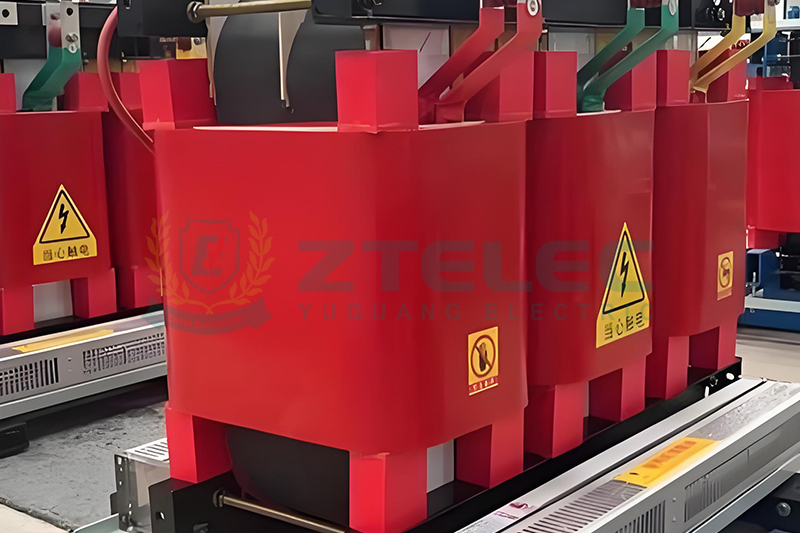
Core Differences Between Dry-Type and Oil-Immersed Transformers
Dry-type transformers typically use epoxy resin cast windings or Class H insulation systems and rely on natural air cooling or forced air cooling for heat dissipation. Since there is no insulating oil inside, there is no risk of oil leakage or oil fire, resulting in a higher fire safety rating.
Oil-immersed transformers use insulating oil as both the cooling and insulating medium. Heat is dissipated through oil circulation, giving these transformers better cooling performance and stronger short-term overload capability while maintaining lower manufacturing costs. As a result, they are widely used in industrial parks, outdoor substations, and utility power distribution networks.
In simple terms, dry-type transformers prioritize safety, environmental protection, and indoor applications, while oil-immersed transformers focus more on cost efficiency and heavy-load operation capability.
1250 kVA Dry-Type vs Oil-Immersed Transformer Price Comparison
Based on the mainstream domestic 10kV market, the typical price ranges for 1250 kVA transformers are as follows:
| Transformer Type | Typical Specification | Reference Price Range (RMB) |
|---|---|---|
| Dry-Type Transformer | SCB13-1250/10, Class F Insulation, Level 2 Efficiency | RMB 90,000 – 140,000 |
| Dry-Type Transformer | SCB13-1250/10, Class H Insulation, Level 1 Efficiency | RMB 120,000 – 180,000 |
| Oil-Immersed Transformer | S13-1250/10, Standard Type | RMB 50,000 – 80,000 |
| Oil-Immersed Transformer | S13-1250/10, Hermetically Sealed Type | RMB 60,000 – 90,000 |
From the perspective of bare unit pricing, a 1250 kVA dry-type transformer is typically 50% to 150% more expensive than an equivalent oil-immersed transformer.
This difference is mainly caused by the higher cost of epoxy resin insulation materials, the more complex vacuum casting manufacturing process, and the increased copper usage required for larger insulation distances in dry-type transformer winding structures.
However, comparing equipment purchase prices alone does not fully reflect the real economic value of the two solutions.
Why Total Cost of Ownership Matters More Than Initial Purchase Price
For transformers with a service life of 25 to 35 years, the true economic performance depends less on the initial purchase cost and more on the total cost throughout the entire lifecycle.
Total Cost of Ownership (TCO) generally includes equipment procurement, installation and civil engineering costs, operating losses, electricity expenses, maintenance costs, and future replacement or disposal expenses.
Installation and Supporting Infrastructure Costs
Because dry-type transformers do not contain insulating oil, installation requirements are relatively simple. Most projects only require a standard indoor electrical room without the need for oil containment pits, firewalls, or dedicated fire suppression systems.
Oil-immersed transformers, however, involve fire risks associated with insulating oil and therefore typically require fire protection separation, oil collection pits, and fire suppression systems. In urban commercial buildings or underground substations, these additional civil engineering and fire protection costs can be substantial.
| Cost Item | Dry-Type Transformer | Oil-Immersed Transformer |
|---|---|---|
| Transformer Room Requirement | Standard indoor electrical room | Dedicated transformer room and oil pit required |
| Fire Protection System | Usually no additional system required | Additional fire suppression system required |
| Ventilation Requirement | Natural ventilation is sufficient | Forced ventilation may be required |
| Typical Additional Installation Cost | Approximately RMB 5,000 – 20,000 | Approximately RMB 30,000 – 80,000 |
As a result, in high-rise buildings, commercial complexes, and urban core projects, the overall engineering cost difference between dry-type and oil-immersed transformers is often much smaller than the equipment price difference itself.
Long-Term Maintenance Cost Comparison
Oil-immersed transformers require periodic insulating oil inspections, including oil quality analysis, moisture testing, and oil level monitoring. After years of operation, oil replacement and sealing maintenance may also become necessary.
Dry-type transformers, on the other hand, require relatively simple maintenance, mainly involving periodic dust cleaning and terminal inspection, resulting in significantly lower maintenance costs.
For factories, commercial buildings, and data centers with limited maintenance personnel, dry-type transformers offer clear advantages in long-term maintenance management.
Over a 25-year operating period, the cumulative maintenance cost of a 1250 kVA dry-type transformer is typically RMB 50,000 to 150,000 lower than that of an oil-immersed transformer.
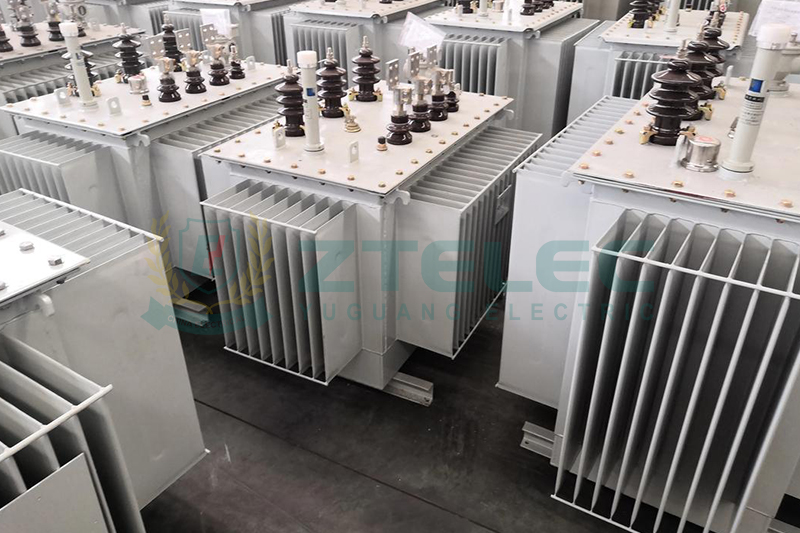
Energy Loss and Operating Efficiency Differences
The two transformer types also differ in terms of loss characteristics.
Traditional S13 oil-immersed transformers generally feature lower no-load losses, while SCB13 dry-type transformers often perform better in load loss control.
If a project operates for long periods at low load rates, such as office buildings during nighttime or seasonal factories, no-load losses become increasingly important, giving oil-immersed transformers a slight energy-saving advantage.
However, for continuously high-load applications such as data centers, industrial production lines, or rail transit systems, the overall loss differences between the two types become less significant.
Therefore, transformer selection should consider not only equipment price but also actual load rate, annual operating hours, and local electricity prices when evaluating long-term operating costs.
Safety Performance and Fire Protection Comparison
Safety is one of the most important differences between dry-type and oil-immersed transformers.
Oil-immersed transformers contain a large volume of insulating oil. In the event of an internal fault or external fire, there is a risk of oil combustion or even explosion. As a result, fire regulations usually impose strict installation limitations.
Dry-type transformers use flame-retardant insulation materials and contain no flammable liquids, making them far safer for densely populated environments.
In the following applications, dry-type transformers are often preferred or even mandatory:
Metro systems and underground substations, hospitals, schools, high-rise buildings, data centers, airports, commercial complexes, and indoor public power distribution facilities.
Overload Capability and Environmental Adaptability
Oil-immersed transformers use insulating oil for cooling and therefore have greater thermal capacity and stronger short-term overload capability. They are well suited for industrial applications involving impact loads such as rolling mills, welding equipment, or large motor starting conditions.
Dry-type transformers generally have lower overload capability and therefore often require additional capacity margins in high-impact load applications.
In high-humidity or dusty environments, oil-immersed transformers usually offer stronger environmental adaptability due to their sealed tank structure.
Dry-type transformers, with windings exposed to air, require special attention to moisture prevention, condensation control, and dust accumulation.
At high altitudes, reduced air density affects cooling performance, meaning dry-type transformers typically require more significant derating.
1250 kVA Transformer Selection Recommendations
Applications Better Suited for Dry-Type Transformers
High-rise buildings, commercial complexes, hospitals, schools, data centers, metro systems, airports, and indoor distribution facilities with strict fire safety requirements are generally better suited for dry-type transformers.
In these projects, fire safety, environmental compliance, and indoor installation convenience are usually more important than the higher equipment purchase cost.
Applications Better Suited for Oil-Immersed Transformers
Outdoor substations, industrial parks, large factories, rural power distribution networks, and budget-sensitive projects are generally better suited for oil-immersed transformers.
Especially in industrial applications with dedicated transformer rooms, fewer fire restrictions, and heavy impact loads, oil-immersed transformers continue to offer outstanding cost-performance advantages.
Key Questions to Confirm Before Purchasing a 1250 kVA Transformer
Before finalizing the transformer type, it is recommended to carefully evaluate several critical factors:
Whether the project is located indoors or underground, whether local fire regulations restrict oil-immersed transformer installation, how sensitive the project budget is to initial purchase cost, whether there are conditions for constructing oil pits and fire protection systems, the actual load rate and operating hours, the maintenance capability of the operation team, and whether the project involves green building certification or energy-saving subsidy requirements.
Although the initial purchase price of a 1250 kVA dry-type transformer is usually higher than that of an equivalent oil-immersed transformer, the real cost difference often becomes much smaller after considering fire compliance, installation conditions, long-term maintenance, and total engineering costs.
For indoor installations, densely populated environments, and projects with strict fire safety requirements, dry-type transformers are generally the safer and more compliant solution. For outdoor industrial power distribution systems, budget-sensitive projects, or applications requiring strong overload capability, oil-immersed transformers still provide unmatched economic advantages.
The most appropriate transformer selection is not about deciding which type is universally “better,” but about choosing the solution that offers the lowest total cost of ownership, the most stable operation, and the easiest long-term maintenance based on actual project conditions, load characteristics, and budget requirements.
1250kVA oil immersed transformer
oil immersed transformer cost
dry type transformer price
1250kVA dry type transformer
dry type transformer
- more+releated article
- 2026-05-221250 kVA Dry-Type vs Oil-Immersed Transformer:
- 2026-05-21Data Center Substations vs Industrial Substati
- 2026-05-2066kV vs 110kV Oil Immersed Transformers: Which
- 2026-05-19CWIEME Berlin 2026 · Day 1 Exhibition Report
- 2026-05-19Cast Resin vs VPI Dry-Type Transformers: Key D
- 2026-05-18Oil-Immersed Transformer vs Dry-Type Transform
- 2026-05-15Dry-Type Transformer Energy Efficiency Standar
- 2026-05-142026 Dry-Type Transformer Price Factors: Capac
- 2026-05-13What Is an Oil-Immersed Transformer? Working P
- 2026-05-13Medium Voltage Dry-Type Transformers in Solar
- ELECTRICAL INSULATION BOARD MATERIALS
- ELECTRICAL INSULATION MATERIALS
- POWER TRANSFORMER
- ENAMELED WIRE
- SWITCHGEAR



1250kVA oil immersed transformer
dry type transformer price
1250kVA dry type transformer
oil immersed transformer cost
data center substation
dry type transformer
data center UPS
Oil immersed transformer
industrial substation
66kV oil immersed transformer
custom transformer manufacturer
IEC 60076 certified transformer
dry-type transformer selection
Vacuum Pressure Impregnation Transformer
VPI Dry-Type Transformer
Cast resin transformer
transformer selection
oil immersed vs dry type transformer
dry-type transformer energy efficiency standards
ANSI transformer efficiency
IEC transformer standard
2026 dry-type transformer
dry-type transformer price
SCB11 transformer
dry-type transformer capacity