
Cast Resin vs VPI Dry-Type Transformers: Key Differences and 2026 Selection Guide
With the rapid expansion of urban power grids, renewable energy projects, and high-density data center construction, dry-type transformers have become critical components in modern power distribution systems. Compared with traditional oil-immersed transformers, dry-type transformers offer oil-free operation, fire safety, environmental protection, and lower maintenance requirements, making them widely used in hospitals, commercial complexes, rail transit systems, industrial plants, offshore wind farms, and large-scale data centers.
However, “dry-type transformer” does not refer to a single technology route. The mainstream solutions on the market today are Cast Resin Transformers (CRT) and Vacuum Pressure Impregnation (VPI) transformers. These two designs differ significantly in insulation structure, cooling method, moisture resistance, service life, and maintenance requirements, resulting in completely different performance in specific operating environments.
As 2026 approaches, transformer selection has become increasingly complex. The implementation of the GB/T 10228-2025 efficiency standard, stricter green building requirements, upgraded electrical fire protection regulations, and growing demand for intelligent operation and maintenance are reshaping procurement priorities. More project owners are now focusing on total cost of ownership (TCO), long-term reliability, and environmental adaptability rather than simply comparing purchase prices.
For high-humidity, high-salinity, and heavily polluted environments, cast resin transformers generally provide stronger protection and reliability. In dry environments, large-capacity industrial applications, and cost-sensitive projects, VPI transformers continue to maintain strong market competitiveness. The optimal choice is not about which technology is universally superior, but which one best matches the actual project conditions.
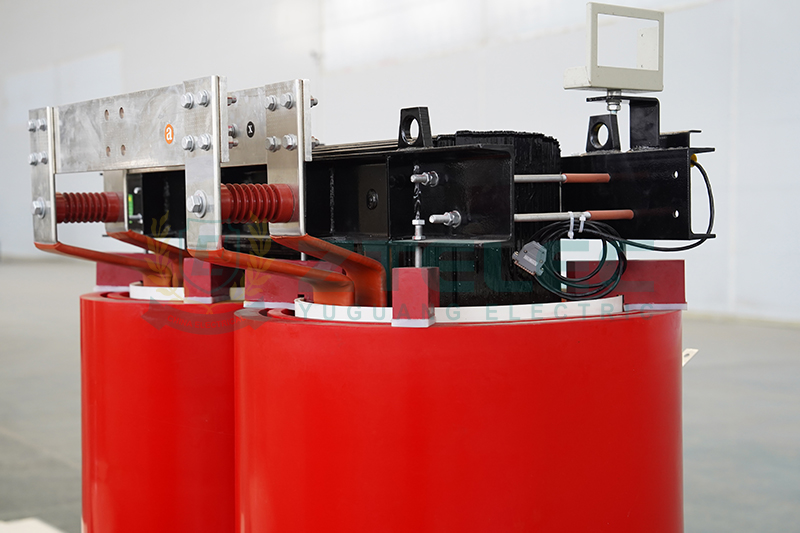
Differences in Manufacturing and Insulation Technology
Cast Resin Transformers: Fully Encapsulated Solid Insulation
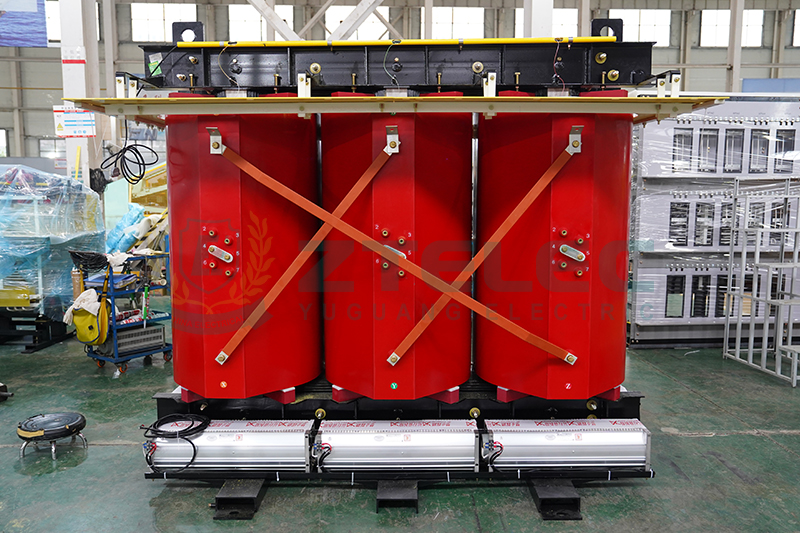
Cast resin dry-type transformers use epoxy resin vacuum casting technology. After winding production is completed, the coils are placed into a vacuum chamber where liquid epoxy resin is injected into molds and then thermally cured to form a solid insulation structure. The conductor, insulation materials, and resin become a single integrated body with extremely high mechanical strength.
Because almost no air gaps remain inside the resin structure, cast resin transformers offer excellent resistance to moisture, contamination, and salt fog. Even in underground substations, coastal areas, or chemical plants, insulation performance remains stable over long operating periods.
VPI Transformers: Vacuum Pressure Impregnated Insulation
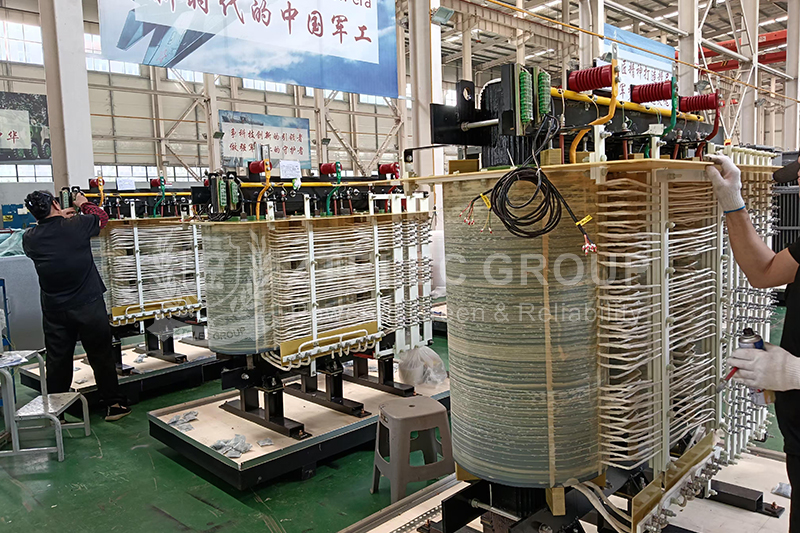
VPI dry-type transformers use vacuum pressure impregnation technology. After the coils are dried, they are placed in a vacuum chamber where air and moisture are removed. Insulating varnish is then forced deep into the insulation layers under positive pressure before the coils are baked and cured.
Unlike cast resin transformers, VPI transformers do not form a completely sealed solid shell. The winding structure retains air circulation paths, allowing for more efficient heat dissipation, lighter weight, and greater design flexibility.
In simple terms, cast resin transformers use “sealed solid insulation,” while VPI transformers rely on “enhanced impregnated insulation.” This fundamental technological difference directly affects moisture resistance, cooling performance, maintenance requirements, and operational lifespan.
Core Performance Comparison Between Cast Resin and VPI Transformers
| Comparison Item | Cast Resin Transformer (CRT) | VPI Transformer |
|---|---|---|
| Moisture Resistance | Excellent, suitable for high-humidity environments | Moderate, often requires dehumidification |
| Pollution Resistance | Resin surface resists dust accumulation | Open structure accumulates contamination more easily |
| Fire Performance | F1 class, self-extinguishing | Typically E2 class |
| Cooling Efficiency | Moderate | Excellent airflow cooling |
| Partial Discharge | Below 10 pC | Possible residual micro air gaps |
| Mechanical Strength | Extremely strong short-circuit resistance | Good |
| Operating Noise | Lower | Slightly higher |
| Maintenance Requirement | Nearly maintenance-free | Requires regular insulation inspection |
| Design Flexibility | Limited by mold structure | Highly flexible |
| Repairability | Difficult local repair | Easier maintenance and repair |
| Initial Purchase Cost | Higher | More economical |
Application-Based Selection Recommendations
Best Applications for Cast Resin Transformers
Cast resin dry-type transformers are ideal for harsh environments and projects with strict safety requirements. Typical applications include subway systems, underground tunnels, hospitals, airports, commercial complexes, data centers, and offshore wind power platforms.
In coastal regions, high-salinity areas, and humid southern climates, the fully sealed insulation structure significantly slows insulation aging while reducing outage risks and maintenance costs.
For large-scale data centers, low partial discharge, low noise, and high reliability are critical. As a result, cast resin transformers have become the preferred solution for many Tier III and Tier IV data center projects.
Best Applications for VPI Transformers
VPI transformers are more suitable for dry, well-ventilated industrial environments, such as mining facilities, manufacturing plants, onshore wind farms, photovoltaic booster stations, and industrial power distribution systems.
Thanks to their open winding structure, VPI transformers achieve higher cooling efficiency and are easier to design for large-capacity applications. Their lower initial cost also makes them attractive for budget-sensitive projects.
For transformers above 6300 kVA, or for applications requiring multiple windings and special voltage ratios, VPI transformers are often easier and more cost-effective to customize.
Renewable Energy and Data Centers Are Reshaping the Market
Renewable energy and data centers are currently the fastest-growing application segments for dry-type transformers.
In onshore wind and solar power plants, VPI transformers continue to dominate many installations because of their lower cost and strong cooling capability. However, in offshore wind power projects, cast resin transformers have become the mainstream solution due to their superior resistance to salt fog and humidity, often combined with IP55 or higher protection enclosures.
Meanwhile, the rapid expansion of AI computing infrastructure and hyperscale data centers is creating unprecedented demand for reliable power distribution. Low partial discharge, low noise, and long-term operational stability make cast resin transformers increasingly preferred in this sector.
Total Cost of Ownership (TCO) Analysis
Initial Procurement Cost
At the same capacity level, cast resin transformers typically cost 30% to 60% more than VPI transformers. For a 1000 kVA / 10 kV transformer, the 2026 market price of cast resin units remains significantly higher than comparable VPI units.
Long-Term Maintenance Cost
Although cast resin transformers require higher initial investment, they generally operate with minimal maintenance over their service life. VPI transformers require periodic insulation testing, thermal imaging inspections, and humidity management.
In humid environments, insufficient maintenance of VPI transformers can accelerate insulation aging and significantly increase long-term operating costs.
Service Life and Downtime Risk
Under normal conditions, cast resin transformers typically achieve a service life of 25 to 30 years, while VPI transformers generally last around 20 years with proper maintenance. In applications such as hospitals, rail transit systems, and data centers, the financial impact of unexpected downtime often exceeds the transformer purchase price difference.
Therefore, in high-reliability applications, the long-term TCO of cast resin transformers may ultimately be lower than that of VPI transformers.
Industry Trends and Policy Changes in 2026
New Energy Efficiency Standards
The updated GB/T 10228-2025 standard further tightens no-load and load-loss limits, accelerating the adoption of Level 1 energy efficiency transformers. Amorphous alloy cores are increasingly used in dry-type transformer designs because of their extremely low core loss performance.
For government procurement, green buildings, and public infrastructure projects, high energy efficiency is rapidly becoming a mandatory requirement rather than a competitive advantage.
Smart Monitoring Is Becoming Standard
Modern dry-type transformers are increasingly integrated with temperature sensors, vibration monitoring, partial discharge detection, and online diagnostic systems to support building automation systems (BAS) and industrial IoT platforms.
Due to their compact encapsulated structure, cast resin transformers are often easier to integrate with embedded sensors and intelligent monitoring systems.
Stricter Fire Protection Regulations
Updated building fire safety regulations are expanding the mandatory use of F1-class dry-type transformers in underground spaces, hospitals, super high-rise buildings, and densely populated public facilities. This trend continues to drive strong growth for cast resin transformers in urban infrastructure markets.
Five-Step Dry-Type Transformer Selection Method for 2026
Step 1: Evaluate Environmental Conditions
For projects located in high-humidity, high-salinity, underground, or corrosive environments, cast resin transformers should generally be the preferred option.
Step 2: Verify Fire Protection Requirements
If the project requires F1 fire classification, such as hospitals, subway systems, and shopping malls, cast resin transformers are usually the more suitable choice.
Step 3: Determine Capacity and Structural Requirements
For very large capacities, multiple winding configurations, or special voltage ratios, VPI transformers often provide greater design flexibility.
Step 4: Assess Budget and Project Life Cycle
If the project has a limited operating life and tight budget constraints, VPI transformers may offer better cost-effectiveness. For long-term stable operation and reduced maintenance, cast resin transformers are generally preferable.
Step 5: Consider Smart and Green Building Requirements
For projects involving green building certification, smart operation systems, or government green procurement programs, Level 1 energy-efficient cast resin transformers are strongly recommended.
Frequently Asked Questions
Does a cracked cast resin transformer need replacement?
Minor surface cracks do not always affect insulation performance. Comprehensive evaluation through partial discharge testing, insulation resistance testing, and thermal imaging inspection is recommended. If cracks extend to the conductor area, the transformer usually requires shutdown and repair or replacement.
Why do data centers prefer cast resin transformers?
Data centers demand extremely high reliability. Cast resin transformers provide superior moisture resistance, lower partial discharge levels, lower noise, and greater long-term operational stability, making them ideal for critical power systems.
What is the difference between VPI and conventional varnish-impregnated transformers?
Traditional varnish impregnation uses atmospheric pressure, which cannot fully penetrate deep insulation gaps. VPI technology uses both vacuum and positive pressure to achieve far more uniform insulation quality and reliability. In the 10 kV and above market, conventional varnish impregnation has largely been phased out.
Which transformer type is recommended for offshore wind platforms?
Cast resin transformers are strongly recommended for offshore wind applications, combined with fully enclosed IP55 or higher protection enclosures. High humidity and salt fog can rapidly degrade VPI insulation systems, leading to significantly higher maintenance and downtime risks.
Cast resin and VPI dry-type transformers represent two major technological paths in dry insulation systems, each offering unique advantages for different applications.
Cast resin transformers dominate harsh environments thanks to their superior environmental protection, fire safety, and maintenance-free operation. VPI transformers continue to provide strong value in industrial, renewable energy, and large-capacity applications because of their lower cost, flexible design, and excellent cooling performance.
In 2026, transformer selection is no longer based solely on procurement cost. Safety, energy efficiency, maintenance strategy, operational lifespan, and intelligent monitoring capabilities must all be considered together. Before final selection, project owners should evaluate site conditions carefully and verify compliance with the latest standards such as GB/T 10228-2025 and IEC 60076-11 while requesting detailed technical adaptation reports from transformer manufacturers.
dry-type transformer selection
Cast resin transformer
VPI Dry-Type Transformer
Vacuum Pressure Impregnation Transformer
dry type transformer
- more+releated article
- 2026-05-19CWIEME Berlin 2026 · Day 1 Exhibition Report
- 2026-05-19Cast Resin vs VPI Dry-Type Transformers: Key D
- 2026-05-18Oil-Immersed Transformer vs Dry-Type Transform
- 2026-05-15Dry-Type Transformer Energy Efficiency Standar
- 2026-05-142026 Dry-Type Transformer Price Factors: Capac
- 2026-05-13What Is an Oil-Immersed Transformer? Working P
- 2026-05-13Medium Voltage Dry-Type Transformers in Solar
- 2026-05-11How Long Does an Oil-Immersed Transformer Last
- 2026-05-08Modern Power System Dry-Type Transformer Insta
- 2026-05-07Oil-Immersed Transformer Overheating: Causes,
- ELECTRICAL INSULATION BOARD MATERIALS
- ELECTRICAL INSULATION MATERIALS
- POWER TRANSFORMER
- ENAMELED WIRE
- SWITCHGEAR
Vacuum Pressure Impregnation Transformer
VPI Dry-Type Transformer
Cast resin transformer
dry-type transformer selection
Oil immersed transformer
dry type transformer
transformer selection
oil immersed vs dry type transformer
ANSI transformer efficiency
IEC transformer standard
dry-type transformer energy efficiency standards
SCB11 transformer
2026 dry-type transformer
dry-type transformer capacity
dry-type transformer price
distribution transformer
Power transformer
oil filled transformer
renewable energy transformer
medium voltage dry-type transformer
solar transformer
transformer insulation aging
oil immersed transformer lifespan
transformer lifecycle
oil immersed transformer maintenance