
66kV vs 110kV Oil Immersed Transformers: Which Voltage Level Is Best for Your Project?
Selecting the correct transformer voltage level is one of the most important decisions in substation construction, industrial power systems, and renewable energy projects. The choice between a 66kV oil immersed transformer and a 110kV oil immersed transformer directly affects project cost, transmission efficiency, future expansion capability, and long-term operating reliability.
Both voltage classes are widely used in modern power transmission and distribution networks, but they are designed for different load capacities, transmission distances, and grid structures. Choosing the wrong voltage level may lead to unnecessary investment, inefficient power delivery, or future capacity limitations.
This article compares 66kV and 110kV oil immersed transformers from the perspectives of technical specifications, application scenarios, investment cost, transmission efficiency, and lifecycle economics to help engineers, EPC contractors, utilities, and project owners make the right decision.
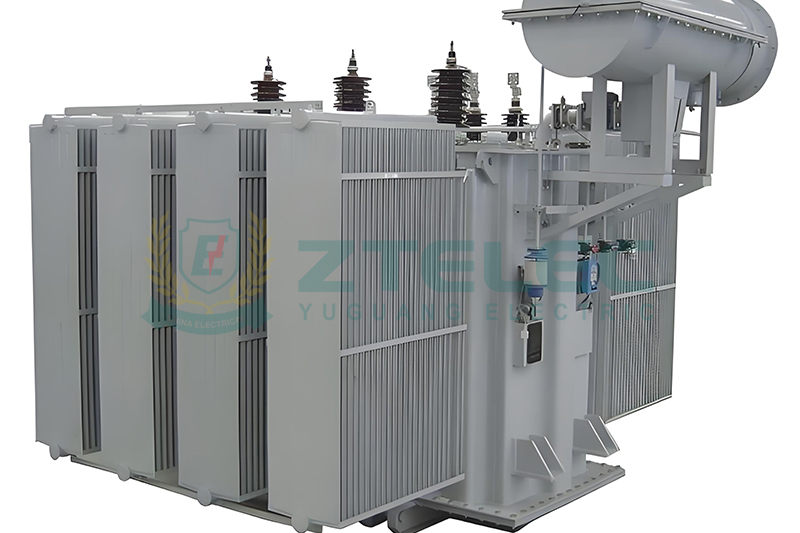
Basic Comparison Between 66kV and 110kV Transformers
| Comparison Item | 66kV Oil Immersed Transformer | 110kV Oil Immersed Transformer |
|---|---|---|
| Rated Voltage | 66kV | 110kV |
| Typical Capacity Range | 2,500 kVA – 63,000 kVA | 10,000 kVA – 240,000 kVA |
| Lightning Impulse Level | 325 kV | 550 kV |
| No-Load Loss | Lower | Slightly Higher |
| Short-Circuit Impedance | 6% – 8% | 10% – 14% |
| Transformer Weight | Lighter and easier to transport | Heavier with special transport requirements |
| Substation Footprint | Smaller | Larger |
| Overall Investment Cost | Lower | Higher |
The values above represent common industry configurations. Actual transformer specifications may vary depending on project requirements and local grid standards.
Technical Features of 66kV Oil Immersed Transformers
66kV transformers are widely used in regional transmission networks, industrial power systems, and medium-scale utility substations. They are especially common in Asia, Africa, and the Middle East.
Simplified Insulation Design
The insulation level of a 66kV transformer is lower than that of a 110kV transformer. This reduces the amount of insulation material required and simplifies the manufacturing process, resulting in lower production costs and shorter delivery times.
Compact Structure and Easier Transportation
Most 66kV transformers have a smaller physical size and lower overall weight compared with 110kV units. Transportation and installation are therefore easier, especially for projects located in mountainous areas or regions with limited infrastructure.
Flexible Voltage Regulation
66kV transformers can be equipped with either off-circuit tap changers or on-load tap changers depending on grid voltage stability requirements and project budgets.
Lower Initial Investment
For medium-capacity projects and short transmission distances, 66kV substations usually require less investment in transformers, switchgear, insulation systems, and civil construction.
Technical Features of 110kV Oil Immersed Transformers
110kV transformers are commonly used in large utility substations and high-capacity industrial projects. They provide stronger transmission capability and better performance for long-distance power delivery.
Higher Insulation Requirements
110kV transformers require significantly higher insulation levels to withstand lightning impulses and switching overvoltages. This increases manufacturing complexity and requires higher-grade insulation materials and bushings.
Large Power Transmission Capacity
110kV transformers are designed for high-load applications and large-scale grid integration. A single transformer can support the power demand of major industrial plants, large cities, or utility transmission systems.
Lower Transmission Losses
For the same transmission power, a 110kV system carries lower current than a 66kV system. This significantly reduces line losses and improves transmission efficiency over long distances.
Standard On-Load Tap Changer Configuration
Most 110kV transformers are equipped with on-load tap changers to maintain stable voltage during changing load conditions without interrupting power supply.
Application Scenarios for 66kV Transformers
Industrial Parks and Manufacturing Plants
Projects with power demand between 20MW and 50MW often use 66kV transformers because they provide a balance between investment cost and operating efficiency.
Medium-Scale Renewable Energy Projects
Wind farms and solar power plants with capacities between 50MW and 150MW commonly use 66kV grid connection systems due to lower substation construction costs.
Regional Distribution Networks
In countries where 66kV is part of the established utility voltage structure, regional substations and urban secondary distribution systems widely adopt this voltage level.
Developing Infrastructure Projects
For developing regions with moderate electricity demand growth, 66kV systems offer faster deployment and lower initial investment requirements.
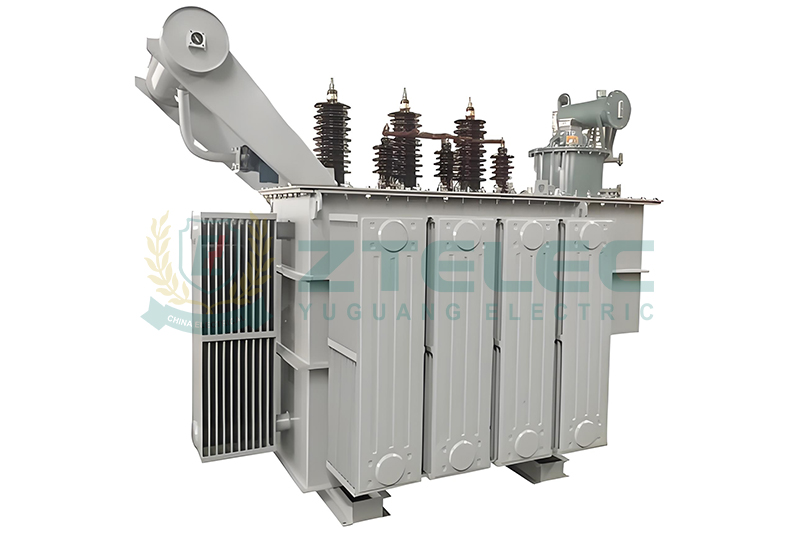
Application Scenarios for 110kV Transformers
Large Urban Substations
Major cities often use 110kV substations to distribute power from higher-voltage transmission networks to regional distribution systems.
Heavy Industrial Facilities
Steel mills, petrochemical plants, aluminum smelters, and mining operations with power demand exceeding 100MW typically require 110kV power supply systems.
Large Renewable Energy Bases
Renewable energy projects above 200MW generally adopt 110kV grid integration because of the higher transmission capacity and lower line losses.
Long-Distance Transmission Projects
When transmission distances exceed 50 kilometers, 110kV systems become more economical due to improved efficiency and lower operating losses.
Investment Cost and Lifecycle Economics
The choice between 66kV and 110kV transformers should not be based only on equipment purchase price. A complete lifecycle cost analysis is essential for accurate project evaluation.
Transformer Equipment Cost
Under similar capacity conditions, a 110kV transformer may cost 1.5 to 2 times more than a 66kV transformer because of higher insulation requirements, larger core structures, and more complex testing procedures.
Substation Construction Cost
110kV substations require larger safety clearances, higher insulation coordination, and more advanced switchgear systems, increasing civil engineering and installation costs.
Energy Loss Cost
Although 110kV systems require higher initial investment, reduced transmission losses can generate significant long-term savings in large-scale or long-distance projects.
Maintenance and Operating Cost
110kV equipment generally requires stricter maintenance procedures and more advanced safety management, leading to slightly higher operating costs.
For projects with transmission distances below 30 kilometers and loads under 50MW, 66kV systems are usually more economical. For large-scale projects with future expansion plans, 110kV systems often provide better long-term value.
How to Choose the Right Transformer Voltage Level
Understand Local Grid Standards
Different countries and utility companies use different voltage structures. Always confirm grid connection requirements with the local power authority before finalizing transformer specifications.
Evaluate Current and Future Load Demand
Transformer selection should consider both present power demand and future expansion plans over the next 5 to 10 years.
Analyze Transmission Distance
Long transmission distances favor higher voltage systems because they reduce current and minimize line losses.
Perform Lifecycle Cost Analysis
A complete economic evaluation should include transformer cost, substation construction, transmission line investment, operating losses, and maintenance expenses.
Work with an Experienced Transformer Manufacturer
An IEC 60076 certified transformer manufacturer can provide technical calculations, voltage selection recommendations, customized transformer design, and complete project support.
Frequently Asked Questions
Why do some regions use both 66kV and 110kV systems?
Different voltage systems often developed because of historical utility planning and regional grid expansion strategies. Many countries continue to operate both systems depending on local infrastructure.
Can a 66kV substation be upgraded to 110kV in the future?
Yes, but upgrading usually requires replacing transformers, switchgear, insulation systems, and other major equipment. Early planning for future expansion is highly recommended.
Which voltage level is better for renewable energy projects?
Projects between 50MW and 150MW commonly use 66kV systems, while projects above 150MW or 200MW often require 110kV grid connection.
What is the delivery time difference between 66kV and 110kV transformers?
Standard 66kV transformers usually require 10 to 16 weeks for production, while 110kV transformers may require 14 to 24 weeks because of more complex insulation and testing requirements.
Both 66kV and 110kV oil immersed transformers have their own advantages and ideal application scenarios. The best choice depends on project load demand, transmission distance, future expansion plans, local grid standards, and overall lifecycle economics.
Working with a professional transformer manufacturer that offers complete IEC 60076 certified solutions for both voltage classes can significantly reduce project risks and improve long-term system reliability.
If you are planning a new substation, industrial power system, or renewable energy project, our engineering team can provide customized transformer selection support, technical proposals, and competitive quotations within 48 hours.
IEC 60076 certified transformer
custom transformer manufacturer
66kV oil immersed transformer
dry-type transformer selection
Cast resin transformer
- more+releated article
- 2026-05-2066kV vs 110kV Oil Immersed Transformers: Which
- 2026-05-19CWIEME Berlin 2026 · Day 1 Exhibition Report
- 2026-05-19Cast Resin vs VPI Dry-Type Transformers: Key D
- 2026-05-18Oil-Immersed Transformer vs Dry-Type Transform
- 2026-05-15Dry-Type Transformer Energy Efficiency Standar
- 2026-05-142026 Dry-Type Transformer Price Factors: Capac
- 2026-05-13What Is an Oil-Immersed Transformer? Working P
- 2026-05-13Medium Voltage Dry-Type Transformers in Solar
- 2026-05-11How Long Does an Oil-Immersed Transformer Last
- 2026-05-08Modern Power System Dry-Type Transformer Insta
- ELECTRICAL INSULATION BOARD MATERIALS
- ELECTRICAL INSULATION MATERIALS
- POWER TRANSFORMER
- ENAMELED WIRE
- SWITCHGEAR



66kV oil immersed transformer
IEC 60076 certified transformer
custom transformer manufacturer
Vacuum Pressure Impregnation Transformer
VPI Dry-Type Transformer
Cast resin transformer
dry-type transformer selection
dry type transformer
transformer selection
oil immersed vs dry type transformer
Oil immersed transformer
ANSI transformer efficiency
IEC transformer standard
dry-type transformer energy efficiency standards
dry-type transformer capacity
dry-type transformer price
2026 dry-type transformer
SCB11 transformer
oil filled transformer
distribution transformer
Power transformer
solar transformer
medium voltage dry-type transformer
renewable energy transformer
transformer lifecycle