
China vs Europe Oil-Immersed Transformer Manufacturers: Comprehensive Comparison of Quality, Price, and Delivery Time
As global power infrastructure investment continues to grow, oil-immersed transformers have become essential equipment in industrial power distribution, transmission grids, data centers, renewable energy plants, and large commercial projects. For buyers, selecting the right transformer manufacturer not only affects initial investment costs, but also directly impacts long-term operational reliability, energy efficiency, and maintenance expenses.
In recent years, China’s oil-immersed transformer manufacturing industry has developed rapidly, with many companies exporting products to Southeast Asia, the Middle East, Africa, Europe, and South America. Meanwhile, European brands continue to dominate the high-end market with their long-established technical expertise, mature quality systems, and extensive experience in demanding applications.
So what are the key differences between Chinese and European oil-immersed transformer manufacturers? This article provides an in-depth comparison from multiple perspectives, including product quality, procurement pricing, delivery lead time, supply chain stability, and long-term investment value, helping procurement managers, EPC contractors, utilities, and industrial users establish a more scientific purchasing strategy.
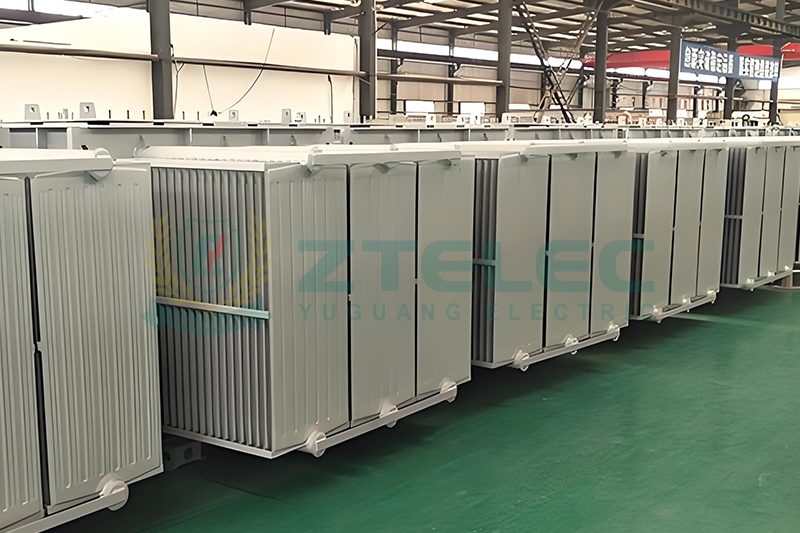
Global Market Trends for Oil-Immersed Transformers
The global energy transition is driving continuous growth in transformer demand. Renewable energy projects, industrial automation, urban rail transit, and data center expansion are all increasing the need for highly efficient, low-loss, and reliable oil-immersed transformers.
European manufacturers have traditionally dominated the premium market, particularly in ultra-high-voltage transmission, offshore wind power, nuclear energy, and specialized transformer applications. Chinese manufacturers, on the other hand, have rapidly expanded in medium- and low-voltage distribution markets thanks to their integrated supply chains, large-scale manufacturing capacity, and cost advantages.
Today, more international projects are adopting a “China manufacturing + international standards” procurement model. Especially in distribution transformers rated 35kV and below, leading Chinese manufacturers are now capable of producing transformers compliant with IEC, ANSI, UL, CSA, and other international standards, while gradually narrowing the technical gap with European competitors.
Product Quality Comparison: Core Differences Between Chinese and European Manufacturing
Quality Advantages of European Oil-Immersed Transformer Manufacturers
European brands possess decades, and in some cases more than a century, of experience in transformer engineering. Companies such as Siemens, ABB, Schneider Electric, and Eaton have supplied transformers for national grids, nuclear power stations, rail transit systems, and high-end industrial projects worldwide.
European manufacturers typically use high-permeability cold-rolled silicon steel, high-purity oxygen-free copper windings, and premium insulation systems. Their transformers often achieve superior no-load loss, load loss, and temperature rise performance while meeting the highest energy efficiency levels under IEC 60076 standards.
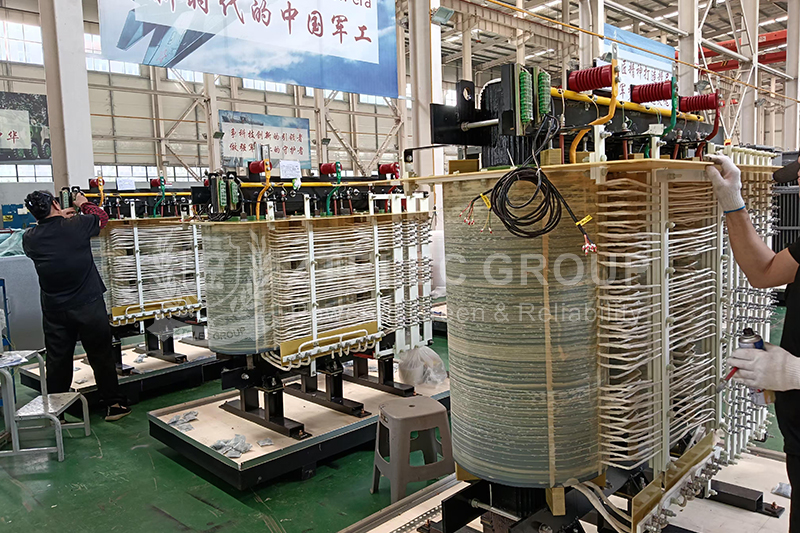
In terms of manufacturing processes, European factories generally implement stricter quality management systems, including vacuum oil filling, automated winding systems, partial discharge testing, and fully digitalized production management. These technologies significantly improve transformer reliability and service life.
European brands also have extensive expertise in insulation life design. By combining high-quality insulation paper, insulating oil, and precision drying processes, many transformers can operate reliably for over 30 years under demanding load conditions.
Current Development of Chinese Oil-Immersed Transformer Manufacturers
Over the past two decades, China’s transformer industry has expanded rapidly and established a complete industrial supply chain. Major companies such as TBEA, China XD Electric, Baobian Electric, and Tianwei Baobian now possess comprehensive capabilities ranging from raw material processing to complete transformer manufacturing.
Today, mainstream Chinese manufacturers commonly hold ISO 9001 certification and can design and produce transformers according to IEC, ANSI, GB, IEEE, and other international standards. Some companies have also obtained KEMA, UL, and CSA certifications, exporting products to countries worldwide.
In the 35kV and below distribution transformer segment, the performance of leading Chinese manufacturers has approached that of comparable European products. Significant progress has been made in core loss reduction, winding temperature control, and short-circuit withstand capability.
Chinese manufacturers also benefit from fast technology upgrades. With increasing adoption of automated production equipment and digital testing systems, consistency in manufacturing quality continues to improve.
However, European brands still maintain a clear advantage in ultra-high-voltage transformers above 220kV, offshore wind power transformers, transformers for extremely cold environments, and applications requiring ultra-low partial discharge levels.
Transformer Price Comparison: Why Are Chinese Transformers More Affordable?
Cost Advantages of Chinese Manufacturers
Price remains one of the strongest competitive advantages of Chinese oil-immersed transformer manufacturers. Compared with European brands, Chinese suppliers can usually offer significantly lower procurement costs.
For example, the price of a 10MVA/35kV oil-immersed power transformer from a leading Chinese manufacturer may be only one-third to one-half of the price of a premium European equivalent.
This cost advantage mainly comes from several factors:
First, China has a highly integrated raw material supply chain. Key materials such as silicon steel sheets, copper conductors, insulation paper, transformer oil, and bushings are mostly sourced domestically, reducing procurement costs.
Second, Chinese manufacturers benefit from strong economies of scale. Large factories with high-volume production capacity can effectively reduce manufacturing and labor costs.
Additionally, China still maintains certain advantages in labor costs, industrial land pricing, and government support for manufacturing industries, further lowering overall production expenses.
Reasons Behind the Higher Cost of European Brands
European transformer manufacturers face higher production costs due to labor expenses, energy prices, and strict environmental regulations.
European factories generally adopt more demanding environmental and energy-efficiency standards. For example, many products must comply with the EU Ecodesign Directive (ErP), requiring lower losses and optimized material design.
At the same time, European brands often provide comprehensive after-sales service systems, local technical support teams, and long-term spare parts availability, all of which contribute to higher final pricing.
Total Cost of Ownership (TCO) Analysis
Many buyers focus only on the initial purchase price while overlooking the long-term operational and energy costs associated with transformers.
In reality, for oil-immersed transformers operating over 20 to 30 years, electricity losses often exceed the original equipment purchase cost.
European high-efficiency transformers typically offer lower no-load and load losses, resulting in substantial energy savings over their service life.
For example, under a 75% annual load factor, a high-efficiency 10MVA transformer may save tens of thousands of dollars in electricity costs over a 25-year operating period.
In addition, European brands usually maintain mature global service networks, ensuring faster maintenance response times and more stable spare parts supply.
Chinese brands have also been actively expanding overseas service systems in recent years, although after-sales support capabilities in some emerging markets still require improvement.
Delivery Time Comparison: Why Is China’s Supply Chain Faster?
Delivery Advantages of Chinese Manufacturers
In recent years, delivery lead time has become a critical factor affecting project schedules.
Compared with European manufacturers, Chinese factories generally offer shorter production cycles. Standard oil-immersed distribution transformers are often delivered within 6 to 14 weeks, while European manufacturers may require 16 to 28 weeks or even longer.
China’s supply chain advantages are mainly reflected in the following areas:
A fully integrated industrial ecosystem enables faster procurement of key materials; large factories provide higher production capacity; manufacturing schedules are more flexible; and high local sourcing rates reduce dependence on international supply chains.
For industrial projects, infrastructure developments, and renewable energy plants facing tight deadlines, the fast delivery capability of Chinese manufacturers is highly attractive.
Challenges Facing European Supply Chains
In recent years, European manufacturing has been affected by rising energy costs, labor shortages, and supply chain disruptions, resulting in significantly extended lead times.
Some large power transformer orders now require more than a year for delivery, creating considerable pressure on project timelines.
However, European brands still possess strong expertise in managing highly customized and technically complex projects.
International Logistics and Import Cost Analysis
When sourcing oil-immersed transformers from China, international logistics costs must be carefully evaluated.
Because transformers are heavy industrial equipment, ocean freight often accounts for 5% to 15% of total equipment cost. Buyers must also consider insurance, import duties, port handling fees, and customs clearance charges.
For large power transformers, additional costs related to oversized transportation, special lifting operations, and on-site assembly may also apply.
When comparing quotations, buyers should evaluate the true landed cost under FOB, CIF, or DDP trade terms instead of focusing solely on factory prices.
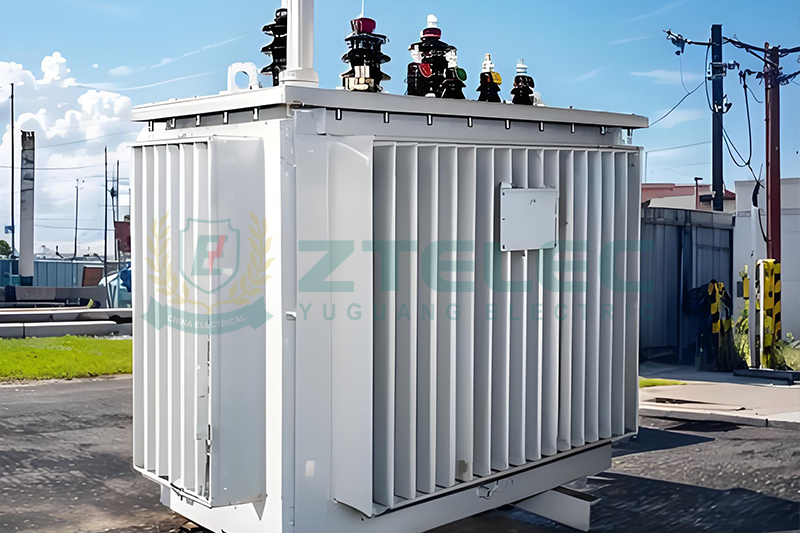
How to Choose the Right Oil-Immersed Transformer Supplier
When Chinese Manufacturers Are the Better Choice
If the project budget is limited, procurement cost is highly sensitive, and the application mainly involves standard distribution systems below 35kV, Chinese manufacturers often provide the best cost-performance ratio.
In industrial plants, commercial buildings, standard renewable energy projects, and general power distribution systems, leading Chinese manufacturers are now capable of supplying reliable transformers that meet international standards.
In addition, when project schedules are tight, China’s fast delivery capability becomes a major advantage.
When European Manufacturers Are the Better Choice
For ultra-high-voltage transmission projects, nuclear power plants, petrochemical facilities, advanced rail transit systems, and applications in extreme environments, European brands are generally the safer option.
If lifecycle energy efficiency is a top priority, or if local regulations favor European brands, premium European transformers remain highly competitive.
European manufacturers also maintain clear advantages in applications requiring extremely low partial discharge levels, exceptional long-term reliability, and operation under harsh environmental conditions.
Hybrid Procurement Strategies Are Becoming More Common
Today, many large international projects adopt a hybrid procurement strategy combining “European core equipment + Chinese auxiliary equipment.”
This approach helps ensure the reliability of critical systems while effectively controlling overall project costs.
For example, in large renewable energy plants or industrial park developments, the main power transformer may be sourced from a European brand, while standard distribution transformers are supplied by Chinese manufacturers to balance performance and budget.
Key Considerations When Purchasing Oil-Immersed Transformers
Regardless of whether buyers choose Chinese or European manufacturers, careful attention should be paid to technical specification review, third-party factory audits, type test reports, transportation planning, and installation conditions.
It is recommended to clearly define loss values, temperature rise limits, noise requirements, partial discharge levels, and warranty terms in procurement contracts, while requiring complete factory test documentation.
For export projects, buyers should also verify compliance with local grid standards, certification requirements, voltage classes, and frequency specifications.
Rational Procurement Matters More Than Simply Comparing Prices
Chinese and European oil-immersed transformer manufacturers each possess unique competitive strengths.
Chinese manufacturers excel in pricing, delivery speed, and large-scale production capability, while European brands continue to lead in advanced technology, long-term reliability, and high-efficiency performance.
As Chinese manufacturing technology continues to improve, the quality gap between the two sides is gradually narrowing. However, for buyers, the key is not simply choosing the cheapest or most expensive option, but establishing a comprehensive evaluation system based on project requirements, lifecycle costs, and supply chain risks.
Only by combining technical requirements, operating conditions, budget structure, and long-term maintenance needs can buyers truly maximize the value of oil-immersed transformer procurement.
European transformer manufacturer
China transformer manufacturer
transformer procurement
oil-immersed transformer
1250kVA dry type transformer
- more+releated article
- 2026-05-23China vs Europe Oil-Immersed Transformer Manuf
- 2026-05-221250 kVA Dry-Type vs Oil-Immersed Transformer:
- 2026-05-21Data Center Substations vs Industrial Substati
- 2026-05-2066kV vs 110kV Oil Immersed Transformers: Which
- 2026-05-19CWIEME Berlin 2026 · Day 1 Exhibition Report
- 2026-05-19Cast Resin vs VPI Dry-Type Transformers: Key D
- 2026-05-18Oil-Immersed Transformer vs Dry-Type Transform
- 2026-05-15Dry-Type Transformer Energy Efficiency Standar
- 2026-05-142026 Dry-Type Transformer Price Factors: Capac
- 2026-05-13What Is an Oil-Immersed Transformer? Working P
- ELECTRICAL INSULATION BOARD MATERIALS
- ELECTRICAL INSULATION MATERIALS
- POWER TRANSFORMER
- ENAMELED WIRE
- SWITCHGEAR

oil-immersed transformer
China transformer manufacturer
European transformer manufacturer
transformer procurement
1250kVA dry type transformer
1250kVA oil immersed transformer
oil immersed transformer cost
dry type transformer price
data center substation
dry type transformer
Oil immersed transformer
data center UPS
industrial substation
IEC 60076 certified transformer
66kV oil immersed transformer
custom transformer manufacturer
Cast resin transformer
Vacuum Pressure Impregnation Transformer
VPI Dry-Type Transformer
dry-type transformer selection
oil immersed vs dry type transformer
transformer selection
ANSI transformer efficiency
IEC transformer standard
dry-type transformer energy efficiency standards