
Cast Resin vs VPI Dry-Type Transformers: Differences in Cost, Moisture Resistance, and Service Life
Dry-type transformers are widely used in commercial buildings, industrial facilities, data centers, hospitals, subways, and renewable energy projects due to their fire safety, environmental protection, and oil-free design. Among all dry-type transformer technologies, Cast Resin Transformers and VPI (Vacuum Pressure Impregnation) Transformers are the two most common solutions.
Although both transformer types eliminate insulating oil and reduce fire risks compared with oil-immersed transformers, they differ significantly in manufacturing process, moisture resistance, thermal performance, maintenance requirements, and long-term operating costs. Choosing the right technology directly affects transformer reliability, lifecycle cost, and system safety.
This article provides a detailed comparison between cast resin and VPI dry-type transformers from the perspectives of technical structure, initial investment, insulation performance, moisture resistance, service life, maintenance, and application suitability, helping engineers, EPC contractors, and procurement managers make more informed decisions.
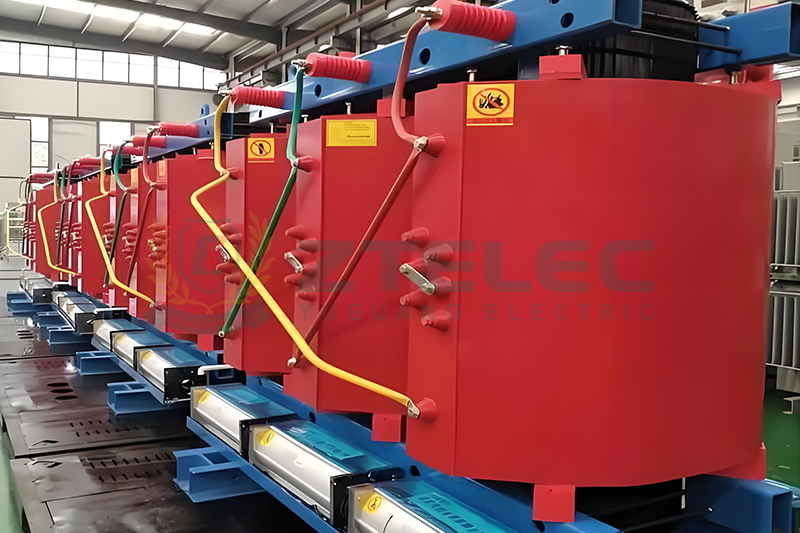
Technical Principles of Cast Resin and VPI Dry-Type Transformers
What Is a Cast Resin Transformer?
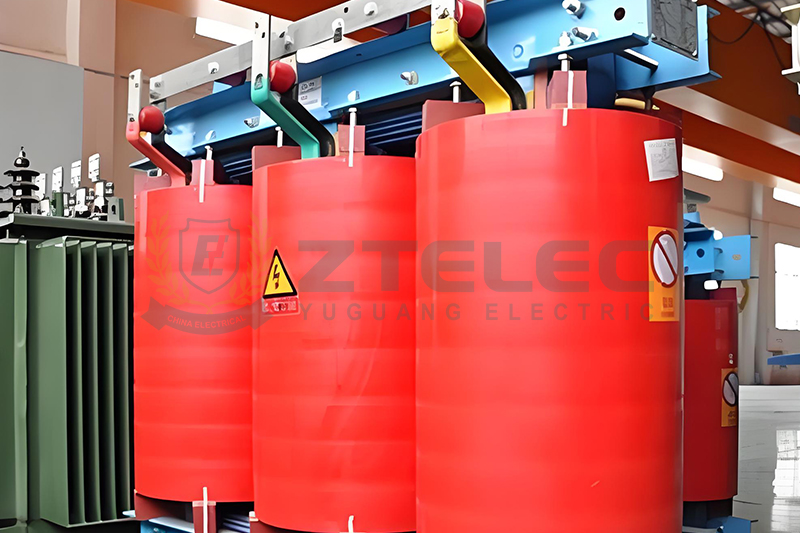
A cast resin transformer uses epoxy resin to encapsulate the high-voltage and low-voltage windings under vacuum conditions. After curing, the winding becomes a fully enclosed solid insulation structure that isolates the conductor from moisture, dust, and contaminants.
The solid resin insulation system provides excellent mechanical strength and environmental protection. Because the windings are completely sealed, cast resin transformers are highly resistant to humidity, condensation, salt spray, and chemical pollution.
Main characteristics of cast resin transformers include:
Fully encapsulated windings with no exposed conductors.
High insulation classes, commonly Class F (155°C) or Class H (180°C).
Excellent short-circuit withstand capability.
Strong resistance to moisture, corrosion, and contamination.
Low maintenance requirements and long operating life.
Typical manufacturers include ABB, Siemens, Schneider Electric TRIHAL series, and other IEC-compliant dry-type transformer suppliers.
What Is a VPI Transformer?
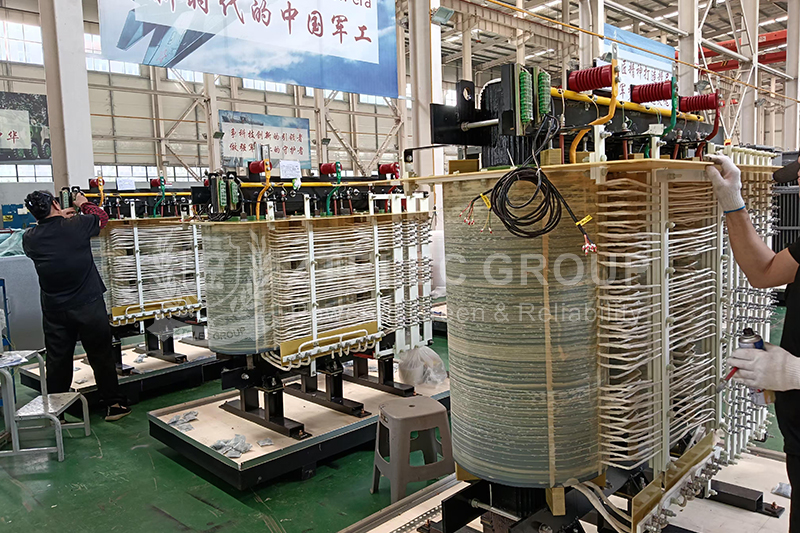
VPI stands for Vacuum Pressure Impregnation. In a VPI transformer, the winding remains an open ventilated structure. After coil winding is completed, the entire winding assembly is placed into a vacuum chamber where air and moisture are removed. Insulating varnish, usually polyester or epoxy-based resin varnish, is then injected under pressure to penetrate the insulation layers and coil gaps.
After curing, the varnish forms a continuous insulation coating around the winding surfaces while maintaining an open-coil cooling structure.
Main characteristics of VPI transformers include:
Open winding structure with better natural ventilation.
Lower manufacturing cost compared with cast resin transformers.
Lighter insulation layer and improved heat dissipation.
Widely used in standard indoor industrial and commercial environments.
Commonly designed according to IEC 60076-11 and IEEE C57.12.91 standards.
Cost Comparison Between Cast Resin and VPI Transformers
Initial Investment Cost
Cost is often the first consideration during transformer procurement. Cast resin transformers generally have a higher manufacturing cost due to their complex vacuum casting process, epoxy resin material expenses, mold systems, and long curing cycles.
For a typical 1000 kVA 10 kV dry-type transformer, the factory price of a cast resin transformer is usually 30% to 50% higher than a comparable VPI transformer.
VPI transformers use a simpler production process and less expensive insulating varnish materials. As a result, VPI dry-type transformers are more economical for projects with strict budget limitations, especially in standard indoor environments with low humidity.
Lifecycle Cost Analysis
Although cast resin transformers require a higher initial investment, their long-term lifecycle cost can be lower in harsh environments.
| Cost Factor | Cast Resin Transformer | VPI Transformer |
|---|---|---|
| Initial Purchase Cost | Higher | Lower |
| Maintenance Cost | Very Low | Moderate |
| Failure Risk in Humid Areas | Very Low | Higher |
| Insulation Repair Requirement | Rarely Needed | Occasional Repair Required |
| Expected Service Life | 25–40 Years | 15–25 Years |
In high-humidity, high-pollution, or coastal environments, cast resin transformers usually provide better long-term economic performance because they reduce maintenance costs and insulation failures.
However, in clean and dry indoor facilities, VPI transformers remain highly competitive due to their lower capital cost and good operational efficiency.
Moisture Resistance Comparison
Advantages of Cast Resin Transformers in Humid Environments
Moisture resistance is one of the biggest advantages of cast resin dry-type transformers. The cured epoxy resin has extremely low water absorption, usually below 0.1%, which effectively isolates the winding from environmental moisture.
Cast resin transformers can operate safely even under 100% relative humidity conditions and maintain stable insulation performance during temperature fluctuations that may create condensation.
Typical protection levels include IP54 as standard, while additional enclosures can increase protection to IP65 or IP66.
Because of their sealed insulation structure, cast resin transformers are ideal for:
Subways and underground tunnels.
Water treatment plants and pump stations.
Coastal facilities and marine ports.
Offshore platforms.
Chemical plants and corrosive industrial environments.
According to IEC 60076-11, dry-type transformers are classified into climate categories C1 and C2. Cast resin transformers can easily satisfy C2 severe climate requirements without additional dehumidification systems.
Moisture Limitations of VPI Transformers
Because VPI transformers use an open-coil structure, their moisture resistance is more limited. Although the varnish coating provides protection against normal humidity, prolonged exposure to moisture or condensation may gradually damage the insulation layer.
In highly humid environments, microcracks may appear in the varnish coating, allowing moisture penetration and accelerating insulation aging.
Typical protection ratings for VPI transformers are IP20 to IP23. Exposed windings can also accumulate dust and contaminants over time.
If a VPI transformer remains out of service for long periods in humid conditions, insulation resistance testing and drying treatment may be required before re-energization.
For environments with relative humidity above 85% or condensation risk, cast resin transformers are strongly recommended to avoid partial discharge and insulation breakdown.
Service Life Comparison
Factors Affecting Transformer Lifespan
The service life of a dry-type transformer mainly depends on insulation aging, operating temperature, environmental conditions, and maintenance quality.
According to the Arrhenius thermal aging principle, every 6°C to 10°C increase in operating temperature may reduce insulation life by approximately half.
Cast resin transformers typically use higher insulation classes and sealed insulation systems that prevent contamination and moisture intrusion. Under normal operating conditions, their design life usually reaches 25 to 40 years.
Many cast resin transformers also comply with IEC 60076-11 E2 environmental classification and F1 fire behavior requirements.
VPI transformers generally use Class B or Class F insulation systems. Their open structure makes them more sensitive to environmental pollution and humidity, which may accelerate insulation deterioration.
Under suitable operating conditions and proper maintenance, VPI transformers normally achieve a service life of 15 to 25 years.
Maintenance Impact on Transformer Lifespan
Cast resin transformers require minimal maintenance. Routine inspection usually involves cleaning cooling surfaces and checking electrical connections.
VPI transformers require more regular maintenance, especially in dusty or humid environments. Periodic insulation resistance testing, coil cleaning, and varnish repair treatment may be necessary to maintain long-term reliability.
Other Performance Differences
Cooling and Heat Dissipation
VPI transformers generally provide better natural ventilation because of their open winding structure. Their lower thermal resistance can reduce temperature rise and improve operational efficiency.
Cast resin transformers have higher thermal resistance due to solid encapsulation. Large-capacity units above 1600 kVA often require forced air cooling systems such as AN/AF cooling configurations.
Overload Capability
Cast resin transformers usually offer stronger short-term overload capability because of their higher insulation class and stronger thermal endurance. They are suitable for applications with fluctuating or impact loads.
Short-Circuit Strength
The solid encapsulated winding structure of cast resin transformers provides superior mechanical strength during short-circuit events. VPI transformers may experience winding displacement under severe fault conditions.
Environmental and Fire Safety
Both transformer types are oil-free and significantly safer than oil-immersed transformers in terms of fire risk and oil leakage.
However, cast resin transformers generally provide better fire behavior performance and lower emission characteristics, making them more suitable for hospitals, airports, data centers, underground facilities, and public buildings.
Application Selection Guide
| Application Environment | Recommended Transformer Type | Main Reason |
|---|---|---|
| Subways and Tunnels | Cast Resin | High moisture and fire protection requirements |
| Coastal and Marine Facilities | Cast Resin | Salt spray and severe humidity conditions |
| Chemical Plants | Cast Resin | Corrosive gas resistance |
| Hospitals and Data Centers | Cast Resin | High reliability and low maintenance |
| Standard Industrial Buildings | VPI | Lower cost and adequate indoor protection |
| Commercial Office Buildings | VPI | Good cost-performance ratio |
| Rural Power Distribution | VPI | Budget-sensitive applications |
How to Choose the Right Dry-Type Transformer
Environmental conditions should always be the primary selection factor. If the installation site involves high humidity, condensation, salt spray, or chemical contamination, cast resin transformers are usually the safest and most reliable solution.
For clean and temperature-controlled indoor facilities, VPI transformers may provide better economic value with lower initial investment.
Project owners should also evaluate total lifecycle cost rather than focusing only on purchase price. Over a 20-year operating period, cast resin transformers often become more economical in demanding environments because of lower maintenance and reduced failure rates.
For critical applications, transformers should comply with IEC 60076-11 classifications such as C2, F1, and E2.
Both cast resin and VPI dry-type transformers play important roles in modern power distribution systems. Cast resin transformers offer superior moisture resistance, longer service life, stronger short-circuit capability, and minimal maintenance requirements, making them ideal for harsh environments and high-reliability applications.
VPI transformers provide lower initial investment, excellent heat dissipation, and cost-effective performance for clean and dry indoor environments.
The best transformer solution should be selected based on operating environment, humidity level, lifecycle expectations, maintenance capability, and long-term operating cost rather than purchase price alone.
dry-type transformer
Cast resin transformer
Vacuum Pressure Impregnation Transformer
epoxy resin transformer
moisture resistant transformer
- more+releated article
- 2026-05-28Cast Resin vs VPI Dry-Type Transformers: Diffe
- 2026-05-27Transformer Conservator Bladder Replacement Gu
- 2026-05-26110kV Power Transformer: Oil-Immersed vs Dry-T
- 2026-05-251000 kVA Dry-Type Transformer — Resin Cast,
- 2026-05-23China vs Europe Oil-Immersed Transformer Manuf
- 2026-05-221250 kVA Dry-Type vs Oil-Immersed Transformer:
- 2026-05-21Data Center Substations vs Industrial Substati
- 2026-05-2066kV vs 110kV Oil Immersed Transformers: Which
- 2026-05-19CWIEME Berlin 2026 · Day 1 Exhibition Report
- 2026-05-19Cast Resin vs VPI Dry-Type Transformers: Key D
- ELECTRICAL INSULATION BOARD MATERIALS
- ELECTRICAL INSULATION MATERIALS
- POWER TRANSFORMER
- ENAMELED WIRE
- SWITCHGEAR
Cast resin transformer
epoxy resin transformer
dry-type transformer
VPI transformer
moisture resistant transformer
Vacuum Pressure Impregnation Transformer
conservator air bag
transformer diaphragm replacement
transformer bladder
diaphragm conservator tank
transformer conservator bladder
110kV oil immersed transformer
Oil immersed transformer
dry type transformer
110kV transformer
110kV dry type transformer
low noise transformer
resin cast transformer
1000 kVA dry-type transformer
SCB10 transformer
transformer procurement
China transformer manufacturer
European transformer manufacturer
oil-immersed transformer
dry type transformer price