
1500 kVA Oil Immersed Transformer for Substations: Complete Specification Checklist Before Ordering
A 1500 kVA oil immersed transformer represents a significant investment for utilities, industrial facilities, renewable energy projects, and commercial substations. A single specification omission during procurement can lead to installation delays, costly redesigns, grid interconnection issues, or even complete equipment replacement.
For EPC contractors, consulting engineers, and procurement teams, a detailed transformer specification checklist is one of the most effective tools for reducing project risks and ensuring accurate supplier quotations.
This guide provides a comprehensive pre-order checklist covering electrical ratings, cooling systems, tap changers, insulation requirements, accessories, certification standards, transportation requirements, and current market pricing.
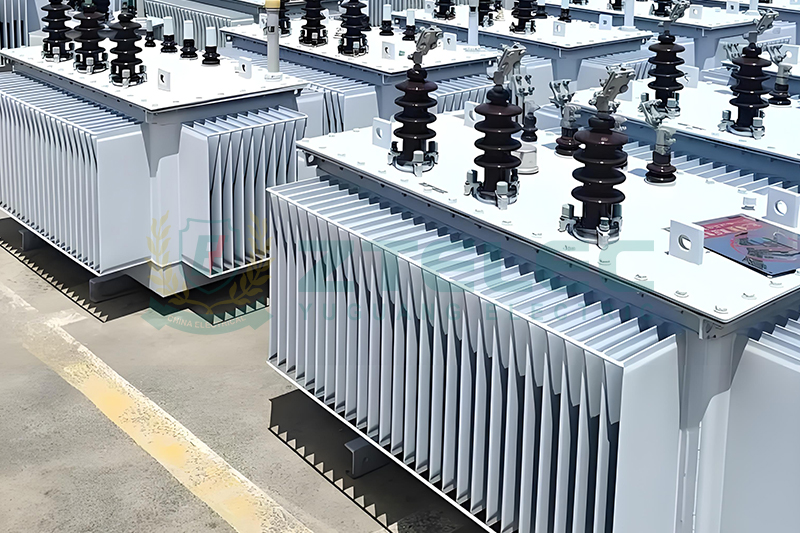
Verify Basic Nameplate Data First
The transformer nameplate data forms the foundation of every technical specification sheet and RFQ document. Missing or ambiguous information often results in inaccurate quotations and lengthy clarification cycles.
Key parameters that should always be specified include rated capacity, system frequency, primary voltage, secondary voltage, vector group, impedance voltage, no-load loss, load loss, no-load current, insulation level, and allowable temperature rise.
For a typical 1500 kVA substation transformer, buyers should clearly define whether the rating refers to continuous operation or temporary overload capability.
Voltage ratings such as 11 kV, 15 kV, 22 kV, or 33 kV on the high-voltage side and 400 V, 415 V, or 480 V on the low-voltage side should be specified together with system grounding requirements.
Vector groups such as Dyn11, Dyn1, or YNd11 must match the protection philosophy and grid requirements of the installation site.
When reviewing quotations, always request guaranteed values rather than typical values. The purchase contract should clearly define acceptable tolerances and remedies if factory test results exceed guaranteed limits.
Select the Appropriate Cooling Method
Cooling system selection directly affects transformer size, operating efficiency, overload capability, maintenance requirements, and project cost.
ONAN Cooling
ONAN (Oil Natural Air Natural) is the most common cooling method for 1500 kVA transformers. It provides reliable operation with minimal maintenance and is ideal for installations operating below 40°C ambient temperature.
ONAF Cooling
ONAF (Oil Natural Air Forced) utilizes cooling fans to increase transformer capacity by approximately 25% to 33%. It is recommended for heavily loaded substations and high-temperature environments.
Dual ONAN/ONAF Configuration
Many modern substations use dual-mode cooling systems that automatically activate fans when transformer loading or oil temperature exceeds predefined thresholds.
Project specifications should also clearly identify maximum ambient temperature, minimum ambient temperature, installation altitude, seismic requirements, and whether the transformer will be installed indoors or outdoors.
Sites located above 1000 meters elevation require special consideration because both insulation performance and cooling efficiency are reduced.
Confirm Tap Changer Requirements
One of the most common procurement mistakes is failing to clearly define the voltage regulation method.
Many RFQs simply state that the transformer should include taps, without specifying whether a no-load tap changer or an on-load tap changer is required.
DETC (De-Energized Tap Changer)
DETC allows voltage adjustment only when the transformer is de-energized. Typical adjustment ranges are ±2 × 2.5%. It is cost-effective and suitable for stable utility networks.
OLTC (On-Load Tap Changer)
OLTC enables voltage regulation while the transformer remains energized. Typical adjustment ranges include ±8 × 1.25% or ±9 × 1.78%.
OLTC transformers are preferred for industrial facilities, municipal substations, and renewable energy projects where voltage fluctuations occur frequently.
If OLTC is required, the RFQ should also specify preferred manufacturers such as MR (Maschinenfabrik Reinhausen) or ABB and whether an automatic voltage regulator (AVR) and remote monitoring interface are required.
Review Insulation System and Transformer Oil Specifications
The insulation system has a major impact on transformer reliability, fire safety, maintenance costs, and overall service life.
Standard Class A insulation is suitable for most installations, while Class F insulation is often selected for high-temperature environments or projects requiring additional overload capability.
Buyers should also specify the preferred insulating liquid.
Mineral oil remains the most economical option and is widely used in utility substations.
Natural ester fluids offer superior environmental performance and biodegradability.
Synthetic ester fluids provide fire points above 300°C and are commonly specified for indoor substations, commercial buildings, hospitals, airports, and data centers.
Oil test reports should include dielectric breakdown voltage, moisture content, and dissipation factor results according to IEC standards.
Check Accessories and Protection Devices
Transformer accessories are among the most frequently overlooked procurement items.
The supply scope should clearly identify whether the following equipment is included:
Oil temperature indicators with alarm contacts.
Winding temperature indicators with alarm and trip functions.
Buchholz relays for internal fault detection.
Pressure relief devices with specified operating pressure settings.
Magnetic oil level gauges with low-level alarms.
Silica gel breathers for conservator-type transformers.
High-voltage and low-voltage bushings designed according to the site pollution level.
Grounding terminals compatible with the substation grounding system.
Lifting lugs and transportation fixtures.
Communication interfaces such as Modbus RTU or IEC 61850 for SCADA integration.
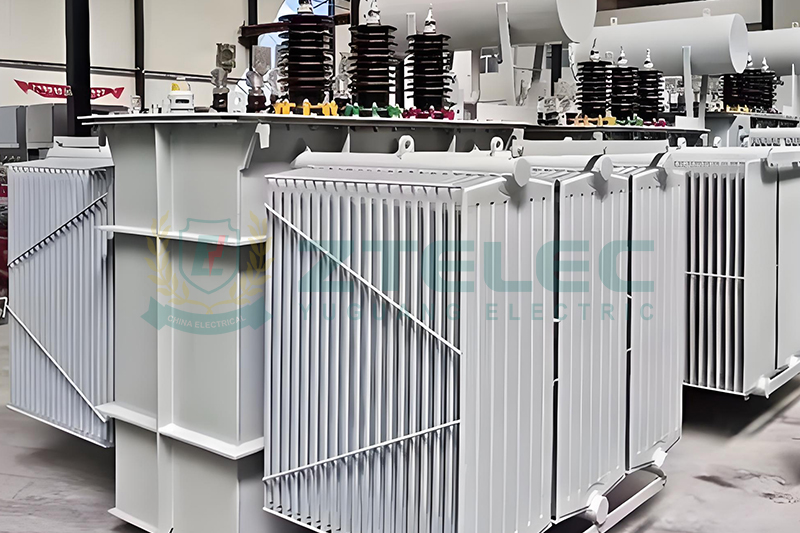
Ensure Compliance with Local Standards and Certifications
Target market requirements should be clearly defined before supplier selection.
European projects typically require compliance with IEC 60076 standards, IEC 60076-5 short-circuit requirements, EN 50588-1 efficiency regulations, and CE marking.
United Kingdom projects may additionally require compliance with G99 and G100 utility interconnection standards and UKCA marking.
North American projects generally follow IEEE C57 and ANSI transformer standards, together with UL or CSA certification requirements.
Middle Eastern markets often require SASO, ESMA, or GCC approvals in addition to IEC compliance.
Southeast Asian countries may require local approvals such as BIS certification in India or TISI certification in Thailand.
Transportation and Site Acceptance Checklist
Transformer transportation planning should be finalized before production begins.
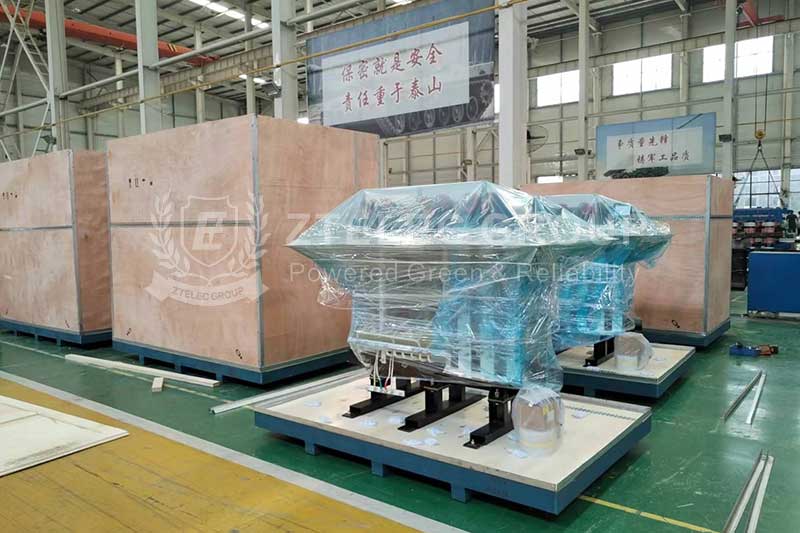
Long-distance sea shipments often require nitrogen-filled transportation with positive internal pressure to prevent moisture ingress.
Large accessories such as radiators, conservators, bushings, and OLTC drive mechanisms are usually removed and packaged separately.
Impact recorders and tilt indicators should be installed to monitor transportation conditions and identify potential handling damage.
Wooden export packaging must comply with ISPM 15 requirements.
Upon arrival, transformers transported under nitrogen should be properly assembled, vacuum-filled with oil if required, and subjected to commissioning tests before energization.
Many international buyers also require Factory Acceptance Testing (FAT) and independent third-party inspection before shipment.
FOB Price Reference for 1500 kVA Oil Immersed Transformers
Based on quotations from major Chinese transformer manufacturers, the following FOB Shanghai price ranges are commonly observed:
Basic DETC Model: USD 22,000 – 28,000
ONAN cooling, mineral oil insulation, standard accessories, 11 kV/400 V, Dyn11 configuration.
Standard Export Model: USD 26,000 – 34,000
Includes IEC type test reports, ONAN/ONAF cooling, and complete protection accessories.
OLTC Model: USD 32,000 – 42,000
Includes MR or ABB on-load tap changer, AVR control cabinet, and communication interfaces.
Ester Fluid Fire-Safe Model: USD 35,000 – 48,000
Natural or synthetic ester insulation fluid with fire point exceeding 300°C.
Actual pricing depends on voltage class, cooling method, certification requirements, insulation liquid type, and order quantity.
Frequently Asked Questions
What is the FOB price of a 1500 kVA oil immersed transformer?
Typical FOB Shanghai pricing ranges from USD 22,000 to USD 42,000 depending on cooling configuration, voltage level, certification requirements, and whether OLTC is included.
Should I choose ONAN or ONAF cooling?
ONAN is suitable for stable loading conditions and moderate ambient temperatures. ONAF is recommended for high-load applications or hot climates where additional cooling capacity is beneficial.
What is the difference between OLTC and DETC?
DETC requires transformer shutdown before voltage adjustment, while OLTC allows continuous voltage regulation during operation and is better suited to variable-load applications.
What is the difference between IEC and ANSI transformer standards?
IEC and ANSI standards differ in voltage classifications, insulation definitions, temperature rise references, impedance requirements, and testing methodologies. The applicable standard should always be specified before ordering.
Purchasing a 1500 kVA oil immersed transformer involves much more than selecting a power rating. Electrical specifications, cooling methods, tap changer configuration, insulation systems, accessory packages, certification requirements, transportation planning, and FAT procedures all influence project success.
For international buyers, the most effective approach is to attach a detailed specification checklist directly to the RFQ and require suppliers to respond item-by-item with compliance statements, deviations, and clarifications. This process not only improves quotation accuracy but also helps identify suppliers with strong engineering capabilities and mature project management systems.
ZTELEC GROUP Xujue Electrical Debuts at Booth 1N21
CWIEME Shanghai 2026
transformer specification checklist
1500 kVA oil immersed transformer
substation transformer
- more+releated article
- 2026-06-241500 kVA Oil Immersed Transformer for Substati
- 2026-06-24Successful Opening Day at CWIEME Shanghai 2026
- 2026-06-23Mineral Oil vs Biodegradable Ester Fluids in T
- 2026-06-22How to Write a 1250 kVA Cast Resin Transformer
- 2026-06-18ZTELECGROUP Mid-Year Sale 2026: Full Range Dis
- 2026-06-1811kV Compact Substations for Commercial Buildi
- 2026-06-17500 kVA Oil Immersed Transformer Selection &am
- 2026-06-16Oil Immersed Transformer Maintenance Guide: In
- 2026-06-151 MVA Compact Substation: Engineering Guide fo
- 2026-06-12How to Evaluate Chinese Transformer Suppliers:
- ELECTRICAL INSULATION BOARD MATERIALS
- ELECTRICAL INSULATION MATERIALS
- POWER TRANSFORMER
- ENAMELED WIRE
- SWITCHGEAR



CWIEME Shanghai 2026
ZTELEC GROUP Xujue Electrical Debuts at Booth 1N21
transformer specification checklist
1500 kVA oil immersed transformer
substation transformer
synthetic ester transformer
mineral oil transformer
FR3 insulating fluid
natural ester transformer
transformer procurement guide
dry type transformer specification
IEC 60076-11 transformer
1250 kVA cast resin transformer RFQ
European type substation
compact substation
11kV compact substation
11kV prefabricated substation
prefabricated substation
500kVA Transformer Price
industrial oil immersed transformer
500kVA distribution transformer
500 kVA Oil Immersed Transformer
transformer inspection checklist
oil immersed transformer maintenance
transformer oil testing