
How to Write a 1250 kVA Cast Resin Transformer RFQ: Complete Template and Procurement Recommendations
For EPC contractors, consulting engineers, and industrial procurement managers, a well-structured Request for Quotation (RFQ) is one of the most effective tools for reducing procurement risks, shortening quotation cycles, and identifying qualified transformer manufacturers at an early stage.
This guide provides a complete RFQ framework for a 1250 kVA Cast Resin Dry-Type Transformer, including IEC 60076-11 technical requirements, supplier qualification criteria, pricing references, and contract considerations. It is suitable for power distribution projects in industrial plants, commercial buildings, data centers, infrastructure developments, transportation systems, and renewable energy facilities.
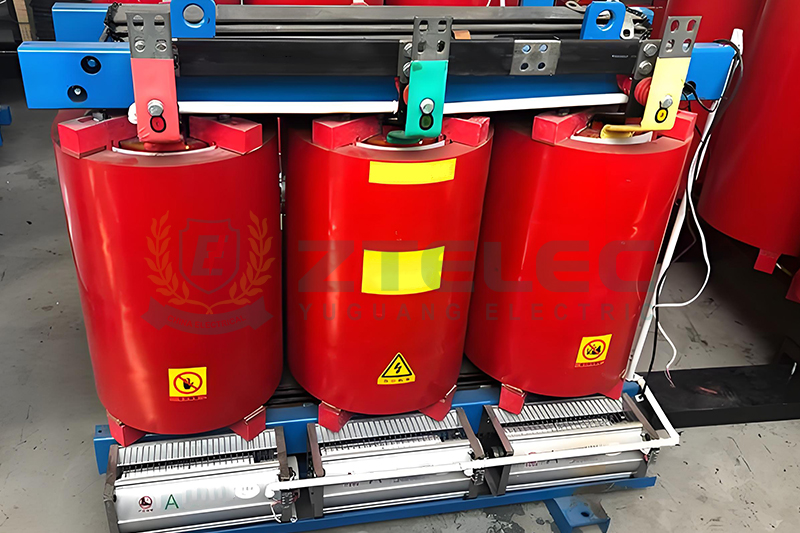
Why Choose a 1250 kVA Cast Resin Transformer?
The 1250 kVA rating is one of the most widely used transformer capacities in medium-voltage distribution systems. It offers an ideal balance between load capacity, installation flexibility, efficiency, and total ownership cost.
Typical applications include manufacturing plants, commercial complexes, hospitals, airports, metro stations, data centers, high-rise buildings, mining operations, and offshore platforms.
Compared with oil-immersed transformers, cast resin transformers provide several important advantages. Because they operate without insulating oil, there is no risk of oil leakage, environmental contamination, or fire caused by combustible insulating liquids. This makes them especially suitable for indoor installations where safety requirements are stringent.
Vacuum-cast epoxy resin insulation also provides excellent dielectric strength, moisture resistance, and short-term overload capability. Combined with their maintenance-free design, cast resin transformers can significantly reduce lifecycle operating costs while improving system reliability.
Typical Technical Baseline for a 1250 kVA Cast Resin Transformer
| Parameter | Typical Value |
|---|---|
| Rated Power | 1250 kVA |
| Primary Voltage | 6.3 kV / 10 kV / 11 kV |
| Secondary Voltage | 400 V / 433 V / 690 V |
| Vector Group | Dyn11 |
| Insulation Class | Class F (Class B Temperature Rise) |
| Cooling Method | AN Natural Air Cooling |
| Loss Category | B0 / C0 According to IEC 60076-11 |
| Protection Degree | IP20 / IP23 / IP34 |
Preparation Before Drafting the RFQ
Define Installation Conditions
Transformer ratings are generally based on standard operating conditions, including an altitude below 1000 meters, maximum ambient temperature of 40°C, daily average temperature below 30°C, and annual average temperature below 20°C.
If the project site exceeds these limits, actual environmental conditions must be specified in the RFQ. Manufacturers may need to provide derating calculations or alternative cooling solutions. At elevations around 2000 meters, transformer output capacity may be reduced by approximately 10% to 15% unless special design measures are implemented.
Select the Applicable Standard
The selected standard directly affects testing requirements, documentation, and acceptance procedures.
IEC 60076-11 is the preferred standard for Europe, the Middle East, Africa, Southeast Asia, and most international projects. GB/T 1094.11 is widely used within China and remains technically aligned with IEC requirements. IEEE C57 standards are typically specified for North American projects.
The RFQ should clearly identify the governing standard and indicate whether equivalent standards are acceptable.
Analyze Load Characteristics
Projects involving UPS systems, variable frequency drives (VFDs), data centers, battery energy storage systems, or rectifier loads should include harmonic information in the RFQ.
Where significant harmonic distortion exists, buyers should specify the required K-factor rating and request confirmation of harmonic withstand capability. For many industrial applications, K13 or K20 transformer designs are commonly selected.
Procurement Tip: Before issuing a formal RFQ, conduct a preliminary Request for Information (RFI) with several manufacturers. Early technical discussions often reduce quotation lead times from four to six weeks down to two or three weeks.
1250 kVA Cast Resin Transformer RFQ Template
Project Information
Project Name: [Insert Project Name]
RFQ Number: [Insert RFQ Reference]
Quotation Deadline: [Insert Date]
Section 1: Basic Technical Requirements
Rated Capacity: 1250 kVA
Frequency: 50 Hz / 60 Hz
Phase: Three-Phase
Primary Voltage: [Specify Voltage and Tapping Range]
Secondary Voltage: [Specify Voltage]
Vector Group: Dyn11
Insulation Class: Class F with Class B Temperature Rise
Cooling Method: AN Natural Air Cooling
Section 2: Efficiency and Loss Requirements
No-Load Loss (P0): ≤ [Specify Value]
Load Loss at 75°C (Pk): ≤ [Specify Value]
No-Load Current: ≤ 1.0%
Short Circuit Impedance: 6% ±10%
Section 3: Insulation and Testing Requirements
Lightning Impulse Level: 75 kV for 10 kV systems
Power Frequency Withstand Voltage: 35 kV / 3 kV for 60 seconds
Partial Discharge Level: ≤10 pC at 1.1 × U0
Applicable Standard: IEC 60076-11 / Equivalent Approved Standard
Section 4: Installation Requirements
Protection Degree: IP20 / IP23 / IP34
Installation Altitude: [Specify]
Maximum Ambient Temperature: [Specify]
Mounting Arrangement: Fixed Base / Wheels / Lifting Lugs
Enclosure Color: RAL7035 or Project Requirement
Section 5: Optional Accessories
Digital Temperature Controller
Forced Air Cooling System (ANAF)
Neutral Copper Busbar
Grounding Busbar
Anti-Vibration Pads
Section 6: Commercial Requirements
Trade Term: FOB [Port]
Quantity Required: [Specify]
Delivery Time: [Specify]
Warranty Period: Minimum 24 Months
Required Documentation: Type Test Reports, Technical Datasheets, Outline Drawings, Nameplate Drawings, Installation Manuals
Understanding Critical Technical Parameters
Loss Classification
IEC 60076-11 categorizes transformer losses into various efficiency classes. Selecting lower-loss designs can substantially reduce electricity costs over the transformer's operational life.
C0-level transformers generally achieve significantly lower no-load losses compared with conventional A0-rated units. Over a 20-year operating period, the energy savings often justify the higher initial investment.
For extreme climate environments, climate classifications such as C1 and C2 should also be specified. C2 designs are suitable for ambient temperatures ranging from -25°C to +40°C.
Insulation Class and Temperature Rise
A common industry practice is to use Class F insulation while limiting temperature rise to Class B levels. This approach creates additional thermal margin and improves insulation life expectancy.
To avoid ambiguity, procurement documents should require manufacturers to clearly state both insulation class and guaranteed temperature rise values.
Short-Circuit Impedance
The standard impedance for a 1250 kVA transformer is typically 6%. This provides a practical balance between fault current limitation and voltage regulation performance.
Projects requiring enhanced voltage stability may specify impedance levels of 6.5% or 7%. Lower impedance values may reduce manufacturing costs but can increase fault current levels.
Important: Require all loss values to be guaranteed at full rated load and referenced to the specified winding temperature, typically 75°C.
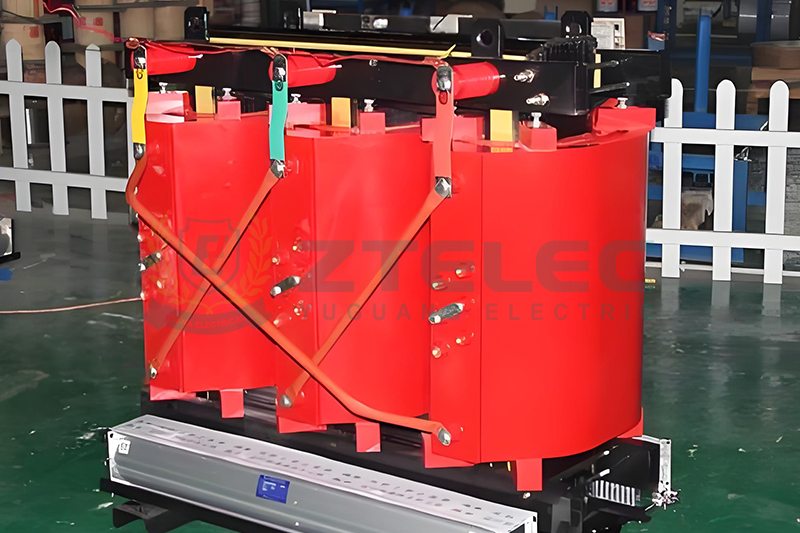
1250 kVA Cast Resin Transformer FOB Price Reference
The following budgetary price ranges represent typical FOB quotations from major Chinese export ports such as Shanghai, Ningbo, and Tianjin. Actual prices vary according to technical specifications, certification requirements, raw material costs, and order quantities.
| Configuration | Voltage Class | Loss Class | Protection | FOB Price Range (USD) |
|---|---|---|---|---|
| Basic Configuration | 10 kV / 0.4 kV | A0 | IP20 | $16,000 – $20,000 |
| Standard Configuration | 10 kV / 0.4 kV | B0 | IP23 | $20,000 – $26,000 |
| High-Efficiency Configuration | 11 kV / 0.433 kV | C0 | IP23 | $26,000 – $33,000 |
| Protected Enclosure Type | 11 kV / 0.433 kV | C0 | IP34 | $30,000 – $38,000 |
| 35 kV Special Design | 35 kV / 0.4 kV | B0 | IP23 | $38,000 – $50,000 |
The main cost drivers include copper prices, electrical steel grade, epoxy resin system quality, protection enclosure requirements, cooling accessories, and production lead time.
Supplier Qualification Checklist
Before selecting a supplier, procurement teams should verify quality systems, testing capabilities, export experience, and after-sales support.
The manufacturer should maintain a valid ISO 9001 quality management certification and be capable of providing complete type test reports for transformers of similar ratings.
Type test documentation should include temperature rise testing, lightning impulse testing, partial discharge testing, and short-circuit withstand verification.
For European projects, suppliers should be able to provide CE compliance documentation and declarations of conformity where applicable.
For GCC countries and Middle Eastern projects, buyers should confirm compliance with local certification requirements such as SASO or other regional standards.
The supplier should also demonstrate international shipping experience, acceptance of third-party inspection services, and the ability to provide references from comparable projects.
RFQ Distribution and Bid Evaluation Strategy
For effective market competition, it is generally recommended to invite quotations from four to six qualified manufacturers. Too few suppliers may limit price competitiveness, while too many can complicate technical evaluation.
All quotations should be reviewed using a standardized Technical Deviation Sheet. This allows buyers to identify specification differences and quantify their financial impact before making a final selection.
Rather than evaluating bids solely on purchase price, buyers should consider Total Ownership Cost (TOC), including energy losses, maintenance expenses, reliability, and service support over the transformer's expected operating life.
Even a small reduction in no-load losses can generate significant long-term savings. In many industrial applications, lifecycle energy costs often exceed the original transformer purchase price.
Critical Contract Attachment Requirements
Once a supplier is selected, the final technical specification should become an integral part of the purchase contract.
Key contractual provisions should include guaranteed loss values, penalties for non-compliance, guaranteed dimensions and weights, factory acceptance testing requirements, packaging standards, transportation protection measures, spare parts obligations, warranty terms, and complete technical documentation deliverables.
Best practice is to require suppliers to submit a detailed Technical Deviation Sheet together with their quotation. Manufacturers unwilling to clearly disclose deviations often create increased contractual and operational risks during project execution.
A professionally prepared RFQ is one of the most effective tools for ensuring successful procurement of a 1250 kVA cast resin transformer. By clearly defining technical requirements, environmental conditions, testing standards, commercial terms, and supplier qualification criteria, buyers can significantly reduce project risk while obtaining more accurate and competitive quotations.
For international EPC projects, combining a detailed RFQ with lifecycle cost analysis and supplier qualification reviews provides the strongest foundation for selecting a reliable transformer partner and achieving long-term operational performance.
dry type transformer specification
1250 kVA cast resin transformer RFQ
transformer procurement guide
IEC 60076-11 transformer
11kV prefabricated substation
- more+releated article
- 2026-06-22How to Write a 1250 kVA Cast Resin Transformer
- 2026-06-18ZTELECGROUP Mid-Year Sale 2026: Full Range Dis
- 2026-06-1811kV Compact Substations for Commercial Buildi
- 2026-06-17500 kVA Oil Immersed Transformer Selection &am
- 2026-06-16Oil Immersed Transformer Maintenance Guide: In
- 2026-06-151 MVA Compact Substation: Engineering Guide fo
- 2026-06-12How to Evaluate Chinese Transformer Suppliers:
- 2026-06-11500 kVA Compact Substation: Design, Configurat
- 2026-06-1011kV Dry Type Transformer: Technical Guide, St
- 2026-06-0911kV Substation: Technical Specifications, App
- ELECTRICAL INSULATION BOARD MATERIALS
- ELECTRICAL INSULATION MATERIALS
- POWER TRANSFORMER
- ENAMELED WIRE
- SWITCHGEAR


transformer procurement guide
IEC 60076-11 transformer
dry type transformer specification
1250 kVA cast resin transformer RFQ
11kV prefabricated substation
prefabricated substation
11kV compact substation
compact substation
European type substation
500kVA distribution transformer
500kVA Transformer Price
500 kVA Oil Immersed Transformer
industrial oil immersed transformer
transformer inspection checklist
oil immersed transformer maintenance
transformer oil testing
1 MVA box type substation
1000 kVA compact substation
1 MVA compact substation
IEC 60076 type test report
Chinese transformer suppliers
transformer supplier evaluation
transformer factory audit
500 kVA prefabricated substation
500 kVA package substation