
Oil Immersed Transformer Maintenance Guide: Inspection Schedule, Oil Testing and Fault Diagnosis
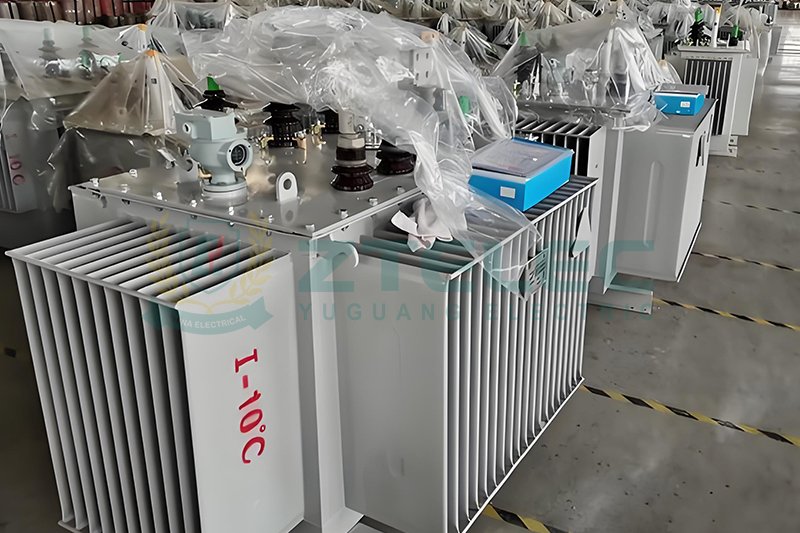
Oil immersed transformers are critical assets in industrial and utility power distribution systems. Transformer insulating oil performs two essential functions: electrical insulation and heat dissipation. A structured preventive maintenance program can extend transformer service life from approximately 20 years to more than 35 years while reducing unexpected outage losses by over 70%.
This comprehensive guide explains inspection schedules, transformer oil testing requirements, dissolved gas analysis (DGA), common fault diagnosis procedures, OLTC maintenance practices, and lifecycle management strategies. It applies to oil immersed transformers ranging from 10kV to 220kV voltage classes.
Why Preventive Maintenance Matters
Many transformer failures develop gradually. Moisture ingress, overheating, insulation aging, poor cooling performance, and contact deterioration often produce early warning signs months before catastrophic failure occurs.
Routine inspections and oil analysis help maintenance teams identify abnormalities early, allowing corrective actions before major outages occur. Effective maintenance programs improve reliability, reduce repair costs, and maximize return on transformer investments.
Transformer Inspection Schedule: From Daily Checks to Major Overhaul
Inspection intervals should follow IEC 60076 requirements, national standards, manufacturer recommendations, and actual operating conditions. Transformers operating in environments with high temperature, humidity, heavy contamination, or severe loading may require shorter maintenance intervals.
| Inspection Type | Frequency | Main Inspection Items | Responsible Personnel |
|---|---|---|---|
| Routine Inspection | Daily | Oil level, top oil temperature (≤85°C), cooling fan status, oil leakage, abnormal noise | Operators |
| Monthly Inspection | Monthly | Breather silica gel color, gas relay condition, bushing cleanliness, grounding resistance, radiator corrosion | Maintenance Engineers |
| Preventive Testing | Annually | Insulation resistance, winding resistance, turns ratio, oil analysis, OLTC inspection | Testing Specialists |
| Major Overhaul | Every 5–8 Years | Internal inspection, core grounding check, oil regeneration, bushing assessment, lead tightening | Manufacturer or Service Team |
For transformers operating more than 15 years, DGA testing is recommended every three years to detect early insulation deterioration without waiting for the major overhaul cycle.
Top Oil Temperature and Load Management
Under ONAN cooling conditions, top oil temperature should generally remain below 85°C. Transformers using ONAF or OFAF cooling systems achieve higher heat dissipation efficiency, but cooling fans and oil pumps must be included in routine inspections.
If top oil temperature continuously exceeds acceptable limits, verify whether loading exceeds 110% of rated capacity and immediately investigate cooling system performance.
Transformer Oil Testing: Key Parameters and IEC Limits
Transformer oil analysis provides the most direct indication of transformer health. Oil samples should normally be collected while the transformer is energized and operating under stable temperature conditions.
| Test Parameter | Recommended Limit | Maintenance Interpretation |
|---|---|---|
| Breakdown Voltage (BDV) | ≥50 kV | IEC 60156 recommends operating oil above 50 kV for 110kV systems; new oil should exceed 70 kV. |
| Moisture Content | ≤15 ppm | Excess moisture reduces dielectric strength and accelerates paper aging. |
| Dielectric Dissipation Factor (tanδ) | ≤0.1% | Higher values indicate contamination or oil deterioration. |
| Acid Number | ≤0.1 mgKOH/g | Values above 0.2 mgKOH/g indicate significant oxidation. |
| Interfacial Tension (IFT) | ≥22 mN/m | Lower values suggest increasing polar degradation products. |
| 2-FAL Content | <1 mg/L | Indicates insulation paper condition and remaining life. |
Oil test results should be trended over time rather than evaluated as isolated measurements. Sudden changes often provide more meaningful diagnostic information than absolute values.
Dissolved Gas Analysis (DGA): Early Fault Detection
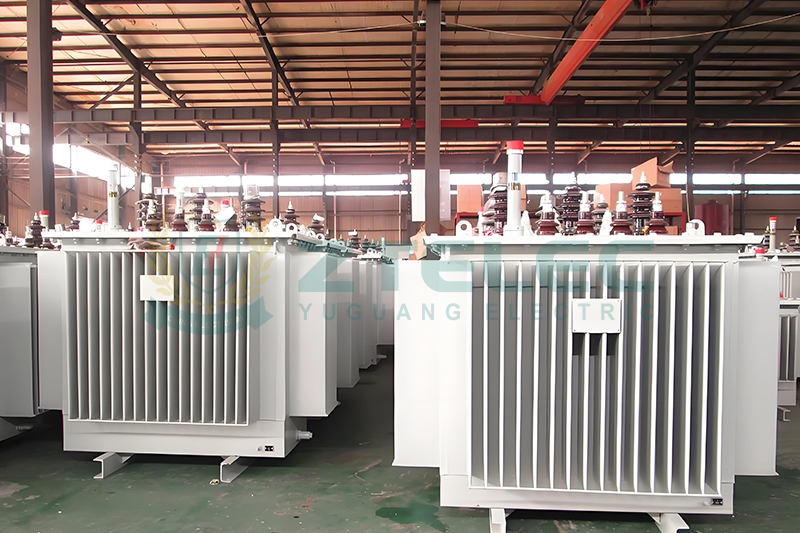
DGA is widely regarded as the most effective method for detecting internal transformer faults. According to IEC 60599, dissolved gas concentrations and gas ratios can reveal developing problems long before visible symptoms emerge.
| Characteristic Gas | Associated Fault Type |
|---|---|
| H₂ (Hydrogen) | Partial discharge and low-energy discharge |
| CH₄ (Methane) | Low-temperature overheating (<150°C) |
| C₂H₆ (Ethane) | Medium-temperature overheating (150–300°C) |
| C₂H₄ (Ethylene) | High-temperature overheating (>300°C) |
| C₂H₂ (Acetylene) | High-energy arcing faults |
| CO / CO₂ | Cellulose insulation overheating |
Rapid increases in acetylene concentration require immediate investigation and potential shutdown. Elevated hydrogen levels often indicate partial discharge activity and justify shortening the DGA testing interval to one to three months.
Common Transformer Fault Diagnosis and Troubleshooting
| Symptom | Severity | Possible Causes | Recommended Actions |
|---|---|---|---|
| Top oil temperature above 85°C | High | Overloading, cooling failure, winding short circuit | Reduce load, inspect cooling equipment, perform DGA |
| Buchholz relay trip | High | Internal faults, winding failure, arcing | Do not re-energize. Investigate immediately. |
| Frequent Buchholz alarm | Medium | Entrapped gas, breathing problems, partial discharge | Conduct gas analysis and inspect the breather. |
| Insulation resistance decline | Medium | Moisture ingress, aging insulation | Dry out insulation and inspect sealing systems. |
| Increased humming noise | Medium | Loose core components, DC bias, overexcitation | Check harmonics and mechanical fastening. |
| Bushing oil leakage or damage | High | Seal deterioration or mechanical damage | Isolate transformer and replace defective bushings. |
| Continuous oil level reduction | Low to Medium | Leakage, gauge malfunction, temperature effects | Verify oil quantity and inspect sealing points. |
OLTC Maintenance Best Practices
The On-Load Tap Changer (OLTC) is often the most frequently operated mechanical component in a transformer. Arcing during switching gradually erodes contacts and contaminates the diverter oil compartment.
Specialized OLTC maintenance should be performed every 5,000 to 8,000 operations or every two years. Maintenance activities include diverter oil replacement, contact wear measurement, lubrication of drive mechanisms, and emergency manual operation testing.
Contacts worn beyond one-third of their original thickness should be replaced to maintain reliable operation.
Maintenance Records and Lifecycle Management
Digital maintenance records form the foundation of transformer asset management. Operators should maintain electronic databases containing inspection findings, loading records, oil test reports, protection events, and corrective actions.
For transformers operating beyond 20 years, residual life assessment should combine DGA trends, 2-FAL measurements, insulation degree of polymerization (DP), and hotspot temperature calculations based on IEEE C57.91 methodologies.
Lifecycle assessments support replacement planning, refurbishment decisions, and capital investment optimization.
International Compliance Considerations
Export-oriented transformer maintenance programs should consider regional standards and customer specifications.
European projects may require compliance with IEC 62770 and environmental directives. North American users commonly reference IEEE C57.106 for insulating oil maintenance practices. Projects in the Middle East and Africa should clearly define whether IEC or ANSI/IEEE requirements govern maintenance activities to avoid warranty disputes.
Frequently Asked Questions
How often should transformer oil testing be performed?
Annual oil testing is generally recommended. Transformers operating under heavy loading or severe environmental conditions should undergo oil analysis every six months. DGA testing should be expanded when abnormalities are detected.
What is the acceptable transformer oil breakdown voltage?
According to IEC 60156, new oil for 110kV transformers should exceed 70 kV, while in-service oil should remain above 50 kV. Lower values require immediate treatment or oil replacement.
Why does transformer temperature rise abnormally?
Typical causes include cooling system malfunction, excessive loading, winding defects, increased core losses, and restricted oil circulation.
How should repeated Buchholz relay alarms be handled?
Collect gas samples for DGA testing, inspect oil levels and breather condition, and determine whether the gas composition indicates internal discharge or external causes such as trapped air.
Preventive maintenance is the most cost-effective strategy for maximizing transformer reliability and extending service life. By combining structured inspections, transformer oil testing, DGA diagnostics, OLTC maintenance, and comprehensive record management, utilities and industrial operators can significantly reduce outage risks and optimize asset performance.
Whether managing distribution transformers or large power transformers, a proactive maintenance approach ensures safer operation, lower lifecycle costs, and improved power system resilience.
transformer inspection checklist
transformer oil testing
oil immersed transformer maintenance
1000 kVA compact substation
1 MVA compact substation
- more+releated article
- 2026-06-16Oil Immersed Transformer Maintenance Guide: In
- 2026-06-151 MVA Compact Substation: Engineering Guide fo
- 2026-06-12How to Evaluate Chinese Transformer Suppliers:
- 2026-06-11500 kVA Compact Substation: Design, Configurat
- 2026-06-1011kV Dry Type Transformer: Technical Guide, St
- 2026-06-0911kV Substation: Technical Specifications, App
- 2026-06-08500kVA Oil Immersed Transformer Price Guide 20
- 2026-06-06Prefabricated Substations: Complete 2026 Buyin
- 2026-06-05Cast Resin Distribution Transformers: A Compre
- 2026-06-04Air-Cooled Dry Type Transformer Manufacturer |
- ELECTRICAL INSULATION BOARD MATERIALS
- ELECTRICAL INSULATION MATERIALS
- POWER TRANSFORMER
- ENAMELED WIRE
- SWITCHGEAR



transformer inspection checklist
transformer oil testing
oil immersed transformer maintenance
1 MVA box type substation
1 MVA compact substation
1000 kVA compact substation
prefabricated substation
transformer factory audit
transformer supplier evaluation
IEC 60076 type test report
Chinese transformer suppliers
500 kVA compact substation
500 kVA prefabricated substation
500 kVA package substation
11kV cast resin transformer
11kV dry type transformer
dry type transformer manufacturer
11kV transformer
11kV substation
compact substation
11kV switchgear
500kVA oil immersed transformer price
500kVA transformer cost
oil filled transformer 500kVA
500kVA distribution transformer