
How to Evaluate Chinese Transformer Suppliers: Certifications, Factory Audits and Risk Warning Guide
China is the world's largest producer and exporter of transformers, accounting for more than 40% of global output. However, the market varies significantly in quality. Buyers may encounter everything from internationally recognized manufacturers with KEMA-certified products to trading companies lacking any valid type test records.
For EPC contractors, utility procurement teams, industrial project owners, and transformer distributors, selecting the wrong supplier can lead to project delays, costly failures, warranty disputes, and reputational damage.
This comprehensive guide explains how to verify certifications, conduct effective factory audits, identify supplier red flags, and structure contracts to minimize procurement risks when sourcing transformers from China.
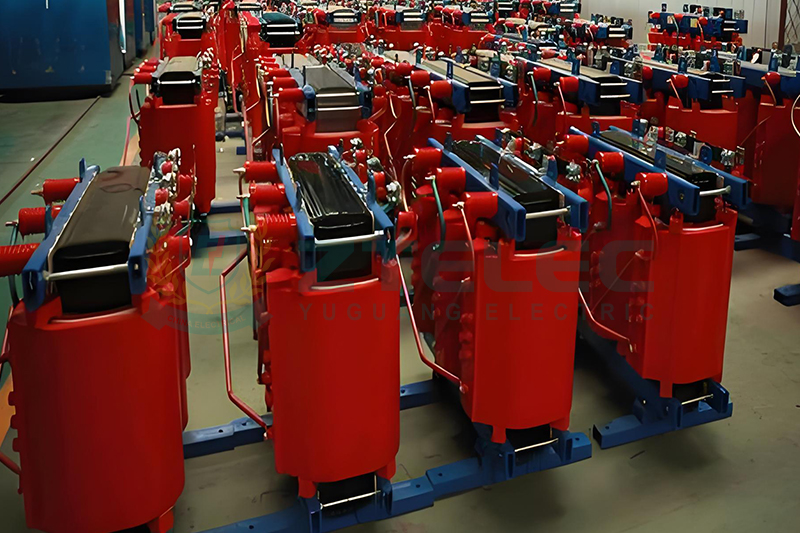
Why Supplier Evaluation Matters in Transformer Procurement
Transformer procurement is not simply about obtaining the lowest quotation. The reliability of the equipment directly affects power system safety, operational continuity, and lifecycle costs.
A systematic supplier qualification process helps buyers:
Reduce technical and commercial risks before issuing purchase orders.
Verify whether the manufacturer possesses genuine production capabilities.
Ensure compliance with international standards and local regulations.
Improve delivery reliability and after-sales support.
Avoid hidden quality compromises that may only emerge after commissioning.
Understand Transformer Certifications: Mandatory Requirements vs Value-Added Credentials
Many quotations display multiple certification logos. However, the value of a certificate depends on two factors:
The international credibility of the issuing organization.
Whether the certification scope actually covers the transformer specifications being purchased.
| Certification / Standard | Applicable Market | Verification Focus | Importance |
|---|---|---|---|
| ISO 9001 | Global | Verify validity through IAF CertSearch and confirm factory address consistency. | Essential |
| IEC 60076 Type Test Report | Global | Request the complete report matching ordered ratings and voltage classes. | Essential |
| GB/T 6451 & GB 20052 | Chinese Exports | Verify efficiency grades such as S11, S13 and S15. | Essential |
| CE Marking | Europe / EEA | Confirm technical documentation is controlled by the manufacturer. | Required for Europe |
| KEMA / CESI | Middle East, Africa, Latin America | Validate certificate numbers directly with issuing bodies. | Strongly Recommended |
| SONCAP / SASO / G-Mark | Nigeria, Saudi Arabia, GCC | Ensure certified models exactly match ordered products. | Mandatory in Target Markets |
Type Test Verification Tips
Always request the complete Type Test Report rather than only the cover page. Genuine reports issued by accredited laboratories generally contain between 50 and 120 pages.
Pay particular attention to three critical test results:
Impulse and power-frequency insulation levels (LI/AC).
Temperature rise performance.
Short-circuit withstand capability.
These values must align with your technical specification requirements.
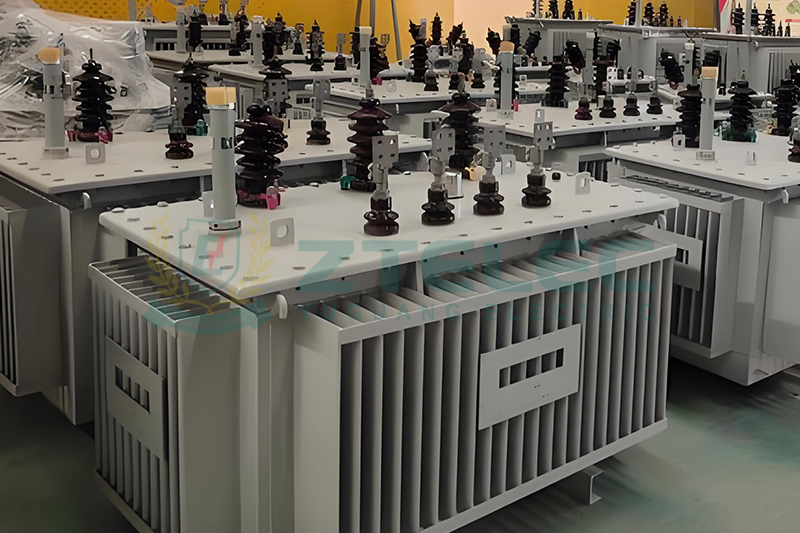
Factory Audits: Five Critical Areas to Examine
Certificates can be falsified, but manufacturing capability is much harder to fake.
For transformer contracts exceeding USD 300,000, buyers should arrange onsite audits or appoint independent inspection agencies such as SGS or Bureau Veritas before contract signing.
1. Raw Material Control
Review incoming inspection records for grain-oriented electrical steel and verify supplier qualifications.
Confirm copper or aluminum conductor purity reports, with copper purity typically exceeding 99.9%.
Request certificates for insulation materials and verify whether internationally recognized brands are used where specified.
Be cautious of aluminum windings being presented as copper conductors.
2. Manufacturing Process and Equipment
Inspect transformer oil treatment systems and verify the availability of vacuum oil purification equipment.
Review oil dielectric strength records, preferably exceeding 60 kV/2.5 mm.
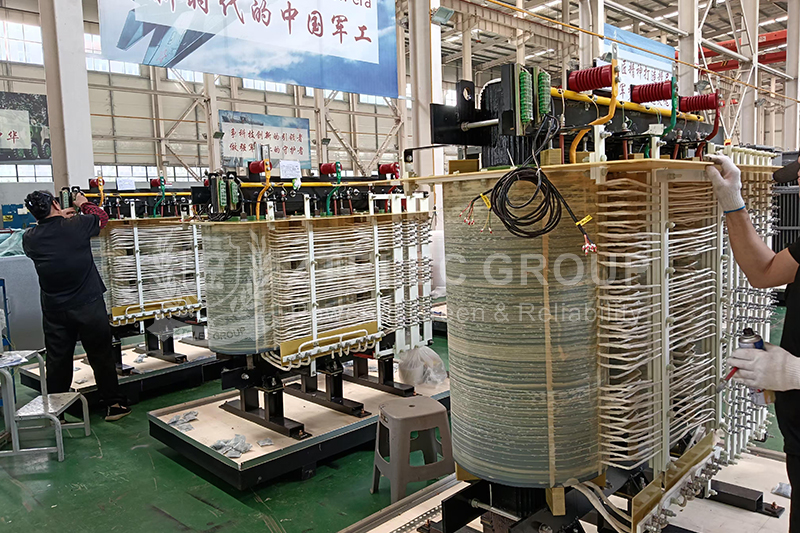
For dry-type transformers, verify the presence of VPI systems or enclosed resin casting facilities.
Observe resin casting records and core stacking processes to assess manufacturing consistency.
3. Routine Testing Capability
Every transformer should undergo routine testing before shipment.
Key routine tests include:
Winding resistance measurements.
Voltage ratio and vector group verification.
No-load loss and no-load current testing.
Load loss and short-circuit impedance measurements.
Insulation resistance and polarization index evaluation.
Review testing records from the previous six months and confirm calibration certificates remain valid.
4. Quality Management Implementation
Request access to the latest ISO 9001 internal audit reports.
Review non-conformance logs and corrective action records.
Inspect quarantine areas designated for defective materials.
Assess traceability systems and ask management to explain recent quality incidents and improvements.
5. Capacity Planning and Delivery Control
Compare production schedules with actual work-in-progress volumes.
Verify lead times for critical components such as bushings, cooling systems, and on-load tap changers.
Ask suppliers to disclose delivery delay statistics caused by material shortages or quality issues.
Seven Red Flags That Should Trigger Immediate Caution
Red Flag 1: Traders Pretending to Be Manufacturers
Factory addresses differ from business registration information, or suppliers cannot provide verifiable production locations.
Red Flag 2: Certification Scope Mismatch
Certificates cover different capacities or voltage classes from the ordered transformers.
Red Flag 3: Unusually Low Pricing
Quotations more than 20% below market averages often indicate compromises such as reduced core cross-sections, downgraded insulation systems, or conductor substitutions.
Red Flag 4: Refusal of Third-Party Inspection
Suppliers unwilling to permit SGS, Bureau Veritas, or buyer-appointed inspectors to witness testing should be treated as high risk.
Red Flag 5: No Export History
Suppliers cannot provide export records, customer references, or opportunities to communicate with previous overseas clients.
Red Flag 6: Ambiguous Contract Terms
Technical specifications lack complete parameter schedules, and warranty responsibilities remain undefined.
Red Flag 7: Unauthorized Component Substitution
Specified brands for OLTCs, bushings, or accessories are replaced without buyer approval.
Contract Structures That Reduce Financial Exposure
Even after successful supplier qualification, poorly drafted contracts can undermine procurement outcomes.
1. Link Payments to Quality Milestones
A recommended payment structure includes:
30% advance payment upon contract effectiveness.
40% progress payment after completion of core and winding production and successful interim inspection.
25% shipment payment following satisfactory factory acceptance tests.
5% retention payment released after warranty completion without major defects.
Avoid advance payment structures exceeding 50% of contract value.
2. Understand FOB and CIF Risk Allocation
Under FOB terms, risks transfer to buyers once goods pass the loading point.
Comprehensive marine cargo insurance covering at least 110% of invoice value is recommended.
Although CIF terms include seller-arranged insurance, coverage often remains limited and may not adequately protect against moisture damage or handling incidents.
For high-value transformers exceeding 100 kVA, buyers should ideally control insurance arrangements.
3. Define Guaranteed Technical Performance
Contracts should clearly state guaranteed values and tolerances for:
No-load losses.
Load losses.
Short-circuit impedance.
Reference IEC 60076-1 requirements when establishing acceptance criteria.
Contracts should specify compensation mechanisms for deviations and grant rejection rights for significant non-compliance.
Implement Annual Supplier Performance Scorecards
For strategic suppliers, annual performance reviews encourage continuous improvement.
Key performance indicators may include:
On-time delivery rates.
First-pass factory acceptance rates.
After-sales response times.
Warranty claim frequency.
Framework agreements can include replacement provisions when suppliers consistently fall below agreed performance thresholds.
Build a Systematic Supplier Evaluation Process
Evaluating Chinese transformer suppliers should be viewed as an ongoing management process rather than a one-time qualification exercise.
Effective procurement combines four essential pillars:
Certification verification as the entry threshold.
Factory audits to validate manufacturing capability.
Red flag identification to filter risks.
Contract safeguards to protect commercial interests.
Integrating these elements into a standardized procurement SOP can significantly reduce project delays and quality disputes caused by supplier failures.
Experienced EPC contractors worldwide increasingly rely on structured supplier evaluation frameworks because they consistently improve procurement outcomes and reduce lifecycle risks.
Frequently Asked Questions
What certifications should Chinese transformer suppliers have?
At minimum, suppliers should maintain valid ISO 9001 certification and provide IEC 60076-compliant type test reports corresponding to the ordered products. CE marking is required for Europe, while KEMA or CESI certification strengthens credibility in many international markets.
What should buyers focus on during factory audits?
Priority areas include raw material traceability, resin casting or VPI capabilities, authenticity of routine testing records, non-conforming product controls, and compliance of critical purchased components such as OLTCs and bushings.
What is the difference between S11, S13 and S15 transformers?
S11 transformers follow older efficiency requirements and generally exhibit higher no-load losses. S13 and S15 models comply with newer GB 20052 efficiency standards, with S15 achieving significantly lower energy losses and improved lifecycle economics. S11 designs often fail to satisfy European Ecodesign efficiency requirements.
Choosing the right transformer supplier in China requires more than comparing prices. Buyers who systematically verify certifications, audit manufacturing facilities, identify warning signs, and negotiate robust contracts gain a significant advantage in quality assurance and risk control.
By embedding supplier evaluation into standard procurement procedures, organizations can establish resilient supply chains, improve project execution, and secure long-term value from transformer investments.
transformer factory audit
Chinese transformer suppliers
IEC 60076 type test report
transformer supplier evaluation
500 kVA prefabricated substation
- more+releated article
- 2026-06-12How to Evaluate Chinese Transformer Suppliers:
- 2026-06-11500 kVA Compact Substation: Design, Configurat
- 2026-06-1011kV Dry Type Transformer: Technical Guide, St
- 2026-06-0911kV Substation: Technical Specifications, App
- 2026-06-08500kVA Oil Immersed Transformer Price Guide 20
- 2026-06-06Prefabricated Substations: Complete 2026 Buyin
- 2026-06-05Cast Resin Distribution Transformers: A Compre
- 2026-06-04Air-Cooled Dry Type Transformer Manufacturer |
- 2026-06-02RMU vs Medium Voltage Switchgear: Which Soluti
- 2026-06-01Dry Type Transformer Price Guide 2026: Cost by
- ELECTRICAL INSULATION BOARD MATERIALS
- ELECTRICAL INSULATION MATERIALS
- POWER TRANSFORMER
- ENAMELED WIRE
- SWITCHGEAR



transformer supplier evaluation
IEC 60076 type test report
Chinese transformer suppliers
transformer factory audit
500 kVA prefabricated substation
500 kVA compact substation
500 kVA package substation
11kV dry type transformer
11kV cast resin transformer
dry type transformer manufacturer
compact substation
11kV switchgear
11kV transformer
11kV substation
prefabricated substation
500kVA distribution transformer
oil filled transformer 500kVA
500kVA transformer cost
500kVA oil immersed transformer price
box type substation
packaged substation
prefabricated transformer substation
cast resin distribution transformer
epoxy resin dry type transformer
Cast resin transformer