
1 MVA Compact Substation: Engineering Guide for Utility, Industrial and Renewable Energy Projects
The 1 MVA compact substation has become one of the most widely deployed medium-voltage distribution solutions worldwide. Combining modular design, rapid installation, and compliance with international standards, it is extensively used in utility networks, industrial facilities, commercial developments, mining operations, and renewable energy projects.
This guide explains the technical specifications, structural configurations, application scenarios, pricing trends, installation requirements, and procurement considerations associated with 1000 kVA compact substations.
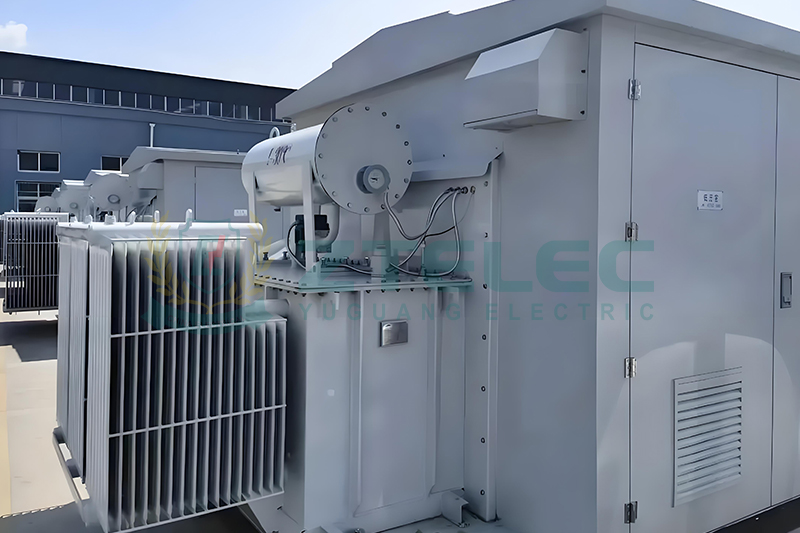
What Is a 1 MVA Compact Substation?
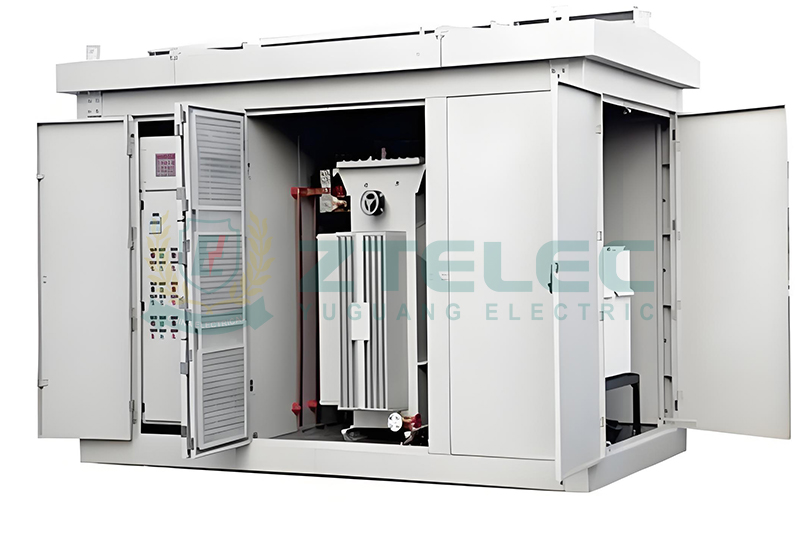
A compact substation, also known as a box-type substation or prefabricated substation, is an integrated power distribution system that combines medium-voltage switchgear, a distribution transformer, and low-voltage switchboards within a single enclosure.
These substations are designed and manufactured in accordance with IEC 62271-202 and GB/T 17467 standards, allowing fast deployment and simplified site installation.
A 1 MVA compact substation contains a transformer rated at 1000 kVA. It is commonly connected to medium-voltage systems such as 10 kV, 11 kV, and 33 kV, while supplying low-voltage outputs including 400 V, 415 V, or 480 V.
This capacity is particularly suitable for:
Industrial manufacturing facilities requiring approximately 800–1000 kW of load demand, commercial developments, municipal infrastructure projects, and renewable energy plants using modular power blocks.
Main Types of 1 MVA Compact Substations
| Type | Configuration Features | Typical Applications | Protection Rating | FOB Reference Price |
|---|---|---|---|---|
| European Type Compact Substation | Separate HV, transformer, and LV compartments with front or double-side maintenance | Industrial parks, urban utilities, commercial complexes, data centers | IP34 to IP54 | USD 30,000–55,000 |
| American Pad-Mounted Substation | Integrated transformer and load-break switch design with compact footprint | Residential communities, rural electrification, commercial districts | IP23–IP34 | USD 18,000–32,000 |
| Containerized Substation | 20 ft or 40 ft container structure equipped with HVAC, lighting and fire protection | Mining, solar farms, wind farms, temporary projects, remote areas | IP54 | Starting from USD 45,000 |
For international projects, European-type substations remain the preferred solution because their medium-voltage compartments can accommodate RMUs, vacuum circuit breakers, and SF₆ switchgear that comply with IEC standards.
Typical Technical Specifications
| Parameter | European Type | American Type |
|---|---|---|
| Rated Capacity | 1000 kVA | 1000 kVA |
| Medium Voltage | 6/10/11/33 kV | 11/15/24.9 kV |
| Low Voltage | 400/415/480 V | 120/240 V or 208Y/120 V |
| Vector Group | Dyn11 / YNd11 | Dyn1 / Dy1 |
| No-Load Loss | ≤1.30 kW (S13) | ≤1.40 kW |
| Short-Circuit Impedance | 4.0–6.0% | 4.5–5.5% |
| Cooling Method | ONAN or AN | ONAN |
| Basic Insulation Level | 75 kV | 95 kV |
| Switchgear Type | RMU, Vacuum Circuit Breaker, SF₆ | Load Break Switch with Fuse |
| Applicable Standards | IEC 62271-202 / GB/T 17467 | IEEE C57.12 / ANSI |
Major Application Areas
Industrial Power Distribution
A 1 MVA compact substation can support approximately 800–1000 kW of industrial demand, including production lines, compressors, HVAC systems, and processing equipment.
Multiple substations can operate in parallel using N+1 redundancy schemes to improve reliability and facilitate future expansion.
Solar and Wind Power Integration
Utility-scale renewable energy projects frequently utilize 1–2 MVA power blocks.
The compact substation steps inverter outputs of 315 V or 400 V up to collector voltages ranging from 10 kV to 35 kV.
Key requirements include overload capability exceeding 120%, harmonic mitigation, insulation monitoring, and reactive power compensation.
Utility Distribution Networks
Urban developments, shopping centers, and residential projects increasingly rely on compact substations due to their reduced footprint and rapid commissioning capabilities.
Compared with conventional substations, installation periods can be shortened from several months to only a few days.
Oil-Immersed Versus Dry-Type Transformers
Transformer selection significantly influences operating costs, fire protection requirements, and project suitability.
Oil-Immersed Transformers
Oil-filled transformers utilize mineral oil or ester fluids for cooling and insulation.
Advantages include lower investment costs, superior overload capability, and excellent thermal performance, making them ideal for outdoor environments.
However, indoor installations generally require oil containment systems and fire protection measures.
Dry-Type Transformers
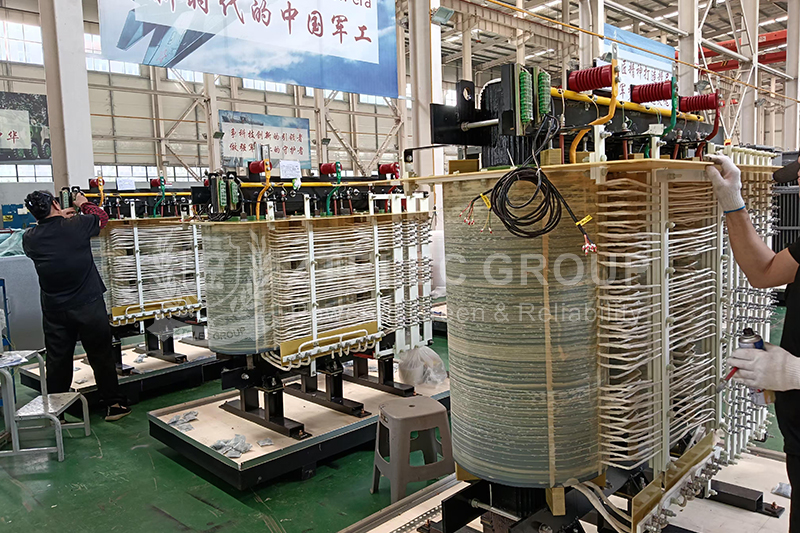
Cast resin transformers employ solid insulation without liquid dielectric materials.
They offer excellent fire resistance and low maintenance requirements, making them suitable for airports, metro stations, hospitals, commercial buildings, and data centers.
Compared with oil-filled alternatives, dry-type units typically cost 30%–50% more.
Critical Selection Criteria
Energy Efficiency Level
S11, S13, and S15 classifications define transformer loss performance.
S13 transformers have become the mainstream export option because they provide an optimal balance between initial investment and life-cycle energy savings.
Compared with older S9 designs, S15 transformers can reduce no-load losses by approximately 40%.
Short-Circuit Impedance
Typical impedance values range from 4% to 6%.
Lower impedance increases fault currents, requiring higher interrupting capacities for downstream equipment.
Higher impedance reduces fault levels but may negatively affect voltage regulation.
On-Load Tap Changer (OLTC)
Projects serving remote loads or utility distribution systems often specify OLTC transformers to maintain voltage stability under varying operating conditions.
OLTC systems usually provide ±2 × 2.5% voltage adjustment while increasing total project costs by approximately 8%–15%.
Export Pricing and Delivery Schedule
| Configuration | FOB China Price | Production Lead Time |
|---|---|---|
| European Type, Oil-Immersed, S13, 10 kV | USD 30,000–42,000 | 6–10 Weeks |
| European Type, Dry-Type, 10 kV | USD 40,000–55,000 | 8–12 Weeks |
| American Type, Oil-Immersed, 11 kV | USD 18,000–28,000 | 4–8 Weeks |
| Containerized Substation with HVAC | USD 45,000–75,000 | 10–14 Weeks |
Certification Requirements for Global Markets
European markets generally require CE marking together with compliance with Low Voltage Directive and EMC requirements.
Middle Eastern countries often request SASO or ESMA certification.
Many Southeast Asian markets accept IEC type test reports as substitutes for local approvals.
International buyers should request complete documentation, including:
Type Test Reports, Factory Acceptance Test reports, insulation resistance measurements, winding resistance tests, and routine test certificates.
Installation and Commissioning Guidelines
A 1 MVA compact substation can usually be installed within one to three working days, excluding civil works.
Typical procedures include foundation inspection, positioning and lifting, cable termination, grounding connection, insulation testing, relay protection settings, and energization.
Oil-filled transformers transported over long distances should remain idle for at least twelve hours before commissioning to allow trapped gases to dissipate.
When ambient temperatures exceed 40°C, transformer derating curves must be reviewed to ensure safe loading conditions.
Frequently Asked Questions
What are the advantages of a 1 MVA compact substation compared with a conventional substation?
Compact substations reduce installation space by 60%–80%, significantly shorten project schedules, minimize on-site construction, and simplify maintenance procedures.
How much does a 1 MVA compact substation cost?
Typical FOB China prices range from USD 18,000 to USD 55,000 depending on transformer type, switchgear configuration, enclosure design, and project requirements.
What should be considered for solar applications?
Renewable energy projects should verify overload capability, inverter voltage compatibility, harmonic suppression measures, enclosure protection ratings, and utility interconnection requirements.
Which international standards apply?
Most products comply with IEC 62271-202 for prefabricated substations, IEC 60076 for transformers, IEC 62271-200 for switchgear assemblies, and relevant national standards such as GB/T 17467.
The 1 MVA compact substation has evolved into an essential component of modern power distribution infrastructure.
Its modular architecture, rapid deployment capability, and compliance with international standards make it a preferred choice for utility expansion, industrial development, and renewable energy integration.
When selecting a 1000 kVA compact substation, engineers and procurement professionals should carefully evaluate transformer technology, enclosure configuration, energy efficiency class, certification requirements, environmental conditions, and life-cycle operating costs to achieve the optimal balance between reliability, compliance, and investment efficiency.
1000 kVA compact substation
prefabricated substation
1 MVA compact substation
1 MVA box type substation
Chinese transformer suppliers
- more+releated article
- 2026-06-151 MVA Compact Substation: Engineering Guide fo
- 2026-06-12How to Evaluate Chinese Transformer Suppliers:
- 2026-06-11500 kVA Compact Substation: Design, Configurat
- 2026-06-1011kV Dry Type Transformer: Technical Guide, St
- 2026-06-0911kV Substation: Technical Specifications, App
- 2026-06-08500kVA Oil Immersed Transformer Price Guide 20
- 2026-06-06Prefabricated Substations: Complete 2026 Buyin
- 2026-06-05Cast Resin Distribution Transformers: A Compre
- 2026-06-04Air-Cooled Dry Type Transformer Manufacturer |
- 2026-06-02RMU vs Medium Voltage Switchgear: Which Soluti
- ELECTRICAL INSULATION BOARD MATERIALS
- ELECTRICAL INSULATION MATERIALS
- POWER TRANSFORMER
- ENAMELED WIRE
- SWITCHGEAR



1 MVA box type substation
1 MVA compact substation
prefabricated substation
1000 kVA compact substation
transformer supplier evaluation
Chinese transformer suppliers
transformer factory audit
IEC 60076 type test report
500 kVA prefabricated substation
500 kVA package substation
500 kVA compact substation
11kV cast resin transformer
11kV dry type transformer
dry type transformer manufacturer
11kV switchgear
11kV substation
compact substation
11kV transformer
500kVA distribution transformer
500kVA oil immersed transformer price
oil filled transformer 500kVA
500kVA transformer cost
packaged substation
prefabricated transformer substation
box type substation