
500 kVA Oil Immersed Transformer Selection & Safety Guide for Industry
The 500 kVA oil immersed transformer is one of the most widely used capacity ratings in industrial power distribution systems. It is extensively deployed in medium-sized manufacturing factories, industrial zones, commercial complexes, agricultural irrigation projects and infrastructure construction works. For international procurement managers and electrical engineers, scientific selection not only controls equipment investment costs but also directly impacts power supply reliability, operational efficiency and full-lifecycle maintenance expenses.
This article systematically analyzes the technical specifications, selection principles, export prices, installation standards, safety management, maintenance routines and international certification requirements of 500 kVA oil immersed transformers, delivering practical references for industrial project procurement.
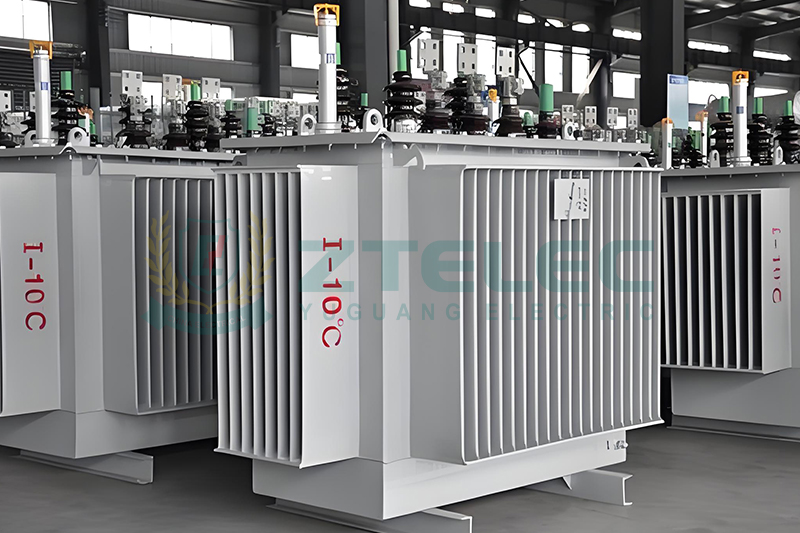
What Is a 500 kVA Oil Immersed Transformer?
An Oil-Immersed Transformer is power equipment that uses mineral insulating oil or natural ester dielectric fluid for both insulation and cooling functions, with its core and windings fully submerged in insulating liquid. Compared with dry-type transformers, oil immersed units feature outstanding heat dissipation, strong overload capability, lower manufacturing costs and well-established maintenance practices.
500 kVA refers to the continuous apparent power output of the transformer under specified temperature rise conditions. For a standard three-phase 50 Hz system, the rated current on the 10 kV high voltage side is approximately 28.9 A, while the rated current on the 0.4 kV low voltage side stands at around 721.7 A.
Per IEC 60076 standards, the winding temperature rise limit of a 500 kVA oil immersed transformer is typically 65 K, and the top oil temperature rise shall not exceed 60 K. This thermal design parameter determines the unit’s continuous operating capacity and short-time overload performance under varying ambient conditions.
Standard Technical Parameters of 500 kVA Oil Immersed Transformer
| Parameter Item | Typical Value | Remarks |
|---|---|---|
| Rated Capacity | 500 kVA | Three-phase continuous operation |
| High Voltage Rating | 10 kV / 11 kV / 33 kV | Customizable |
| Low Voltage Rating | 400 V / 415 V | Standard low-voltage distribution |
| Frequency | 50 Hz / 60 Hz | Configured per export destination |
| Vector Group | Dyn11 / YNyn0 | Dyn11 is the most common |
| No-load Loss P₀ | ≤900 W | Compliant with energy efficiency standards |
| Load Loss Pk | ≤5,200 W | Reference temperature at 75℃ |
| Impedance Voltage Uk | 4%~4.5% | Affects short-circuit current |
| Insulation Class | Class A | Mineral oil insulation system |
| Cooling Mode | ONAN | Natural oil circulation, natural air cooling |
| Unit Weight | 1,500~2,000 kg | Total weight including oil |
Core Selection Criteria for 500 kVA Transformers in Industrial Projects
Load Calculation & Capacity Margin
For industrial projects, the long-term operating load factor of a 500 kVA transformer is recommended to be controlled between 70% and 80%. The actual maximum demand should be maintained within 350~400 kVA to accommodate motor startup, impact loads from welding equipment and future capacity expansion plans.
For production lines with a large number of induction motors, the startup current of large motors can reach 6 to 8 times the rated current. Adequate reserved capacity margin helps mitigate voltage fluctuation and extend insulation service life.
Voltage Class & Tap Changer Type
Local grid voltage standards and fluctuation ranges shall be confirmed during project design. If primary side voltage fluctuation exceeds ±5%, an On-Load Tap Changer (OLTC) is recommended for voltage regulation under load; for grids with stable voltage, a De-energized Tap Changer (DETC) meets requirements and effectively reduces procurement costs.
Copper Winding vs Aluminum Winding
Copper windings feature high conductivity, superior mechanical strength and low load loss, making them the preferred option for industrial continuous-operation projects. Aluminum windings come with lower procurement costs, cutting initial investment by roughly 15% to 25%, which suits projects with limited budgets and low load factors.
During procurement, suppliers shall be required to provide winding material certificates and test reports to avoid risks of copper-clad aluminum replacing pure copper windings.
Installation Environment Adaptability
For outdoor installation, attention shall be paid to tank anti-corrosion grade, protective measures and rainproof design. For altitudes above 1,000 m, capacity correction shall be implemented in accordance with IEC 60076. Natural ester dielectric fluid or high-performance mineral oil is suggested for high temperature and high humidity regions to boost oxidation and moisture resistance.
Energy Efficiency Requirements
Exports to the EU must comply with EU Regulation 2019/1783 on energy efficiency; shipments to the US shall meet DOE regulations; units supplied to the Chinese market need to conform to GB 20052-2020. High-efficiency transformers carry a slightly higher upfront cost yet deliver substantial savings on long-term power consumption losses.
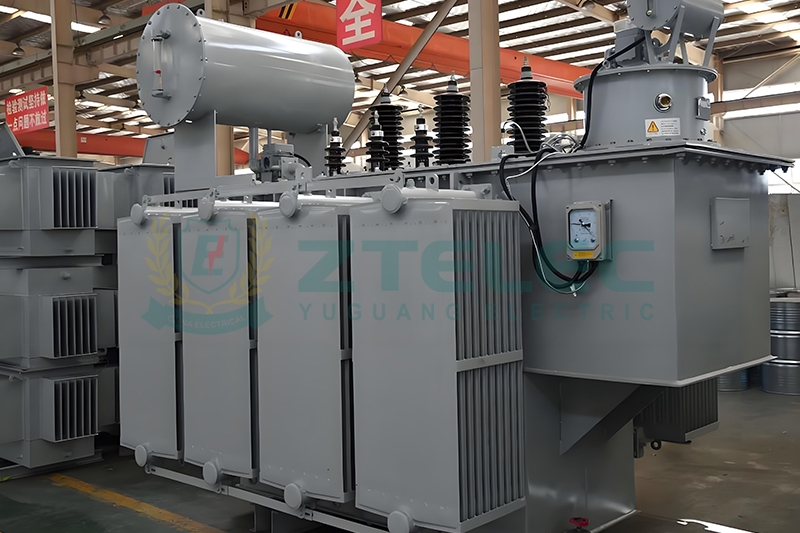
FOB Export Price Reference for 500 kVA Oil Immersed Transformers
Based on market quotations from major Chinese export manufacturing bases in 2025, the FOB China port price of a standard-configured 500 kVA oil immersed transformer generally ranges from USD 8,000 to USD 14,000.
| Configuration Item | Standard Configuration | Upgraded Configuration |
|---|---|---|
| Winding Material | Aluminum Winding | Copper Winding (+15%~25% cost) |
| Voltage Regulation Mode | DETC | OLTC (+20%~30% cost) |
| Cooling System | ONAN | ONAF (+8%~12% cost) |
| Dielectric Fluid | Mineral Oil | Natural Ester Fluid (+10%~18% cost) |
| Certification Requirements | Domestic Standards Only | CE/KEMA/SASO (+5%~15% cost) |
Final quotations are also affected by copper price fluctuations, voltage ratings, shipping terms and mandatory certification requirements.
Installation Codes & Safety Operation Requirements
Transformer installation quality determines its long-term operational reliability. Industrial projects shall focus on the following critical specifications.
Foundation Load Bearing: The installation foundation shall withstand at least 1.5 times the total unit weight, with an oil containment pit whose volume is no less than 110% of the transformer oil volume.
Settling & Degassing: Inspect oil level upon equipment delivery; allow a 24-hour settling period after vacuum oil filling to fully release internal air bubbles.
Insulation Resistance Test: Before commissioning, measure insulation resistance between high voltage to ground, low voltage to ground, and high-low voltage windings. Measured values shall not be lower than 70% of factory test values.
Full-Voltage Switching Surge Test: Conduct 5 full-voltage impulse switching tests prior to initial energization to verify protection device performance.
Earthing Specifications: The tank shell earthing resistance shall be less than 4 Ω; neutral earthing configuration shall match system design requirements.
Safety Clearance: For 10 kV equipment, the minimum clearance between live components and guardrails is 0.7 m, and the distance to buildings shall not be less than 1.0 m.
High-Voltage Safety Instructions: Lockout-tagout procedures including power cut, voltage verification, temporary earthing and warning signage must be completed before maintenance. Disassembly of radiators or operation of oil circuits under load is strictly prohibited. In case of fire, dry powder or CO₂ fire extinguishers shall be used; water-based extinguishing agents are forbidden.
Routine Maintenance & Insulating Oil Management
The designed service life of a 500 kVA oil immersed transformer normally reaches 25 to 35 years, with preventive maintenance being the key to lifespan extension.
Daily Inspection Rounds
Record three-phase load currents, oil level, top oil temperature and operating noise daily. Under normal operation, three-phase current unbalance ratio shall not exceed 5%, and top oil temperature shall be kept below 85℃.
Insulating Oil Laboratory Testing
In accordance with IEC 60422 standards, oil sample testing is recommended every two years or after 25,000 cumulative operating hours, covering breakdown voltage, water content, dielectric dissipation factor and Dissolved Gas Analysis (DGA).
Abnormal rising acetylene gas levels usually indicate internal arcing faults, requiring immediate further diagnostic inspection.
Expansion Tank & Seal Gasket Inspection
Diaphragm-type expansion tanks require diaphragm condition checks every five years. All sealing gaskets must be replaced after disassembly during maintenance; reuse of old gaskets is not allowed.
Export Certification Requirements for Global Markets
| Target Market | Main Standards & Certifications | Authorized Test Body Examples |
|---|---|---|
| EU & United Kingdom | CE, EU 2019/1783 | TÜV, KEMA, SGS |
| Middle East | SASO, ESMA | Bureau Veritas, Intertek |
| Nigeria & West Africa | SONCAP, NIS 413 | SGS, Cotecna |
| India | BIS, IS 2026, IS 1180 | NABL Accredited Labs |
| Australia & New Zealand | AS/NZS 60076 | SAI Global, Intertek |
| Southeast Asia | IEC 60076 plus local energy efficiency rules | QUATEST and other local labs |
Frequently Asked Questions About 500 kVA Oil Immersed Transformers
What application scenarios suit 500 kVA oil immersed transformers?
They are widely deployed in textile mills, food processing plants, metalworking workshops, industrial parks, commercial complexes, agricultural irrigation pump stations and infrastructure projects, supporting simultaneous operation of 10 to 20 units of 22~37 kW motors.
What is the price of a 500 kVA oil immersed transformer?
Standard FOB prices range from USD 8,000 to USD 14,000, varying based on voltage rating, winding material, tap changer configuration and required certifications.
How to choose between oil immersed and dry-type transformers?
Oil immersed transformers offer better cost efficiency and overload performance for outdoor, high-humidity and continuous industrial operation environments. Dry-type transformers are prioritized for indoor commercial buildings with strict fire protection standards.
When is insulating oil replacement required?
Oil filtration or full oil change shall be arranged when insulating oil breakdown voltage drops below 30 kV, water content exceeds 35 mg/kg, or DGA detects abnormal gas signatures. Preventive oil treatment is generally recommended after 8 to 10 years of operation.
Scientific Selection Ensures Long-Term Reliable Operation
With mature and proven technology, strong overload capacity and competitive cost performance, the 500 kVA oil immersed transformer has become one of the most representative capacity ratings for industrial power distribution.
For international procurement projects, clearly specify technical requirements including high/low voltage ratings, winding material, vector group, tap changer type, target market certifications and trade terms during inquiry stages to receive accurate, comparable quotation proposals.
Through precise capacity selection, standardized installation and continuous preventive maintenance, 500 kVA oil immersed transformers can safely and stably operate for over 25 years, delivering long-term dependable power supply for industrial facilities.
industrial oil immersed transformer
500 kVA Oil Immersed Transformer
500kVA distribution transformer
500kVA Transformer Price
transformer oil testing
- more+releated article
- 2026-06-17500 kVA Oil Immersed Transformer Selection &am
- 2026-06-16Oil Immersed Transformer Maintenance Guide: In
- 2026-06-151 MVA Compact Substation: Engineering Guide fo
- 2026-06-12How to Evaluate Chinese Transformer Suppliers:
- 2026-06-11500 kVA Compact Substation: Design, Configurat
- 2026-06-1011kV Dry Type Transformer: Technical Guide, St
- 2026-06-0911kV Substation: Technical Specifications, App
- 2026-06-08500kVA Oil Immersed Transformer Price Guide 20
- 2026-06-06Prefabricated Substations: Complete 2026 Buyin
- 2026-06-05Cast Resin Distribution Transformers: A Compre
- ELECTRICAL INSULATION BOARD MATERIALS
- ELECTRICAL INSULATION MATERIALS
- POWER TRANSFORMER
- ENAMELED WIRE
- SWITCHGEAR



500kVA Transformer Price
500 kVA Oil Immersed Transformer
industrial oil immersed transformer
500kVA distribution transformer
transformer oil testing
oil immersed transformer maintenance
transformer inspection checklist
1000 kVA compact substation
1 MVA compact substation
1 MVA box type substation
prefabricated substation
transformer factory audit
IEC 60076 type test report
transformer supplier evaluation
Chinese transformer suppliers
500 kVA prefabricated substation
500 kVA compact substation
500 kVA package substation
11kV cast resin transformer
11kV dry type transformer
dry type transformer manufacturer
11kV switchgear
11kV transformer
compact substation
11kV substation